Written by: Muhammad Suhayb
Posted on: June 20, 2025 |  | 中文
| 中文
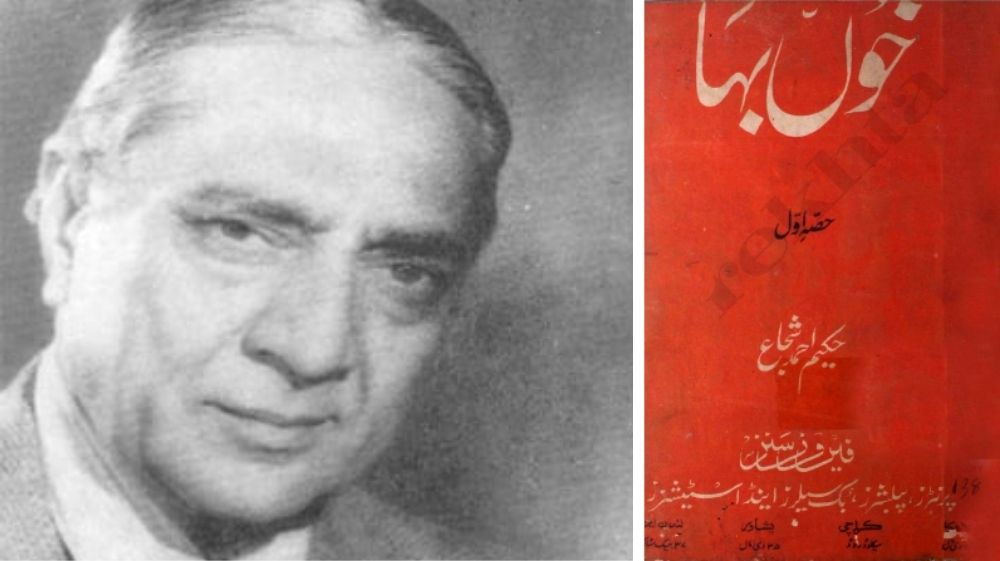
Hakim Ahmed Shuja and Khoon Baha
If you are unaware of Hakeem Ahmed Shuja and call yourself a lover of Urdu literature, it is time to pause and reassess. You are surely mistaken. Shuja is not just another name in the annals of Urdu prose; he is a towering figure whose contributions are foundational to the cultural and literary memory of the subcontinent. A man of many talents, he knew English, Urdu, Farsi and Arabic. A prolific playwright who later ventured into films, Hakeem Ahmed Shuja was a disciple of Agha Hashar Kashmiri, known as the Shakespeare of the East. The Pakistan film industry would always remain indebted to Hakim Ahmed Shuja for penning dialogues like Chori mera paisha hai aur namaz farz, which exposed our true priorities. His autobiography, Khoon Baha, republished in 2024, brings to life a bygone era that traces the arc of his life from the beginnings up to the forties, when India was close to being divided.

Sheesh Mahal, written by Hakim Ahmed Shuja
Written in Urdu, the title Khoon Baha translates to "Blood Money", a powerful metaphor evoking the pain, loss and cost of freedom and transformation. The book weaves together autobiographical reflection and historical narrative, shedding light on Lahore before it became part of Pakistan. It captures the city's cultural vibrancy, its people, and the evolving spirit of its time. Reading Khoon Baha is like stepping into a vanished world, vividly resurrected by a witness who recounts it with empathy, sorrow and striking clarity. Following the preface and introduction, the book is divided into four chapters. After tracing the beginnings, it moves through the mainstays of the author's life: Aligarh, the alma mater, Lahore, his birthplace, Delhi, Meerut and Pakpattan.
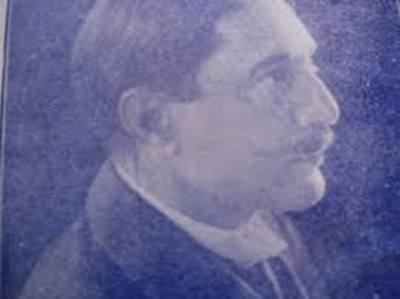
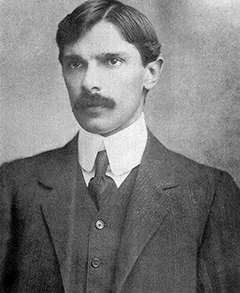
Hakim Ahmed Shuja
Born in 1893, Hakim Ahmad Shuja traced his lineage with pride, recounting how his ancestor Abdul Hamid Ansari first arrived in India. One of his forefathers served as a hakim (physician) in the court of Mughal Emperor Akbar, a tradition of healing and scholarship that continued through generations. By the late 18th century, two notable figures in the family, Hakim Abdullah Al-Ansari and his brother, Hakim Khuda Buksh Al-Ansari, had established control over the Bazar-e-Hakimaan in Lahore’s Bhati Gate area, and later expanded their influence to Katra Hakimaan in Amritsar. The descendants of Hakim Abdullah continued the medical legacy under the banner of the 'Hakim-Khana' family. Meanwhile, Hakim Khuda Buksh, having no male heir, married his only daughter to Fakir Syed Ghulam Mohyeddin. This union gave rise to the prominent 'Fakir-Khana' Syed family, who went on to serve as ministers during the Sikh era and continue to maintain the historic Fakir-Khana Haveli and museum in old Lahore.

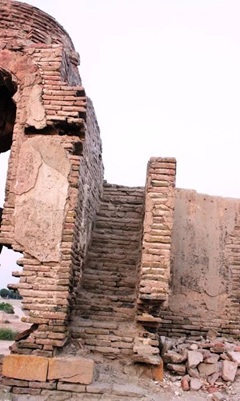
Bhati Gate
Hakim Shuja wrote about his encounters with Allama Iqbal, Muhammad Brothers, Abul Kalam Azad and Agha Hashar in his book. Hakim Ahmad Shuja’s father, Hakim Shuja-ud-Din, was one of the founders of Shor-e-Mehshar, the first Urdu literary society in the Bhati Gate area of Lahore. At a mushaira organized by this society, Allama Iqbal’s first poem was recited, a piece later published in the society’s magazine. At the time, Iqbal was a newly admitted student at Government College Lahore. Iqbal would often tease Hakim with 'you are as old as my shayri, as you were born at the time I wrote my first poem'. Hakim Ahmad Shuja's mother was Princess Farah Naz, one of the many grandchildren of the Shah Shuja of Afghanistan, who was restored to power by British but murdered by his compatriots. When Shuja was three, his father died and his uncle Shahzada Rahim Dil, took on some of the mentoring tasks for the young boy. Hakim Ahmad Shuja was taught horse riding, Persian literature in particular the Hikayat of Saadi and the verses of Hafiz, and the skills of swimming and cooking. Other relatives and friends taught him swordsmanship and archery and his elder cousin started him off with his Arabic /Quranic training, while Maulana Hussain Azad started him off with Urdu poetry. Later, of course, Agha Hashr became his special teacher and mentor for drama and script writing. Agha Hashar shaped the foundations of Urdu theatre, and Shuja polished his writing skills. Thus began a career in films that continued until the 60s.
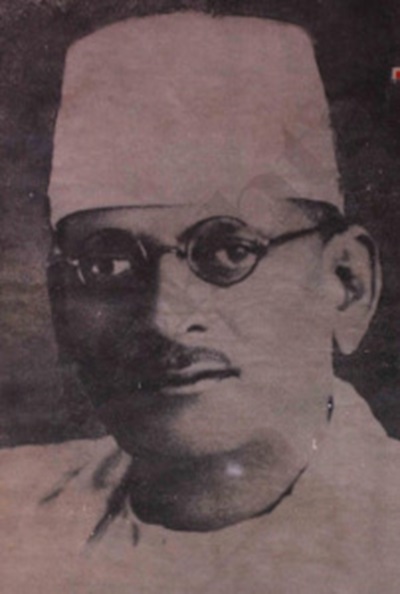
Agha Hashar Kashmiri
His association with Sardar Sikandar Hayat Khan began in 1905 in Rawalpindi and, after a forty-year-long bond, culminated in 1942 with the marriage of his daughter to Sikandar's son, Brigadier Azmat Hayat. Famous television director Yawar Hayat was the grandson of Hakim Shuja.
Recalling his college days, Hakim Shuja revisited interesting episodes of youth. At one point, fearing that someone might steal his powerful memory-enhancing potion, Hakim Shuja deliberately contaminated it to protect his secret. Then there was a prank few friends played on one of their own, by placing a fake 'Zaroorat-e-Rishta' (matrimonial) ad, luring him with promises of great rewards, and the episode when he was searched for in the house as the 'guest of honor; while he was standing at the gate 'half-dressed' to escape the scorching heat.
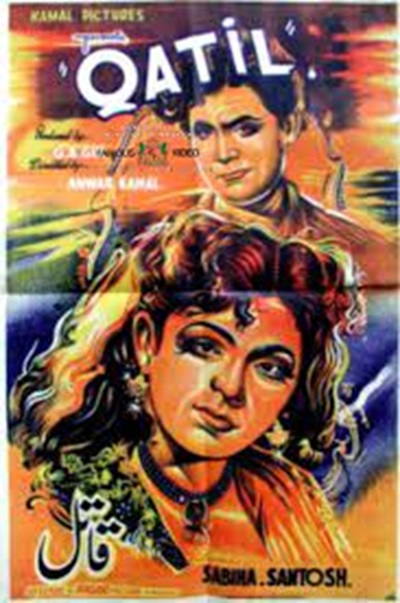
Qatil (1955) by Hakim Ahmed Shuja
The culture of Aligarh, the norms, and the warmth they received, even from people like postmen and barbers on the premises, reflected a time when respect for education and camaraderie transcended social hierarchies. Aligarh was more than an academic institution; it was a vibrant intellectual community where debates on literature, politics and philosophy were part of everyday life. After being banned from acquiring government jobs, Maulana Muhammad Ali Jauhar and Maulana Shaukat Ali lived on the premises of Aligarh. Hakim Shuja recounts an incident in which Viqar-ul-Mulk, the Secretary of Aligarh College, objected to the introduction of dramatics on campus, effectively stifling the students' creative expression. It includes an episode where Shuja attempted to learn how to control Djinns, only to eventually realize the practice was a sham.
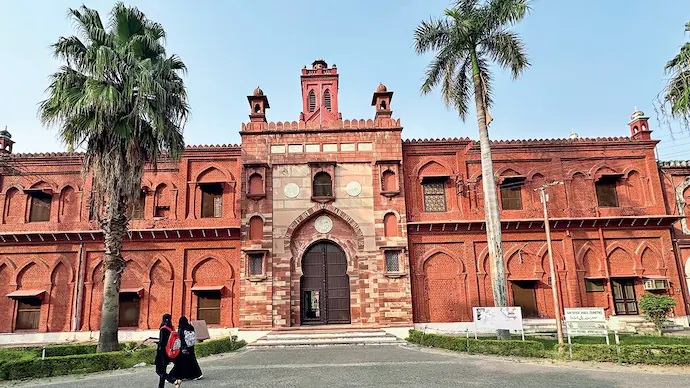
Aligarh Muslim University
The book also touches on the period of World War I, by which time Hakim Shuja had taken up teaching. His journey into bureaucracy and later into dramatics makes for compelling reading. Khoon Baha serves as a complementary work to Hakim Ahmad Shuja’s Lahore ka Chelsea, in which he recalls a time when the Bhati area was the heart of Lahore’s literary and creative life, roughly from the 1850s to the 1940s.
You may also like:
From the Horn of Africa to Bahria Town: Habesha Café Brings Centuries of Coffee Culture to Rawalpindi
(October 15, 2026)