Written by: Muhammad Suhayb
Posted on: November 10, 2025 |  | 中文
| 中文
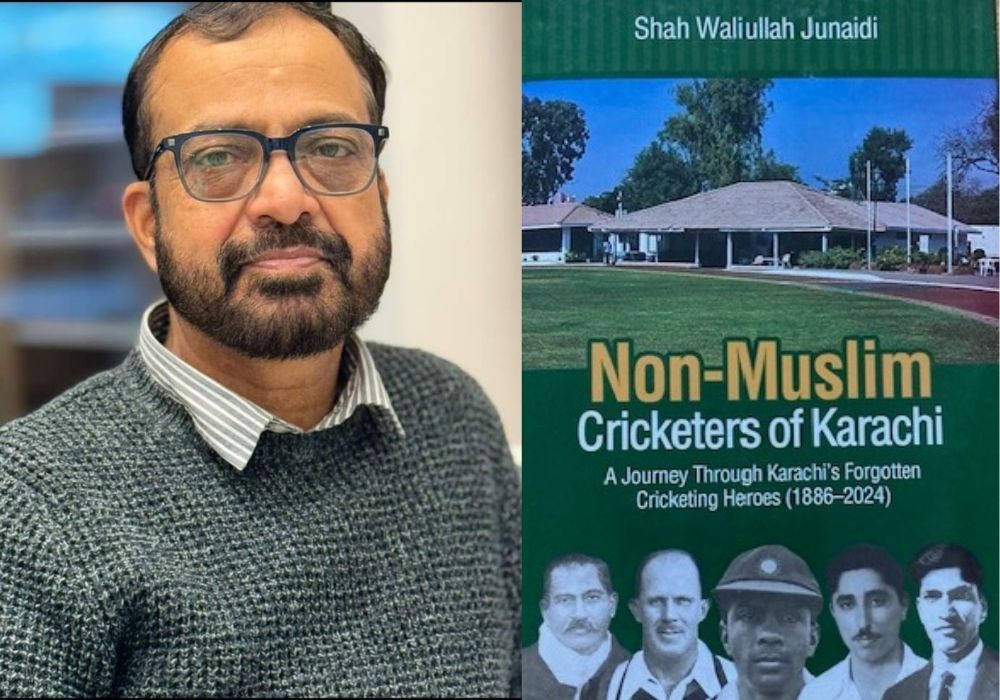
Non-Muslim Cricketers of Karachi and its author, Shah Waliullah Junaidi
Just take a look at these names: legendary Australian batsman Sir Don Bradman scored his hundredth first-class century against India; Jimmy Irani, father of English cricketer Ronnie Irani, played for Karachi Parsi Institute; Naoomal Jeoomal opened the innings for India in its first ever Test match in 1932; and Peter Paul Fernandes was part of the Indian hockey team that won gold in the 1936 Olympics. What is common between all these people? Surprisingly, they were all non-Muslims from Karachi. This fascinating information comes from Shah Waliullah Junaidi’s book Non-Muslim Cricketers of Karachi.
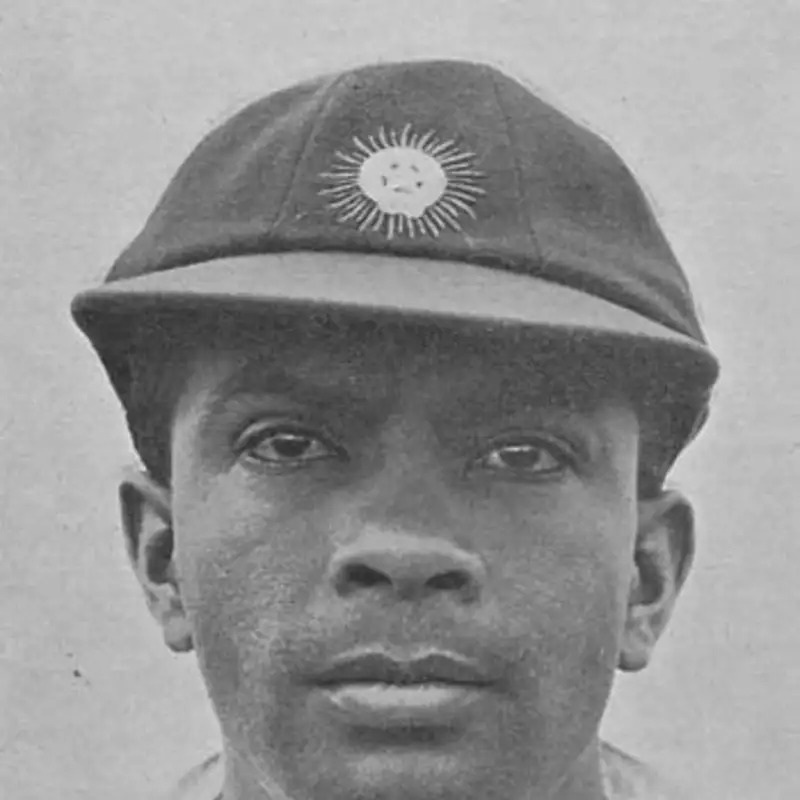
Naoomal Jeoomal
Shah Waliullah Junaidi is a writer and researcher who knows Karachi very well. He has written over a dozen books about the city, its history and its culture. In this book, he focuses on non-Muslim cricketers from Karachi while also telling the story of the city itself. Through cricket, he shows how Karachi has changed over time, from a small town to a modern metropolis. Cricket, throughout the city’s history, often brought people of different faiths together. This book reminds us how sports can unite communities beyond religion and politics.
If you are a cricket fan, you might already know about some non-Muslims who played for Pakistan. Wallis Mathias was a talented batter and an excellent fielder. Danish Kaneria, a leg spinner, took 261 wickets and remains Pakistan’s most successful bowler of that type. Gulabrai Ramchand, originally from Karachi, even captained India. But Junaidi’s book goes much deeper than just facts and statistics. He takes the reader through Karachi’s growth, showing how cricket reflected the city’s journey every step of the way. 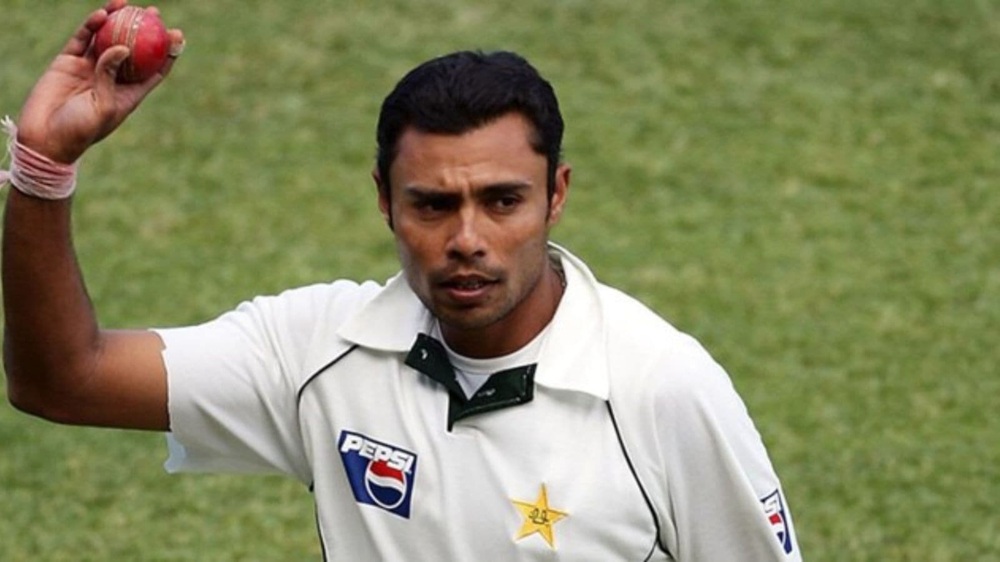
Danish Kaneria
The book describes historic cricket venues in Karachi such as the Karachi Gymkhana, Karachi Cricket Association, Patel Park (now Nishtar Park), Jahangir Park and the Goan Gymkhana. These places evoke the spirit of the city in the early 1900s. Although Karachi was small back then, its people were passionate about cricket. Teams were often formed based on religion, and competitions were intense. The first inter communal cricket tournament took place in 1916, featuring teams of Parsis, Hindus, Muslims and Christians. Later, in 1922, Europeans joined the tournament. This early history feels almost like a cricket movie, full of sportsmanship and rivalry in an exciting way. The Pentangular tournament of five teams continued for 24 years until partition.
Junaidi emphasizes that cricket in Karachi began with the Parsi community. Parsis were the pioneers of the sport in the city almost 170 years ago. Non-Muslim youth from Karachi were the first to embrace cricket in Sindh. The city’s first cricket club, Oriental, was founded by a Parsi in 1848. An All Parsi team even traveled to England to play cricket in the late 19th century, led by Dr. Dhanjisaw H. Patel. Junaidi also highlights other minority communities in his 96-page book, emphasizing their role in Karachi’s cricket history.
One of the most famous players mentioned is Wallis Mathias, a Goan Christian from Karachi. He became Pakistan’s first non-Muslim Test cricketer and was known for his exceptional slip fielding. Mathias showed how Karachi’s cricketing culture included players from all communities. Another example is Anil Dalpat, a wicketkeeper and the first Hindu to play Tests for Pakistan in the 1980s. Sadly, fielding behind the stumps led to his ouster in 1985, when he dropped a sitter in an Indo Pak final during the World Championship of Cricket in Australia, off none other than Imran Khan’s bowling. Anil’s cousin, Danish Kaneria, later became a legendary leg spinner, taking 261 wickets.
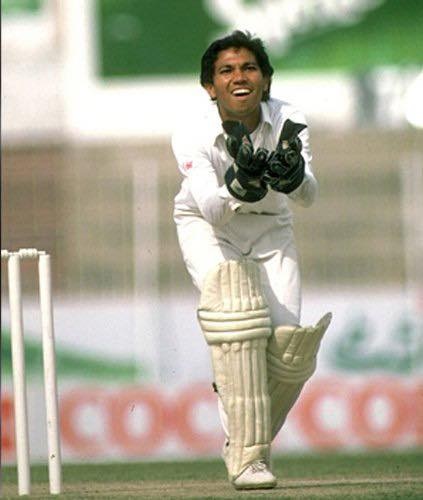
Anil Dalpat, first Hindu cricketer to play Test cricket for Pakistan
The book also shares stories of Antao D’Souza, a Goan Christian who moved to Karachi during partition and became part of the city’s cricket scene, and Naoomal Jeoomal, born in 1904, who opened India’s first Test innings in 1932. Jeoomal later worked as a coach and selector in Pakistan, bridging the cricket world before and after partition. Similarly, Gulabrai Ramchand, another Karachi born player, captained India and led them to their first Test win against Australia. These stories show that Karachi’s influence on cricket extended far beyond its borders.
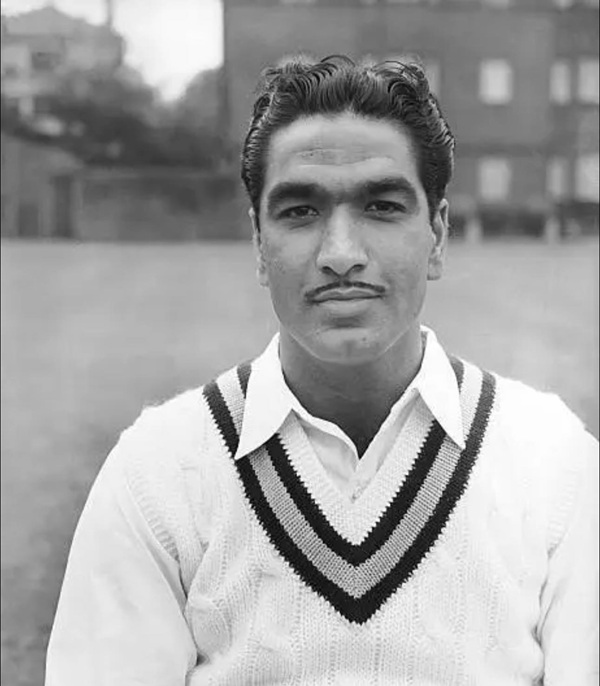
Gulabrai Ramchand
Junaidi also tells the stories of lesser-known cricketers. Isaac Solson, a Jewish player from Karachi, later represented the USA in the Maccabiah Games. Malawa Singh, a Sikh, captained the Karachi Port Trust team. The book does not only talk about players, it also highlights people who worked behind the scenes, such as Bernard “Ben” Lawrence, an Anglo-Indian scorer and statistician, Kaikhusroo Collector, a Parsi who became the first President of the Board of Cricket Control in Pakistan (BCCP), and Jamsheed Marker, a pioneer of cricket commentary along with Omar Kureshi.
Cricket was not the only sport these players excelled at. Jack Britto, for example, was skilled in both cricket and hockey but eventually chose hockey because of a European tour opportunity. Peter Paul Fernandes, another Karachi born sportsman, won gold with the Indian hockey team at the 1936 Olympics. He later opted for Pakistan after 1947 and passed away in 1981. The book also discusses trophies like the Rubie Shield, showing the dedication of Karachi’s cricket lovers.

Ben Lawrence, phenomenal cricket statistician
For anyone who follows cricket in Karachi, Junaidi’s book is a treasure. Even if you do not know much about the city or its cricket history, this book offers a fascinating glimpse into a past where communities played together, competed with respect, and helped shape the city’s identity. It shows how Karachi’s cricket history is tied to its diverse population, how sports can bring people together, and how the city’s non-Muslim communities played a major role in its sporting heritage.
In conclusion, Non-Muslim Cricketers of Karachi is more than a book about cricket. It is the story of Karachi itself, a city that grew, changed and welcomed talent from all communities. From early Parsi clubs to legendary cricketers like Wallis Mathias and Danish Kaneria, and from hockey gold medalists to statisticians and commentators, the book celebrates Karachi’s unique and inclusive sporting culture. Cricket in Karachi was never just about winning matches, it was about unity, passion and the shared love of the game. Shah Waliullah Junaidi’s work preserves this history and gives readers a chance to experience the city as it once was, vibrant, diverse and full of cricketing spirit.
You may also like:
From the Horn of Africa to Bahria Town: Habesha Café Brings Centuries of Coffee Culture to Rawalpindi
(October 15, 2026)