Written by: Emma Alam
Posted on: March 03, 2026 |  | 中文
| 中文
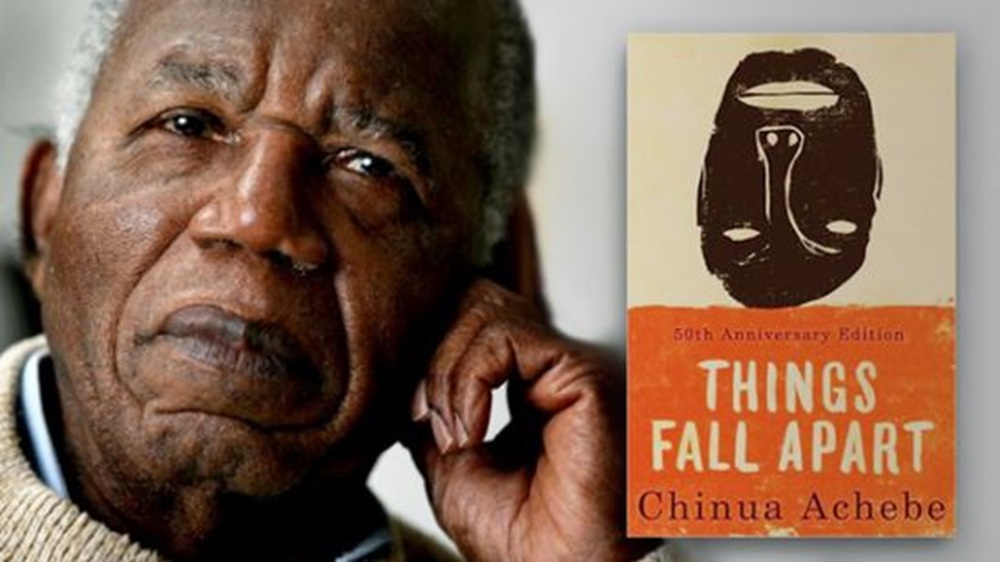
The author, Chinua Achebe, and the book, Things Fall Apart
Things Fall Apart by Chinua Achebe is not just a story regarding colonialism; rather a grave interpretation of a scenario when a structured world, its culture, rituals, norms and morality are forcibly shattered. The writer does not glorify kingdom with extravaganza; rather, he paves the way silently and patiently, until the earth under the feet of his characters slips away. The intellectual process culminated as the most overwhelming novel of the twentieth century.
The protagonist of the narrative is Okonkwo, who is a prominent man sculpted by apprehension of weakness and insecurity of becoming like his father. Achebe constructs him not as an antagonist, instead a profound figure of humanity whose virtues are transformed into tragic flaws. The individual tragedy of Okonkwo reflects the misery of his tribe, Umuofia, which remains unaware of the foreign invasion imposed not only with weapons, but with ideology, concepts and frameworks as well.

Chinua Achebe, the author of Things Fall Apart
The major theme of the novel is the vulnerability of customs. The writer depicts the Igbo, or Ibo, community as complicated, adjustable and ethically complex, opposing colonial representations of Africa as indigenous or motionless. Ceremonies, rituals, family structure, myths and folktales shape the infrastructure of public life. So far, these ethnicities are fragile indeed because of their dependency on shared belief systems. As soon as skepticism embarks on, the entire structure breaks down.
The other main theme of the story is patriarchy and power. The perception of Okonkwo regarding masculinity, considering power and violence equal, curbing and suppressing emotions deprives him of flexibility. The writer skillfully evaluates this lack of flexibility, advocating that both individual and social survival demand adaptability instead of possessing rigid and stubborn behaviours. The novel also highlights the impact of imperialism on human psychology. Colonizers not only invade territories; they conquer minds.
Colonial power introduces new concepts and frameworks of religion, morality and culture; thus, it ruins the fabric of family structure, fractures authority and destroys native infrastructure from inside. The writer argues that kingdoms progress, not solely through domination but through demarcation.

A picture depicting Igbo culture
In terms of structure, ‘Things Fall Apart’ functions as a classical tragedy. The decline of Okonkwo is unavoidable not only because he is sinister, but because of his uncompromising behaviour. The tragic end of Okonkwo is not termed brave and heroic resilience; rather, it signifies the entire breach among individuals, society and tradition. Achebe’s narrative is simple yet filled with maxims and folktales, that give the story credibility and ability to connect with readers. Achebe draws the attention of the readers to recognize that the collapse of the Igbo community was not abrupt; it was steady, traumatic and profoundly human.
‘Things Fall Apart’ serves as a red flag, signaling the outcome of assimilation when one culture is enforced to change another one. Moreover, it highlights why the loss of opinion, ideology and history is one of colonialism’s supreme and perpetual damages.
The readers of South Asia could relate to this novel in a very empathetic manner, keeping in view that the colonial system in the subcontinent acted in the same way. The shift from the local languages to English, administrative and legal control, economic exploitation, and through Macauleyism, the British colonizers worked on the same patterns that Achebe has identified in his novel, ‘Things Fall Apart.’
Foundational facts:
Work Title: Things Fall Apart
Writer: Chinua Achebe
Originally released: 1958
Literary Category (Genre): fiction
Context: The tribes of Umuofia and Mbanta, connected to pre-imperial and first phase of colonial rule in Nigeria.
Significant Themes: Imperialism, heritage versus progress, Patriarchal society, personal identity, authority and ethnic conflict.
Critical importance: Cornerstone novel of African literature; interpreted into more than fifty languages.
You may also like: