Written by: Fiza Husnain
Posted on: June 19, 2025 |  | 中文
| 中文
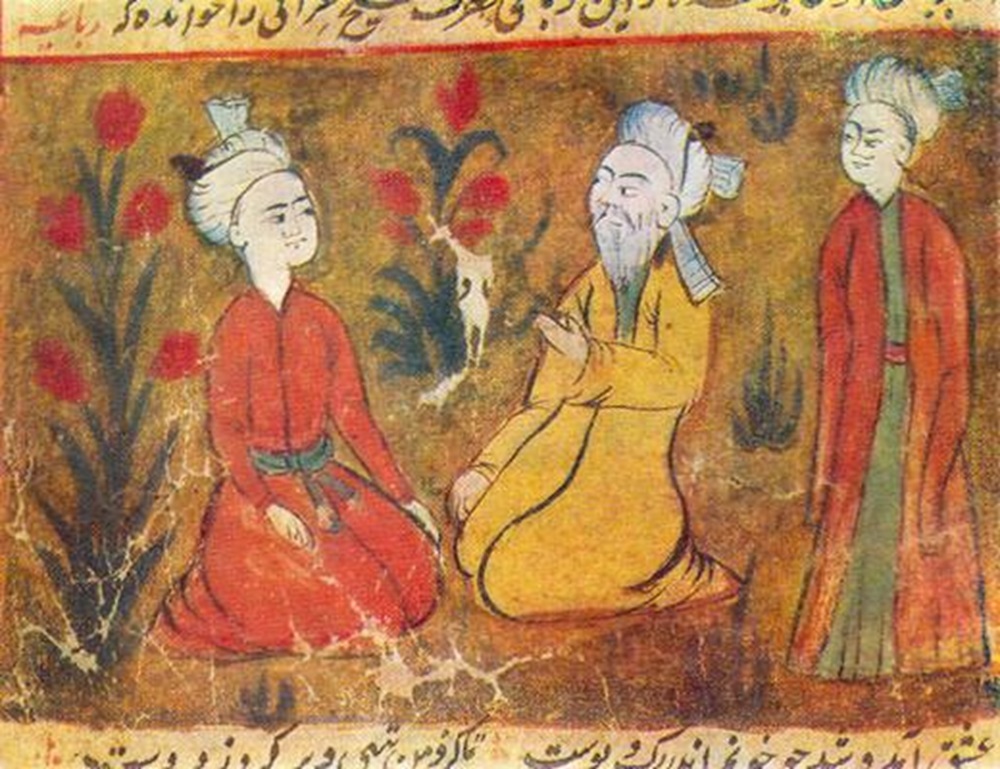
Imaginary painting of Ameer Khusrau with his disciples.
What is the self? What makes you, you? How does love impact your sense of self? What determines one’s identity? What is the boundary between self and other? The questions that have always haunted philosophers, thinkers and artists, and how Sufis of this region have been exploring those questions.
Sufis have an interesting take on the idea of self. The self in Sufi thought is not controlled. Self is not something you cling to. The concept of self is more of a fluid entity. That loses its core. No, it rather finds its core in the beloved. This is when the Ishq is there. One thing that you end up losing yourself. Your inner self is lost. Now, because the self is the foundation of you. Being in love means losing that very ground. The self must be merged into the beloved self. You become a secondary entity even in your world. Now this loss is cherished. That beloved holds your foundation. Beloved becomes the centre. You are the periphery. You’re revolving around an axis of your existence. Thus, the self is lost. The self is given.
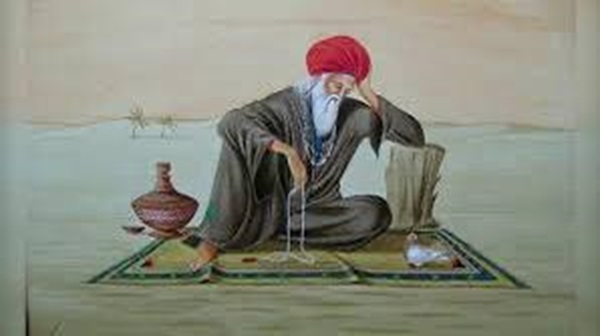
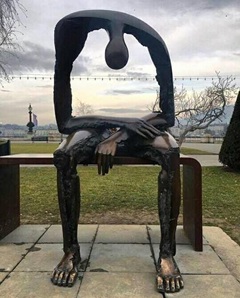
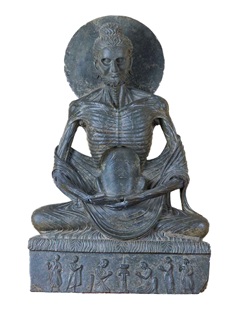
A piece depicting a Sufi in his realm
You’d find plenty of references in Sufi poetry that dissolve this distinction between the self and the beloved. The identity merged into the beloved. The line drawn between the self and others dissolves.
Bullah shah Writes,
“Ramjha Ranjha krdi Ni main Apaye Ranjha hoi”
“I've been repeating my beloved's name, so much so that I've become the beloved now.”
What is that if not the negation of self? That I no longer exist even in me. That your quest had turned me into you.
Bulleh Shah Says,
Ankh Jogi nal Lar gai loko. Mainu Jogan Jogi Di Alho. Heer Salyti mar gai Loko. Since my eyes met his eyes, I belong to him. He is the Mystic. I am nothing but his devotee. I, the Heer, am dead.
Thus, even if I exist, I exist under the beloved shadow, following his footsteps. I don't have my identity. I am my beloved devotee now. That's the only identity I have. The “I” no longer exists.
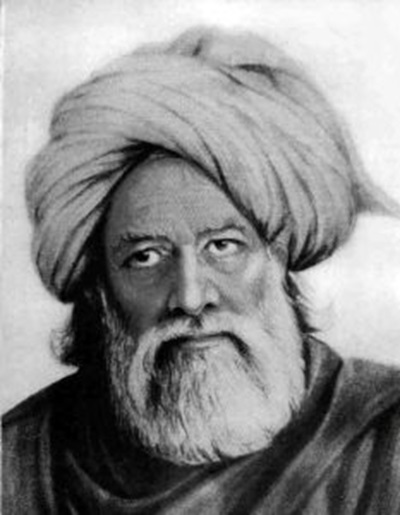
Baba Bulleh Shah
Shah Hussain writes,
Sajan Day Hat banh Asadi, kynkar akhan Chad way Arya!
He's holding my arm so tightly, so why do I ask him to leave me?
That's submitting one's agency to the other person. I will not ask him to leave me; he comes first.
Ameer Khusro Writes,
Chap Tilk Sub cheeni, Mosay Naina Melia kay
You have stolen my identity with just a glance.
This verse metaphorically explores the theme of loss of self and one's identity.
Now, according to Sufis, the mortal loves a pavement towards divine love. Mortal love is the bridge to divine love. They find their way to divine love by loving their spiritual masters. For example, Bullah Shah devoted himself to his spiritual master, Shah Inayat. That divine love is immortal because it is a devotion towards God. God is immortal; so is the love for him. Thus, love, mortal and then divine, is what leads to God.
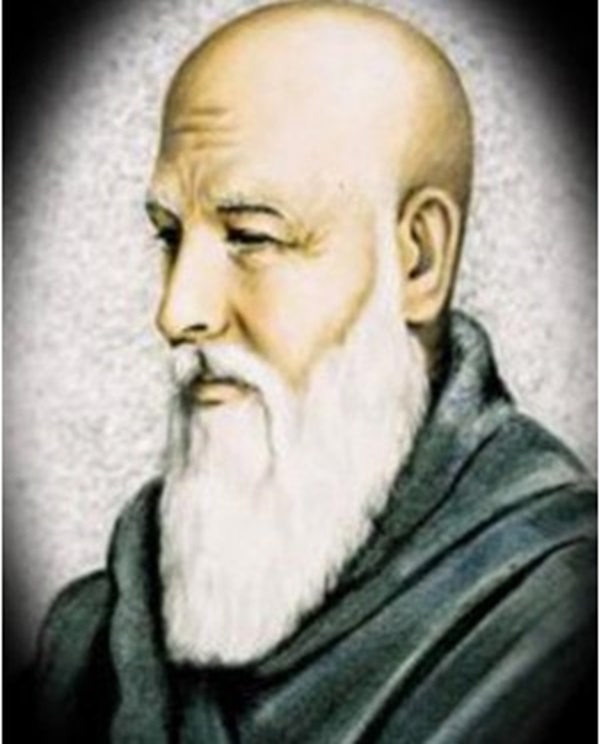
Shah Hussain
Mian Muhammad Bushk wrote.
“Jis Dill andar Ishaq na Rachya, kutty Us thain Changay.
Dogs are better than the people whose hearts are devoid of love.”
The loss of the self for the pursuit of love is celebrated by the Sufis.
On the contrary, if we look into Western philosophy. The Western philosophical take on love, for example, is quite different. Lacan, for example, famously said, Man’s desire is the desire of the Other.” This means that we don’t only desire the other, but we also desire to be desired by the other. So, the performance of the self, became a way to ignite the other's desire. Self here is used and controlled as a means to gain certain ends. Thus, according to Lacan, the self remains performative in the whole process of love.
Love, as Lacan sees it, is driven by a lack in the self. Thus, we hope to find wholeness. To complete our lack. Then he also says that we look for the idealised image of our inner self. And this is how we misrecognise the other person. The focus of love remains on what the other person means to us. Thus, love remains a selfish quest to either complete the lack in the self or to be desired by the other.
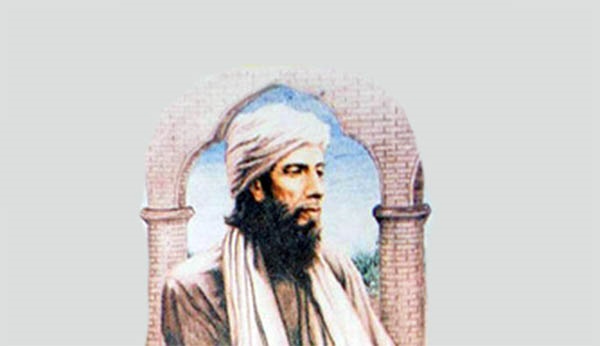
Mian Muhammad Bakhsh
Compared to that, we see the self in the Sufi school of thought is neither on this quest for the fulfilment of the core that was lacking nor does it want to be desired back. It is rather a quiet submission. Loss of sense of control. It's giving your core to the beloved without expectation of reciprocity.
Sartre, on the other hand, also sees the self in love as a controlled entity that struggles between two extremes. The self wants the freedom of the other person. Freedom to choose us. He thinks that loving someone puts us under their gaze. Thus, the self thinks of the self as an object of the beloved. That leads to inauthenticity. Loss of control of self. Thus, you dread the loss of losing yourself. So the self gets stuck in this tension between freedom and objectification. Comparatively, this instability doesn’t exist when it comes to the philosophical understanding of Sufi love. The self is devoted to the beloved. The self would seek authenticity within the merger into the beloved. The loss of individuality becomes the pinnacle of love. There is no existential tension left. Nothing to be disappointed in. Love goes to where it belongs. The self goes to where it belongs. Vanishing the debate of loss and gain.
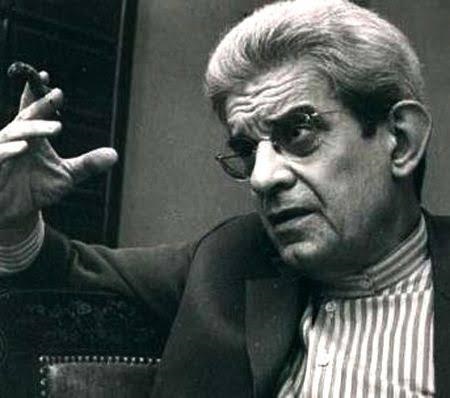
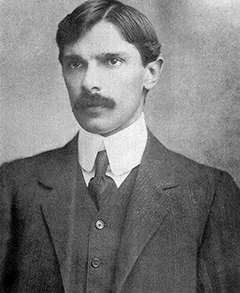
Jacques Lacan
Thus, the idea of the self in love, as approached by the Sufis of this land, is entirely distinguishable from how philosophers would see the self. One is happy in total submission of the self; the other struggles to retain the self while trying to love. The power politics remain significant in both scenarios. The Sufi school of thought presents a philosophy where there is no power struggle. Power and subjectivity are forsaken with the advent of love. However, in Western philosophy, power remained central to the idea of love. The tension and the tussle remain. You struggle between letting go of yourself and holding onto it.
While the philosophy of love presents conflicting views, what remains constant is love itself. Love remains there in the universe. With its capacity to make us vulnerable yet strong. It comes to us as imagined yet real. Tender yet cruel. It breaks us into fragments yet makes us whole. We feel it carved into our bones, yet it drifts like a ghost—intangible, eternal. Of all the universe’s cruel wonders, love is the most macabre. It creeps in sweetly, like a lullaby for the damned, then blossoms into something darker—a beautiful curse that stains the heart, shatters the spirit, and feasts slowly, lovingly, on the soul it once held most tenderly. Love has the power to consume us whole, not with fury, but with a quiet ache, unfolding slowly, until we no longer know where we end and it begins.
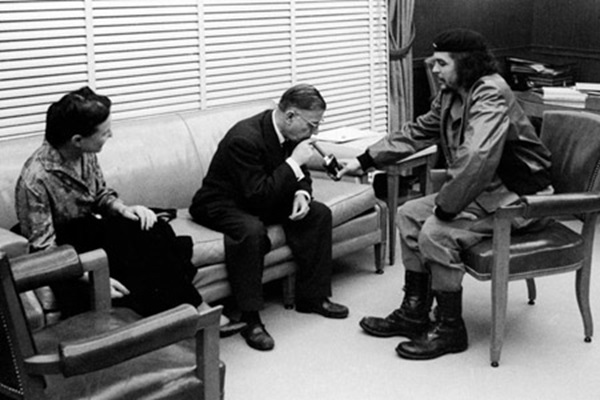
Jean-Paul Sartre and Simone de Beauvoir with Che Gavera
You may also like: