Written by: Fiza Husnain
Posted on: November 11, 2025 |  | 中文
| 中文
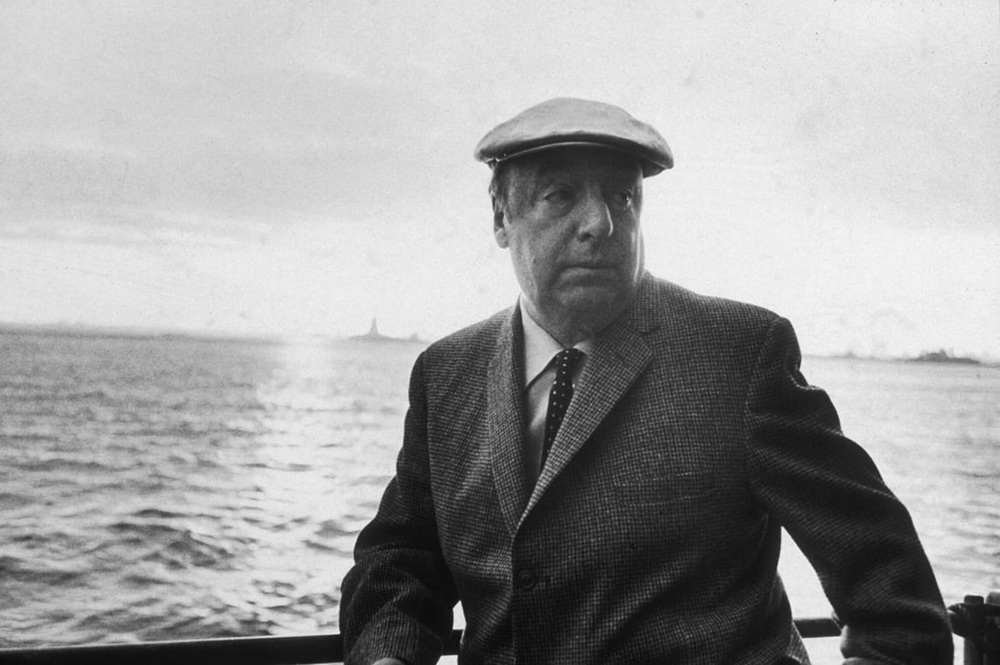
Pablo Neruda
What if I told you that the poems you have been reading all your life, the English sonnets you admire, and the Urdu Ghazals that make your heart ache are not just literary indulgences. It's not just written to make you think about your ex and how they never loved you as much as you did. What if every verse you recite is also a historical document, an emotional record of its own time? Every poem, every ghazal, is an extended history, written not by official historians, but by those who were too tender, too restless, too easily dismissed as “oversensitive.”
Historians, after all, are not the only ones who write history. Some write it with archives and footnotes; others, with metaphors and silences.
The theorist Hayden White, famous for Meta-history, argued that historical writing is never neutral and that historians shape events into plots and tropes (romance, tragedy, satire) that make the past meaningful. And Paul Ricoeur showed that memory and narrative are inseparable: to remember is already to narrate. To narrate is to situate what has happened, to document the past. Together, they tell us that history is always a story, and poetry, with its compressed intensity, can be its most honest narrator.
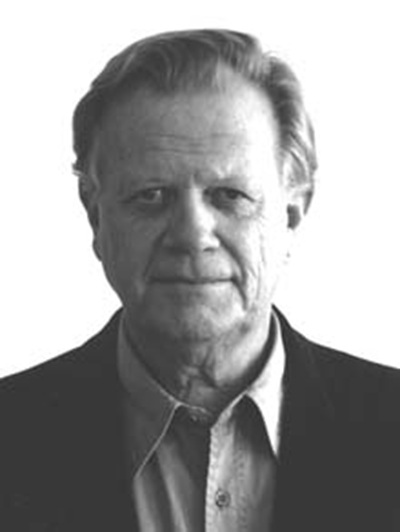
Hayden White
Poetry offers a parallel archive, a neglected footnote, and lines of the song that never made it into the Original Soundtrack (OST), one that refuses linear chronology. That actively parts its way from a permissible way. Where state archives preserve decrees, court cases, and treaties, poetry preserves something else: the texture of loss, the aftertaste of hope, the smell of exile, and loss of self. It collapses time so that a century can exist within a line. It exists in a matrix. A rumour, a sigh, or a child’s broken toy can stand in for a fall.
Read as historiography, poems don’t replace chronicles; they augment them. They keep alive the things official accounts erase: the song someone hummed before the riot began, the prayer whispered before crossing a border, the silence after a gunshot, and a sigh of acceptance when the freedom is denied. This is why poetry deserves to be read as history: Access to silenced memory. Poems preserve oral histories that archives ignore the voices of the subaltern, the displaced, and the unnamed. People who lived but were never revered.
Different evidentiary logic. Poetry testifies through metaphor and through rhythm and rupture, revealing violence not as data but as a wound, not only to be studied but also to be felt, to be relived all over again. Poetry transmits the emotions that statistics cannot: grief, rage, loss and joy. Poets, like historians, choose which events to dignify with memory.
We see poets who wrote history as poetry, or I should say poetry as history. Faiz Ahmed Faiz, “Hum Dekhenge”, an anthem of resistance, politically charged with emotions of unnamed chaos of oppression flickering with painful hope against all odds. Faiz’s anthem imagines not the present but the future as history rewritten: “Hum dekhenge / Sab taaj uchhaley jayenge” We shall see … Every crown shall be flung away. It’s not a lament but a prophecy, a re-ordering of political time. The poem archives a collective dream, the fall of tyranny, that the official state chronicle refuses to inscribe.
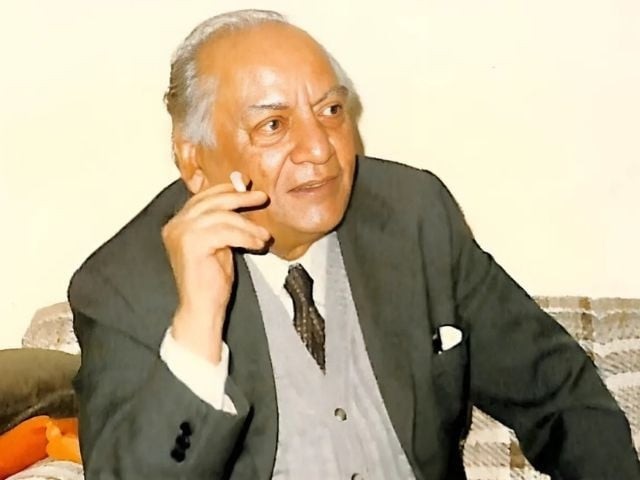
Faiz Ahmed Faiz
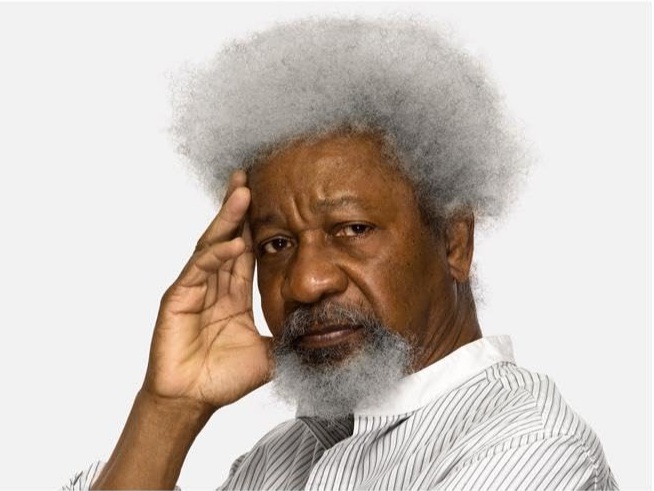
Another poet from Nigeria, Wole Soyinka, “Telephone Conversation” Soyinka condenses the lived history of colonial racism into a single absurd phone call about renting a room.
“You mean, like, plain or milk chocolate?”
That tiny exchange holds decades of racial politics and post-empire anxiety. The poem becomes micro-history, the document of everyday humiliation.
Wole Soyinka
Pablo Neruda “Explico Algunas Cosas,” he commands.
“Come and see the blood in the streets.”
He performs the historian’s work through poetry, testimony without archive, moral evidence without bureaucracy.
Sadat Hasan Manto
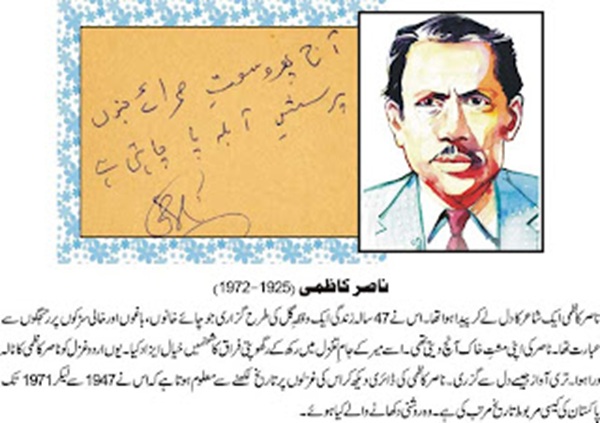
Back home we have another historian of sorrows, Nasir Kazmi (1925–1972), often remembered as a melancholic romantic, who was in truth a chronicler of historical grief, a poet of Partition’s long shadow. Born in Ambala and displaced to Lahore in 1947, Kazmi’s personal exile mirrored a continent’s dislocation.
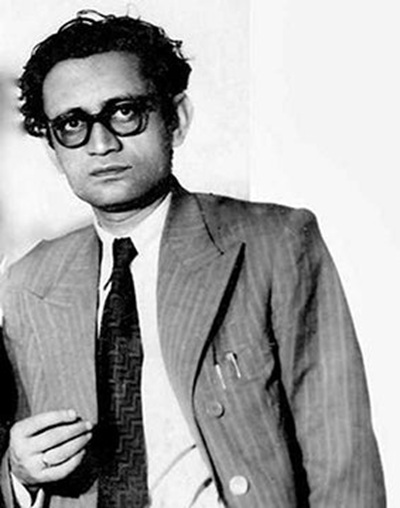
While Saadat Hasan Manto wrote of blood and madness, and Faiz wrote of revolutionary hope, Kazmi turned inward. His grief was quieter, his metre was short, but no less political. In his simplicity, he preserved what the ledgers of Partition could never count: the loneliness of the survivor, the nostalgia for a vanished street, and the echo of a name lost to distance.
“Dil to mera udaas hai Nasir, / Sheher kyon sai’in sai’in krta hy?”
It is my heart that is desolate, Nasir. Why does the city echo with such emptiness?
Nasir Kazmi’s autograph
Here, private sadness dilates into collective mourning. Lahore’s melancholy becomes the emotional map of a divided nation. This is precisely what Cathy Caruth describes in trauma theory: the personal wound as a vessel for collective catastrophe.
Kazmi’s diction is spare, his tone conversational, yet the absences in his verse record the scale of rupture. In another couplet, he writes:
Aye, pitchli rut kay sathi, ab kay baris main tanha hun You, the companion of the last spring, look at me this year; I am engulfed by loneliness
What sounds like a love poem is, in context, a document of migration. The “companion” is a lost homeland; the memory is frozen before violence. Nostalgia here functions as documentation of a vanished togetherness, a poetic map of places erased by Partition borders. His engagement with memory often reappears as an involuntary bloom of pain:
Emaratin to jal kay rakh ho gain Emaratain banany waly kya hoaye Yes, the fire burns all the architecture down to the ashes, but what about the architect? What did they do?
Intizar Hussain
Once again, the memory is haunted by the destruction of partition, where he sees the city in dust, but he questions the existence of those who made them; the idea is destroyed, and the people who made the ideology are also nowhere to be seen. The historian inside the poet is trying to narrate what has happened but cannot find the audience.
Memory in Kazmi’s poetry is cyclical, refusing closure. It resurfaces like spring, reminding the reader that history is never over; it keeps germinating in silence. This is historiography through emotion, a chronicling of how loss renews itself generation after generation.
Kazmi’s attention to smallness, the quiet rain, the wall, an empty street, and an evening lamp becomes a subtle way of recording the “everyday” of Partition. Where official accounts recount massacres, Kazmi records the emptiness that followed. The destroyed routine, the emptied house, the ghost of a friend, these become evidence of historical trauma that no archive catalogues.
Kazmi and Faiz are two halves of the same historical consciousness. Faiz’s “Subh-e-Azadi” laments broken promises of freedom on the national scale; Kazmi whispers the private sorrow of that same dawn. Faiz chronicles the revolution’s deferred sunrise; Kazmi stands in the grey aftermath, asking where everyone went.
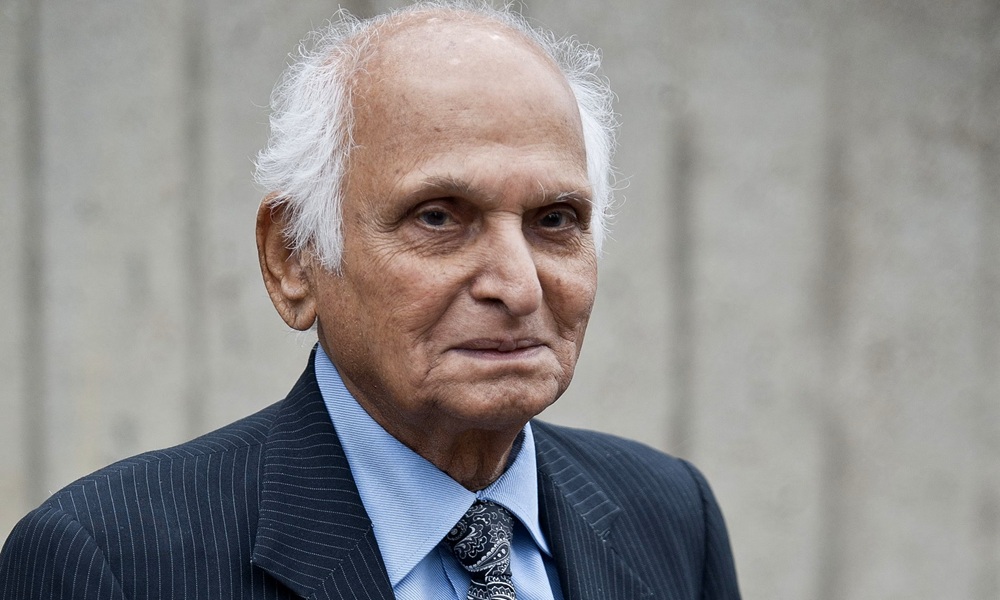
If Intizar Husain mythologized Partition through allegory, Kazmi humanized it through intimacy. He did not universalize the pain; he localized it, embodied it, and made it walk down familiar alleys.
Traditional historiography counts bodies and borders; Kazmi records silence, absence, and mood. His poems preserve the aftermath, the echo after the explosion, and the grief that statistics cannot contain. In doing so, he performs the most difficult kind of historical work: transforming unspeakable experience into a shared language of memory.
If Hayden White is right that all history is story, and if Paul Ricoeur is right that remembering is narration, then poets are historians of the most fragile truths. Faiz, Soyinka, Neruda, and Kazmi all write from the ruins of empires and wars. But it is perhaps Nasir Kazmi who best demonstrates how poetry can turn private sorrow into collective testimony. His ghazals remind us that Partition was not just a division of land, but of memory, belonging and the everyday fabric of life. He did not write manifestos; he wrote elegies, and in doing so, he gave history its lost heartbeat.
Poetry, then, is not escape from history; it is history’s secret diary.
You may also like: