Written by: Muhammad Suhayb
Posted on: July 15, 2025 |  | 中文
| 中文
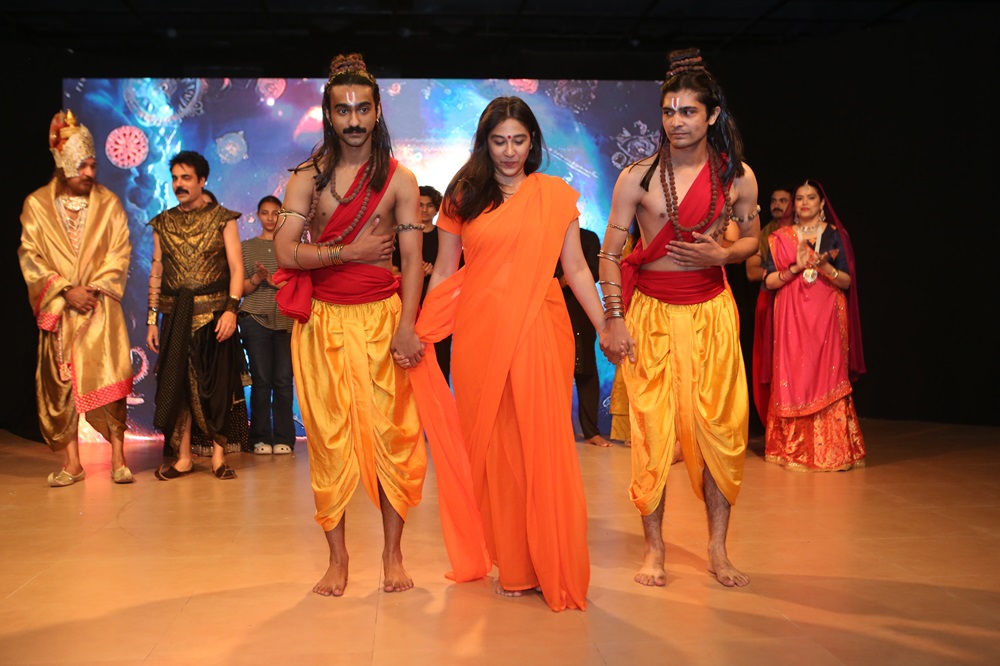
Ashmal Lalwany as Raam, Raana Kazmi as Sita and Waqas Akhtar as Laxman at the end of the play.
It was a pleasant day when I first heard about the upcoming Ramayana stage production at Karachi’s Arts Council of Pakistan—interestingly, from a friend who lives abroad. Over three days, a relatively new theatre company was set to breathe life into Hindu mythology on stage. From July 11–13, the timeless epic, performed countless times across the globe, was to be staged in Pakistan for the first time on the stage.
A brainchild of graduates from the National Academy of Performing Arts (NAPA), this adaptation of the Ramayana was first staged last year at Karachi’s T2F (The Second Floor). Mauj, a small theatre company formed by the talented trio of Raana Kazmi, Sana Toaha Fraidi and Yogeshwer Karera, each trained at Zia Mohyeddin's NAPA, brought the production to life. Most of the actors involved were classmates and friends, united by their belief in the power of arts and culture and a shared passion for innovative storytelling. Mauj has previously staged plays like Lungs (directed by Raana Kazmi), 'night, Mother (by Sana Toaha Fraidi), Rumi Aur Main (directed by Fawad Khan), and of course, Ramayana (by Yogeshwer Karera).
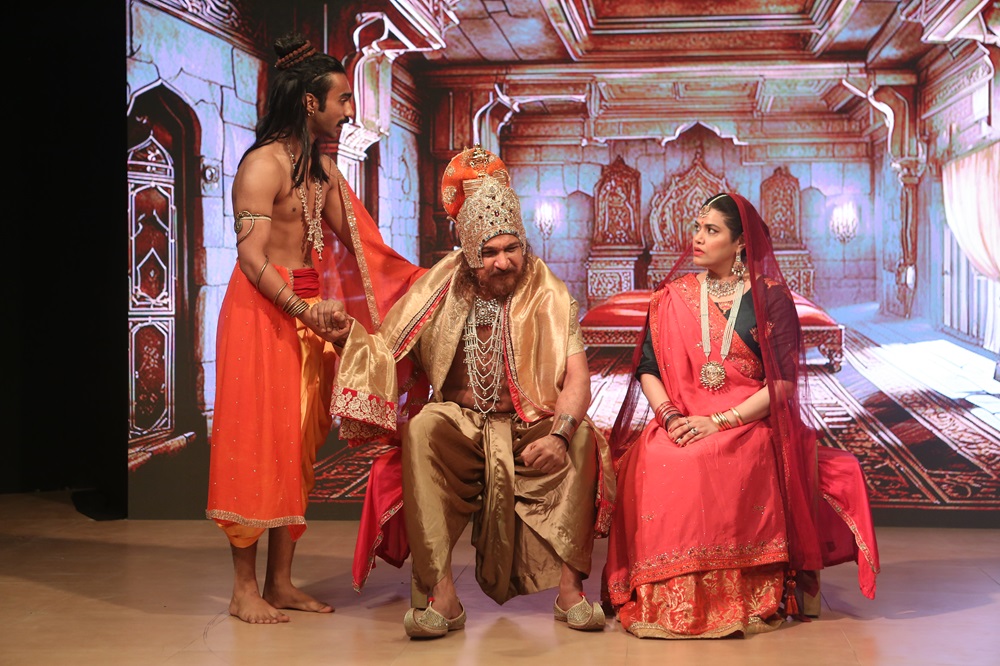
Aamir Ali as Raja Dashrat, Sana Toaha as Rani Kaikai and Ashmal Lalwani as Raam.
My introduction to the Ramayana wasn’t just through familiar references in Hindi films but also through my mother, who grew up in Lucknow watching countless nataks (theatrical plays). Since she had migrated to Pakistan after her marriage in the late 1970s, I thought it would be a meaningful experience to take her along. I was curious to see the brilliance students could bring to the stage, especially those who had never crossed the border and whose only exposure to Hindi was through television.
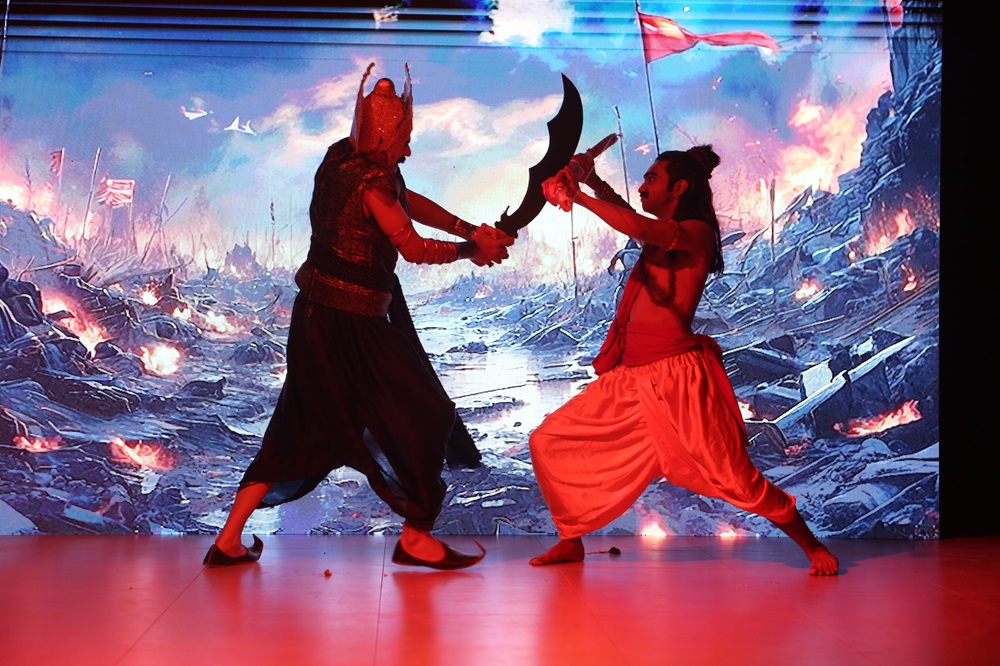
Samhan Ghazi as Raavan and Ashmal Lalwani as Raam during a fighting scene.
At its core, the Ramayana is about the triumph of good over evil, embodied in Lord Raam’s journey to rescue his wife Sita from the demon king Raavan. The drama explores deep moral and philosophical values such as duty (dharma), loyalty, honor, sacrifice and the importance of righteous living. As the epic unfolds, Raja Dashrath (Aamir Ali) of Ayodhya is compelled, due to palace intrigue, to banish his son, Lord Raam (Ashmal Lalwany), along with Raam’s devoted wife, Sita (Raana Kazmi), for 14 years. Raam’s loyal brother, Laxman (Waqas Akhtar), chooses to accompany them into exile, thus standing by the rightful heir to the throne. During their time in the forest, when Raam & Laxman were away, Sita got abducted by the demon king Raavan (Samhan Ghazi) and taken to his distant kingdom of Lanka. In his quest to rescue her, Raam is aided by Hanuman (Jibran Khan) and an army of vanaras (monkey warriors), leading to a legendary war. After vanquishing Raavan and upholding the ideals of dharma, Raam returns to Ayodhya, where he is crowned king, marking not only the end of exile but also the ultimate victory of good over evil.
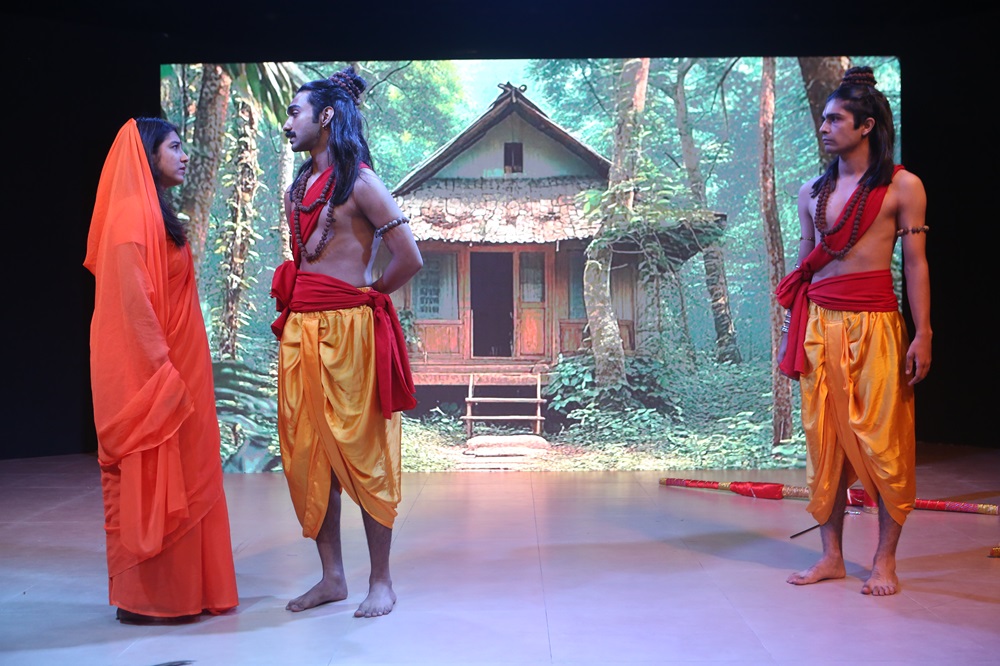
Ashmal Lalwani as Raam, Raana Kazmi as Sita and Waqas Akhtar as Laxman.
The performances by the actors were outstanding: at no point did anyone seem out of place or disconnected from the pre-historic world they were portraying. The animated visuals projected on the LED screen added an immersive layer of authenticity, subtly transporting the audience into the epic’s mythological setting.
Live vocals were beautifully performed by Monica Ahmed, seated gracefully to the right of the stage. Dressed in traditional attire, she sat beside a harmonium and a table placed elegantly on a low settee, creating an intimate and serene musical corner. Her rich, emotive voice resonated throughout the venue, adding a soulful depth to the performance and drawing the audience into a deeply immersive experience.
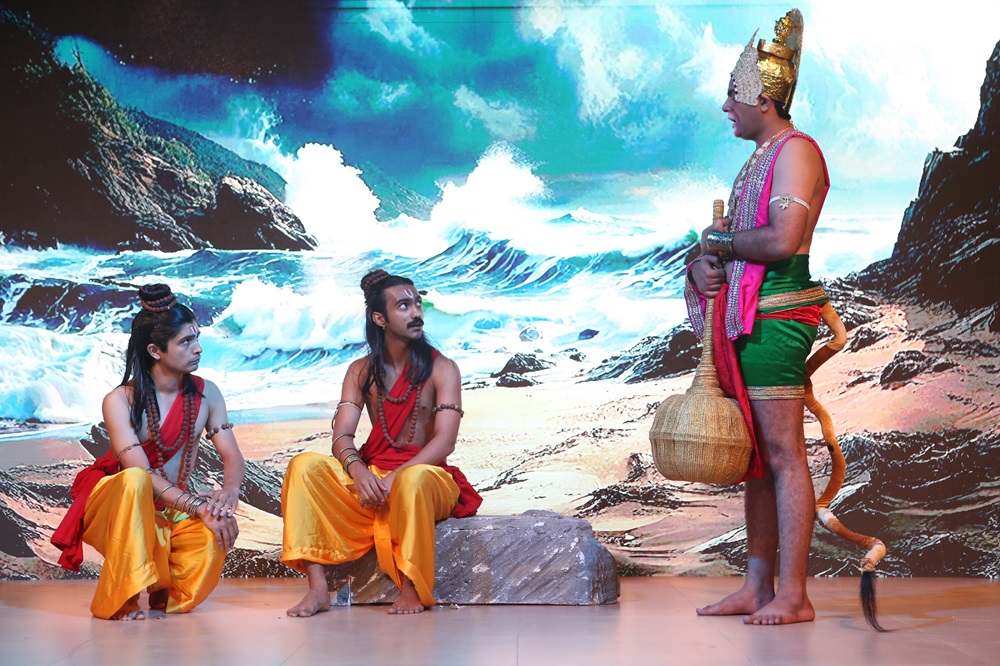
Waqas Akhtar as Laxman, Ashmal Lalwani as Raam and Jibran Khan as Hanuman.
In conversation with the director, Yogeshwer Karera, it was revealed that the version staged wasn’t the production originally envisioned. “The original idea,” he explained, “was to present five or six key scenes from the Ramayana at different locations within T2F, each scene staged like a living picture. The audience would move around like they were in a gallery, experiencing each moment up close. But due to technical constraints, we weren’t able to pull that off. So, it evolved into a full-fledged stage production. We also adapted it slightly for Pakistani audiences, softened the language a bit.”
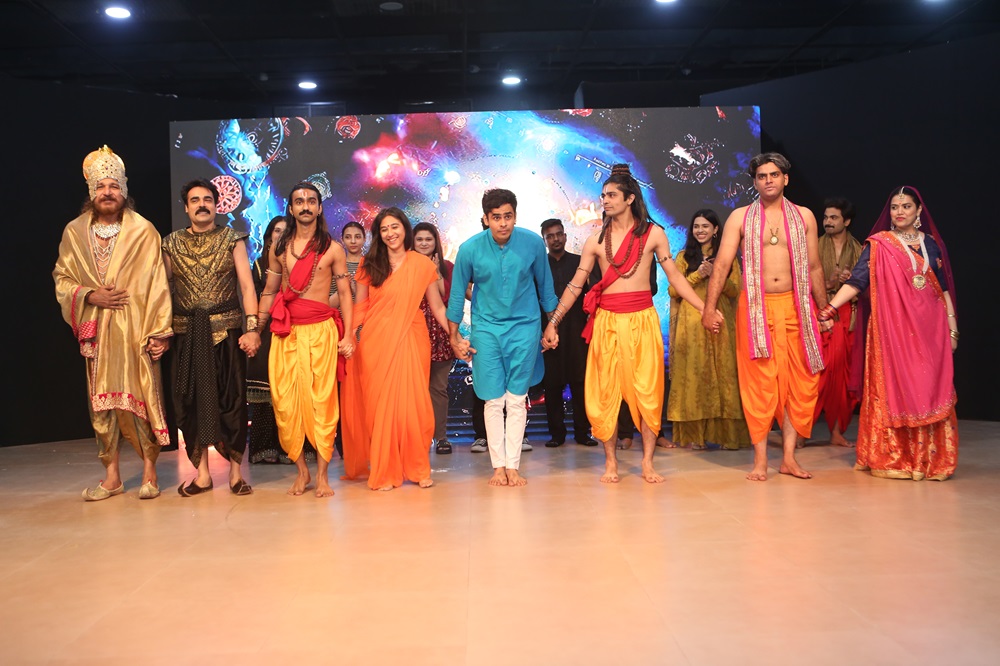
Entire cast and crew
Over 80 minutes, the play unfolded through nine or ten carefully crafted scenes. With theatre veteran, Patna-born, Khalid Ahmed in the audience, along with my mother, I braced for critique. But to my surprise, neither responded as I had feared. My mother, in fact, loved it so much that during the final applause, she rose to her feet and gave Sita a standing ovation. The audience’s response was a powerful reminder that while histories may diverge, the languages of performance, emotion and myth often transcend boundaries. In that moment, watching the naatak unfold wasn’t just about retelling a religious epic, it became a celebration of the cultural threads that continue to connect people across time and place.
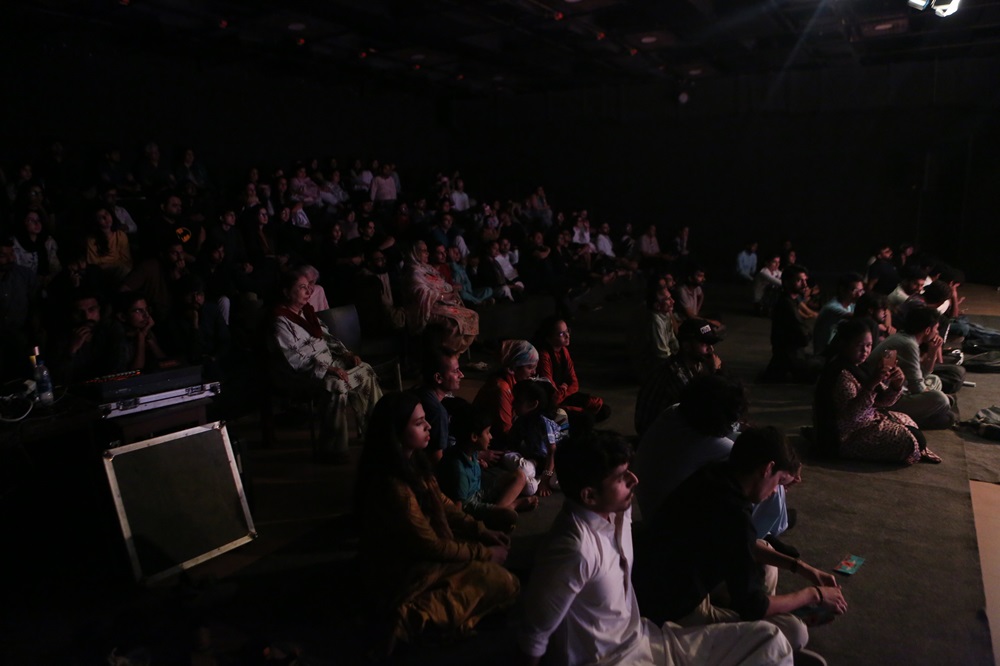
Audience watching the play
So the next time you see Mauj performing the Ramayana near you, think of it not just as a story from scripture, but as a vibrant, living tale: rich in meaning, artistry and connection.
You may also like:
From the Horn of Africa to Bahria Town: Habesha Café Brings Centuries of Coffee Culture to Rawalpindi
(October 15, 2026)