Written by: Muhammad Suhayb
Posted on: November 21, 2025 |  | 中文
| 中文

Abdul Hameed Adam
For most of us, Nusrat Fateh Ali Khan’s melancholic “Yeh Jo Halka Halka Suroor Hai” or the tender “Yeh Baatein Teri, Yeh Fasaane Tere” — sung first by Malika Pukhraj and later by her daughter Tahira Syed — are timeless melodies we can hum by heart. Yet, few remember the poet who penned these beautiful lines. He was also the author of the unforgettable couplet:
“Shāyad mujhe nikāl ke pachhtā rahe hoñ aap, Mahfil meñ is ḳhayāl se phir aa gayā huuñ main.”
That man was Abdul Hamid Adam — a poet of passion, wit, and pain, whose verses carried both elegance and irony. Though his name may be less often recalled today, his words continue to live on through songs that stir our hearts.

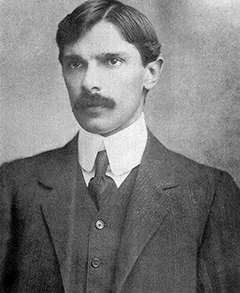
Abdul Hameed Adam's picture
With very little information available online, I stumbled upon the book “Huzoor Ye Hain Adam” and began reading it without checking the author’s name. As I delved deeper, I discovered it was written by Muhammad Akram Saeed, the same writer whose book on Akhtar Sheerani had been an absolute delight to read. My excitement grew, knowing I was about to enjoy another carefully researched and beautifully written work by a writer whose insights and style I had already admired.
The legendary romantic poet Akhtar Sheerani mentored Adam in his early days, Adam was influenced by Sheerani so deeply that he had once considered adopting Akhtar as his takhallus. Born in 1910 in Lyallpur, Adam had to abandon his studies in 1926 after the death of his father. Following this loss, he joined the Military Accounts Department in Rawalpindi as a clerk, marking the beginning of a challenging yet remarkable journey that ran alongside his poetic pursuits. Later, he passed the department’s highest exam in 1941 with distinction, which paved the way for his advancement. A lover of drink, Adam was a completely different person at work. A respected and disciplined officer, he might have indulged in late-night revelry, yet he was always punctual and never neglected his duties.

Adam's poetry (Picture taken from a Facebook Page titled Abdul Hameed Adam)
Having paused from writing poetry for several years, Adam reemerged after Sheerani’s death in 1948 and claimed the literary space left by his mentor as his own. Like Sheerani, Adam loved his drink, was born for poetry, and could be careless with family matters, yet he remained a steadfast friend to those close to him. Unlike Sheerani, however, Adam was diligent throughout his life, brought liveliness and charm to the mushairas, and enjoyed a longer, more enduring career and life.
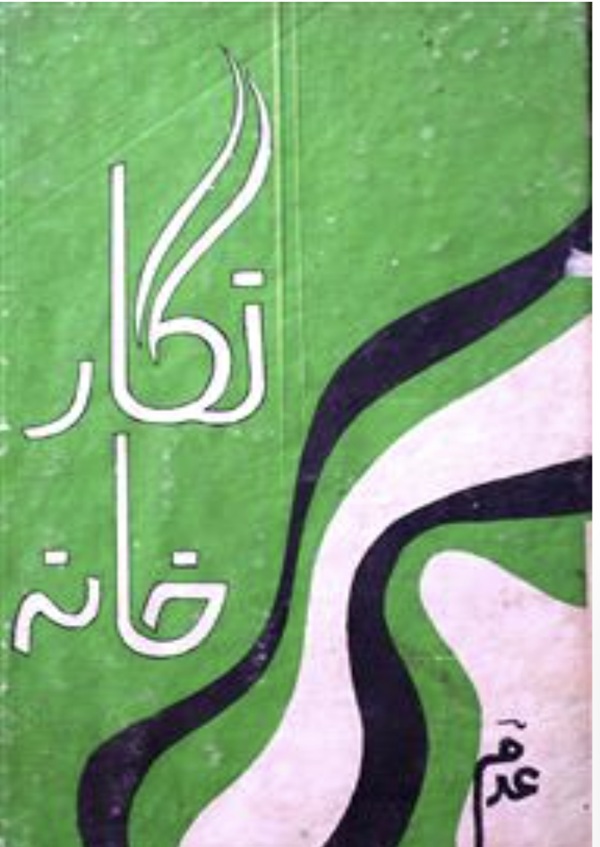
Nigar-e-Khana by Adam
As a fan of Adam, I had carried countless questions about him for years as he was a poet who illuminated the literary horizon from the 1930s to the 1960s. Could a voice so powerful, a presence so vibrant, suddenly vanish into oblivion? What force of time, fate or circumstance could silence such brilliance? The book provides all the answers. A rich compilation of sketches and memories shared by Adam’s friends, the 176-page volume offers a vivid glimpse into the poet’s life through the eyes of those who knew him best.
From the sharp-witted Syed Zameer Jafri, the perceptive and courageous Kishwar Naheed, to the erudite A. Hamid and the graceful Shad Amritsari, the sketches bring Adam’s personality and his era to life. The latter part of the book includes Adam’s last television interview, which remained unaired for understandable reasons. For a poet who questioned the existence of God, described sharab as “rain from heaven,” and centered much of his verse around the saqi, it is no surprise that his work faced censorship under the Zia regime.
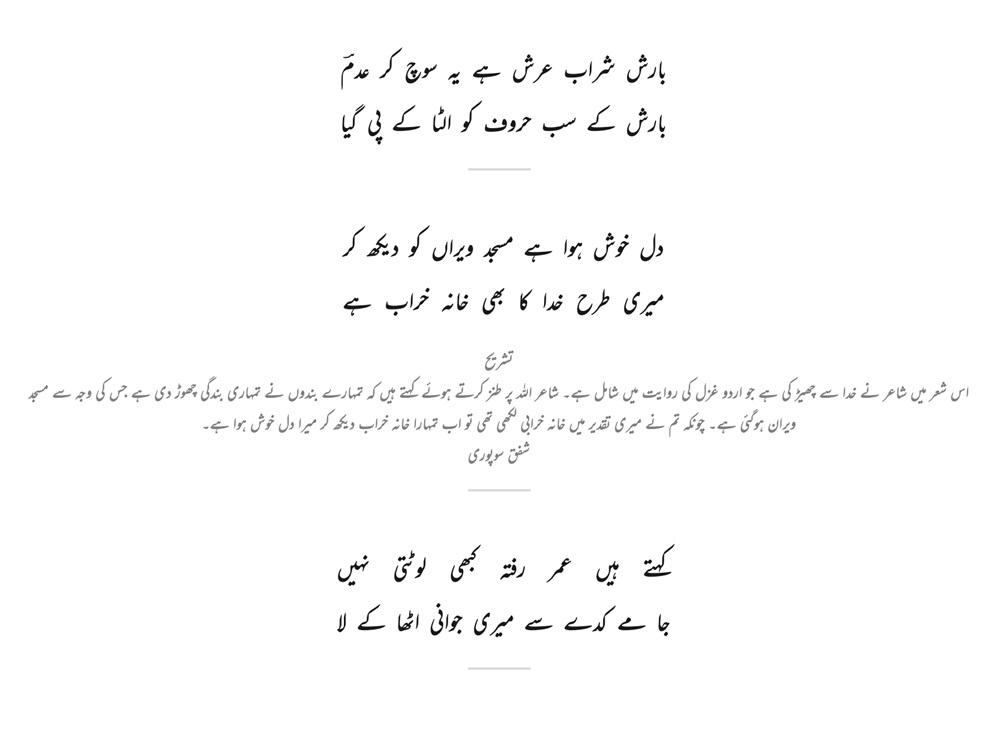
Abdul Hameed Adam's poetry
Beyond personal anecdotes, the book traces his early promise, literary triumphs, struggles with fame, and personal challenges, creating a multi-dimensional portrait of Adam — not just as a poet, but as a complex, charismatic, and deeply human figure. Many contributors were Adam’s close companions — people who had seen him not as a myth, but as a man of flesh and spirit. They drank with him, laughed with him, argued with him — his “hum-nawala aur hum-piyala” (companions in both bread and wine), reflecting the kind of friendships Adam himself preferred.
The book also does not shy away from Adam’s private life. His first wife is portrayed as a pious and homely woman who endured hardships with quiet strength, while the stories about his second wife, whom he married in Iraq, suggest a more strained relationship, often showing her as harsh toward him. One chilling episode describes her pushing him down the stairs, causing injuries severe enough to require hospitalization.
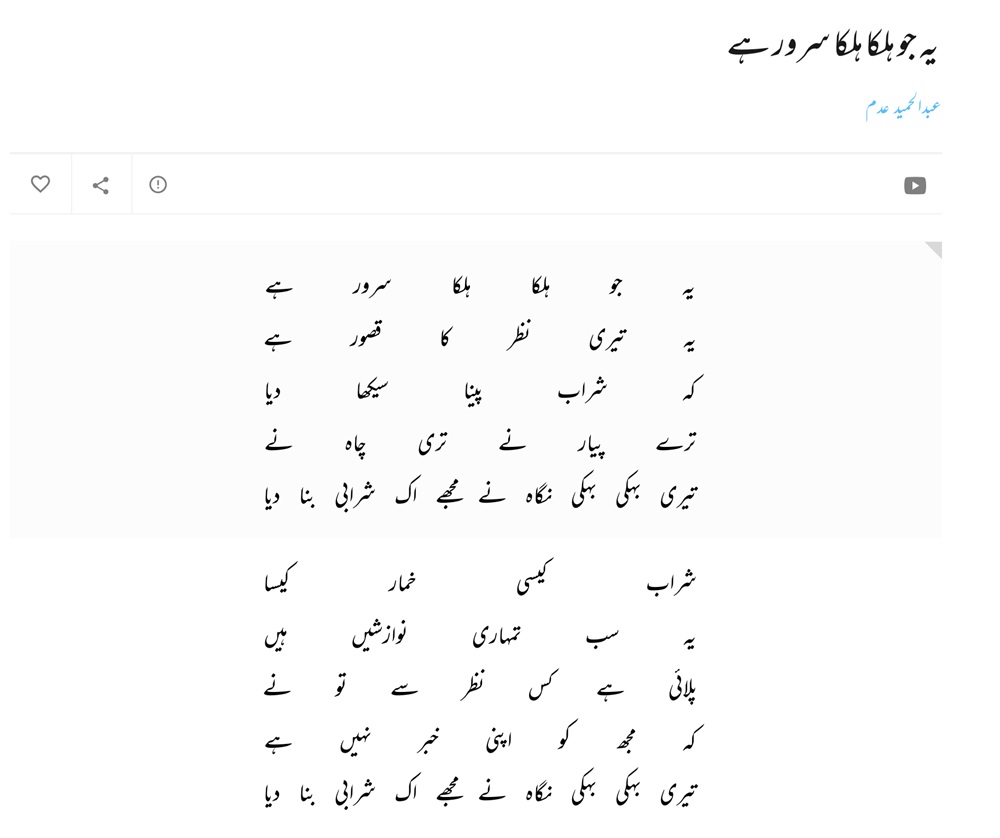
Yeh Jo Halka Halka Suror ha by Adam
Perhaps the most beautiful aspect of Huzoor Ye Hain Adam is how it connects with the reader’s own experience of Adam’s poetry. Within its pages, you do not just encounter a poet. You meet a man of contradictions and passions, of laughter and loneliness, whose words still echo softly through time. For those familiar with his verse, its melancholic rhythms and ironic tenderness, the book feels like a reunion with an old friend. For newcomers, it may read more like a historical record, yet its cultural and literary value remains undeniable.
You may also like:

From the Horn of Africa to Bahria Town: Habesha Café Brings Centuries of Coffee Culture to Rawalpindi
(October 15, 2026)