Written by: Saram Maqbool
Posted on: February 27, 2026 |  | 中文
| 中文
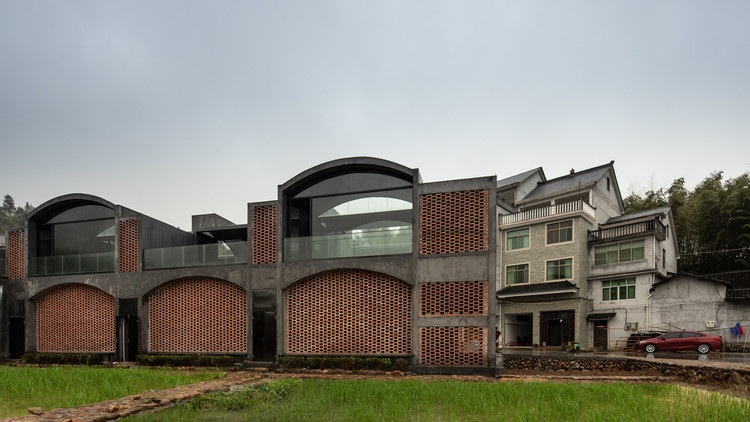
Rice Wine Factory
Architecture is often judged at the moment of its completion, frozen in photographs taken before weather, occupation, and time begin their work. Buildings, unlike images, aren’t static objects. They are temporal, almost alive, in how they are born and how they age. These structures are altered, repaired, or even neglected, so they cannot be judged without taking time into account. To design architecture that ages gracefully is to accept that time isn’t an external force to be resisted, but an entity that is integral to design.
Historically, the buildings most admired today were rarely conceived as timeless in the abstract sense. Medieval cathedrals, Roman forums, and traditional courtyard houses were designed within specific cultural and technological limits. Their longevity comes not from stylistic perfection, but from adaptability, material honesty, and a deep alignment with climate and use. The way stone weathers and wood darkens does not diminish this ancient architecture. Instead, it enriches these buildings. Time, in this sense, becomes a collaborator by adding layers of meaning that could never be designed.
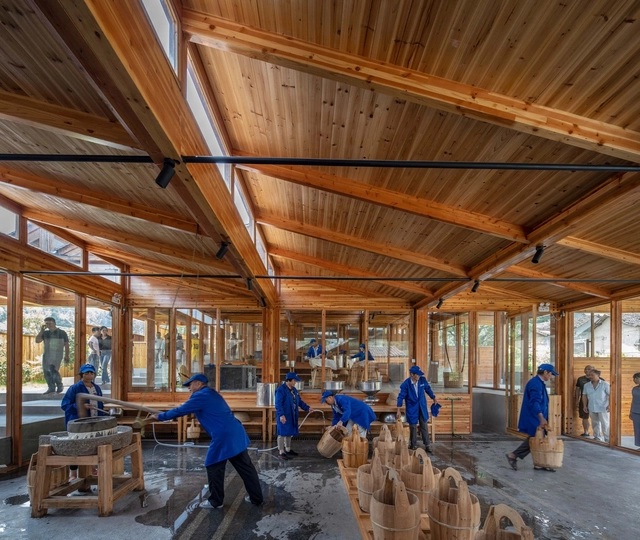
Tofu Factory by DnA_Design and Architecture
Modern architecture, particularly in the mid-twentieth century, struggled with this relationship. The pursuit of purity, smoothness and permanence often produced buildings that aged poorly. White concrete stained, steel corroded and curtain walls failed. Many modernist icons required extensive restoration within decades of completion, revealing a fundamental discomfort with aging. The idea of a building changing visibly over time was often treated as failure rather than evolution. At the center of this issue sits the choice of material. Some materials record time generously and embrace the change fully. Brick absorbs light differently as it weathers, while timber gains a specific depth through wear. Copper develops a natural patina over time, becoming more beautiful while its character is enhanced.
Peter Zumthor’s work consistently demonstrates an understanding of material aging as a design strategy rather than an afterthought. At the Therme Vals, local quartzite is laid in horizontal layers that echo geological time. The stone does not aim to remain pristine, but rather invites moisture, touch and erosion. The building feels ancient not because it imitates the past, but because it anticipates the future. Japanese architecture offers another instructive perspective. The concept of wabi-sabi embraces impermanence, irregularity, and incompleteness. Traditional wooden buildings are designed to be repaired, dismantled, and rebuilt. In this sense, architecture is not a static artifact but a process extended across generations. Contemporary architects like Kengo Kuma translate this ethos into modern contexts, using materials such as wood, bamboo, and stone in ways that allow buildings to soften rather than harden with time.
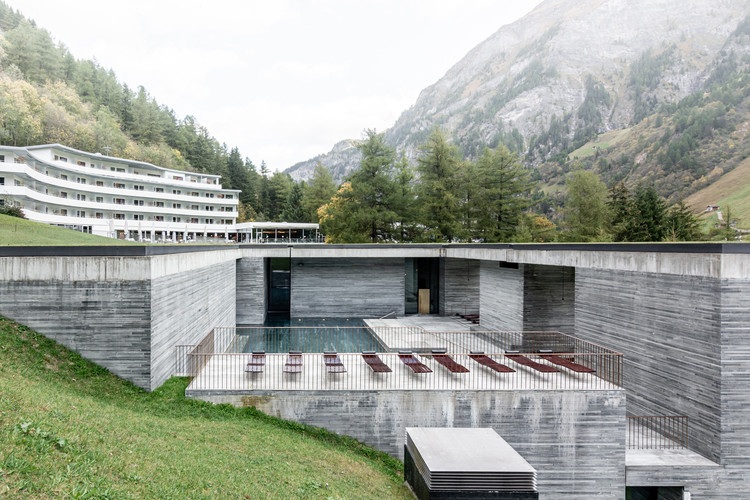
Therme Vals by Peter Zumthor
Adaptive reuse further reframes the architecture of time by treating aging structures as assets rather than obstacles. Projects such as the Tate Modern in London demonstrate how old industrial buildings can gain new life without erasing their past. Herzog & de Meuron did not attempt to disguise the power station’s heavy brick shell. Instead, they worked with it, allowing the memory of industry to coexist with contemporary cultural use. The building’s success lies in its layered identity, where time is visible rather than edited out. This layering is equally present in Carlo Scarpa’s interventions, particularly at Castelvecchio in Verona. Scarpa’s work does not restore history to a single moment, but stages a dialogue between eras. Concrete meets medieval stone, steel details hover lightly against ancient walls. Time is not linear here, but spatial. The architecture acknowledges decay, repair, and transformation as part of the building’s narrative.
In rapidly urbanizing contexts, the question of aging becomes more urgent. Cities built at speed often prioritize immediate visual impact over long-term resilience. Glass towers, optimized for short-term performance, can become obsolete within a generation as systems fail or energy standards change. Designing spaces that age gracefully requires resisting this acceleration. It means considering how buildings will be inhabited decades from now, how they might be repurposed, and whether their forms allow for modification without erasure.
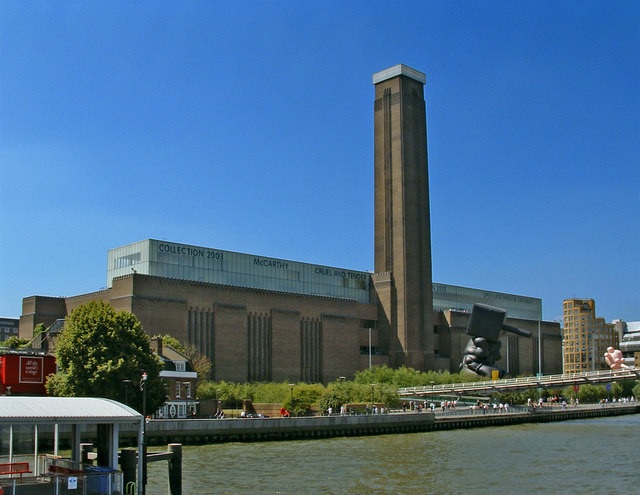
The Tate Modern by Herzog & de Meuron
Xu Tiantian’s work in rural China offers a compelling alternative. Her projects often involve minimal interventions in existing structures, using modest materials and precise spatial adjustments. These buildings are not designed to stand apart from their environments, but to merge with local rhythms of use and repair. By prioritizing continuity over novelty, the architecture remains open-ended, capable of absorbing future changes without losing coherence.
Landscape also plays a crucial role in architectural aging. Buildings that acknowledge seasonal change, vegetation growth, and weather patterns tend to age more gracefully than those that attempt to dominate their surroundings. Luis Barragán’s work exemplifies this sensitivity. His walls, courtyards and water elements are designed to interact with light, shadow, and plant life. As trees grow and surfaces fade, the architecture gains depth rather than losing clarity. The passage of time enhances atmosphere, reinforcing the emotional dimension of space.
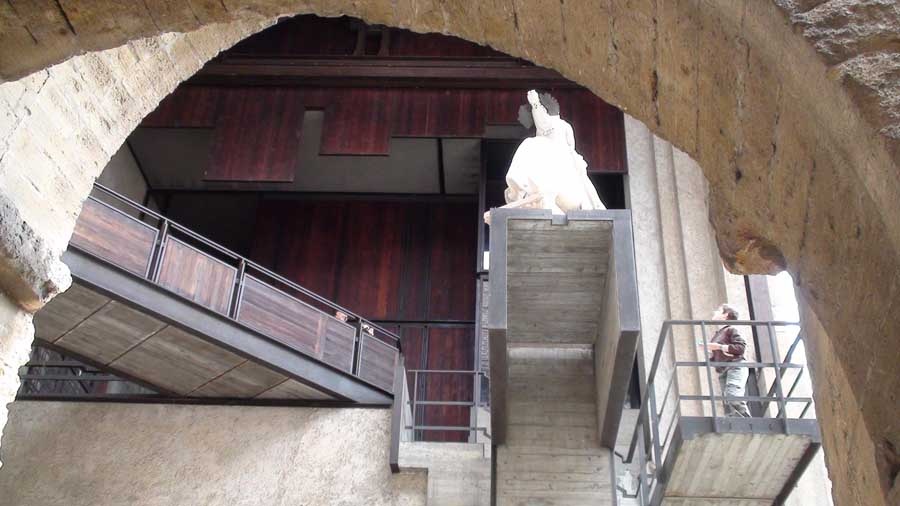
The Modern Interventions Inside Castelvecchio Museum by Carlo Scarpa
Ultimately, the architecture of time asks architects to let go of a degree of control. It requires trust in materials, users, and the slow intelligence of weather and wear. Buildings that age gracefully do not attempt to remain forever young. They accept wrinkles, scars, and adaptations as evidence of life. Their beauty lies not in resisting time, but in revealing it. When architects start treating their own buildings as living structures, they can better visualize how their designs will age. Designing spaces that age gracefully is an act of humility and an acknowledgment that architecture, like life, gains more meaning because of time.
You may also like: