Written by: Nadeem Alam
Posted on: October 31, 2025 |  | 中文
| 中文
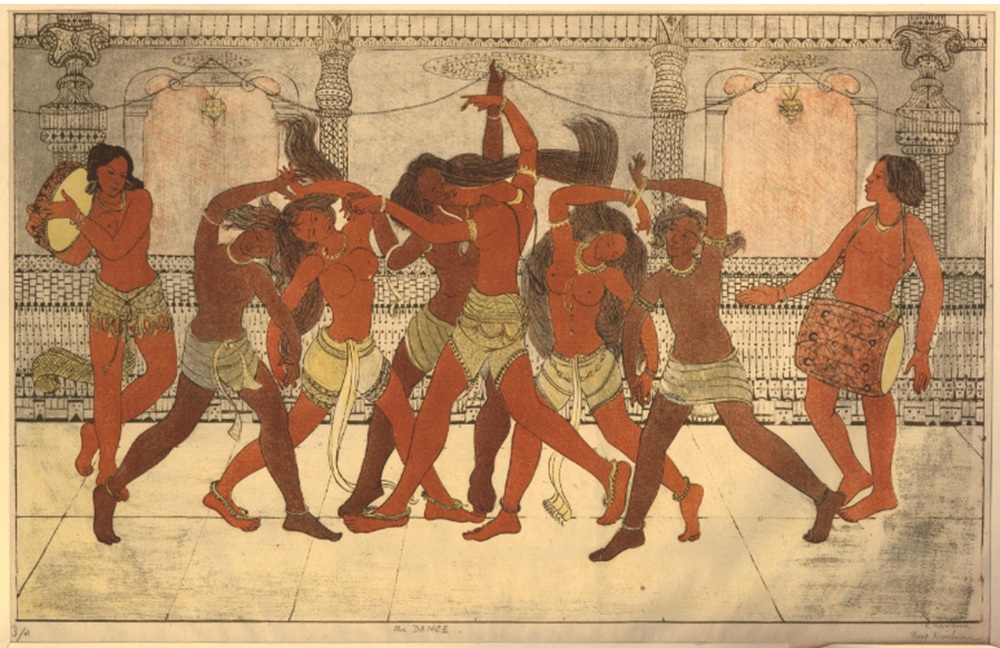
The Dance by Roop Krishna (Picture credits to the British Museum)
The year 1940 holds significant value in the art and academic history of Pakistan, particularly in Lahore. It marks the establishment of the Department of Fine Arts at the University of the Punjab, a milestone in formal art education. This new department emerged as a major art institution of its time, comparable only to the Mayo School of Arts, which was then devoted to industrial arts before eventually evolving into the National College of Arts in 1958.
Three distinguished names, all well-versed women, were considered for leading this project under the shadows of political unrest and chaos. Mary Roop Krishna, Razia Sirajuddin and Anna Molka Ahmed were initially considered for this challenging and pivotal role. Ultimately, the position was awarded to the resilient Anna Molka Ahmed; however, the other two candidates were no less accomplished or esteemed.
“When the Fine Arts Department was finally established in 1940, Anna Molka Ahmed, a young British citizen, was selected as the most suitable candidate to head the Department, after other potential candidates, such as Razzia Sirajuddin and Mary Roop Krishen, had declined the University’s offer.” (Masud 02)
Mary Oldfield and Anna Molka, both British artists trained in London, came to India and Lahore after marrying their Indian contemporaries studying in London, Roop Krishna and Sheikh Ahmed, respectively. In contrast, Razia Sirajuddin was an indigenous artist and writer with intellectual promise, who studied at the Sacred Heart School, Queen Mary College, and later at the Royal College of Arts and Oxford University.
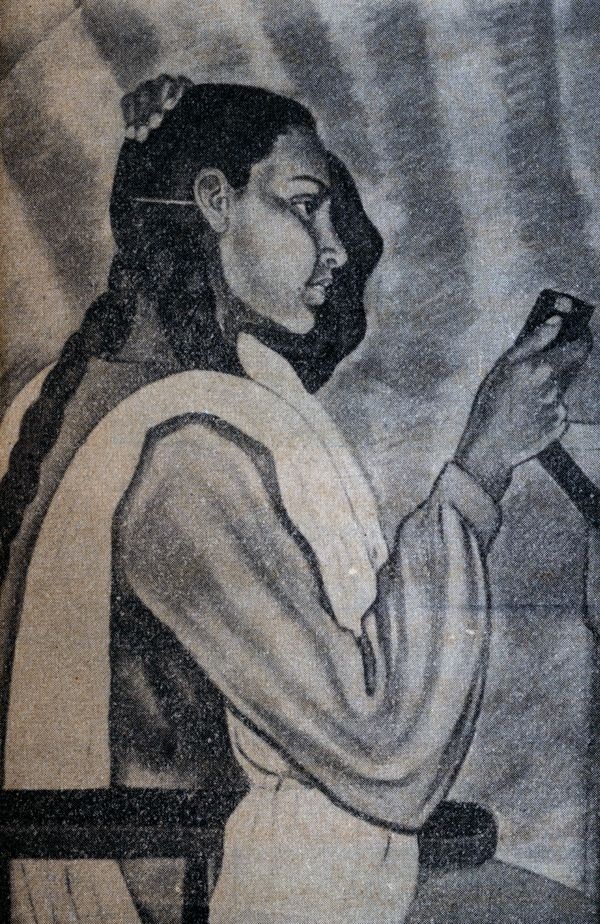
Sanghar by Razia Sirajuddin
Much has been written and talked about Anna Molka Ahmed, as the pioneering female artist in the academic history of art in Pakistan. Whereas very little is known or celebrated about the other two women artists, who were equally eligible for this dutiful role of the art academician at the heart of Punjab, Lahore.
Mary Oldfield (1909-1968), knotted ties with Roop Krishna (1901-1968) when they both were studying art at the Royal College of Arts, London, during 1920s. It was not just a matrimony of two individuals, but an assimilation of two different societal norms, visual cultures, and aesthetic canons, as the couple moved to India and studied under the expertise of renowned Bengali artist Abanindranath Tagore.
Mary Roop Krishna is considered one of the instrumental artists of the 20th century in British India. She, along with her husband, was part of the 20th century artists who experimented by assimilating western techniques with the indigenized and traditional South Asian visual culture.
Coming from a western background, Mary Roop Krishna engaged herself in the richness of South Asian visual culture. She practiced her art by depicting mythological deities, animals, and postures of local dancers, creating swirling and dynamic forms carrying motion and flow. These frames precisely reflect artist’s deep fascination with and sensitivity towards the theatrical dimensions of South Asian art, culture, and mythology. However, her later art practice revolves around the modern and semi-abstract forms with simplicity in rendering and tonalities.
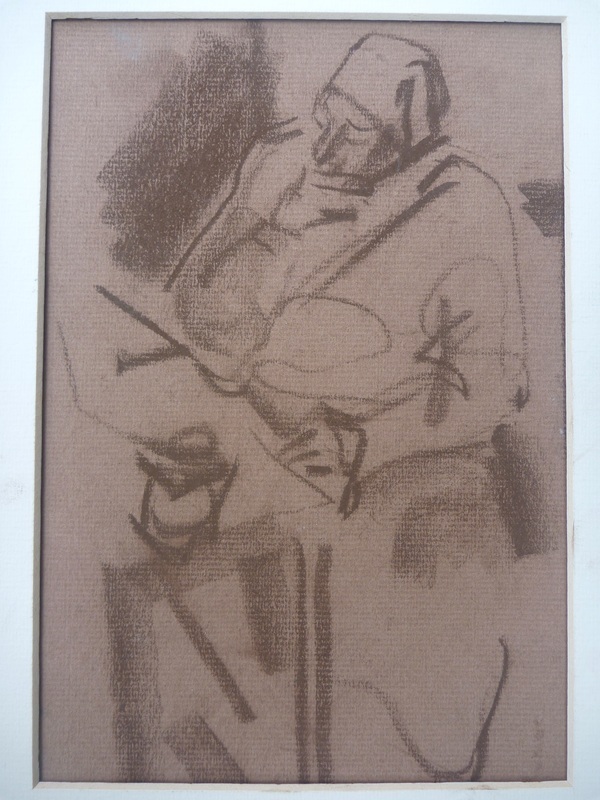
Working at Table by Mary Roop Krishna, 1955
Therefore, her art contributed to the already acceptable British colonial practice of representing South Asian subject matter through the western artistic framework; simultaneously advocating a sense of indigeneity and an underlying feeling of displacement.
Between the dynamic period, under the postwar circumstances, of WW-I and WW-II, or precisely from 1920 to 1940, Mary Krishna was in Lahore and actively participated and practiced during the 1930s. Her nomination for the headship of the Fine Arts Department at the University of the Punjab, Lahore, is evidence of how effective and influential she was at a time when prominent artists like A. R. Chughtai and Amrita Sher-Gil were also active practitioners of their own distinctive styles and genres.
However, just before the partition in 1947, she moved back to London in 1946; and exhibited her work regularly at the Royal Academy in London between 1955 and 1967. Integrated with the British art scene, her work remained deeply influenced by the visual and cultural impressions that she had absorbed during her time in British India, particularly in Lahore.
Mary Roop Krishna’s art addresses an intentional balance between abstraction and figuration. Her series of dancers and casual drawings of human figures present a swift tonal gradation; the sense of chiaroscuro, and the sculpturesque qualities of rhythm and motion. Her focus seems to be on the essence of postures, rather than minute details or realistic rendering. However, her modernist approach and South Asian sensibility resonate as the comparison for spiritual and cultural metaphors.
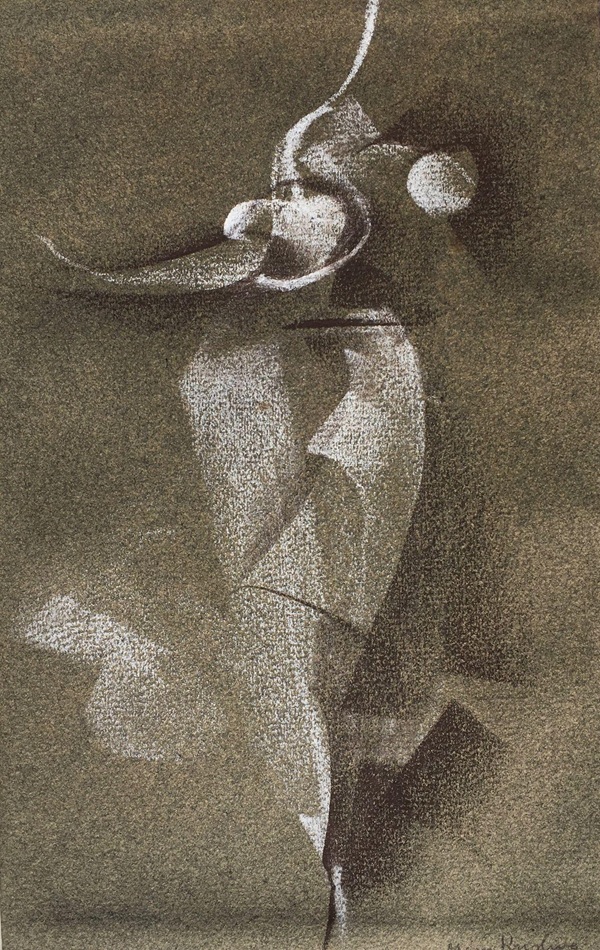
Dancer-IV by Mary Roop Krishna, c. 1960
Razia Sirajuddin embodies the image of a learned, creative, and modern woman of the 20th century Lahore, endowed with the rare qualities of a writer, poet, and painter. The iconic Razia Sirajuddin emerged as a symbol of fashion and freedom at a time when most Muslim women in the subcontinent remained marginalized and largely deprived of education.
She was admired by many of her contemporaries, and a few referred to her as the Emily Brontë of her time considering the art scene in Lahore. She was admired by many of her contemporaries, and some even referred to her as the Emily Brontë of her time, for her introspective depth and distinctive presence in Lahore’s art scene.
However, unlike her contemporaries such as Anna Molka Ahmed, celebrated for her academic leadership, and Amrita Sher-Gil, remembered for her consecutive solo shows in 1938 and 1940, and her tragic death in Lahore; Razia Sirajuddin’s name has faded from public memory.
Razia Sirajuddin was educated at the prestigious Sacred Heart School and Queen Mary College Lahore. From 1949 to 1955, her passion for art took her abroad to the Royal Academy of Arts in London, where she studied under Sir William Rothenstein (1872–1945), a renowned English painter and art educationist best known for portraits of writers, artists, and intellectuals, such as Oscar Wilde, George Bernard Shaw, Rabindranath Tagore, T. S. Eliot, and Paul Nash.
She also showcased an exhibition of paintings at Oxford, which was well received by the British print-media and art critics. “Razia Sirajuddin was at Oxford. The organizers requested her for a show and the same was held at Oxford. A lot of English critics covered her show. BBC carried reports about it. One of her paintings namely BLACK BURQA was heavily commented and appreciated by Western critics.”
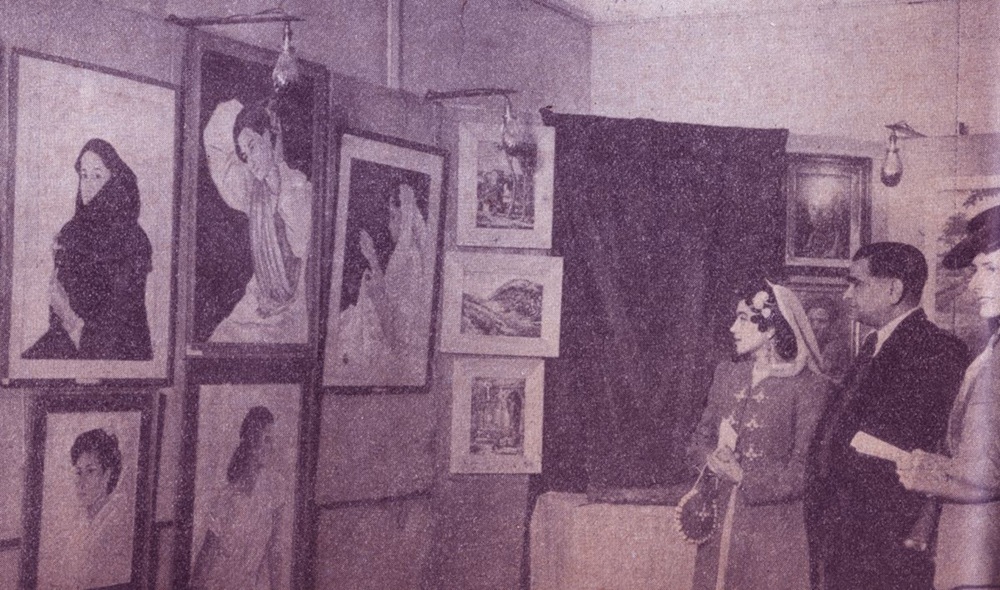
Razia Sirajuddin Show at Oxford
Presently, the only existing record about Razia Sirajuddin lies in the archives of the Chughtai Museum (Online), or a few lines in the book College of Art and Design, A Journey of Resilience and Success, published by the Fine Arts Department of the University of the Punjab, Lahore. The record suggests that she was a preferred candidate for the chair of the Fine Arts Department, which she gracefully refused.
As a woman of great intellect and skills, Razia Sirajuddin reflected literary and artistic brilliance. She worked as a radio presenter, wrote dramas, and delivered talks on cultural and philosophical subjects. Her personality, sophisticated with an elegant taste for dressing, especially sarees carrying the colours and fragrance of fresh flowers could infuse an aura with an air of lyrical beauty and quiet enchantment.
In 1939, at the suggestion of Pitras Bokhari, Razia Sirajuddin authored the introduction and notes for a compilation “Chughtai’s Paintings”, with a foreword by Dr. James Cousin. Her scholarly commentary added critical depth, ensuring her lasting recognition within indigenous art circles.
In the intellectual company of her husband, Professor Sirajuddin of Government College, Lahore, Razia’s innate aesthetic sensibility and cultivated taste were refined even further, deepening her artistic and intellectual poise.
Such attributes won her the admiration and acknowledgment of the renowned critics and artists of her time.
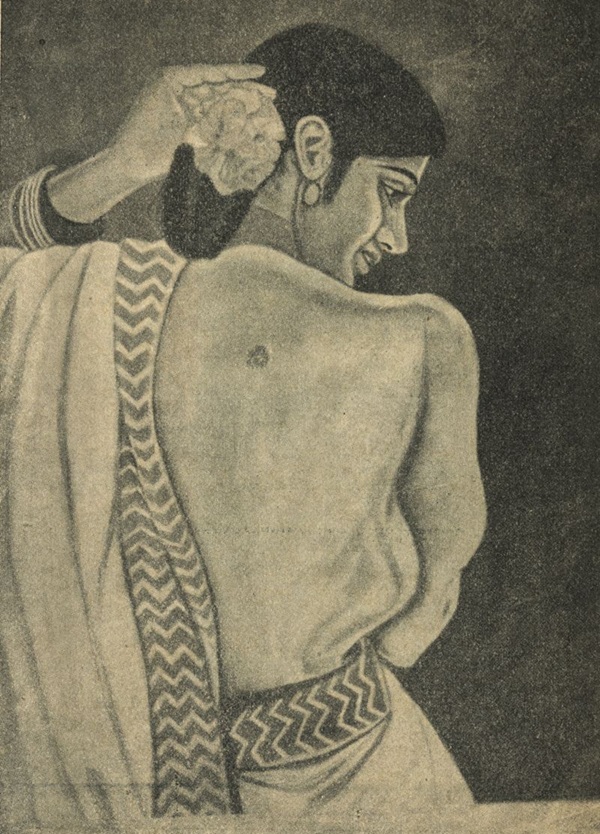
Araish by Razia Sirajuddin (c. 1955)
Azra Zaman, an art critic remarked that Razia’s canvases were “seared with heartfelt emotion.” On the other hand, the legendary A. R. Chughtai saw in Razia the brilliance of a notable artist worthy of mention alongside Ustad Allah Bakhsh in the Lahore art circle.
Razia’s flamboyance gradually faded after her passing in 1969. According to an account shared on a Facebook blog, she died in a road accident near Murree. Public recollections also suggest that Razia’s marriage to Professor Sirajuddin became strained after he remarried Urmila Sondhi, one of his students.
However, whenever research is conducted on the evolution of art in Lahore, Razia Sirajuddin emerges as an artist, intellectual and arbiter of elegance and style, whose legacy endures with timeless grace.
o “A Well Commented Show of Lahori Girl at Oxford – Razia Sirajuddin Steals the Limelight of Criticism.” Chughtai’s Art Blog, 3 Oct. 2015.
o Husain, Marjorie, Nadeem Alam, Rahat Naveed Masud, and Barbara Schmitz. A Journey of Resilience and Success: 1940-2013 — College of Art and Design, University of the Punjab, Lahore. College of Art and Design, University of the Punjab, Lahore, 2013.
o Zaman, Azra. “Razia Sirajuddin crowds her canvas with passion.” Chughtai’s Art Blog, 2014,
You may also like:
From the Horn of Africa to Bahria Town: Habesha Café Brings Centuries of Coffee Culture to Rawalpindi
(October 15, 2026)