Written by: Mubashir Hassan
Posted on: March 10, 2026 |  | 中文
| 中文
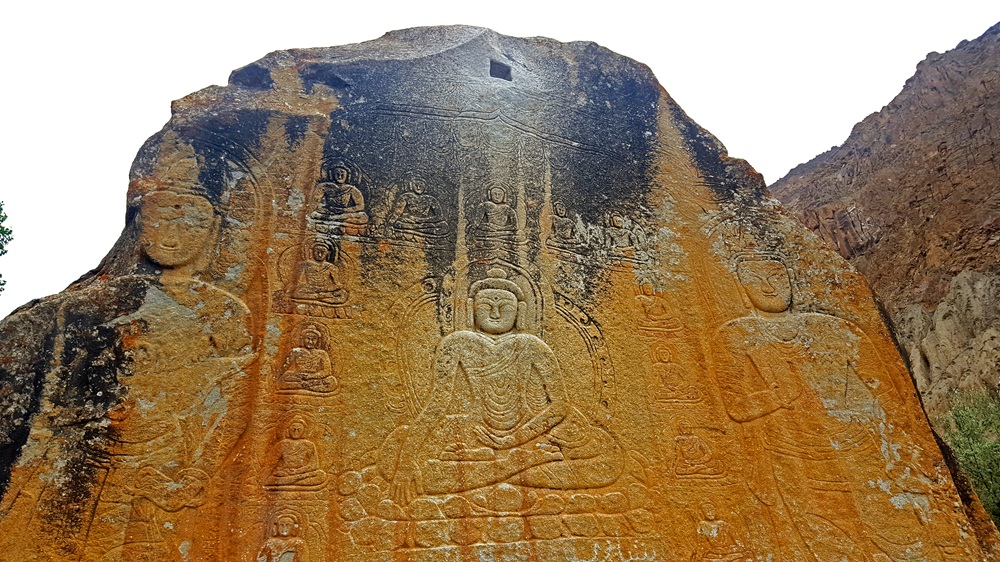
Manthal Buddha Rock, Skardu
Skardu, the second-largest city in Gilgit Baltistan and the tourism hub of Pakistan, encompasses natural serenity, historical artifacts, and spiritual beliefs within a single landscape. It lies at the brink of the mighty Indus River, which emerges from the Tibetan Plateau of China and carves its way across the length of Pakistan until it meets the Arabian Sea. With its snow-clad peaks and mountainous terrain, Skardu has long stood as a gateway between China, Central Asia, and the subcontinent, fostering connections between various civilizations just like the mighty Indus itself.
One of the famous artifacts among Skardu’s iconic sites is the Manthal Buddha Rock, lying in the scenic village of Manthal, only fifteen to twenty minutes away from the city. It stands as a silent testament to an ancient society where faith, art and the human spirit merge into a single entity. It is not merely a scratched rock with some pictures on it, but rather a deliberate, sacred sculpture which tells the story of the region's history and culture. With sophisticated skills, scriptures have been engraved onto the natural granite monolith on a prominent hillside easily visible from the city. Historians and scholars believe that this sacred scripture dates between the 8th and 10th centuries AD, which is regarded as the golden era of Buddhism in the region.
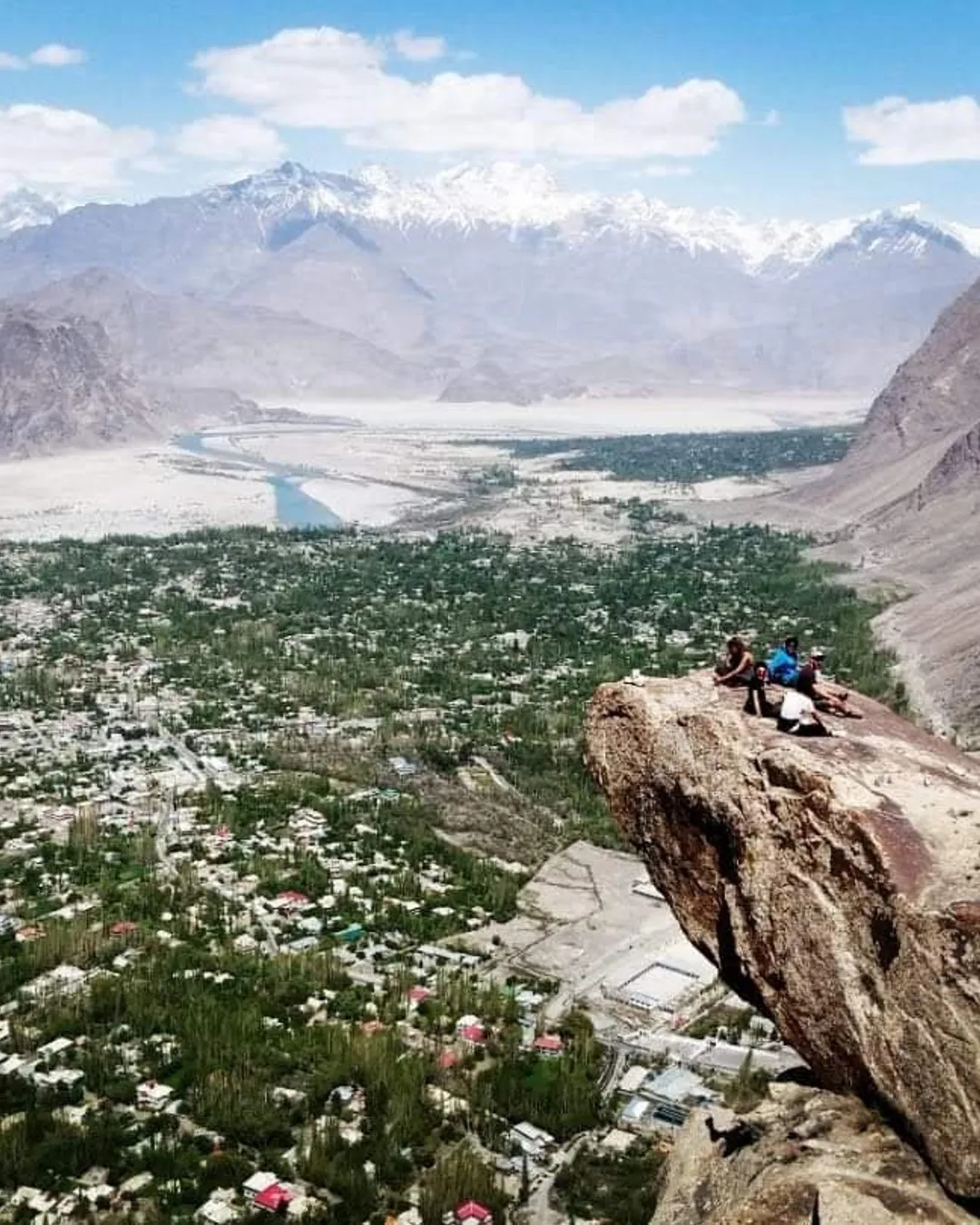
Skardu city from Manthal
The structure of the sculpture is somewhat interesting. In the center sits the stalwart meditating Buddha with all his might. More than a dozen smaller Bodhisattvas surround him, who posture everlasting calm, along with two standing Maitreyas (future Buddhas) at the corners. The latter two are also referred to as the ‘future Buddhas’, for they are believed to represent hope and spiritual continuity. This structural alignment of the sculpture is not merely random; rather, it is the manifestation of a ‘mandala’ – a Buddhist concept of a sacred assembly that demonstrates the cosmic harmony of all enlightened beings. Indigenous people of the locality call this rock and sculpture ‘Dray Chatfi Fong’, which means a rock carved by deities.
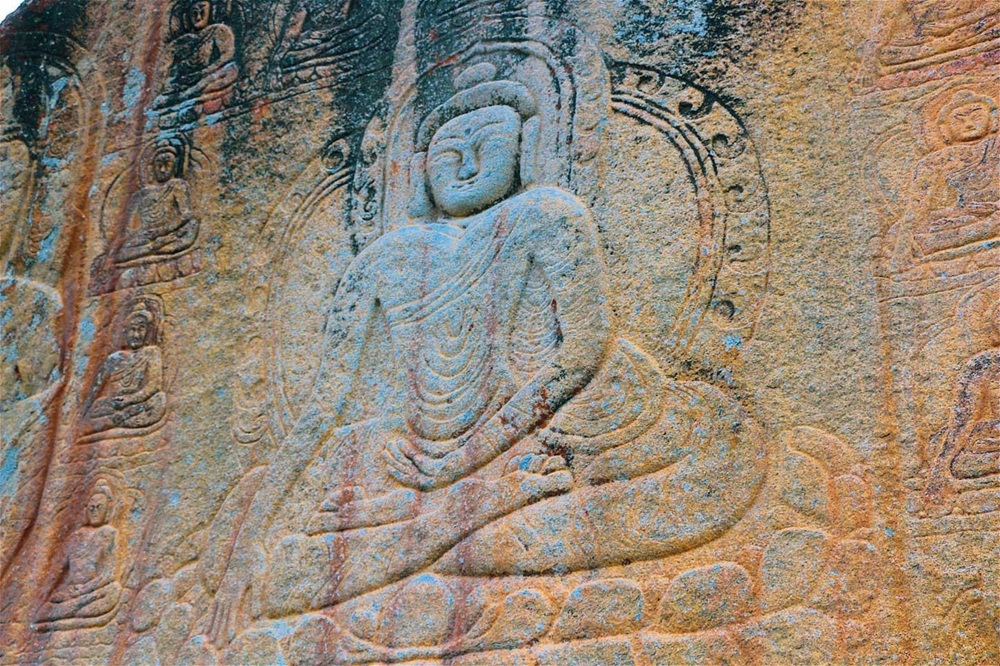
A closeup of the Manthal Buddha Rock
The city of Skardu, now famous for its high mountains, glacial lakes and dramatic landscapes, was once an integral part of the extensive network of Buddhist culture and pilgrimage. Between the 4th and 10th centuries AD, Buddhism flourished in the region under various dynasties of the Tibetan Empire that linked northern India, Tibet and Central Asia through expansionist expeditions and trade routes. Though the rule of the Tibetan empire could not formally last after the 10th century, Buddhism remained the primary faith of the people till the arrival of Islamic missionaries in the 14th century.
During the Buddhist period, the Manthal Buddha Rock was a devotional site and a spiritual marker for monks as well as for lay pilgrims. Its location on the mountain, as believed by that time, served not only as a place of prayer but also as a visual symbol reminding the connection of the earthbound world to higher truths. Nevertheless, this golden era of Buddhism could not last long, and the sanctity and glamour of rock fell into relative obscurity. However, in recent decades, it has substantially regained attention from Buddhist devotees as well as tourists around the city, as the city’s tourism has been booming.
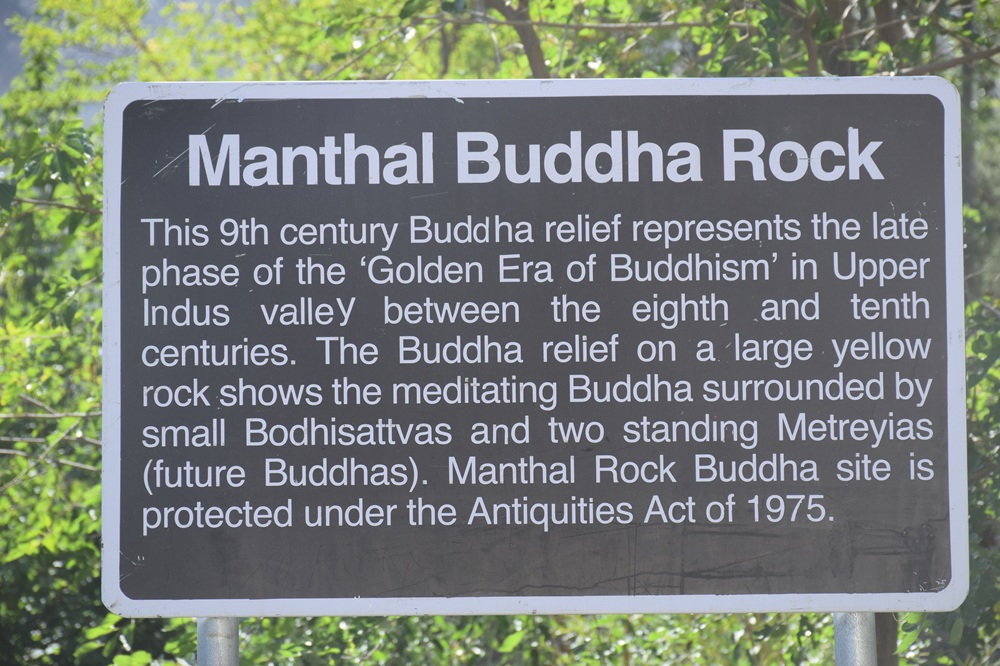
Description at the Manthal Buddha Rock site
With the extinction of Buddhism from the region, the importance of the Manthal Buddha Rock faded away. It lay there for centuries without any significant attention from the wider world, despite the locals knowing of its presence. British scholars like G.T. Vigne and photographers in the late 1800s documented the carvings and endeavored to connect them with broader studies of Central Asian Buddhist art. However, such documentation could barely bring global recognition to this historical masterpiece compared with other Buddhist centres in Asia.
For the first time, it came into the limelight when Western explorers of the 20th century came here. In 1906, Ella Christie, a Scottish traveller, featured the Manthal rock in her writings about her journey to Western Tibet. Her writings drew global attention to this once-hidden Buddhist masterpiece.
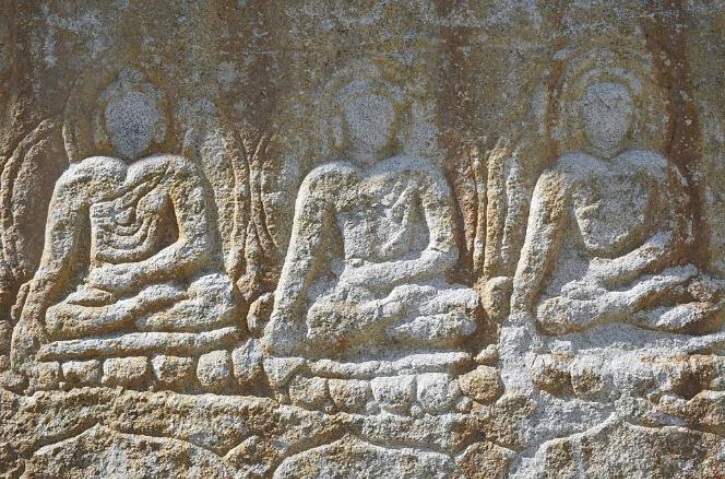
The smaller Buddhistavas
For the lovers of history, art, and spirituality, it is unimaginable to visit Skardu and skip seeing the marvellous Manthal Buddha Rock. Here, the visitors are not only captivated by the magnificent artistic views of the carvings but also by the panoramic views of the surrounding valleys, mountains and streams. The place where the rock lies is a sort of natural viewpoint, offering a panoramic view of the entire city. This scenic outlook evokes a sense of timelessness, where the beauty of nature and human history engage in a silent and eloquent dialogue. Besides, there exists a variant local folklore about the genesis and purpose of the rock. From spiritual reflection to historical curiosity to local traditions, this site deeply demonstrates a profound sense of wonder.
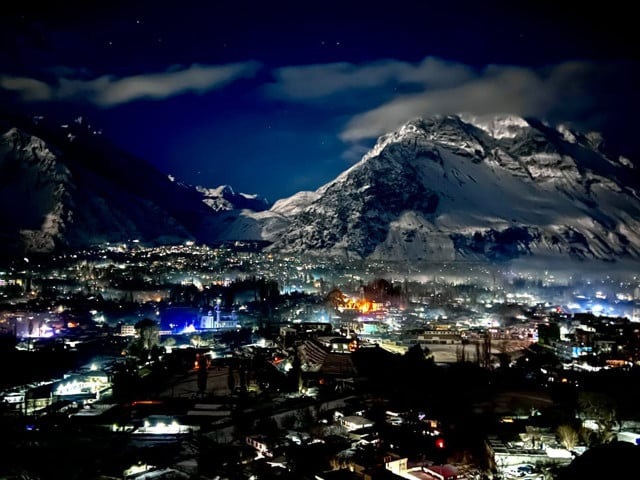
Skardu at Night (Picture credits to Express Tribune)
Like many heritage sites of the contemporary era, Manthal Buddha Rock is also grappling with substantial challenges despite its might and significance. Lack of any standard conservation mechanism, exposure to weathering, and limited global recognition as compared to other better- known Buddhist sites in Asia are the major challenges. Although the local government has made some efforts, recently, in boosting preservation and including the site in broader cultural tourism initiatives; they are still insignificant, and there remains much to be done to protect this silent giant of history.
It stands as a bridge making links across time, belief, spirituality, artistry and human aspiration. The serene figure carved in it echoes the ancient monks and wandering pilgrims, the compassion that transcends centuries cultural memory that refuses to fade. Visiting this sacred rock is thus not just a sighting of a historical artifact, but a pilgrimage through history itself, which pervades the sense of art, faith and human emotion.
You may also like: