Written by: Fiza Husnain
Posted on: September 02, 2025 |  | 中文
| 中文
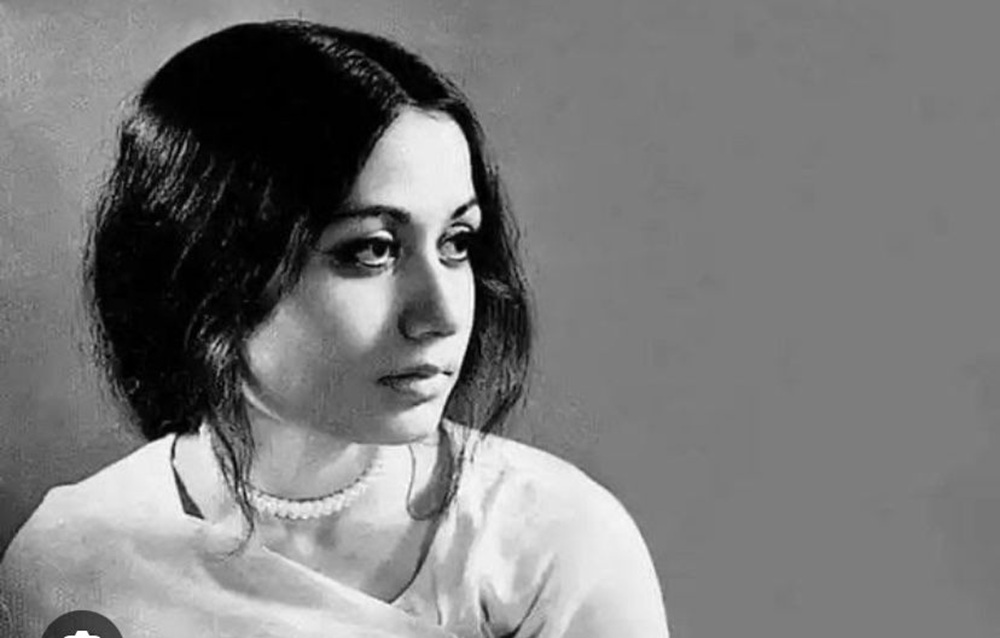
Parveen Shakir
Parveen Shakir’s poetry embodies the emotional turmoil and cultural duality of the South Asian woman. Her poetry reeks of anger that appears submissive on the surface, seemingly telling the story of a haunted woman, with pen bleeding from the betrayal wound. A South Asian trope, a woman who longs, waits and mourns all in silence. She internalizes heartbreak like a quintessential South Asian woman, a paradox becomes voice: beloved and fierce, obedient and insurgent, a self-aware woman keeping the performance but not complying all in all. Her poetry embodies not a neat solution but a living tension. She is the woman who writes like a lover, yet speaks like a revolutionary; she makes softness a camouflage for agency, and grief a lexicon for freedom. To enter her poems is to enter a chamber of contradictions; to leave them is to realize those contradictions were always our own.
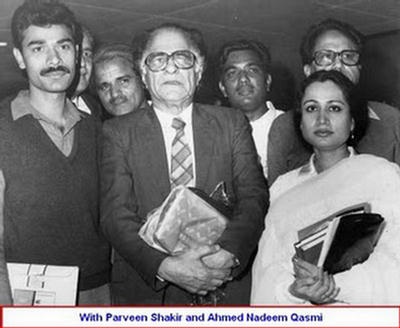
Parveen Shakir and Ahmed Nadeem Qasmi
Shakir often appears, at first glance, as the archetypal South Asian beloved: she waits, remembers, grieves; she tends a private altar to love and calls it life. She doesn’t reject the trope, no, she perfects it, owns it, and then reveals what it costs.
“Be-ssar-o Saman pe dildari ki Chadar Dal Di
Be-da-ro dewar thi main mujh ko ghar isny Kia”
(You draped a veil of love over my desolation;
I was but a bare wall, and you made me a home)
The feminine found home within herself. Soul was homeless. There was a poverty that comes with being unseen and unloved. He loved her, and with love comes self-assurance. She’s seen. She has found her home. A typical South Asian heroin, devoid of any agency. So, love becomes architecture. She writes a home into being where none exists. And when betrayal lurks in polite language, she lets irony sting:
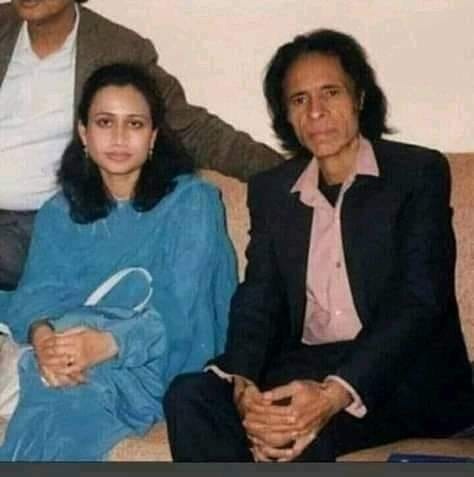
Jaun Elia and Parveen Shakir
“Kamal e Zabaat ko khud Bhi to azmao gi
Mian apny hath say uski Dulhan Sajao gi”.
(I too will one day test the extremes of passion;
With my own hands, I will adorn his bride.)
She’s ambitious. She challenges herself to go down a path where no woman would want to go. Not so much to test herself, more to challenge the traditional expectations form a woman who can’t bear another woman around her man. She’s offering to adorn his wife. Thereby mocking his commitment and registering her resilience. That’s not a quiet act of patience, it’s rebellion.
On the other side, we see a self-aware woman who knows what happened, who would not sugarcoat it. She would name the damage as it is. So, you see a poet who is posing as a traditional quintessential grieving woman. Now you must look at her as a historian and archivist of her own hurt. And that’s recurring in her poetry linguistically and semantically. The use of Aurat (women), “mujhe,” (Me) “main” (I)—she insists on a first-person feminine grammar, a form that long assumed the male lover as norm. She doesn’t reduce pain to fate; she interrogates it.
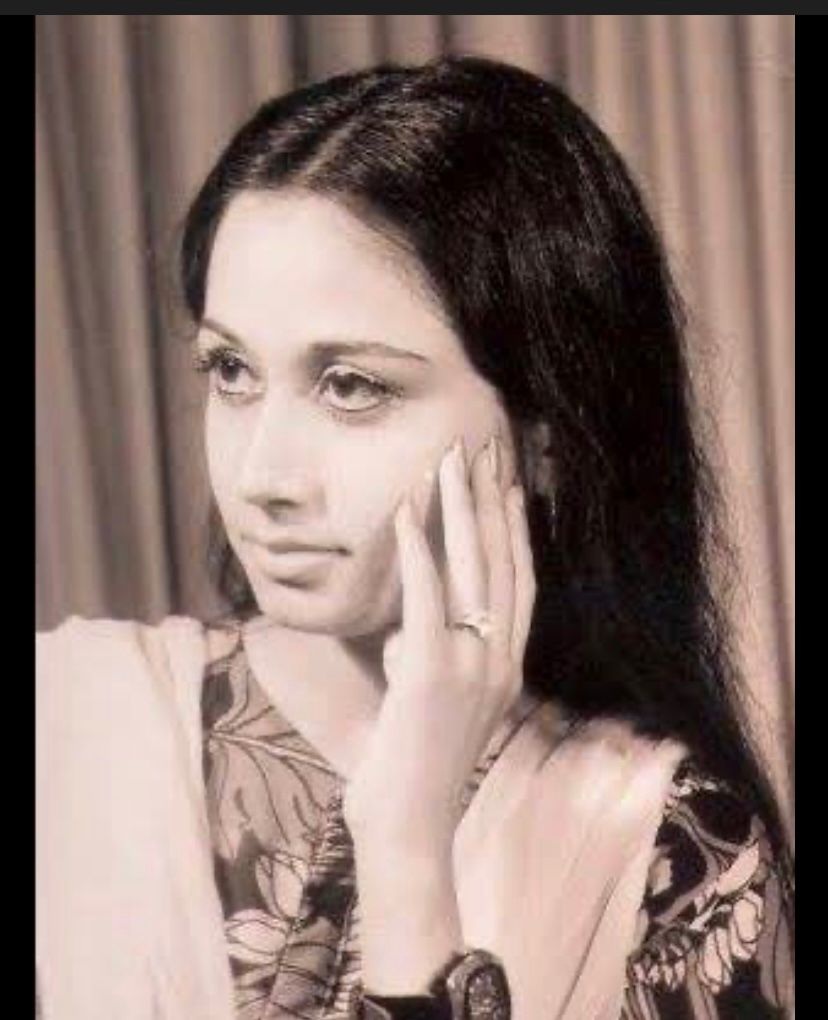
Parveen Shakir
“Main barag barg usko Namo Baskhti rhi
Wo Shakh Shakh Myri Jarain Kata Rha”
(I kept bowing to him leaf by leaf,
While he kept cutting my roots branch by branch.)
Few images capture gendered love so precisely: a woman invests in attention, care and continuity to nurture the man, only to come to the realisation that while she was tending him, he was stemming every part of her being. Trying to erase who she was. She kept pouring, and he kept poisoning. Creativity met destruction. Care met the cruelty. Ironically, she knows it. She is no longer naive enough not to notice it. She is naming it. The anger has documentation. She keeps precise books on ambivalence, too:
“Gaha.e. Qareeb Shah Rag, Gah.e. Baeed o Waham-o- Khab
Iski Rafaqato main Rat, Hijr Bhi tha wisal Bhi.”
(At times as near as the jugular vein,
At times as far as a doubt or a dream;
In its companionship, the night held
Both separation and union.)
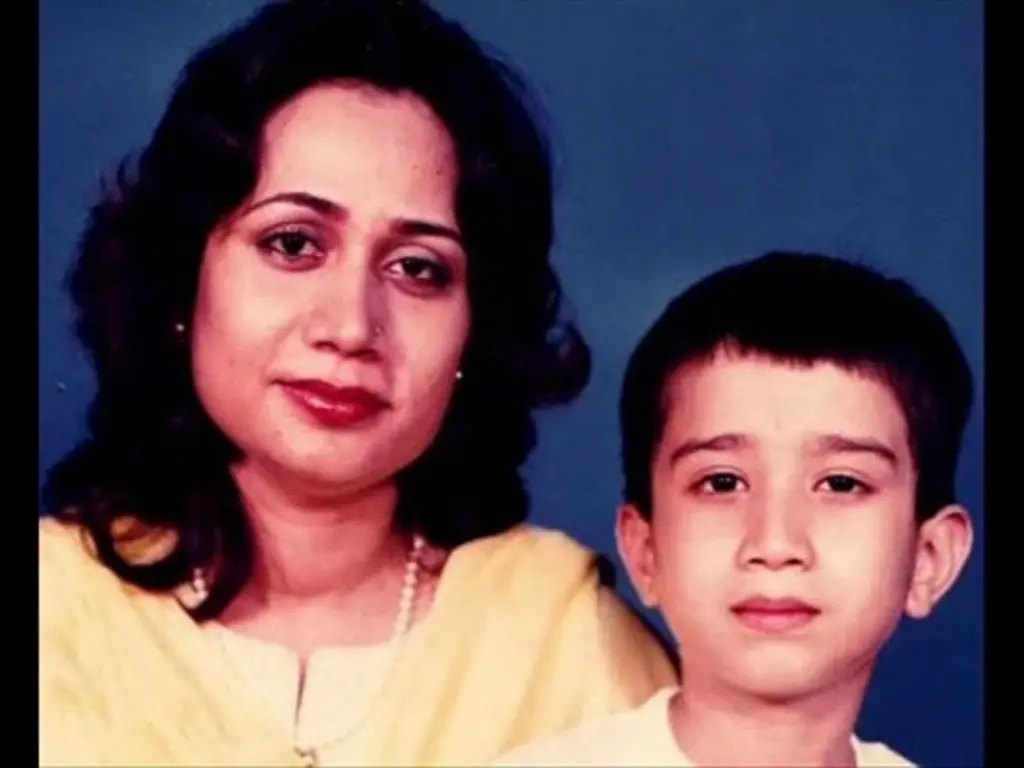
Parveen Shakir with her son
Ambivalence is not confusion; it’s fidelity to complexity. It’s cold indifference to the warmth of tender human emotions. Finally, she drags shame into daylight and re-angles the power: what’s love for her was play to him. His intermittent love and indifference snatch her peace. She never rests. Torn between his presence and absence, the feminine remains in constant fear of abandonment and rejection, and in the liminal space where she thinks she has him only to obsess over the next moment where she loses him.
She strips off the mask of a beloved.
“Ab Taq to Meray Shair Hawala rahy tera
Main ab Teri Russwai ka Charcha Bhi to daikho”.
(Until now, my verses have been devoted to you
Now let me see the world gossip about your disgrace.)
That's Parveen, bringing in her inner intellect, woman who knows how to love, also knows how to drag that love from its collar and speak about how love was used to manipulate her into submission and take her agency. If she can use her verses to glorify you, she can use the same pen dipping in the wounds to write the wrong that she went through. Not confession but disclosure. Not collapse but counterclaim, love turned rotten now tastes like over-ripened mangos in her mouth. love is not a sanctuary; it is a contested site where intimacy and autonomy bargain without witnesses. The muse is also the censor; the caress is also the cut.
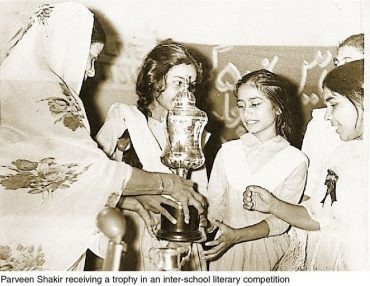
Parveen Shakir receiving a trophy in an inter-school literary competition.
“Jo Khab Denay pe qadir tha Myri Akho min
Azab dyty hoay Bhi mjy kudha hi laga”
(The one who had the power to grant dreams in my eyes
Even while inflicting torment, he still seemed like God to me)
She crafts a figure of the beloved, out of stardust, longing, virtues they never earned. She puts him on a pedestal. The myth is born of someone who can never hurt her, but that’s exactly what happens; she gets hurt. The crafted image also shatters, and with it, the illusion of a smart woman. Because if she was wrong to give him access to her soul, it means she is not as smart as she thinks she is. Suffering betrayal is one thing. Suffering the shame of choosing it—that is a far deeper tragedy. And to escape that double devastation, some of us cling to illusion. So, she preserved the myth to protect herself because sometimes, it’s easier to mourn a god than to admit you mistook a man for one.
Shakir’s rebellion is stylistically stealthy. She chooses delicacy, images of flowers, fragrance, silk and not to perform fragility but to smuggle agency inside familiar aesthetics. Her flowers go stale and then she uses those stale flowers to craft imagery of grief, loss and absence and name the betrayal of fragrance.
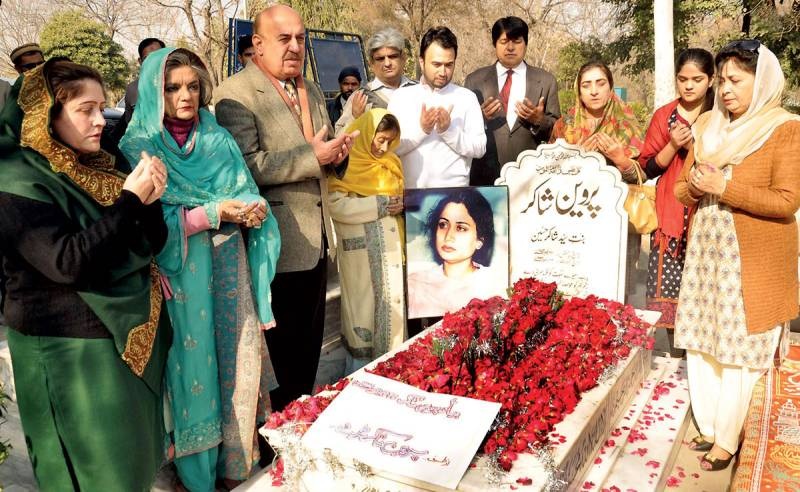
Parveen Shakir's grave
Wo to kushbu hy, Hawao main Bikhar Jaye ga
Masla Phool ka hy, phool kidhar Jaye ga.
(He is like fragrance, destined to scatter in the winds.
The trouble is with the flower—where will the flower go?)
The ghazal’s etiquette remains, yet the speaker is unmistakably a woman who says “main” without apology. If tradition expects deference, she meets it with dictional control on language, meter crisp, imagery polished, address decorous and so that content can take bolder risks. This is a strategy: softness as a cloak, music as a mask.
Her poetry reframes “feminine” not as submissive but as specifically situated: a woman speaking from within social choreography while refusing to be choreographed by it. A woman who might perform that crying woman for the theatrics but shed the skin for herself. She can stage a bridal image and undo it in the next breath. She can mourn the lost love and curse it the next minute. She can keep the ghazal’s velvet yet pull the thread that unravels its paternal seams. In that sense, her craft enacts the split soul: she writes with one hand dipped in rosewater and the other steady on the scalpel.
Parveen Shakir leaves us with a paradox that is, in fact, our inheritance: to be whole while torn, to love without lying about what love does, to accept beauty without forgiving its cruelty. To see things eventually as they are. To not get overwhelmed with the performance of a perfect lover, but to interrogate the pitfall of gender roles, which make women carry the weight of grief while men walk guilt-free. She is a casket of contradictions because womanhood, in our world, has been a casket built by others, decorated, perfumed and locked. Shakir rattles the hinges from the inside. She writes the private into public record and lets tenderness become a form of protest. Her work remains timeless because it refuses neatness. It tells the South Asian woman that she can be both the sigh and the sentence; that naming pain is not bitterness but authorship; that silk, when knotted right, is also rope and causes death. A woman of this continent is not just a silent sufferer but also a curse, no matter how unholy it seems. We return to her not to watch a woman suffer beautifully, but to learn how a woman thinks while suffering and how thinking reshapes the terms of love. Because Parveen Shakir tells the truth we keep tucked away: we worship what wounds us, until we learn to love ourselves more. Her poems teach that lesson gently, then insist we do something with it.
You may also like: