Written by: Muhammad Asif Nawaz
Posted on: September 08, 2025 |  | 中文
| 中文
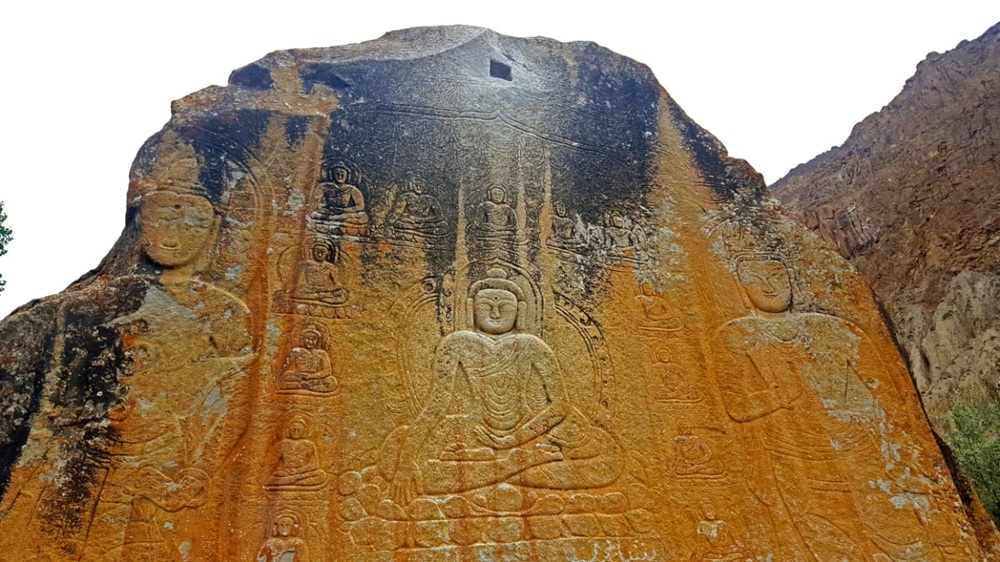
Manthal Buddha Rock, Skardu
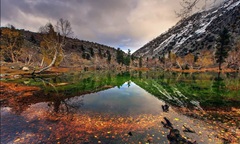
In the final article of this series, after having dwelled on the hotspots of Buddhist heritage in Pakistan, we turn towards Gilgit-Baltistan, the land of majestic mountains, astounding glaciers and gushing waters. Historically, the area was a significant center for Buddhists, a fact that can also be inferred from the geographically contiguous area of Ladakh in India, which remains Buddhist-majority to this day.

Gilgit Manuscripts
The timeline of Buddhism in Gilgit-Baltistan is distinct from the other places we have discussed. While it arrived in the plains of Punjab and Khyber Pakhtunkhwa much earlier, its introduction to Gilgit-Baltistan came later, around the 3rd century CE. This spread was largely an effect of the ancient Silk Road, and therefore the influence of Tibet and Central Asia is more palpable here than in the south. Unlike the specific efforts of kings like Ashoka, the propagation of Buddhism in this rough terrain was a more passive process, a side product of the exchange of ideas and cultures along the great trade route.
The history of Gilgit-Baltistan, largely verbal and recorded majorly during the British period, has left some gaps, but the timeline of Buddhism in this region is generally stated to be from the 3rd to 11th centuries. Notably, during this time, the region was ruled by a Buddhist dynasty known as the Patola Shahis. It is believed that the Patola rulers subscribed to a form of Vajrayana Buddhism, giving Pakistan a more layered historical legacy of the faith.
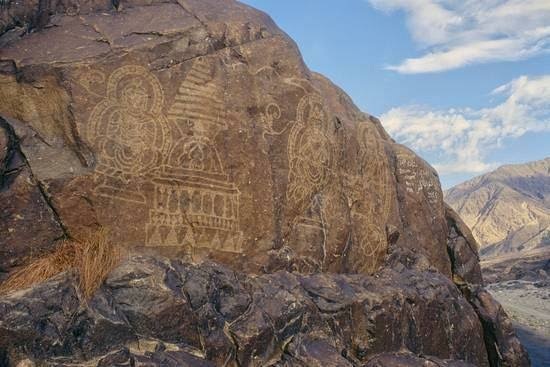
Chilas Petroglyphs
A stark difference when comparing the Buddhist legacy in the northern and southern areas of Pakistan is the lack of intricate, towering structures in the former. However, the remnants of structures like the Hanzel Stupa (in district Gilgit) leave room for conjecture regarding how much could have been lost along the ages due to the severity of climate here. That said, there still are towering reminders of the past of Buddhism in the region, and most important of these are the rock carvings.
The Kargah Buddha, a remarkable site located in Kargal Nullah, is a popular tourist destination located just outside the city of Gilgit. Perched high atop a mountain and visible from afar, the structure is estimated to date back to the 7th century CE. The carving, approximately 50 feet high, depicts the Buddha in a standing position, and is impressive to behold. The area hosting the carving has been converted into a picnic area, and basic facilities are available. However, since the verbal history and folklore of Gilgit Baltistan often takes precedence over facts, the carved figure is identified as Yashani by the locals, an ogress pinned by a local saint, so as to save the population from being eaten by her alive. Pre-Islamic beliefs and Buddhist heritage mingle in Gilgit Baltistan to assert a unique local identity of heritage here.
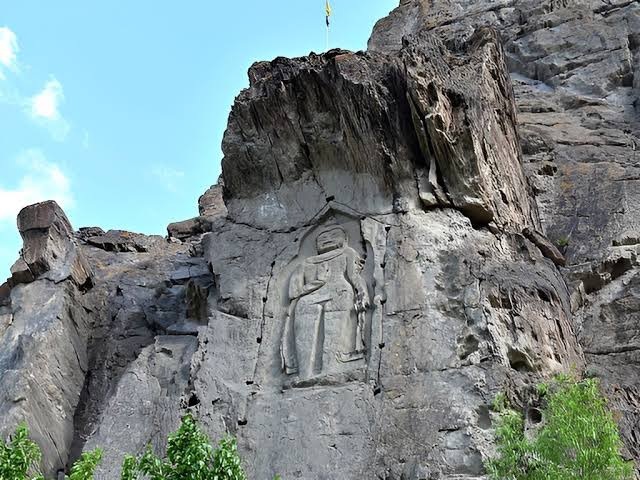
Kargah Buddha, Gilgit
Another famous carving of the Buddha in the region, is miles apart, in Skardu. The Manthal Buddha rock dates back to 8th century CE, and is a set of intricate carvings done upon a huge granite boulder. The central figure is a large Buddha in a meditative posture, flanked by two standing figures of Maitreya, the future Buddha. These are surrounded by smaller figures of Bodhisattvas. This detailed composition represents a Mandala, a symbolic representation of the universe in Buddhist cosmology. The location of the rock, along the ancient trade route of the Indus River, highlights its significance for the Buddhist pilgrims and traders who passed through the region. While the grand stupas and monasteries of Taxila and Swat were the heart of Gandharan Buddhism, the rock art of Gilgit-Baltistan served as a different kind of spiritual marker - a place of worship and a visual record of a faith that thrived in this remote, mountainous region.
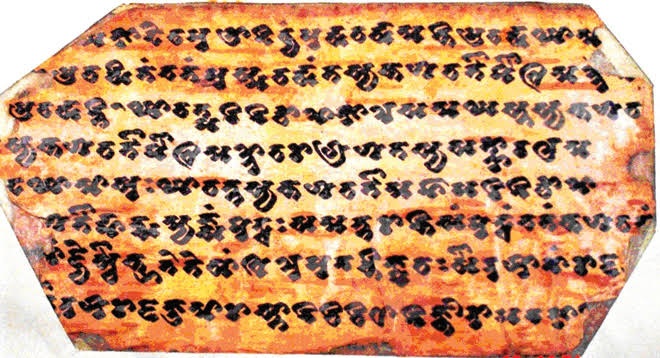
A close-up of Gilgit Manuscripts
A complete account of Buddhism in Gilgit-Baltistan must also factor in some other key facts. One of these is the petroglyphs, thousands of rock carvings that are found in abundance along specifically the Indus in Chilas region. More of a historical diary than mere images, these are not exclusive to Buddhism but include holistically the timeline of the region: they contain images of stupas, Buddhas, and inscriptions in various ancient scripts like Brahmi and Kharosthi, left by travelers and pilgrims over centuries. The Shatial Rock Carving is one glaring example of these. Another critical piece of evidence is the discovery of the Gilgit Manuscripts in 1931 near the Kargah Buddha site. Considered among the oldest Buddhist manuscripts in the world, they are written in ancient Sanskrit on birch bark and palm leaves, providing unique insight into the region's history as a center of Buddhist scholarship. Another intriguing fact related to Buddhism in the region is the Battle Axe People. I discovered their story in the Gilgit Museum, and they were said to be in Diamer region. While there is no evidence of their religion or language, it is claimed that they were hostile to the Buddhists, and may have caused Buddhist migrations from these valleys further up north.

Shatial Rock
While tracing the Buddha in Pakistan, we have embarked on a profound personal journey as well. We have seen how Buddhism manifested not only in the monumental stupas of Swat but also in the resilient rocks of the north. This series, by no means exhaustive, has shed light on the most important centers of Buddhism in Pakistan. It demonstrates that Pakistan's Buddhist heritage is not a single story but a multi-faceted narrative, a testament to its role as a crossroads of ancient civilizations. From the intellectual centers of Taxila to the sacred peaks of Gilgit-Baltistan, this journey highlights a complex, intriguing history that continues to echo in our landscape, leaving an indelible mark on Pakistan's cultural identity.
You may also like:
From the Horn of Africa to Bahria Town: Habesha Café Brings Centuries of Coffee Culture to Rawalpindi
(October 15, 2026)