Written by: Dr. Dushka H. Saiyid - Posted on: June 13, 2013 |  Comments | 中国 (Chinese)
Google Translation: اُردو | 中文
In a society where amassing ill-gotten wealth and its crass display is the norm, Shaheen Atiq-ur-Rahman is an aberration: unpretentious, direct, her sharp and sensitive mind veiled behind a constant stream of wisecracks. I got to know her in the mid-60s at the Presentation Convent School in Rawalpindi: a period when Ayub was firmly in the saddle, his rule an interesting mix of cultural liberalism and political authoritarianism.
By the time Shaheen was at the Punjab University, her father, Lt General Atiq-ur-Rehman was the all-powerful Governor of West Pakistan in the 1969-71 period. Atiq-ur Rehman, or Turk, as he was called in the army, traced his ancestry to the army chief of Tipu Sultan’s army, and roots to the Moplahs. His father, Colonel Rehman, was a doctor in the British Indian Army, who had received his training at the Guy’s Hospital of London in 1909. Col Rehman was a friend of the founder of Pakistan, Quaid-i-Azam, and his wife, Kishwar Zamani begum, the sister of Sir Shifaat, became the first President of the UP Muslim League’s women’s wing. Turk had been schooled at the famous St Paul’s in London, awarded a Military Cross for valour on the Burma front, and as Governor, set new standards of integrity, efficiency and respect for the rule of law; rare qualities in a largely feudal milieu, where patronage based on family and tribal kinship was the norm.
Shaheen is a scion of a family of distinguished public servants, who worked for the uplift of the Indian Muslims. When the Mughal Empire and the Muslim aristocracy declined in the 18th century, East India Company’s stranglehold on India tightened. The failure of the 1857 revolt, a Quixotic attempt by the old order to regain power, led to the persecution and marginalization of Muslims. While the Muslim landed aristocracy was unable to adapt to the challenges of a new dispensation under the British, the middle classes, led by Sir Syed Ahmed Khan, played a central role in the renaissance of Indian Muslims through modern education.
Shaheen’s ancestors became prominent players in this reformist movement at the turn of the century. Justice Shah Din, Shaheen’s maternal great grandfather, was a friend of Sir Syed’s. He studied law in England, became the first Muslim judge of the Punjab High Court, and was part of the Muslim deputation that met the Viceroy at Simla in 1906, a seminal event that led to the creation of the Muslim League. Shah Din became President of its Punjab branch, and with his equally famous cousin, Sir Mian Mohammed Shafi, was a founder of Anjuman-e-Himayat-e-Islam in Lahore, and presided over the Muhammadan Educational Conference; important initiatives for the education of Indian Muslims. It was Sir Syed who arranged the marriage of Justice Shah Din’s daughter to the brilliant historian at the Allahabad University, Sir Shifaat Ahmed Khan, Shaheen’s maternal grandfather. A Pathan from Rohilkhand, UP, Sir Shifaat got his doctorate from Trinity College, Dublin in 1920, was India’s High Commissioner to South Africa and briefly served as the Education Minister in the Interim Government of 1946.
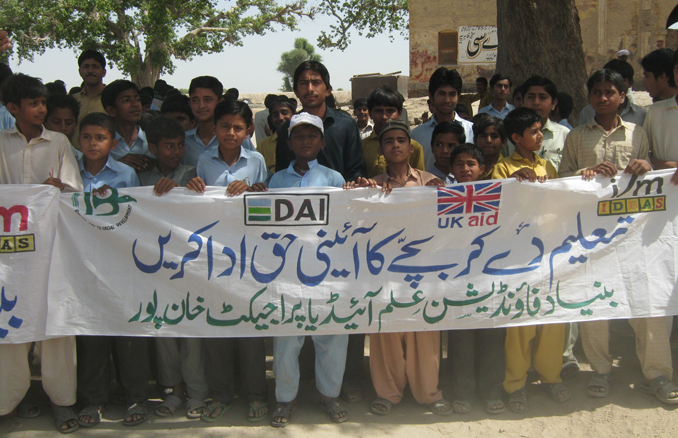
After completing her law degree, Shaheen refused to tie the knot and settle down to a mundane existence, choosing instead to enter politics. As the minister of social welfare and literacy, she confronted the twin menace of poverty and ignorance, and since then her life has been a crusade against them. She founded Bunyad on the model of BRAC of Bangladesh in 1992, and like it, is a development success story. Bunyad has built capacity for sustainable development amongst under-serviced rural families. The focus is literacy for adult women and primary education for the girl child. Her solution to one of the highest school drops out rates in Asia: educate the mothers and make them literate. When she became Minister of Social Welfare in 2002, she started a Department of Non-Formal Education; of the 3.8 million illiterates at the time, 65% were women. Since 80% of the women were Quran literate by rote, she used the Quran primer to teach them Urdu.
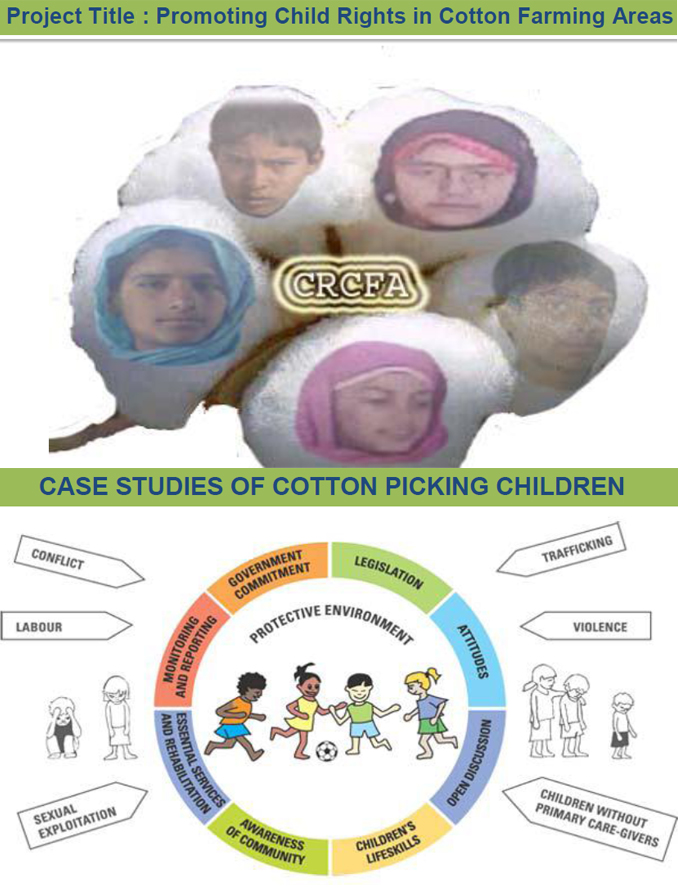
Bunyad is covering 14 districts and 675 villages; 15,00,000 have been made literate and mainstreamed into secondary schools, and communities encouraged to make their own schools. She argues that while Punjab has 44,000 primary schools, there are only 8000 middle schools, and high schools are less than 5000; this has curtailed the upward mobility of learning among women. Her favourite projects have been rehabilitating camel jockey and soccer stitching children, and in other industries using child labour. Her most exciting project has been teaching through mobile phones, although the funding has been very erratic.
At a time when land mafias have become a common scourge in Pakistan, often with the backing of politically powerful, it is worth recalling that General Atiq-ur-Rehman donated his land in Sindh to the Bahawalpur Medical College, his wife, Farhat, gave her land in Mardan to the landless tenants, and Shaheen donated her land in Bedian to Bunyad.
Shaheen continues to carry the torch of her forbearers, working selflessly for the education and empowerment of the poor, because, she says, she was taught only one belief, Pakistan.
 |
Click to view picture gallery