Written by: Adeel Wahid - Posted on: January 30, 2014 |  Comments
Google Translation: اُردو | 中文
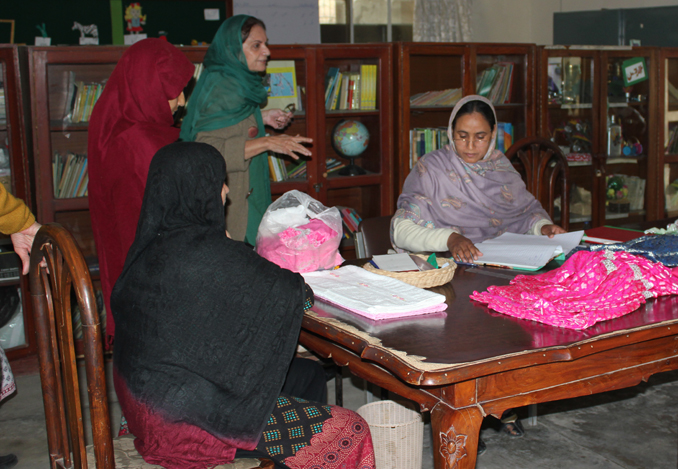
The fervor and patriotism in the War of 1965, eventually led a few influential ladies to come together to form Behbud (literal meaning advancement) in 1967. What had started off as a venture to provide clothes and food packs to soldiers fighting on the borders protecting Pakistanis, eventually culminated into a movement providing the services of education, health, employment along with various other social welfare services to the deprived people of our country.
 |
An idea, a noble idea particularly, can mobilize energies in a manner which other things seldom can. The women, many of them belonging to the rich, privileged families, led by Mrs Athar Riazuddin, started to channel their energies to create schools and dispensaries with the help of volunteers, which initially were all open air.
The clout and influence of the women came in handy. An office was designated to the women, in the heart of Rawalpindi, next to PMC, which has become the headquarters, ideally located amidst neglected, impoverished communities. Housing the vocational centre, which imparts invaluable skills to the women in embroidery, stitching and block printing, Behbud headquarters empowers women by developing in them the ability to earn and sustain themselves and their children.
Many of the women, involved in Behbud were settled in Islamabad and hence it was natural that their eyes turned towards a deprived village just on the outskirts of Islamabad, Saidpur. Much has changed now, but in the 1980s when Behbud started operating, the village and its people were in a dilapidated social and economic situation.
“There was no electricity, no gas, no clean water, no roads, and the people were really poor”, says Mrs Shaukat Farooqi, Chairperson Behbud Saidpur Complex. “The men were mostly involved in drugs and many of them still are, while the women lived in misery with little or no proper livelihoods”.
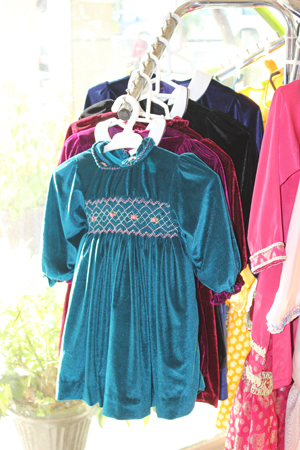
A humble school became operational in Saidpur, behind Behbud’s current building, under a tree. The land was provided by CDA, and the building which now stands on the land, was made using Behbud’s own funds. The village women instead of literacy or education needed a skill that could bring them some money while working from home, and hence started the famous Saidpur Crafts section, which makes smock frocks and other textiles high in demand both by locals and foreigners. The produce ends up at a Boutique located in F-6 Markaz and the yearly held Meena Bazaar.
“Behbud has become a brand name with the help of these village women” says Mrs Farooqi. The exquisite designs and color schemes are decided by the volunteer committee, who let the local women take the cloth and thread to their homes, from where they work at their convenience. The women are paid on the number of pieces they get prepared. Along with Craft, the village women also help prepare spices under controlled, hygienic conditions, attracting a substantial clientele in Islamabad.
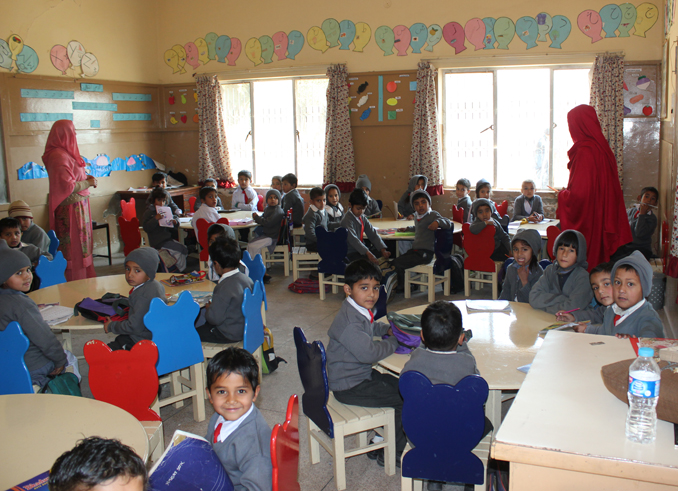
While the training of women continued, their children roamed around the streets, uncouth and unkempt. UNICEF provided Behbud with a room, a kind of a day care centre, where around 30 children got enrolled initially. Now the school has expanded, boasting of 500 students being taught till the 5th grade. The unkempt and uncouth children are now seen in clean uniforms, in a school which possesses its own computer lab thanks to the donation made by the Charge d’ Affaires of the Netherlands, David Kuijper. The desks, boards and other furniture were installed with the help of Korean government, which channeled funds via KOICA (Korea International Cooperation Agency). The school is outgrowing itself with 30-35 students per class, and spaces like garage and space under the staircase turned in to a classroom.
“There are times when we have to say no to the parents, because we have limited room for children”, Mrs Farooqi says. Initially the school project was being financed by Trust for Volunteer Organization (TVO), but when the organization dissolved, Behbud’s Saidpur Complex was scrapped for cash. It was in this time of need, that another idea helped provide impetus to the good work being done. People were asked to sponsor a child’s education for mere Rs 7000/- per annum. The executive members of Saidpur Complex themselves sponsored ten children each with many their friends and relatives taking over the onus of quite a few others. The parents who can afford have to pay Rs 300/- per month for their child while orphans and needy students study on full or partial financial scholarships.
 |
“With all this time spent here, we have garnered the trust of the locals”, Mrs Farooqi elaborates. There is a dispensary in the complex where volunteer doctors provide free medical counseling and the headquarters provides the necessary medicines. On every Tuesday, there is family planning sessions conducted, something which initially drew a lot of ire and suspicion from the locals but which now is sought frequently for help and information.
Saidpur Complex of Behbud, with a history of welfare works during earthquake and floods, are adamant in bringing respite to the neglected sections of our society. By choosing to come out and by helping to lift the impoverished sections of the society, Behbud women are performing duties with integrity and efficiency; duties which are in essence the prerogative of the government. No wonder the parents of the indigenous community of Saidpur send their children to Behbud School rather than to a free government school located next door.
Click to view picture gallery