Written by: Sana Shahid
Posted on: July 08, 2025 |  | 中文
| 中文
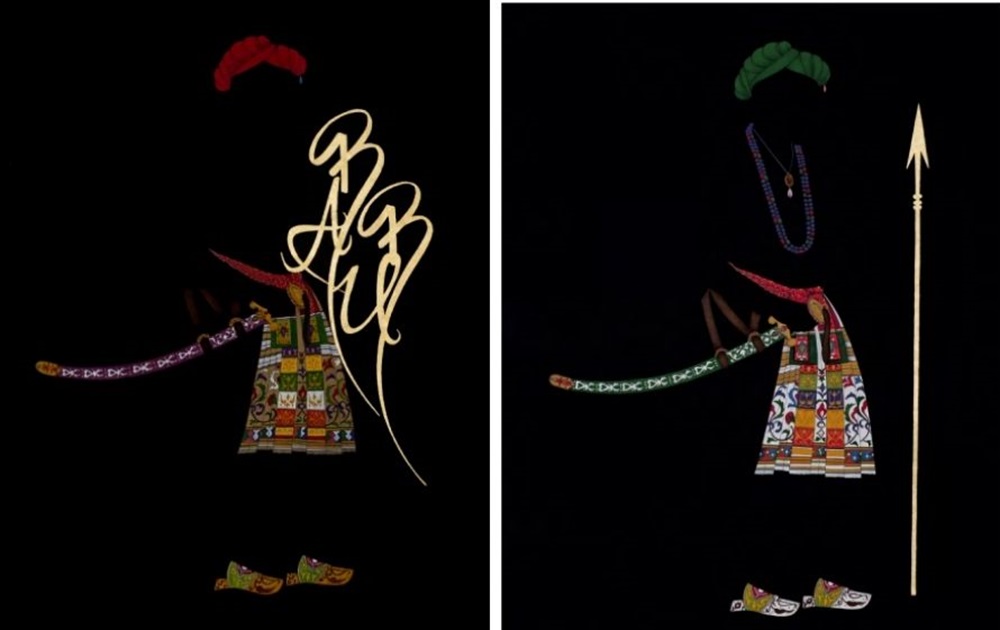
Babu and Untitled
As you step into Tanzara, the paintings on the walls, with their bright gold details and royal figures, draw you in with their beauty. But as you look closer, something feels different. These aren’t just elegant portraits, they carry titles that seem out of place, as though they’re mocking the very grandeur they depict. Shoaib Mahmood’s The Brown Sahib is not just an exhibition of miniature paintings; it’s an astute exploration of the uncomfortable legacy of colonialism, where words and identities collide in unexpected ways.
There’s a certain trick Mahmood plays with time. His figures rooted in the elegance of pre-colonial courts seem suspended in the era of the past. Yet, they're made to carry words that feel sharply contemporary in their familiarity: “Babu,” “Kala,” “Gora,” “Brown Sahib.” These are not just titles; they are ghosts, which Mahmood resurrects from colonial time, specifically “Farang-e-Asfia,”. They seem animated, polished and placed beside princely characters who never asked to bear them.
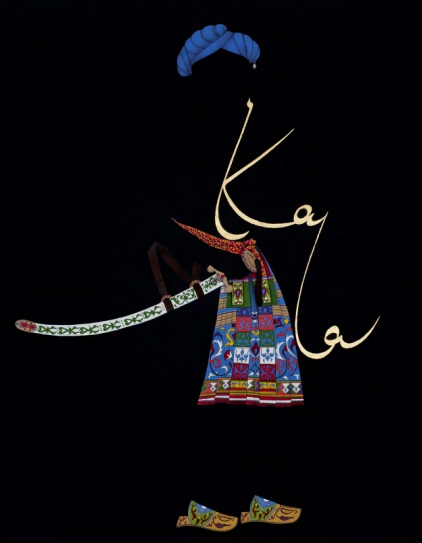
Kala
In ‘The Brown Sahib’, the figure stands in the traditional grace of Mughal portraiture, with immaculate clothing, a crimson turban and a decorative sword but the face is somewhat absent. The word ‘brown’ in the title explains the depths of the painting as it had been used negatively in the colonial era, explaining the entire race of the sub-continent as browns based on more melanin in their bodies. It signifies a time of labels and ‘The Brown Sahib’ is another label given to the painting making the viewer reminisce about the stories from the past. Mahmood’s satire makes you feel the conflict between the figure’s quiet dignity and the absurd label plastered onto them.
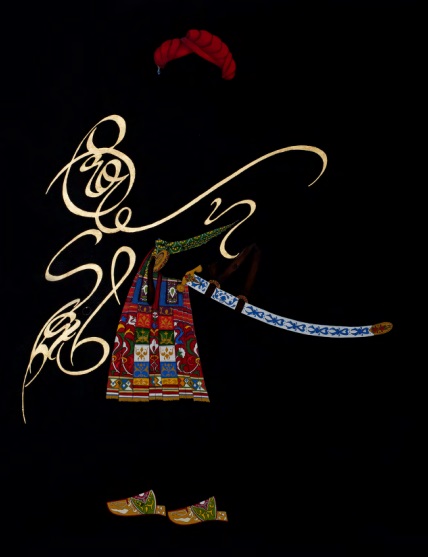
Brown Sahib
This dynamic is repeated across the series. Babu and Babu 1 mesmerize the figure of the colonial-era clerks who were once mocked for their loyalty to the imperial order, now reimagined as a Mughal noble. The details in these works are exquisite, but it’s not ornamental, it’s rather bitter. Mahmood’s mastery lies in this duality - it seduces you with beauty, then delivers the sting.
In Gora and Kala, the contrast is especially compelling. These two paintings sit in a silent dialogue, one evoking the colonizer’s hue, the other the colonized. Yet both are portrayed with equal magnificence, avoiding cliches. There is no obvious villain or victim. Instead, both figures seem to hover in the strange space between mimicry and mockery, where color becomes a power, and identity collapses under the weight of assigned names. The pairing raises uncomfortable questions: Who claimed power through appearance? Who internalized what they were called? These questions have dominated lives of the two for decades, it’s like these concepts never vanish.
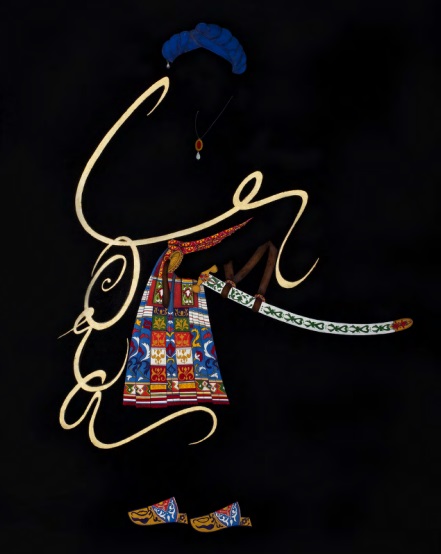
Gora
White Mughal and White Mughal 1 are perhaps the most layered of the pieces. These figures echo into an era when lines between rulers and subjects blurred in both dangerous and seductive ways. There's a romance in these works, but also an unease. The term "White Mughal" historically referred to British officers who adopted local customs, languages, and even wives. Here, though, Mahmood turns the idea inward. These aren’t British men going native, they are Mughal men, repainted with paleness, reflecting the colonial gaze. The title could be a joke, a warning or just an attempt of an artist blurring the boundaries.
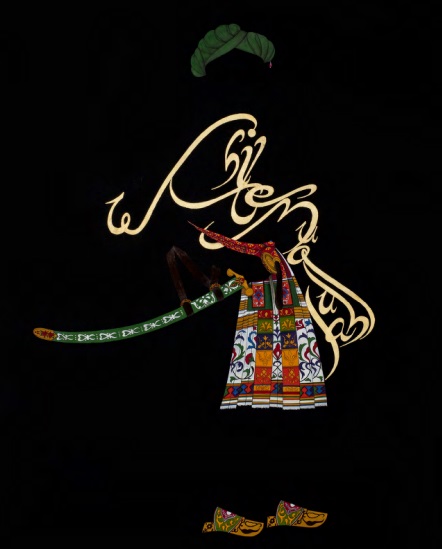
White Mughal
Even the untitled pieces, which offer no textual clues, carry this same spirit of distortion. The figures gaze out, elegant and self-contained, but the silence around them feels heavy, as if their lack of a name is another kind of commentary. What do we become when no title is imposed on us? What do we look like, unlabeled?
In Jamadar and Jamadar 1, the figures stretch beyond the intimate format of the others, asserting presence with scale. The word "Jamadar," a military rank that often carried submissive connotations under colonial rule, is reimagined here with grandeur. But again, the flattery feels deceptive. Is this restoration or repetition? Mahmood doesn't say. He doesn't need to. The work itself flicks between pride and parody.
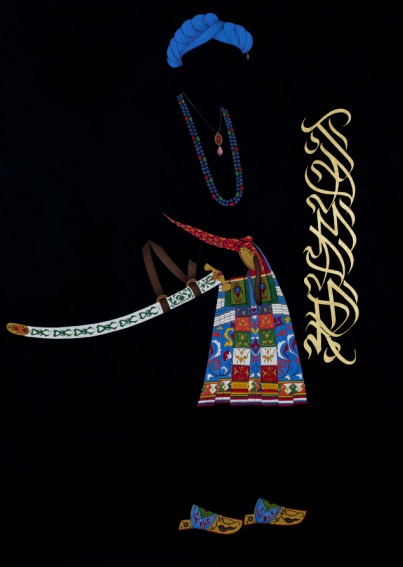
Jamadar
What makes this exhibition so interesting is that it never settles. It doesn’t claim to resolve the tensions it reveals. Instead, it holds them up like a mirror, pointing to a conflict of centuries. Viewers are not asked to decode the paintings as puzzles; they are asked to feel them as provocations. There is a feeling of discomfort leading to the tales of the past but also the beautifully adorned figures with traditional patterns, necklaces and lyrical writing are not to be missed out on.
This is the brilliance of The Brown Sahib. It’s not just about what colonialism did, it’s about what we continue to do with the fragments it has left behind. The titles Mahmood uses haven’t vanished. They are still alive in bureaucracy, in drawing rooms, in the accents we admire and the jokes we tell. There’s a haunting aftertaste, a realization that the colonial enterprise may have ended, but its language still lingers in the corners of who we think we are. The Brown Sahib doesn’t merely mock this reality, it explains rather an uncensored version, ornamented with gold, framed in miniature and echoing with questions.
You may also like: