Written by: Kinza Asif
Posted on: July 07, 2025 |  | 中文
| 中文

The Reluctant Fundamentalist and its author, Mohsin Hamid.
Who are you when your name, color, nationality become louder than your voice? When the place you always admired now watches you with doubt and fear? Mohsin Hamid’s novel The Reluctant Fundamentalist whispers these questions deep into your heart, and the echo of that whisper lingers long after you close the book.
This isn’t just a story about politics or east versus west. It’s about identity, belonging and heartbreak. The story that repeatedly puts a question mark on the identity of Changez, a young man from Lahore, Pakistan, who leaves his country and travels to America with eyes and heart filled with hope and ambition. His brilliance and determination quickly lead him to Princeton University. After graduation, a high-paying job in a prestigious firm awaits him. Even amidst all this hustle and bustle, he falls for an American girl named Erica.

Author Mohsin Hamid holding his novel The Reluctant Fundamentalist.
Changez is a character that wins you over effortlessly. He is confident yet humble, observant and poetic. He loves and admires the structure, the energy, the order-everything about America. This love for America feels sincere, not forced. But like many immigrants, he wears two skins. In one, he tries to blend in, to earn his place in a land that promises opportunity. In the other, he carries the quiet ache of distance from home and homeland. Then comes 9/11.
The terrorist attacks on the World Trade Center shatter not just buildings, but assumptions. The America that once opened its arm to Changez now eyes him with suspicion. He stays the same, but the gaze of world changes. His beard becomes a statement. His name becomes a question. And his silence becomes dangerous.
One of the most powerful moments in the book is when Changez confesses that he smiled when he saw the tower fall. It wasn’t joy at death or destruction, but something more complicated: a moment of power, a mirror turned toward a superpower that had long looked at the world from above. This confession is disturbing, yes, but also deeply human. It forces readers to confront the truth that emotions are not always politically correct.

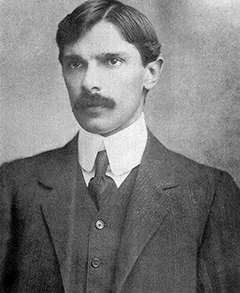
Mohsin Hamid
At the same time, Changez’s personal life also begins to unravel. Erica, the one he loves, is trapped in the grief of losing her beloved, Chris. She is both delicate and distant, never fully present with Changez. She is a metaphor: like America, she is warm but ultimately unreachable. Despite all the efforts of Changez, she accepts him, but only on her terms.
The novel is framed entirely as a one-sided conversation between Changez and an unnamed American stranger in a Lahore tea shop. We never hear the American’s voice. We only have Changez word with calmness and charm. This setup creates an atmosphere of mystery and unease. Is Changez in danger? Is the American a tourist, a journalist, a spy? The reader becomes a part of story, trying to decode the silences between lines.
Hamid’s writing is elegant, tight and musical. He crafts a narrative that feels both personal and political. There is no shouting in his prose, only precision. The questions he asks grips the attention of reader: can you love a country that does not trust you? Can you belong to two places at once? What does loyalty mean when your identity is constantly on trial?

The film adaptation of The Reluctant Fundamentalist brings Hamid’s powerful story to the screen.
What makes The Reluctant Fundamentalist remarkable is its refusal to give easy answers. It doesn’t paint America as evil or Pakistan as perfect. It doesn’t make Changez a hero or villain. It makes him human. And in doing so, it forces us to see the humanity in those who are often reduced to headlines and assumptions.
For readers from the South Asian diaspora, the novel resonates deeply. It captures the pain of being seen as “the other”, of having to explain yourself, of being told you are either “with us or against us.” For Western readers, it offers a rare window into the inner life of someone on the receiving end of global power structures.
Even more, it speaks to anyone who has ever felt like an outsider, who has ever loved someone who could not love them back fully, who has ever had to choose between comfort and conscience.
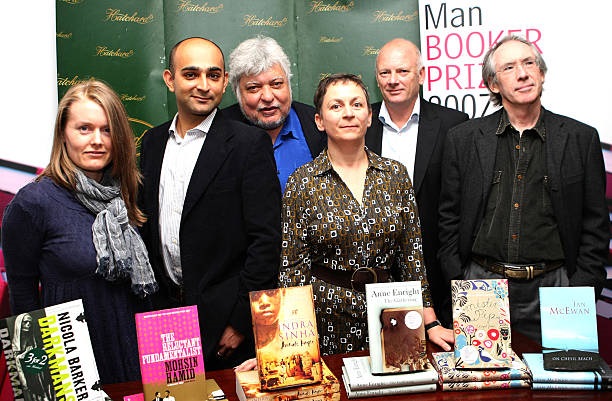
The Reluctant Fundamentalist was shortlisted for the prestigious Man Booker Prize in 2007.
The ending is deliberately ambiguous. We are left uncertain about the fate of both Changez and the American. But that’s the point. The real story is not what happens after the last page. The real story is the conversation that begins within the reader- about fear, identity, love and how easy it is to misunderstand each other.
In the world that often forces people into boxes-terrorist or patriot, East or West, us or them-The Reluctant Fundamentalist is a powerful reminder that the truth is more complicated. That identity is layered. That understanding takes more than headlines. It takes listening. And that sometimes, the most radical thing you can do is to sit down, offer someone tea, and tell your story.
You may also like: