Written by: Saram Maqbool
Posted on: May 05, 2026 |  | 中文
| 中文
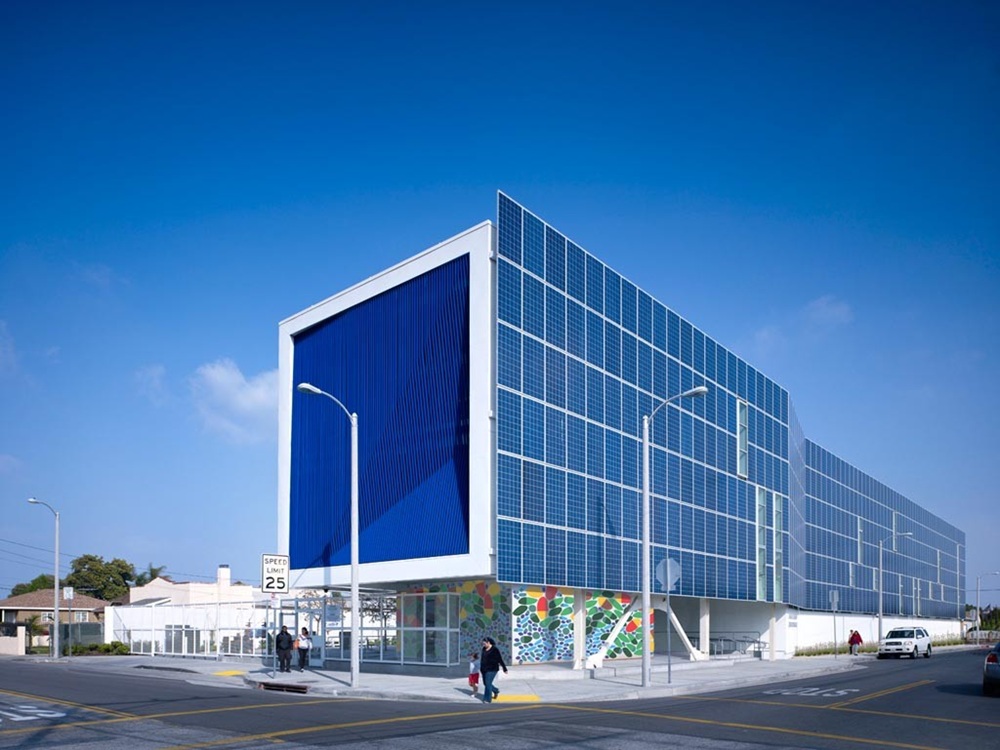
Green Dot Animo Leadership High School in the USA
It's fascinating how architecture has changed over the centuries to reflect the needs and sensibilities of the time. From the simplest conceivable shelters of the earliest cities in the world to the massive, imposing structures built to announce regime changes, to stripping back all the ornamentation after the Industrial Revolution to celebrate the rise of steel and glass, architecture is a great way to study and understand what the needs of each major era were and what they inspired.
In line with this history of transformation, architecture is now beginning to take on a role that was once reserved almost entirely for infrastructure - to generate energy itself. Buildings are no longer seen only as consumers of energy, but are being reconceived as active participants in local energy networks by harvesting sunlight, channeling wind, and storing energy. This shift carries particular weight in regions like the Global South, where rapid urbanization collides with weak and inefficient grids, fuel volatility, and climate stress. For Pakistan, where bad policies surrounding electricity generation and dissemination, load shedding, and grid instability remain recurring realities, the idea of energy-generating architecture isn't only a matter of sustainability, but is rather becoming a matter of resilience.
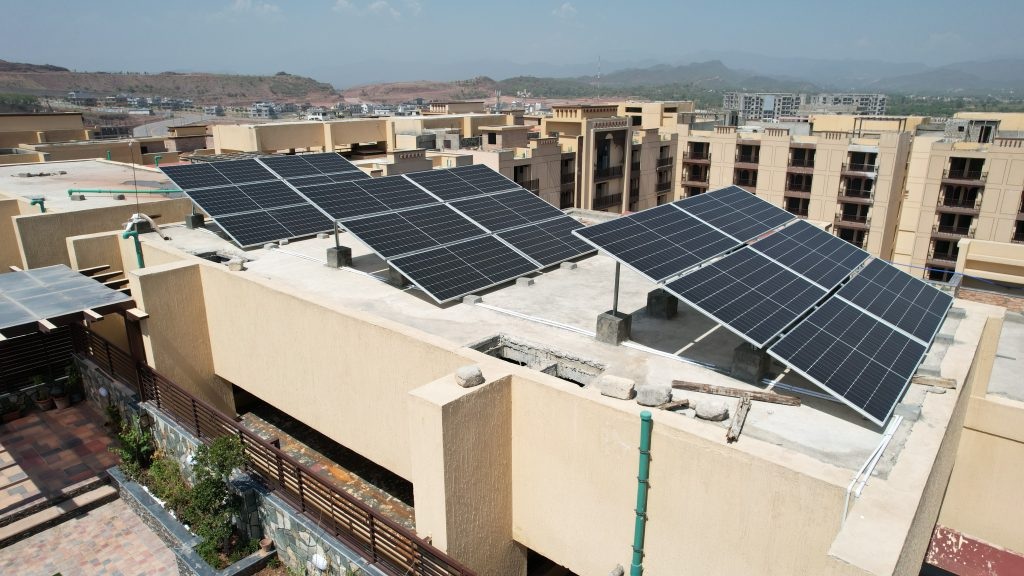
The recent solar boom in Pakistan is a testament to the potential of energy-generating architecture.
For much of the twentieth century, architecture in many developing nations mirrored imported models shaped by stable utilities and cheap energy. Glass towers, sealed interiors, deep floor plates, and mechanically cooled environments proliferated as symbols of modernity. Yet these building types often arrived without the infrastructural conditions that made them viable elsewhere. In hot climates with unreliable power, such models became expensive liabilities. When the grid fails, the sleek office tower becomes uninhabitable within hours. The lesson increasingly clear across the Global South is that architecture cannot remain detached from energy systems. Buildings must generate, conserve, and adapt.
Nowhere is this more visible than in parts of Africa and South Asia, where decentralized solar systems are transforming both urban and rural environments. In countries such as Kenya and Rwanda, solar rooftops combined with battery storage have allowed schools, clinics, and housing developments to function independently of inconsistent national grids. In India, government programs and private innovation have accelerated rooftop photovoltaic adoption across cities like Ahmedabad and Bengaluru. Commercial buildings now integrate solar shading devices, photovoltaic façades, and hybrid ventilation systems that reduce demand while producing energy on-site.
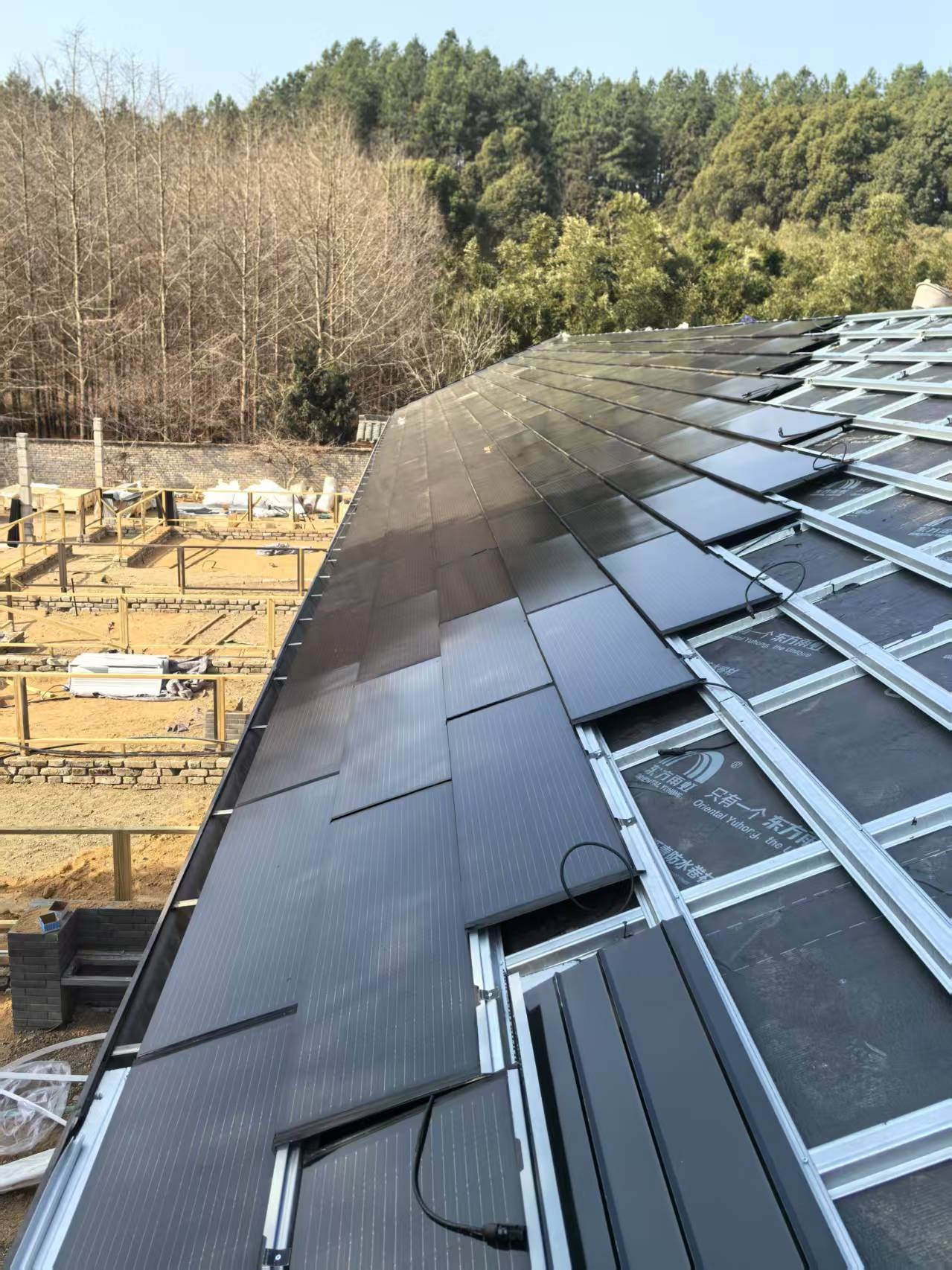
New technologies such as solar tiles offer a great way to incorporate energy production into traditional architecture.
Pakistan stands at the threshold of a similar transformation. Chronic load shedding, seasonal power deficits, rising electricity tariffs, and transmission losses have eroded public confidence in centralized supply. Even in major cities such as Karachi, Lahore, and Islamabad, backup generators and UPS systems have become normalized features of daily life. Yet these are reactive technologies that are costly, noisy, polluting, and dependent on imported fuels. Energy-generating architecture offers a more structural response by designing buildings that reduce dependence on emergency systems altogether.
The most immediate opportunity lies in solar integration. Pakistan receives abundant solar radiation across much of the year, particularly in Punjab, Sindh, and Balochistan. Yet architectural deployment remains uneven. Rooftop solar panels are growing in popularity, but they are often retrofitted rather than integrated into design thinking from the outset. In a more mature model, the building envelope itself would be conceived around solar logic. Roof forms could be oriented for maximum photovoltaic efficiency, façades could incorporate shading panels embedded with thin-film solar cells, and parking structures could double as solar canopies. Rather than adding panels to finished buildings, architecture would begin with energy production as a primary design parameter.
Examples from the wider Global South show how this can be done elegantly. In India, the Pearl Academy campus in Jaipur combines solar energy systems with deep shading screens and evaporative cooling strategies, drastically reducing mechanical demand. In Singapore, tropical high-rises increasingly integrate green façades, daylight optimization, and rooftop photovoltaics into dense urban settings. These projects demonstrate that energy generation can be embedded into architectural expression as opposed to being an afterthought.
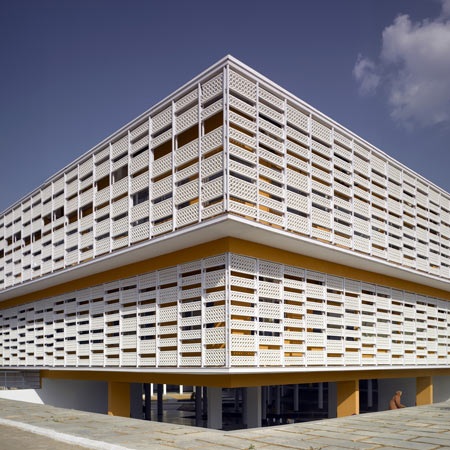
Pearl Academy in Jaipur
For Pakistan, however, generation alone is insufficient without passive design. Too many buildings rely on air-conditioning because they ignore climatic fundamentals such as orientation, cross-ventilation, thermal mass, and shading. Traditional architecture across the region already contains a ton of energy wisdom. Courtyard houses in Lahore, thick masonry walls in Multan, verandas in Karachi, and wind-catching forms in arid settlements all moderated heat long before air-conditioning. Contemporary energy-generating architecture should not abandon these lessons in favor of purely technological fixes. Instead, solar systems should complement passive cooling, not compensate for poor design. Imagine a new apartment block in Lahore with shaded balconies, operable windows, insulated brick walls, rooftop photovoltaics, and shared battery storage. During peak summer outages, interior temperatures remain tolerable because the building envelope performs well, while stored solar power maintains lighting, fans, elevators, and water pumps. This is not futuristic speculation but entirely achievable with current technology. The barrier here isn't technical but rather regulatory, financial, and cultural.
Public architecture offers another major opportunity. Schools, hospitals, and mosques across Pakistan often suffer disproportionately during outages. A solar-powered school with battery backup can maintain fans, lighting, and digital learning during summer blackouts. A clinic with passive cooling and rooftop generation can preserve medicines and run essential equipment. Mosques, frequently central community institutions, could function as neighborhood resilience hubs during emergencies. In this sense, energy-generating architecture extends beyond private convenience into civic preparedness.
There is also an economic dimension. Pakistan imports significant fuel resources and faces recurring pressure from energy-sector debt and tariff disputes. Buildings that generate part of their own electricity reduce strain on the grid and household costs over time. For lower-income communities, micro-generation models like shared rooftop systems for apartment blocks or cooperative solar clusters in villages could lead to equitable access to power.
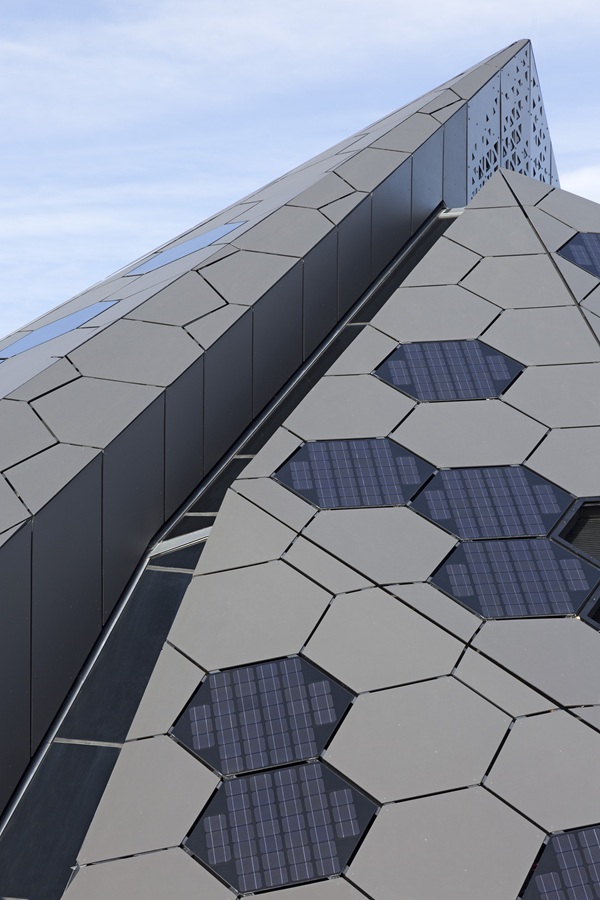
Science Pyramid in the USA integrates solar panels into the facade.
We need our policymakers to step up. Building codes can incentivize solar-ready roofs, rainwater harvesting, insulation standards, and net metering compatibility. Banks can support green mortgages or financing packages for energy-efficient homes. Universities can develop prototypes for affordable climate-responsive housing. Municipal governments can demonstrate leadership through solarized public buildings. Without these structural supports, energy-generating architecture risks remaining a niche luxury rather than a widespread solution.
For Pakistan, where electrical uncertainty shapes domestic routines, business operations, and urban confidence, this shift could be transformative. If energy-generating architecture is embraced seriously, the next generation of Pakistani buildings may not merely survive outages but might render them less relevant. In doing so, architecture would reclaim one of its oldest purposes, which is to protect life by intelligently mediating between people and the forces around them.
You may also like: