Written by: Saram Maqbool
Posted on: April 01, 2026 |  | 中文
| 中文

A typical architecture studio
Architecture education in Pakistan stands at a quiet yet consequential transition. Over the past several decades, the country has witnessed a steady expansion of architecture schools, a diversification of design studios, and an increasing exposure to global architectural discourse. However, despite this growth, one must ask whether architecture programs in Pakistan are preparing students to confront the environmental, social and cultural realities of the region, or do they simply continue to reproduce design models inherited from the Western world?
Historically, architecture education in Pakistan developed through a mixture of colonial legacy and post-independence aspiration. Programs established in the 1960s and 1970s often modeled themselves on British and American studio systems. Students were trained to approach architecture primarily as a design discipline rooted in formal experimentation and modernist theory. Institutions such as the National College of Arts played a pivotal role in cultivating architectural talent, producing generations of architects who contributed significantly to the country’s built environment. Yet the academic emphasis frequently remained centered on abstract design exercises and stylistic exploration rather than the socio-ecological realities of Pakistan’s cities and landscapes.

A project display at the National College of Arts
Over time, this model began to reveal its limitations. Pakistan’s urbanization accelerated dramatically, bringing with it housing shortages, informal settlements, water scarcity, and climate-related vulnerabilities. These challenges led to architects needing to go beyond just designing buildings and develop an understanding of environmental systems, urban policy, and social equity. Despite this, many architecture schools continued to rely on curricula that prioritized global architectural precedents over local contexts. Students often studied European urban typologies, American skyscraper culture, and international modernism more intensively than the climatic and cultural patterns of the Indus region.
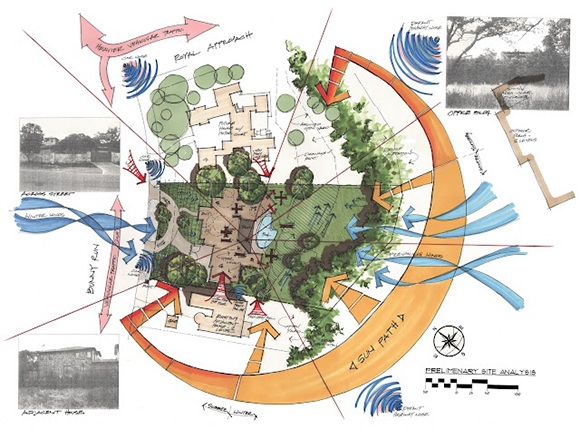
A climatic analysis helps students create contextually grounded designs.
In recent years, several institutions have attempted to recalibrate this imbalance. Schools such as Indus Valley School of Art and Architecture and COMSATS University Islamabad have introduced coursework addressing sustainability, heritage conservation, and community-based design. Studio projects increasingly focus on local urban problems like informal housing, flood resilience, and public space in dense cities. These changes reflect a growing recognition that architecture education must respond directly to the conditions shaping everyday life in Pakistan.
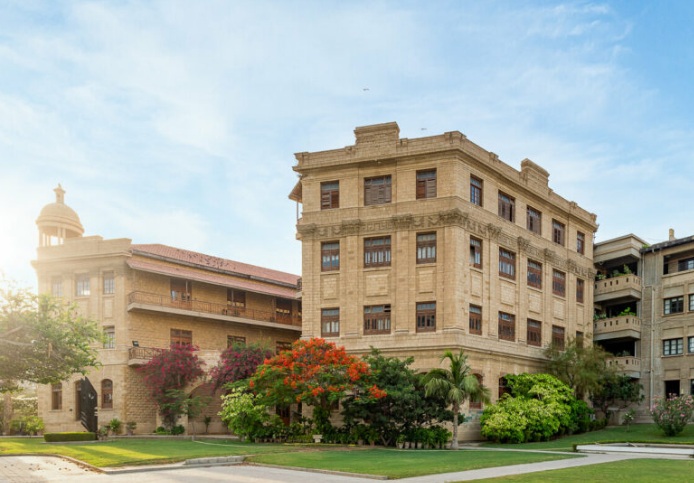
Indus Valley School of Art and Architecture
Climate change has become a particularly urgent subject within this evolving curriculum. Pakistan consistently ranks among the countries most vulnerable to climate impacts, from glacial melt in the north to extreme heat and flooding in the plains. Architecture schools are gradually incorporating environmental design strategies into their programs, teaching students about passive cooling, water management, and climate-responsive materials. Yet this integration remains uneven. In some studios, sustainability is treated as a technical add-on rather than a foundational design principle. The challenge lies not only in adding new courses, but in reorienting the entire design culture toward ecological awareness.
Comparing these developments with international trends reveals both parallels and gaps. Leading architecture schools around the world, such as the Massachusetts Institute of Technology and the University College London Bartlett School of Architecture, have increasingly framed architecture education around climate responsibility and interdisciplinary collaboration. Studios often integrate data science, environmental engineering, and social research into the design process. Students are encouraged to examine the lifecycle impact of buildings, explore low-carbon materials, and address systemic challenges such as housing inequality or urban resilience.
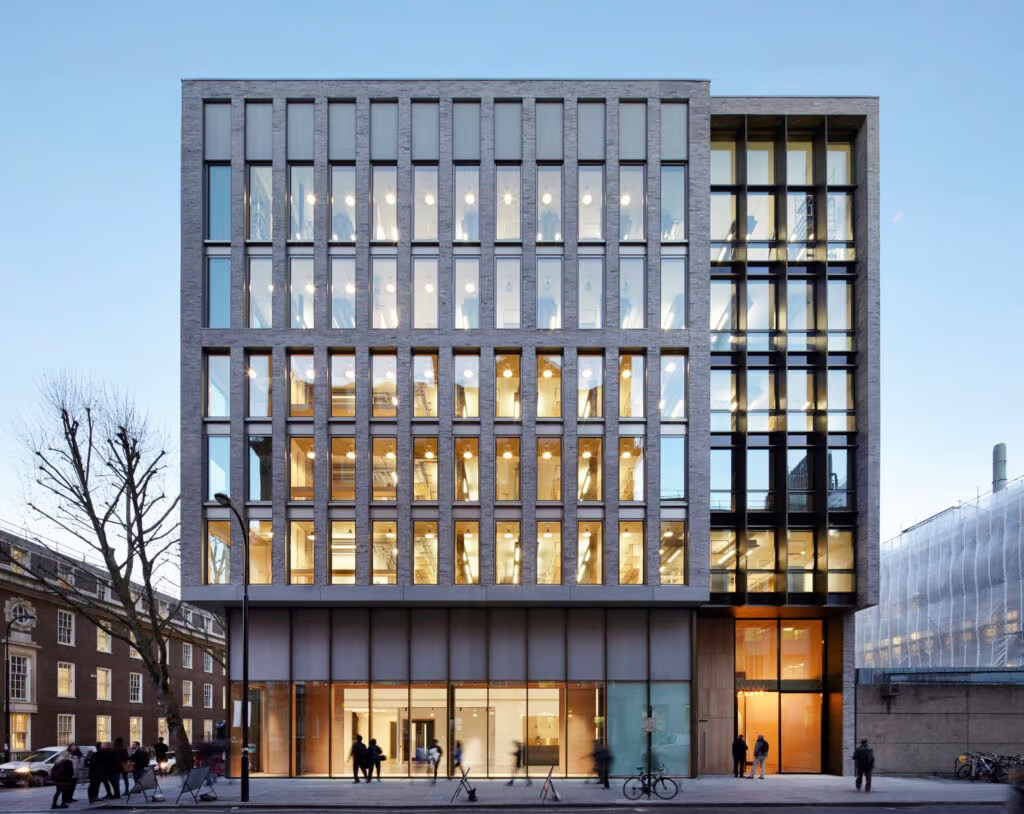
Bartlett School of Architecture
In comparison, Pakistani architecture programs sometimes struggle with institutional constraints that limit similar experimentation. Limited research funding, high student-to-faculty ratios, and rigid accreditation frameworks can restrict curricular innovation. Moreover, architecture remains a resource-intensive discipline, requiring workshops, digital laboratories, and field research opportunities that are not equally accessible across all universities. As a result, the shift toward climate-centered design occurs unevenly, depending largely on individual faculty initiatives rather than systemic reform.
There are some promising signs of transformation, but most of them aren’t on an academic level, not on a large enough scale at least. A new generation of educators and practitioners is advocating for architecture education that engages directly with local knowledge systems. Vernacular architecture isn’t treated as a historical curiosity only, but is analyzed deeply as a sophisticated response to climate and culture. Thanks to educators who focus on such aspects of design, students learn how regional wisdom can inform contemporary design strategies.
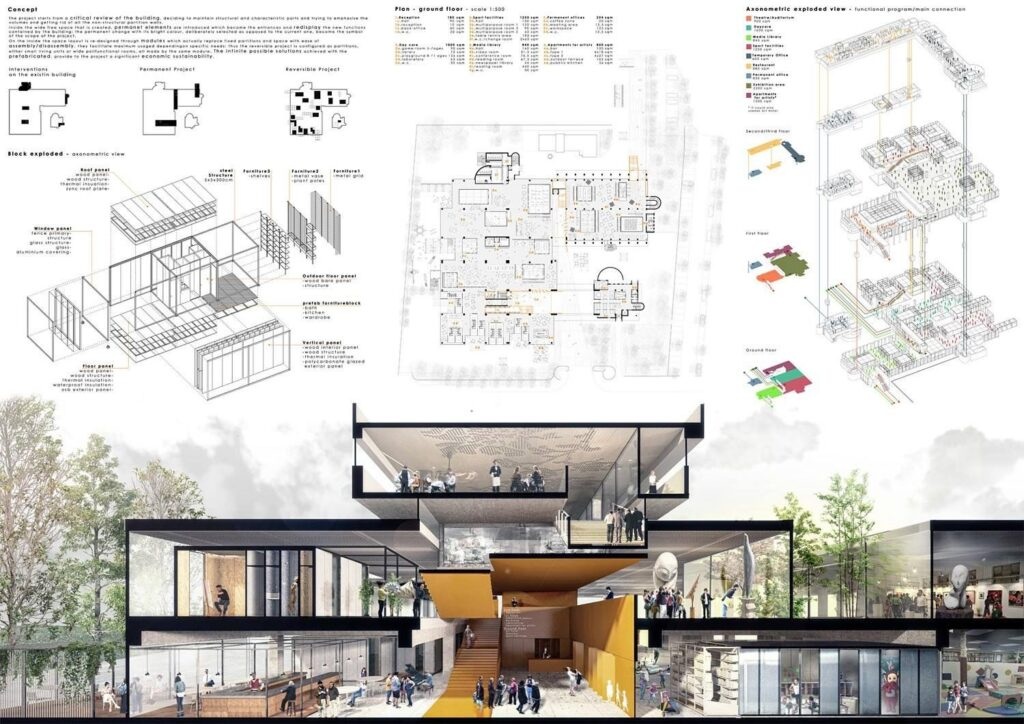
An architecture design project sheet
Community engagement has also begun to shape architectural pedagogy. In several Pakistani schools, design studios now involve fieldwork in informal settlements or rural communities, allowing students to understand the social dimensions of architecture firsthand. These projects challenge the perception of architecture as a purely aesthetic pursuit. Students confront questions of affordability, participation, and cultural sensitivity, learning more about real-world issues surrounding design instead of just creating hypothetical cultural centers or luxury residences.
Similar shifts can be seen internationally. Architecture programs in Europe and North America increasingly encourage students to collaborate with local organizations, municipalities, and activist groups. The emphasis has moved from individual authorship toward collective problem-solving. Pakistani architecture education, when it adopts comparable models, aligns itself with a global movement that redefines the architect’s role as a mediator between communities, environments and institutions.

Lahore Museum is an example of colonial-era architecture
Perhaps the most profound question facing architecture education in Pakistan concerns identity. Should architecture schools primarily teach students how to compete in a globalized design market, or should they prioritize the unique challenges of the country’s built environment? The answer likely lies somewhere in between. Exposure to international discourse remains essential, since architecture has always been a global conversation. Yet without grounding that knowledge in local realities, students risk becoming fluent in architectural imagery while remaining disconnected from the conditions they will ultimately design within.
Ultimately, the future of architecture education in Pakistan will depend on how effectively institutions reconcile these competing pressures. Preparing students for climate reality and social responsibility requires more than curriculum adjustments. Instead, it demands a cultural shift in how architecture itself is understood. If the discipline continues to frame success primarily through iconic buildings and aesthetic innovation, education will struggle to address the deeper challenges facing Pakistani cities. But if architecture is reimagined as a tool for environmental stewardship and collective well-being, the studio can become a laboratory for meaningful change.
You may also like: