Written by: Hurmat Majid
Posted on: January 16, 2026 |  | 中文
| 中文
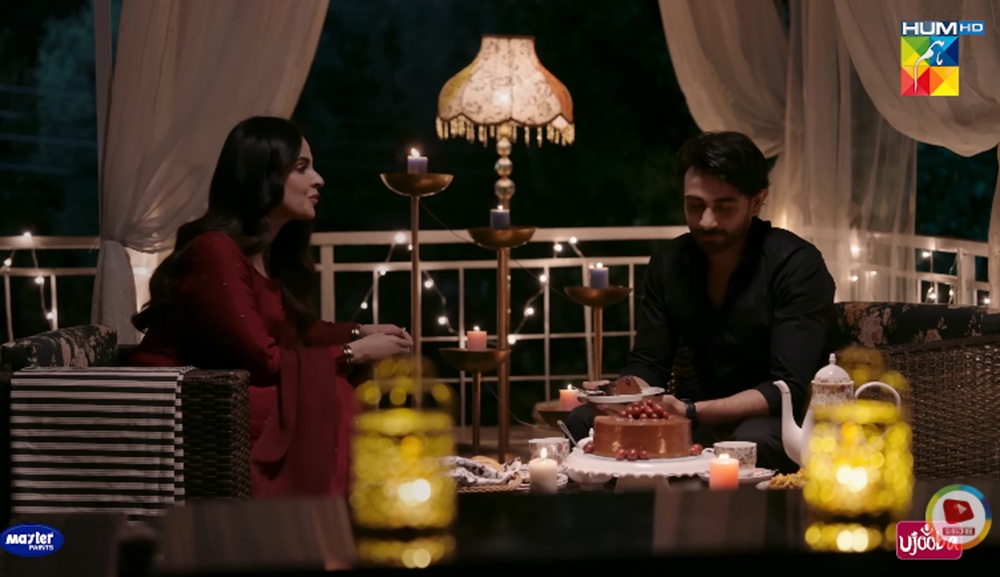
Saba Qamar and Ali Ansari in Maumma
Muamma enters the Pakistani television landscape as a deliberate departure from the comfort of clearly defined genres. After four episodes, it is evident that this is not a conventional mystery, nor is it a straightforward psychological drama in the popular sense. It exists in a more unsettling space where character psychology, moral ambiguity, and emotional disturbance take precedence over plot driven suspense. Muamma asks for patience and attentiveness, and in return offers a viewing experience that is quietly disquieting rather than immediately gripping.
At the center of the drama is Jahan Ara, played by Saba Qamar, a character written with a level of opacity rarely afforded to female protagonists on mainstream television. Jahan Ara is not introduced through tragedy or sympathy but through controlled normalcy. She is financially independent, emotionally guarded, and deeply observant. The early episodes establish her as someone who watches more than she speaks, and who carries her inner life with a deliberate secrecy. The drama’s title is not ornamental. Jahan Ara herself is the muamma, a puzzle that refuses to be solved easily.

Anoushay Abbasi and Ali Ansari
The storyline unfolds through her interactions with the people who occupy her physical and emotional space, particularly the tenants in her house. What could have been a simple setting becomes the drama’s most effective narrative device. The house is not just a location but a psychological arena where relationships are tested, observed, and sometimes subtly interfered with. Jahan Ara’s involvement in the personal lives of others is unsettling precisely because it is never overtly framed as villainous. The writing resists explaining her motivations too soon, allowing the audience to oscillate between empathy and suspicion.
Imran Nazir’s writing demonstrates restraint, a quality that is increasingly rare in television storytelling. Instead of leaning on expositional dialogue, the script relies on repetition of behavior, visual cues, and silence. Past trauma is suggested rather than narrated, and emotional wounds are implied through patterns rather than monologues. This approach gives Muamma a literary quality, though it also places a heavy demand on its viewers. Those expecting quick answers or dramatic confrontations may find the pacing frustrating, but the narrative logic remains internally consistent.
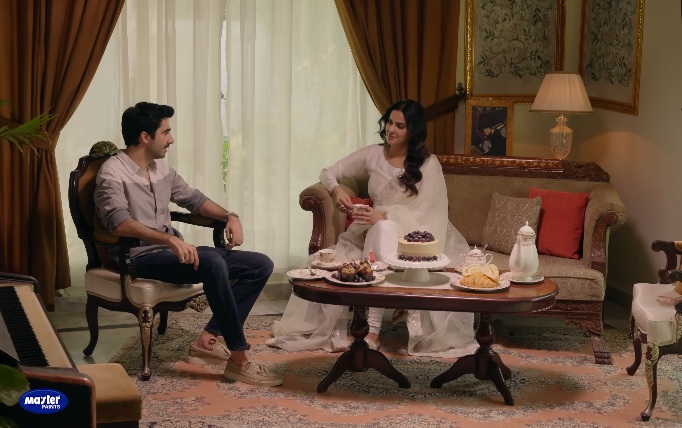
Nabeel Zuberi and Saba Qamar
The slow burn structure is both the drama’s strength and its risk. Across four episodes, there are no explosive twists or dramatic reversals. Instead, tension accumulates through unease. Scenes often end without resolution, conversations trail off, and reactions are withheld. While this creates a sense of psychological realism, there are moments where the drama seems to hover too long over emotional beats that have already landed. A tighter edit in certain domestic scenes could have enhanced narrative momentum without compromising tone.
Saba Qamar delivers one of the most controlled performances of her career. She plays Jahan Ara without seeking audience approval, a brave choice that allows the character to remain morally ambiguous. Her expressions are minimal, her voice measured, and her body language often closed off, suggesting a woman who has learned to protect herself through emotional containment. What makes the performance compelling is its refusal to clarify whether Jahan Ara’s actions stem from trauma, obsession, or a distorted sense of justice. Qamar trusts the material enough to let discomfort linger, and that trust pays off.
Nabeel Zuberi, Ali Ansari, Anoushay Abbasi and the rest of the supporting cast function less as narrative drivers and more as emotional mirrors. Their characters appear ordinary, even predictable at first, but gradually reveal vulnerabilities that complicate the moral landscape of the drama. No one is entirely innocent, and no one is overtly monstrous. This balance prevents Muamma from becoming a cautionary tale or a psychological gimmick. Instead, it remains rooted in human frailty.
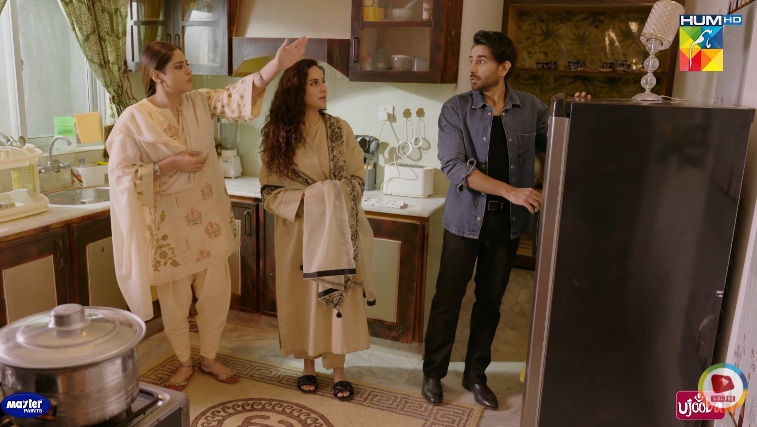
Anoushay Abbasi, Nimra Shahid and Ali Ansari
Direction by Shaqielle Khan complements the writing’s inward focus. The visual language is restrained and intimate, often framing characters through doorways, mirrors, and partial obstructions. This choice reinforces the idea of incomplete access to truth and emotional distance within proximity. The camera frequently lingers on faces after dialogue has ended, allowing reaction shots to carry emotional weight. These moments are some of the drama’s strongest, particularly when paired with Saba Qamar’s performance.
The production design subtly enhances the psychological tension. The house feels lived in yet oddly impersonal, as though it holds memories that its inhabitants are reluctant to acknowledge. Lighting remains naturalistic, avoiding dramatic shadows, which keeps the drama grounded in realism even as its emotional undercurrents grow darker. The background score is used sparingly, surfacing primarily during moments of introspection rather than manipulation. While this restraint aligns with the drama’s tone, there are instances where a slightly stronger musical presence might have helped anchor emotional transitions.
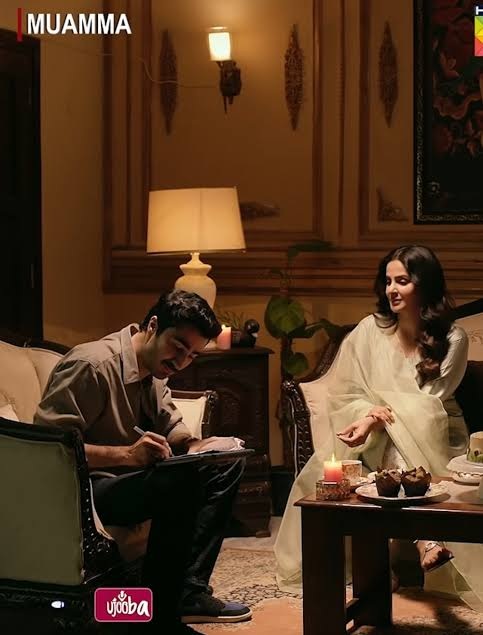
Saba Qamar and Nabeel Qureshi
One of Muamma’s most notable achievements is its refusal to moralize. Jahan Ara is not positioned as a feminist symbol, nor is she condemned for her transgressions. The drama allows her complexity to exist without commentary, trusting the audience to grapple with discomfort. This is a risky choice in a media environment that often demands clear moral signposting, but it lends the series an intellectual seriousness that sets it apart.
However, the drama is not without its weaknesses. After four episodes, the narrative remains tightly enclosed within a limited emotional and physical space. While this intimacy suits the psychological focus, the lack of external stakes risks emotional stagnation. Introducing broader social or relational consequences could help expand the narrative without diluting its core themes. Additionally, a few dialogue exchanges feel overly deliberate, as though thematic intent briefly overrides naturalism. These moments stand out precisely because the rest of the writing is so controlled.

Nimra Shahid and Saba Qamar
Muamma also challenges conventional gender dynamics in subtle ways. Jahan Ara’s power is quiet and psychological rather than overt or confrontational. She does not raise her voice or assert dominance through dialogue. Instead, she exerts influence through observation and timing. This portrayal complicates traditional representations of female agency on television, presenting power as something that can be exercised invisibly and uncomfortably.
After four episodes, Muamma has not revealed its hand, and that is both its promise and its provocation. It is a drama that asks viewers to sit with ambiguity, to resist the urge to categorize characters as heroes or villains, and to accept that some mysteries are emotional rather than narrative. Whether it will sustain this balance across its full run remains to be seen. The danger lies in over explaining or sensationalizing the psychological elements in later episodes. If the writing maintains its restraint and the direction continues to trust silence, Muamma has the potential to become one of the more intellectually ambitious offerings of recent years.
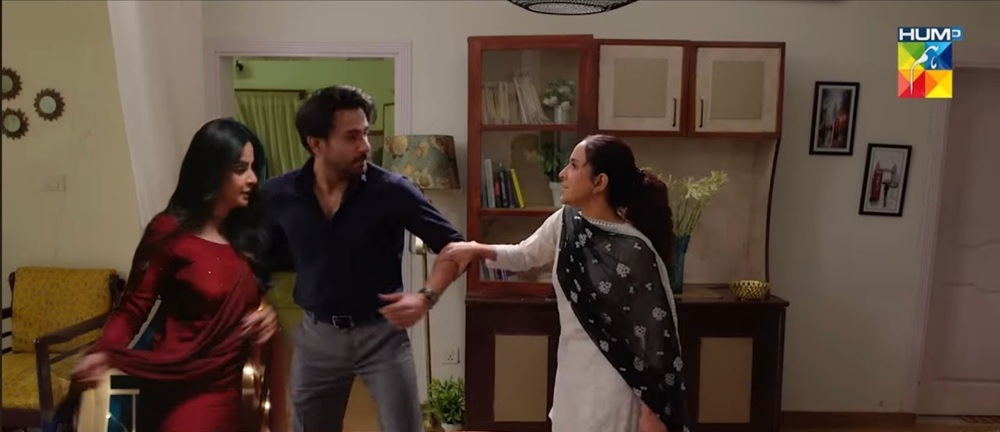
Saba Qamar, Ali Ansari and Anoushay Abbasi
For now, Muamma stands as a confident, unsettling and thoughtfully crafted drama that prioritizes interiority over spectacle. It may not cater to mass expectations of pace or payoff, but it rewards careful viewing with layered performances and an atmosphere of lingering unease. In an industry often driven by formula, Muamma’s refusal to rush, explain or reassure is its most compelling statement.
You may also like: