Written by: Muhammad Suhayb
Posted on: August 19, 2025 |  | 中文
| 中文
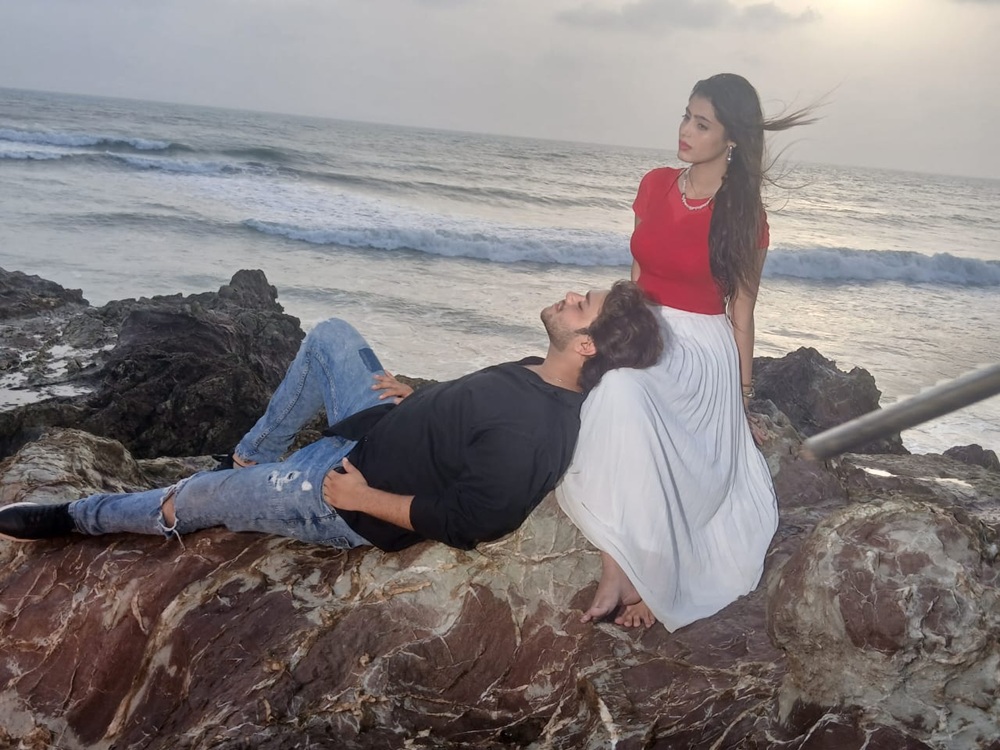
Aadi Khan and Zara Hayat in Welcome to Punjab
At a time when Pakistani cinema is often limited to Eid releases or experimental projects marketed as part of the industry’s “revival,” Welcome to Punjab arrives as a refreshing change. Directed by Shahzad Rafique, the film is a heartwarming, feel-good story that unveils a rarely portrayed side of Pakistan, blending ethnic romance, folk elements and a journey across the country.
Shahzad Rafique, the filmmaker behind Ghoongat and Nikah in the 1990s, and later Salakhain, Mohabbatan Sachiyan, Ishq Khuda and Salute in the 2004-2017 period, makes his cinematic comeback after an eight-year hiatus. Known for introducing fresh talent, Rafique has previously launched Arbaaz Khan and Saira Khan (Ghoongat, 1997), Ahsan Khan (Nikah, 1998), Ahmed Butt (Salakhain, 2004), Adnan Khan and Maria Khan (Mohabbatan Sachiyan, 2007) and Moroccan actress Wiam Dahmani (Ishq Khuda, 2012). In Welcome to Punjab, he continues this tradition by casting television actor and model Aadi Khan alongside newcomer Zara Hayat in the lead roles. The film also marks the return of veteran actress Mumtaz, celebrated for her powerful performances and iconic dance numbers of the 1970s and 1980s. Supporting performances come from stalwarts Bushra Ansari, Javed Sheikh, Adnan Siddiqui and Firdous Jamal, with comedic relief provided by Iftikhar Thakur and Qaisar Piya.
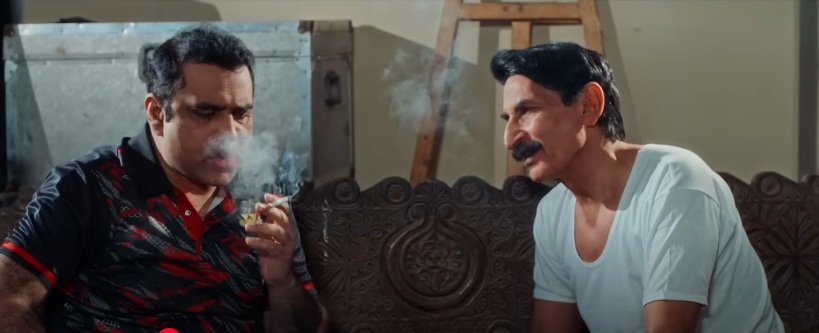
Iftikhar Thakur and Qasier Piya
The story follows two families, one from Karachi and the other from Lahore. Zakariya Sahab’s family, led by Sajid Hasan, relocates to Lahore after his son is wrongfully arrested, something viewers may find eerily reminiscent of Sajid’s own real-life experiences. On a train journey, Zakariya’s daughter Bisma experiences love at first sight with Yusuf, an aspiring artist. The family soon settles near Javed Sheikh’s household, a quintessential Punjabi family. Iftikhar Thakur plays Javed Sheikh’s brother, while Qaisar Piya appears as Yusuf’s brother, the son of Mumtaz Begum and Javed Sheikh.
Mumtaz Begum, fondly remembered for her electrifying performances in Dil Lagaya Na Jaaye, Tu Turu Taara, Aka Lari Bado Badi and Bijli Bhari Hai Mere from the mid-70s, takes on the role of a devoted mother, willing to go to any lengths for her son’s happiness. Known in her heyday as “the ‘it’ girl,” the Main Te Mera Dilbar Jaani lady, slips back into character with grace, warmth and charm.
Zakariya and Shaikh Sahab’s lives intertwine when Bisma persuades Yusuf to elope. What begins as a love story gradually expands into a narrative addressing some of life’s most overlooked issues: the looming fear of honour killing by a brother with a criminal past, the lack of trust between parents and children, and the clash between tradition and modernity.
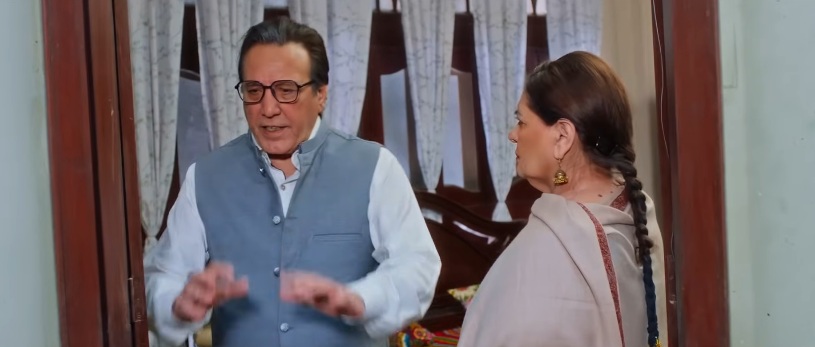
Javed Sheikh and Mumtaz Begum
The film strikes a fine balance between light-hearted humor and emotional gravity, using family dynamics and romance to showcase the vibrancy of both urban and rural Pakistani life. In Rafique’s own words, the love story serves as a metaphor; at its heart, the film is rooted in social realism, shedding light on societal norms, struggles and unspoken truths. The inclusion of the shrine of Sufi Lal Shehbaz Qalandar and the Damadam Mast Qalandar dhamaal injects spiritual vibrancy and cultural depth, symbolizing resilience, unity and the enduring power of faith.
A standout sequence written by Khalil-ur-Rehman Qamar and enacted by fashion-designer-turned-actor Yusuf Bashir Qureshi, persuades the runaway couple to return home and seek their parents’ blessings, a rare voice of reason amid the chaos.
The climax unfolds when the girl’s aunt and uncle, played with finesse by veteran Arjumand Rahim and Adnan Siddiqui, counsel both families toward restraint. Adnan’s character, a wadera, invokes the teachings of Prophet Muhammad (PBUH) and Islam’s stance on women’s rights to steer the dispute toward reconciliation. Firdous Jamal makes a brief but impactful appearance as a hakeem sahib, reinforcing the message of peace.
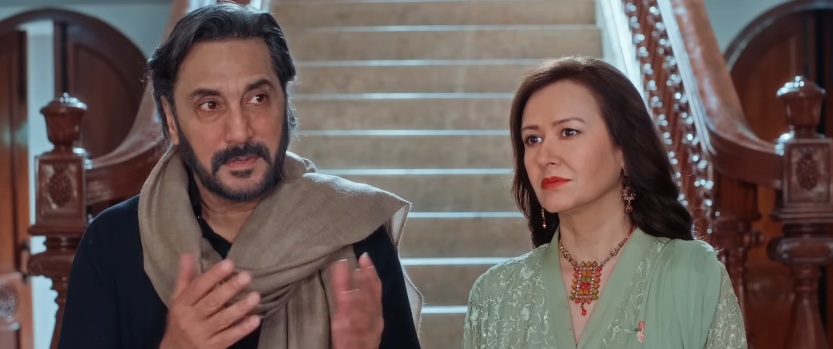
Adnan Siddiqui and Arjumand Rahim
Performance-wise, Aadi Khan resembles the evergreen pop-star Ali Haider, while Zara Hayat, though less expressive, shows potential. Bushra Ansari, still reminiscent of her Saima Choudhry persona, misses an opportunity to break type after her brief yet different role in Deemak. Veterans Sajid Hasan, Javed Sheikh and Mumtaz deliver reliably strong performances, while Iftikhar Thakur and Qaisar Piya’s comedy remains disciplined under Rafique’s direction, who also wrote some of the songs and the entire story himself.
What ultimately sets Welcome to Punjab apart is its ability to be both playful and profound. It captures the heart and soul of Pakistani culture through a celebration of language, tradition and familial love. With its vibrant storytelling, emotional authenticity and infectious humor, the film offers a feel-good experience that lingers long after the credits roll - a modern love letter to cultural unity and the enduring power of connection. The Karachi family’s dialogue is laced with local mahaviras and slang, while the Punjabis converse in their native tongue, switching gears seamlessly when interacting with others.
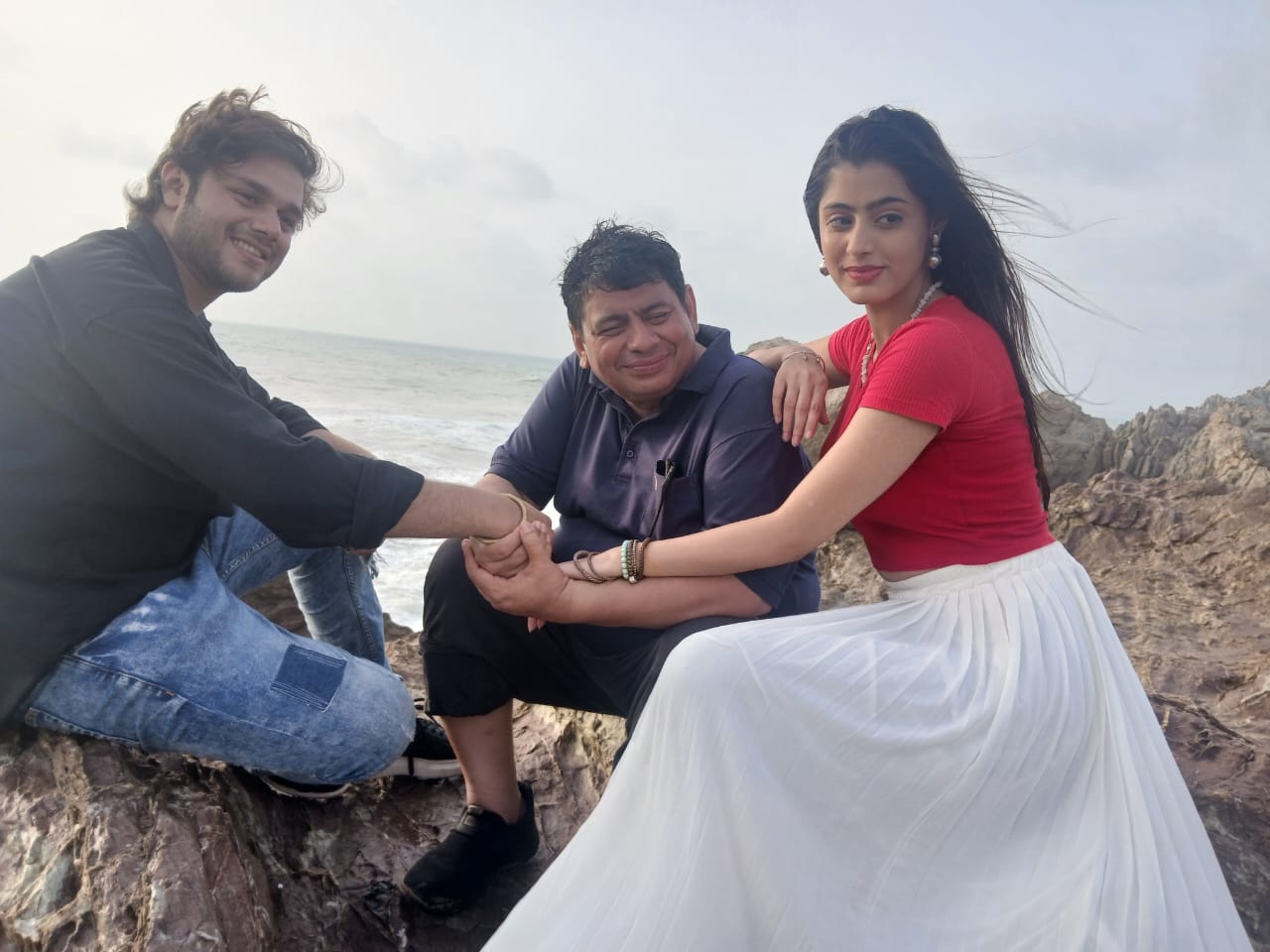
Aadi Khan and Zara Hayat with director Shehzad Rafiq
Cinematography is one of the film’s greatest strengths. Full credit goes to the Director of Photography (DOP) for capturing Pakistan’s landscapes with vivid precision, from Karachi’s scorching heat to Punjab’s open fields, Lahore’s narrow lanes and Swat’s snow-capped mountains. The old city of Lahore is captured so beautifully that the recent restoration work on display even tempted me to plan a visit myself. The city of Sukkur and the Sehwan Urs are rendered beautifully, each location enhancing the emotional tone of the scenes.
The music, too, is a highlight. It’s heartening to see M. Arshad (Jeeva, Nikah, Salakhain) and the late Zulfiqar Ali (Mehndi Walay Hath, Majajan, Choorian) crafting memorable tunes. Two songs in particular stand out: Main Ne Kholi Dil Ki Kitaab, rendered by actor-singer Mohsin Abbas Naqvi and composed by Zulfiqar Ali, and Arshad’s nostalgic compositions, Mehki Hui Yeh by Nomal Rao.
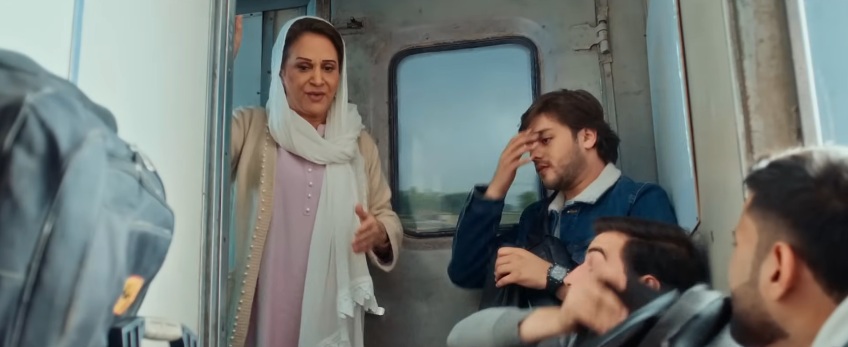
Bushra Ansari and Aadi Khan
Set in the present day, when telecommunications have shrunk the world, the film poses a simple yet profound question: who are we, and what do we truly want? While it offers no easy answers, it leaves audiences reflecting on identity, values and the invisible boundaries we create. In an industry searching for its voice, Shahzad Rafique delivers a story that speaks to the heart of Pakistan, proving that cinema can entertain, inspire and unite all at once.
You may also like: