Written by: Muhammad Suhayb
Posted on: April 16, 2026 |  | 中文
| 中文
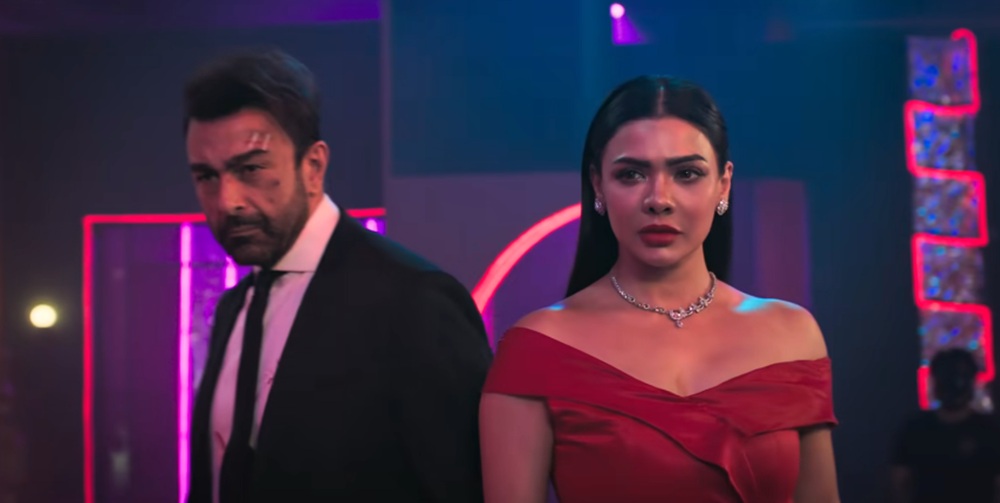
Shaan Shahid and Sarah Loren in Bullah
If you’re an ardent follower of filmmaking and someone keen to see local cinema evolve beyond its familiar comfort zone, Bullah positions itself as a deliberate attempt to raise the bar. Presented by Shake Films, the film blends stylized, high-octane action with themes inspired by Bulleh Shah, whose poetry challenged rigid social hierarchies and spoke against injustice. While the film borrows this philosophical backdrop, it struggles at times to translate that depth into a consistently compelling narrative.
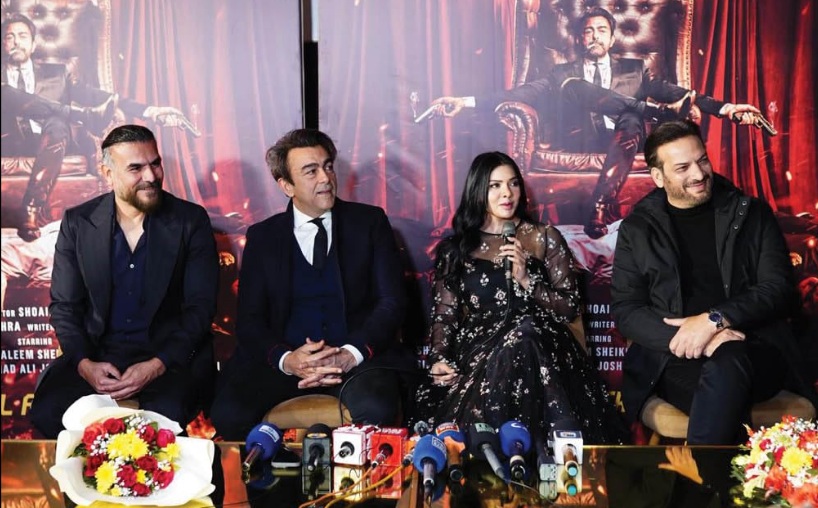
(L to R) Director Shoaib Khan, Shaan Shahid, Sarah Loren and Saleem Sheikh during the promotions of Bullah.
Shaan Shahid leads the film as Bullah, a larger-than-life savior figure who appears almost instinctively wherever injustice unfolds. He is portrayed as a protector of the oppressed, someone driven by an internal moral compass rather than institutional authority. Opposite him, Sara Loren plays Sophia, his love interest, though her role feels more symbolic than fully realized. Naeema Butt makes a striking impression in her debut as Faqeera, a flamboyant yet merciless overlord of a rural criminal network. Meanwhile, Saleem Sheikh and Adnan Butt take on the roles of Bakhshi and Shahu, urban operators who handle the gritty, often violent legwork of the film’s criminal underworld.
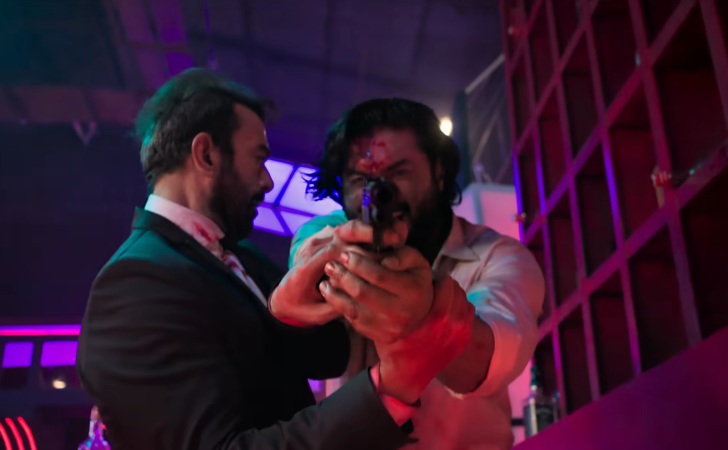
Shaan Shahid and Adnan Butt in the film
The film’s world spans both rural and urban Punjab, presenting a stark and often unsettling portrait of society. However, its reliance on broad-stroke characterization risks reducing the region to a breeding ground for society’s darkest ills. Drawing echoes from real-life incidents, such as the motorway rape case, unrest in judicial spaces and ongoing concerns about minority protection, the narrative attempts to weave pressing social issues into its storyline. Within this charged backdrop, Bullah emerges as a near-mythical guardian of cultural values and social order, embodying a clash between chaos and preservation.
At its core, Bullah follows the journey of its titular hero as he rescues victims from violent gangs and confronts criminal networks operating across Punjab. Yet, despite introducing multiple antagonists, the film offers little insight into what drives them. Characters like Faqeera and Shahu, though visually distinctive, remain largely one-dimensional, serving more as embodiments of evil than as fully fleshed-out individuals. Bullah himself, despite dominating the narrative, is not immune to this issue. A late and underexplored reference to his supposed U.S. military training hints at a deeper backstory, but it is never meaningfully expanded upon.
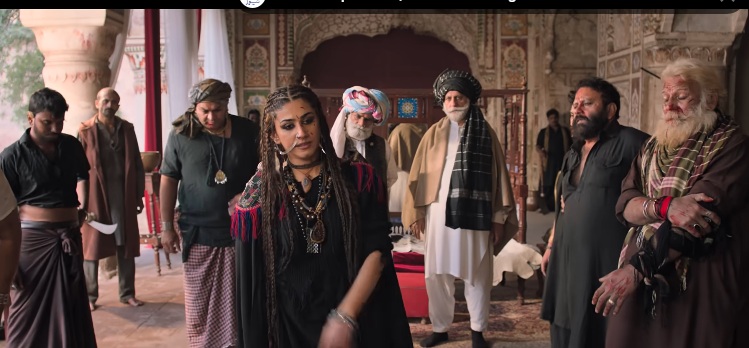
Naeema Butt in Bullah
This emphasis on spectacle over substance extends to other characters as well. Sophia, for instance, is mostly seen pacifying Bullah, with minimal agency or narrative progression of her own. Veteran actor Asif Khan appears in a powerful role, but the film takes too long to establish that he is, in fact, Bullah’s father. This delayed reveal, combined with weak characterization, diminishes what could have been an emotionally resonant subplot. With the help of modern visual effects, the film could have explored a richer backstory for both characters, adding layers to Bullah’s motivations and making his transformation more believable.
Writer Naseir Adeeb and director Shoaib Khan joined hands to bring out Bullah, but Nasir Adeeb’s writing style did not compliment the screenplay of Shoaib. Shoaib, who still needs a grip on his direction capabilities, could not do justice to veteran writer Nasir Adeeb’s writing, whose work has not changed over the years. Being said, another significant issue lies in the film’s overcrowded narrative structure. Multiple parallel storylines unfold simultaneously, often competing for attention rather than complementing each other. Faqeera and Shahu each unleash chaos within their respective domains, yet their eventual connection to Bullah feels forced and overly simplistic. Instead of building toward an organic convergence, the narrative appears to rush these threads together, resulting in a disjointed viewing experience. The inclusion of additional subplots, such as that of a Sikh girl crossing borders, further adds to the clutter, feeling more like filler than a meaningful contribution to the story.
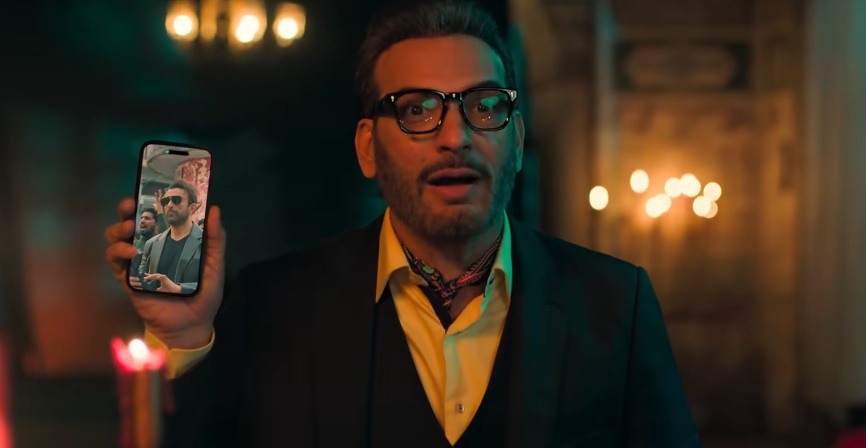
Saleem Sheikh as Bakshi in the film
Despite these shortcomings, Bullah does manage to impress on a technical level. The action sequences, choreographed by Azam Bhatti, stand out as a clear departure from the conventional fights typically seen in Lollywood. They are tightly edited, visually engaging, and demonstrate a growing sophistication in local action filmmaking. The film’s visual tone at times evokes the legacy of Maula Jatt, albeit reimagined in a contemporary setting, while also drawing stylistic inspiration from the sleek, action-driven narrative of John Wick.
The music further enhances the film’s appeal. Tracks like Lajpalan and Wekhi Kithay gradually grow on the listener, blending modern production with traditional influences. Meanwhile, Naseebo Lal’s Nain Mere Kajrare stands out as a reminder of her enduring dominance in Punjabi cinema, adding a layer of cultural authenticity to the film.
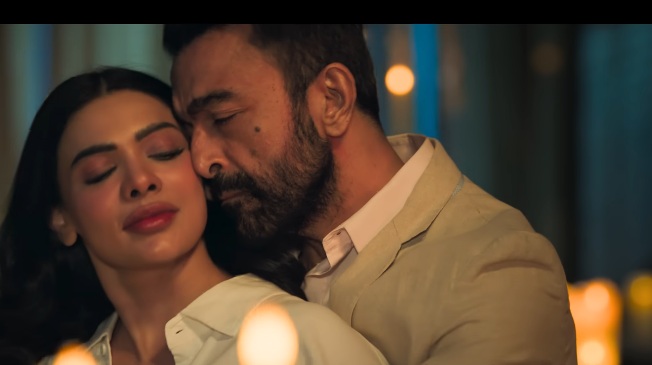
Shaan Shahid and Sarah Loren in Bullah
That said, Bullah often feels like a film caught between eras. Had it been released in the late 1990s, its larger-than-life heroism and stylized storytelling might have resonated more naturally with audiences. In 2026, however, cinematic expectations have evolved significantly. The use of modern weaponry, luxury SUVs, and exaggerated action sequences demands a stronger narrative foundation, something the film struggles to consistently provide.
Ultimately, Bullah is a film of ambition and contradiction. It aims high, occasionally soars, but frequently stumbles under the weight of its own ideas. Yet, even in its inconsistencies, it signals a step forward for Pakistani cinema, an indication that filmmakers are willing to think bigger, experiment with scale and push beyond traditional boundaries.
You may also like:
From the Horn of Africa to Bahria Town: Habesha Café Brings Centuries of Coffee Culture to Rawalpindi
(October 15, 2026)