Written by: Emma Alam
Posted on: May 06, 2026 |  | 中文
| 中文

Paulo Coelho, the author of The Alchemist
In contemporary literature, only a few works have transcended the barriers of language, culture, and theology; ‘The Alchemist’ by Paulo Coelho is certainly one of those. Originally published in Brazil in 1988, this novel, as a lighthouse for numerous readers across the world, presented the very human instincts of self-comprehension and purposefulness of life.
The Alchemist is one of the most frequently translated works of contemporary literature, because of its appeal and instinctual theme, serving as a spiritual lighthouse for countless readers.

The author, Paulo Coelho, with the translations of his famous book, The Alchemist.
It is not only a novel revolving around a shepherd boy Santiago, who is pursuing a treasure; rather, this account is a deep contemplation to explore the inner self, and to unfold the universal rule of interdependence, that creates balance and harmony.
Santiago an Andalusian Sheepherder is the focal character of story, who discards his affluent existence and pursues his unyielding aspiration unveiled in a prophetic dream about a camouflaged fortune in the vicinity of Egyptian pyramids.
This endeavour by the flock-keeper on a symbolic level indicates the human determination towards inner awakening, contentment, and resilience.
Santiago's' odyssey amid the Spain’s mountain ranges, in various parts of Sahara barren land, and along the thriving shopping districts of Tangier, indicate the shifting dynamics of human existence and the heterogeneity of life. Paulo Coelho, with his mastery of fluent and simple language, makes this complicated theme of the novel more convincing, engaging, and persuasive, even for the translator.

Santigo by Daeyoon Huh
The author of this novel uses the intrinsic conflicts of the main character as the conceptual and thematic framework to reflect his external pursuits in such a humanistic way that a reader would easily empathise with it.
By implying allegorical technique, Coelho suggests that every person has a divine fate that corresponds to one’s dreams; the modern lifestyle has deprived us of ours. Santiago’s relentless pursuit of his aspirations shows his robust faith in his inner calling.
In this narrative, the author emphasizes on the interplay of spiritual depth and convenience in the human life, “the universe schemes and cooperates with those who follow their aspirations.” (Coelho 1988, 23).
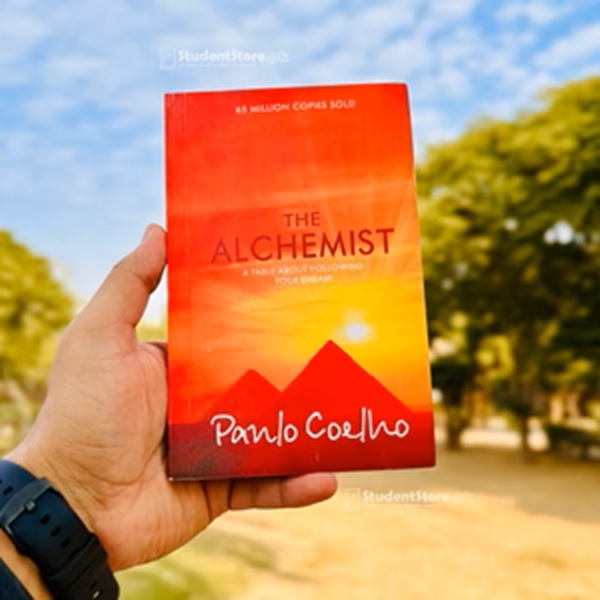
The Alchemist by Paulo Coelho
During this era of occupational stress syndrome, digital interruption, self-identity conflict, and diaspora, Santiago’s quest reflects the contemporary struggle for genuineness. Here, the treasure stands for self-discovery and realization instead of material fortune. The writer reminds readers that real fortune resides in alignment between fate and desire, rather than greed and materialistic struggle.
In the context of the most recent times of the 21st century, the Alchemist addresses the globalized generations, specifically those in developing countries, who find themselves standing at the crossroads of social security and personal ambition. The novel addresses this conflict explicitly: to attain sublimation, leaving the safe havens behind is mandatory, and embracing vulnerability is inevitable.
For professionally ambitious individuals, visionaries, and intellectuals, this account is not only motivational, but rather argumentative as well; especially when it interrogates, “Are you pursuing your own dreams or leading someone’s life?”
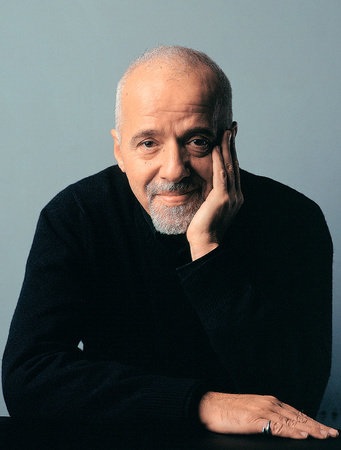
Paulo Coelho
According to the author, The Alchemist cannot be analysed merely under the paradigm of narrative structure or new discourse pattern. It is an essence-driven narrative subtly concealed as fiction, a recall that “fortune favours the brave.” Its sustained relevance lies in its aesthetic purity and integrity: it reminds readers that their heart’s deepest desire is not trivial, rather divine and sacred.
In a world saturated with distraction and noise, the writer proposes a whisper; “Pursue your dream for an asset that is real, but it begins in the inner world.”
Overview of The Alchemist
Feature Details
Writer: Paulo Coelho
Introduced As: O Alquimista
Initially Published In: Portuguese
Literary category: Spiritual journey, odyssey, metaphysical narrative, moral story
Worldwide Sales: A global bestseller
First published in: 1988
Interpretation: Over 80 languages (Guinness World Record holder)
The essence of the Work: "When the soul yearns for something, the entire universe schemes in steering you toward its accomplishment”
You may also like: