Written by: Hurmat Majid
Posted on: January 23, 2026 |  | 中文
| 中文
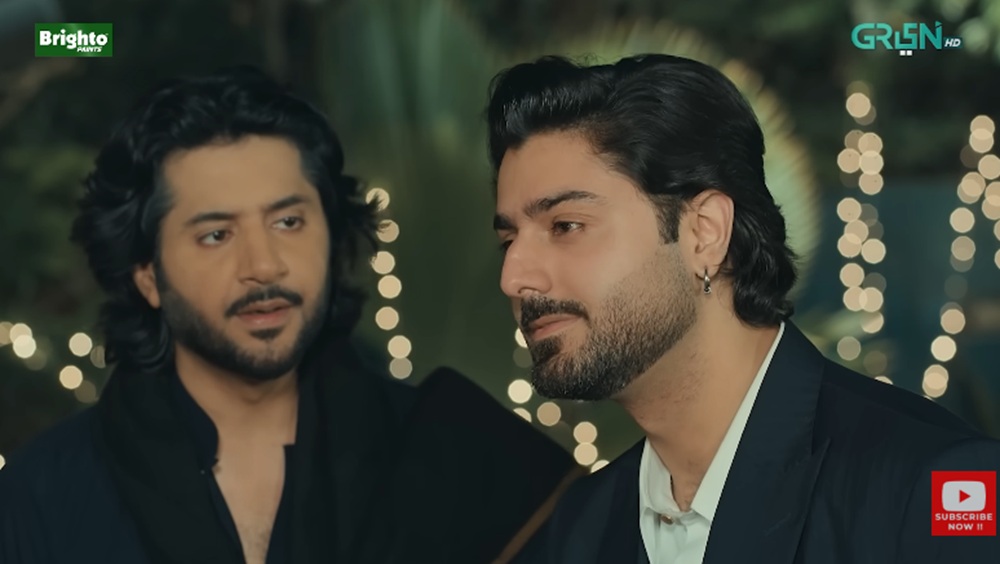
Zaviyar Nauman Ijaz and Imran Ashraf in Badshah Ghulam Sundhari
Badshah Ghulam Sundhari arrives on Green Entertainment with the kind of confidence that suggests its makers believe they have a winner on their hands. A familiar love triangle, social hierarchy, emotional conflict and a cast that should theoretically rise above formulaic material all promise something at least engaging. Directed by Amin Iqbal, known for his work on Raja Raani and written by Zanjabeel Asim Shah, who is currently receiving acclaim for the very successful Pamaal, the pedigree suggests quality. Unfortunately, what unfolds on screen is a deeply predictable, emotionally flat and creatively timid drama that feels stuck in a time loop Pakistani television desperately needs to escape.
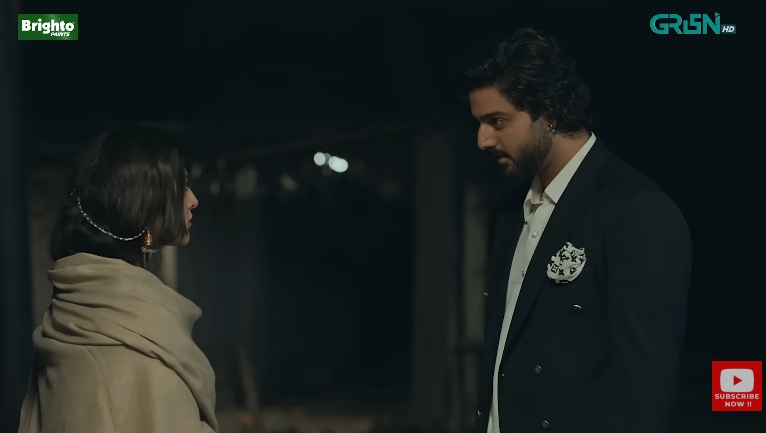
Hina Afridi and Zaviyar Nauman
At its heart, the story is disarmingly simple to the point of monotony. Badshah, played by Zaviyar Nauman Ijaz, is portrayed as an affluent landlord figure, a privileged, emotionally volatile young man whose unchecked impulses create trouble for everyone around him. He falls in love with Sundari, portrayed by Hina Afridi, who is less a character and more a beautifully framed emotional prize described in promotional material as "a young and innocent girl who falls for Ghulam." Sundari, unsurprisingly, gravitates toward Ghulam, played by Imran Ashraf, the ever-dependable good man who exists to absorb pain quietly and function as the moral compass of the narrative. Ghulam is characterized as fearless and bold, someone who fights for what he loves and what's right, though in execution he is simply a doctor, a confidant and conveniently a mulaazim appointed by Badshah's Daaji, Shahnawaz, to clean up Badshah's messes and manage his excesses. From this point onward, the drama moves exactly where one expects it to, without detours, surprises or emotional risk.
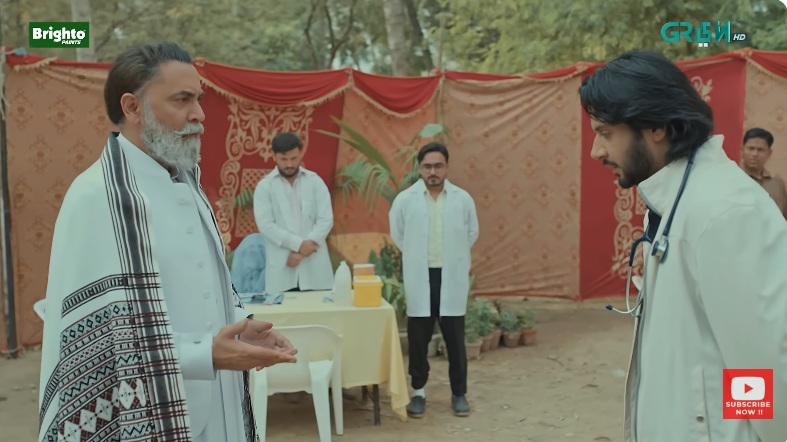
Shahzad Nawaz and Imran Ashraf
The drama attempts to layer itself with historical gravitas, bringing to life elements of Ghulam Shah Kalhoro's legacy, exploring themes of leadership and the founding of Hyderabad. However, this historical dimension feels perfunctory, window dressing meant to add weight to what is fundamentally a regressive romantic melodrama. The themes of power, loyalty and sacrifice that the drama claims to explore remain largely superficial, overshadowed by endless romantic misery and emotional stagnation.
If there is one consistently arresting element in the drama, it is Hina Afridi's physical presence. She is undeniably beautiful and the camera clearly adores her. Her soft features, expressive eyes and composed body language make Sundari visually compelling in almost every scene. Unfortunately, that is where the praise largely ends. Sundari is written as a passive figure, defined more by how men feel about her than by any internal drive of her own. For a character promoted as someone who "falls for Ghulam," she is given remarkably little agency in expressing or pursuing that affection. Afridi does what she can within the confines of the role, but no amount of screen presence can compensate for a character that lacks agency, ambition or emotional complexity.
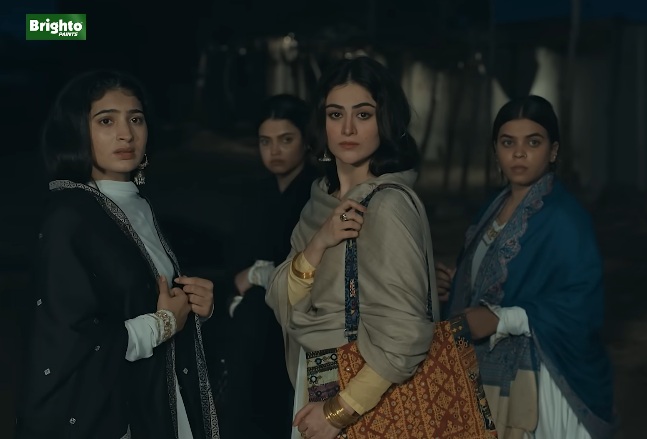
Hina Afridi with her on-screen friends
Imran Ashraf remains one of the most technically gifted actors on Pakistani television, and his performance here is, as expected, sincere and controlled. The promotional material promises a character full of fire who never backs down from any challenge, yet what we get is the same noble suffering we have seen from Ashraf repeatedly. However, there is a growing sense of concern regarding the kind of roles he is choosing. He seems to be oscillating between two extremes. Either he is playing a ghunda mawali simmering with violence, or he is the impossibly noble, humble man who exists to suffer quietly. Ghulam firmly belongs to the latter category. While Ashraf brings dignity and restraint to the role, it feels like a repetition of emotional beats he has played many times before. An actor of his caliber should be experimenting with more layered, morally ambiguous characters. At this point, the issue is not his ability but his reluctance, or perhaps inability, to step outside a very narrow creative comfort zone.
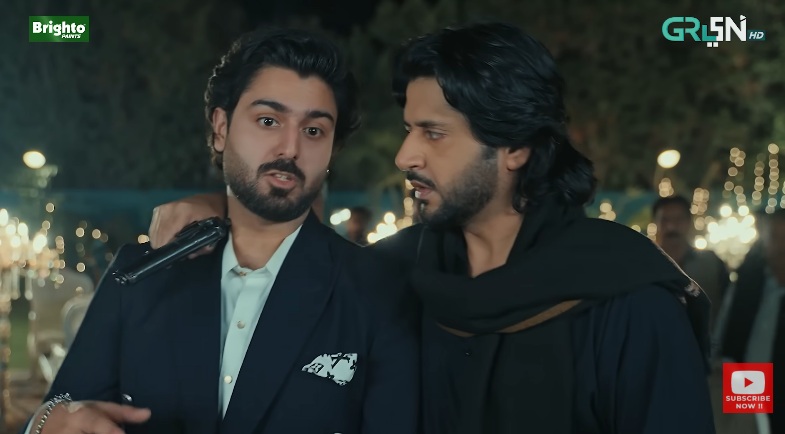
Zaviyar Nauman and Imran Ashraf as Badshah and Ghulam
Zaviyar Nauman Ijaz, as Badshah, is where the drama becomes most confusing. He has shown range in the past and is clearly capable of emotional nuance, but roles like this raise serious questions about his sensibilities and career trajectory. Badshah is written as volatile, entitled and deeply wounded, but the performance often slips into excess without enough grounding. There are moments where Zaviyar hints at vulnerability, but they are buried under melodrama and poorly structured emotional arcs. One is left wondering whether he is being failed by the script, the direction or his own choices. Whatever the reason, this role does little to establish him as an actor with a clear artistic direction.
It is genuinely pleasant to see Alyy Khan on television again, as his presence brings an automatic sense of credibility to any scene he occupies. However, there is no ignoring the fact that he seems trapped in a cycle of near identical roles. Once again, he plays the principled, sensible father of a daughter, navigating financial limitations while upholding moral integrity. The problem is not the performance but the repetition. He was essentially the same man, albeit slightly more affluent, as Aira's father in Meri Zindagi Hai Tu. Here too, despite being portrayed as intelligent and progressive, he is shown saving money for his daughter's dowry, a contradiction that is never interrogated. Alyy Khan deserves far more variety than playing the same ethical father figure at different income brackets.
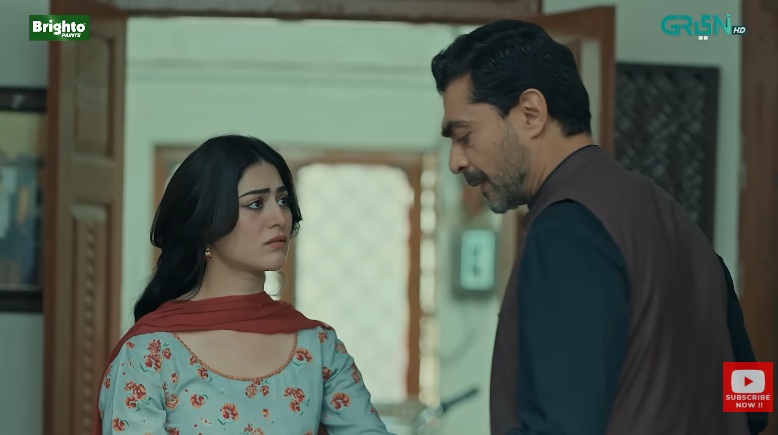
Alyy Khan and Hina Afridi
The writing, credited to Zanjabeel Asim Shah, is perhaps the most disappointing aspect of the drama. This is a writer who has just delivered a hit like Pamaal, a project that showcased control, emotional depth and narrative clarity. In comparison, Badshah Ghulam Sundhari feels like a regression. There is an almost bipolar quality to the contrast between her recent strong work and the mediocrity on display here. The characters are thinly sketched, their motivations repetitive and their dialogues painfully familiar. The drama claims to offer gripping storytelling and strong character development, yet two episodes in, we have recycled tropes and predictable emotional trajectories. It is difficult to reconcile the writer of Pamaal with the writer who has given us such flat, uninspired characterization. One expects better, especially from someone with Zanjabeel's track record.
Direction by Amin Iqbal does little to elevate the material. While the teaser reportedly gained attention for its atmosphere and production values, the actual episodes fail to sustain that initial promise. Scenes are stretched unnecessarily, emotional moments are milked instead of explored, and the pacing remains uneven throughout. There is a lack of visual or narrative urgency, as though the drama is content to rely on its cast and genre conventions rather than crafting moments that feel alive or surprising. Even confrontations and emotional revelations feel staged rather than organic. For a director coming off Raja Raani, this feels like a step backward rather than forward.
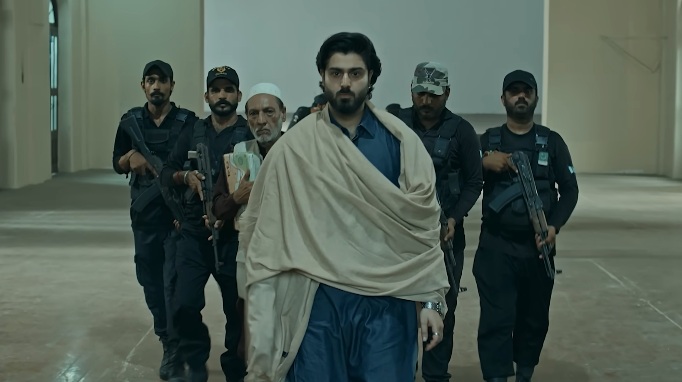
Zaviyar with his guards in the drama
From a production standpoint, under the stewardship of Babar Javed and BJ Productions, the drama is polished but uninspired. The sets, costumes and overall aesthetic are serviceable, and yes, the production values are strong, but there is nothing distinctive enough to make the show stand out in an already crowded television landscape. The breathtaking visuals and soul-stirring narrative promised in promotional material remain conspicuously absent. It looks exactly like what it is, a safe, middle of the road prime time drama designed to offend no one and excite even fewer.
In the end, Badshah Ghulam Sundhari is not an outright failure, but it is undeniably forgettable. With a predictable story, mediocre character writing, average performances despite capable actors and a refusal to take creative risks, it offers very little that feels fresh or meaningful. The intense chemistry and emotional depth viewers have reportedly praised feels more aspirational than actual. In a time when Pakistani television has shown glimpses of evolution, this drama feels content to remain firmly stuck in the past.
You may also like: