Written by: Maysam Khan
Posted on: May 22, 2026 | 

Elif Shafak and The Forty Rules of Love
Few novels manage to make centuries-old spiritual philosophy feel deeply personal and emotionally immediate, yet The Forty Rules of Love does exactly that by bringing the story of Rumi and Shams of Tabriz into conversation with the anxieties and longings of modern life. History remembers Rumi as one of the greatest poets of all time, but Elif Shafak’s novel asks a more intimate question: who transformed Rumi himself? Translated into dozens of languages and read by millions around the world, the novel has become one of Shafak’s most celebrated works for its powerful blend of spirituality, love and self-discovery.
The Forty Rules of Love is a deeply moving novel that brings the mystical and timeless teachings of Sufism to life by weaving together past and present in a powerful journey of love, faith, and self-discovery. Shafak takes readers along two parallel paths: one set in 13th-century Anatolia, where the celebrated poet Rumi meets the wandering dervish Shams of Tabriz, and the other in present-day Massachusetts, where an emotionally unfulfilled housewife, Ella Rubenstein, finds her life quietly unsettled by their story. Through these intertwined narratives, Shafak shows how love can become a radical and transformative force capable of breaking through convention, fear and even time itself.
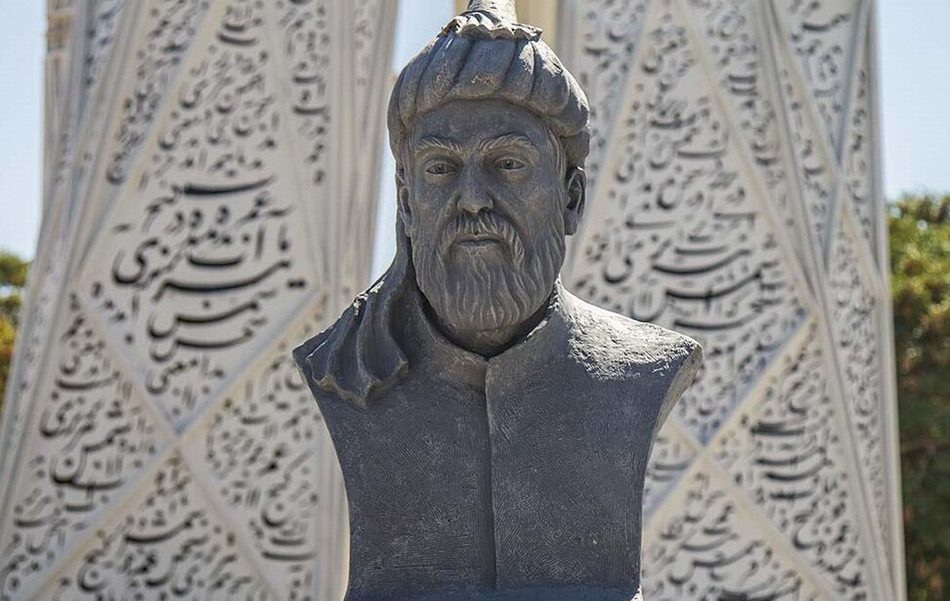
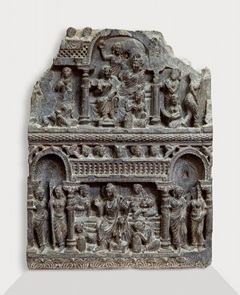
A sculpture of Shams Tabriz
The story begins with Ella Rubenstein, a middle-aged woman whose life feels narrowed by routine and a quiet sense of emptiness. Her marriage has grown distant, and her days pass in a cycle of domestic responsibility with little emotional depth. Searching for something different, she takes a job reviewing manuscripts for a literary agency. There, she comes across a novel titled Sweet Blasphemy by a mysterious author, Aziz Zahara. The manuscript tells the story of Rumi and Shams, and as Ella reads, she becomes gradually absorbed by their intense spiritual friendship and the ideas woven through the “forty rules of love.” These ideas begin to unsettle her understanding of love, faith and purpose, gently pushing her toward truths she has long avoided.
In the historical narrative, Shams of Tabriz is portrayed as a fearless and uncompromising mystic who rejects hollow piety and rigid social convention. For him, truth cannot be confined to religious authority or scholarly learning; it must be experienced through direct encounter with divine love. When Shams arrives in Konya and meets Rumi, then a respected scholar and preacher, he immediately senses in him a depth that has not yet been awakened. Their friendship transforms Rumi completely. Under Shams’ influence, he moves beyond intellectual certainty and becomes the impassioned poet of love and longing whose verses still echo across centuries.

A portrait of Molana Rumi
One of the novel’s greatest strengths lies in the depth and intensity of the relationship between Rumi and Shams. Shafak portrays their bond with emotional clarity and philosophical weight, showing how true spiritual transformation often arises through discomfort, questioning and inner upheaval. Shams persistently challenges Rumi to let go of pride, certainty and the need for approval. This transformation unsettles those around them, especially the conservative circles in Konya who see Shams as a disruptive and dangerous presence. These tensions give the novel its emotional edge and remind readers that the search for truth can be both illuminating and deeply unsettling.
As Ella continues reading about Rumi and Shams, she begins to recognize the quiet emptiness within her own carefully structured life. Through her conversations with Aziz Zahara, she slowly becomes aware of emotions and desires she had long suppressed. Her journey mirrors Rumi’s in subtle but meaningful ways: both are searching for authenticity, connection and a deeper sense of meaning. Although Ella’s narrative is quieter and more restrained than the historical one, it offers a modern reflection on the continuing relevance of Sufi thought. At times, however, it feels less compelling than the story of Rumi and Shams, whose spiritual intensity naturally dominates the novel. Even so, Ella’s transformation provides a necessary bridge for contemporary readers into the book’s philosophical core.

Rumi's whirling dervishes, Konya, Turkey
Shafak’s writing is lyrical without being distant. Rather than presenting Sufi philosophy in an abstract or academic form, she allows it to emerge through dialogue, storytelling and lived emotional experience. Her depiction of 13th-century Anatolia is richly textured, from bustling marketplaces to intimate gatherings of scholars and mystics. The narrative moves smoothly between past and present, quietly suggesting that the questions faced by Rumi and Shams are not bound to history but continue to echo in modern lives.
At times, the novel does lean toward repetition, particularly in its use of spiritual aphorisms and reflective passages. Some of the “forty rules” carry more emotional and philosophical weight than others, and a few moments drift toward idealism. Still, even when the narrative becomes slightly heavy with ideas, Shafak’s sincerity and emotional intelligence keep it grounded and engaging.
One grounded critique of The Forty Rules of Love is that it draws heavily on the modern, popular interpretation of Sufism as a universal philosophy of love, while only loosely engaging with the more complex historical and intellectual context in which figures like Rumi and Shams of Tabriz lived. Historically, Rumi was a deeply embedded Islamic scholar in 13th-century Konya, and Shams remains a partially obscure and sometimes contested figure in historical sources, known more through hagiographic tradition than verifiable biography. The novel reshapes their relationship into a clear narrative of spiritual awakening centered on love as an almost universal, trans-religious force. While this interpretation is emotionally powerful and has introduced Sufi ideas to a wide global readership, it inevitably simplifies the doctrinal, social and theological tensions of the period, especially the more rigorous scholarly environment from which Rumi emerged.

Elif Shafak
Although The Forty Rules of Love is not a strictly historical novel, Shafak captures the emotional and spiritual atmosphere of Rumi and Shams’ world with striking clarity. More importantly, she introduces Sufi thought in a way that feels accessible and deeply human. Through Shams’ teachings, the novel invites readers to reflect on fear, ego, love, faith and the difficult search for inner truth.
For readers drawn to spirituality, philosophy, history, or emotionally rich fiction, The Forty Rules of Love offers more than a traditional love story. It is a novel about transformation in its fullest sense: emotional, spiritual and personal. Shafak encourages readers to look beyond fixed identities and inherited beliefs toward a more open and compassionate understanding of love.

A page from the novel
Finally, the novel’s literary techniques also play a key role in shaping its impact. It relies mainly on a dual narrative structure that moves between modern-day Ella and the historical story of Rumi and Shams of Tabriz, creating a clear contrast between spiritual awakening and emotional stagnation. The “forty rules” function as recurring aphorisms that distill Sufi ideas into simple, memorable reflections, though they can sometimes feel slightly didactic or repetitive. The metafictional device, where Ella reads a manuscript that mirrors the historical narrative, reinforces the idea of storytelling as transformation, but at times feels structurally predictable. Symbolism, particularly the framing of love as a universal spiritual force, gives the novel emotional depth, yet can also simplify the historical and philosophical complexity it draws from. Overall, Shafak’s techniques make the novel highly accessible and emotionally engaging, even if they occasionally trade psychological and historical nuance for thematic clarity.
Long after the final page, the novel lingers not just because of its narrative, but because of the questions it leaves behind. What does it truly mean to love deeply? Can faith exist without transformation? And how much of our lives are shaped by fear of change? Through Rumi, Shams and Ella, Shafak suggests that love is not merely an emotion but a force capable of reshaping the self. That idea is what gives the novel its lasting resonance.
You may also like: