Written by: Hurmat Majid
Posted on: October 08, 2025 |  | 中文
| 中文
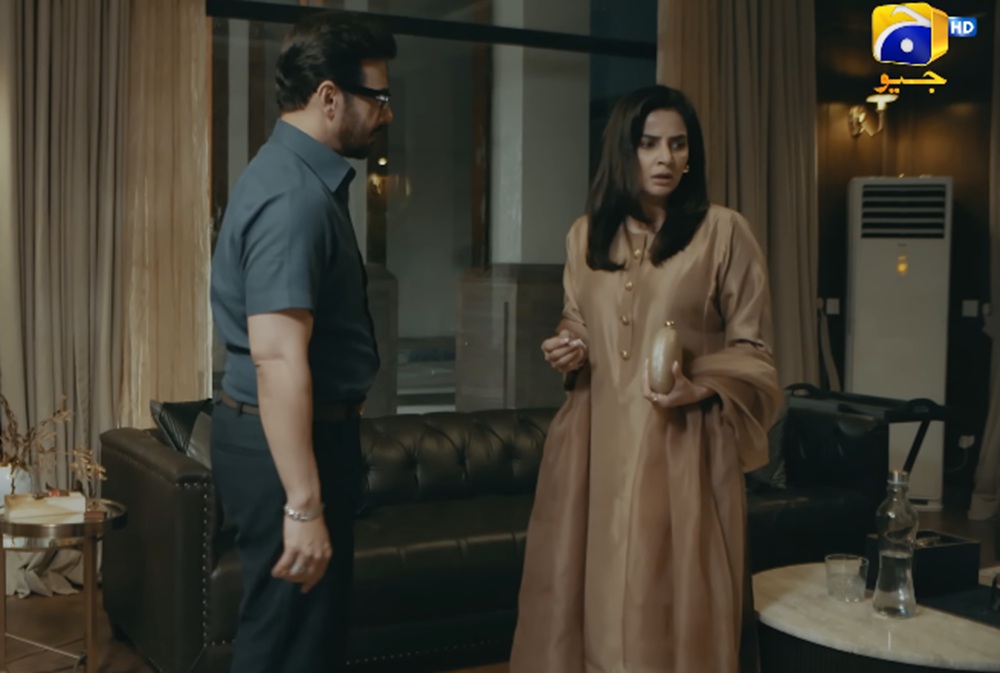
Faysal Quraishi and Saba Qamar in Case No. 9
This is not the first time that the story of a woman’s rape has made its way to Pakistani television. The subject has haunted our screens before, usually wrapped in melodrama, often simplified to victimhood and vengeance, and rarely carried with the level of sensitivity it deserves. What makes Case No. 9 different is the expectation of accuracy and integrity that comes with it. The drama has been written by Shahzeb Khanzada, a journalist who has spent years unraveling difficult stories in the domain of investigative reporting. Khanzada’s decision to write his first serial on the subject of sexual violence and the legal battle that follows creates an unusual standard for a primetime drama. This is not a story that can be glossed over with clichés. Audiences walked into it expecting authenticity, rigor, and a certain reflection of how rape cases really play out in Pakistan.

Saba Qamar as a rape survivor in Case No. 9
The plot of Case No. 9 begins with Sehar, played by the ever-brilliant Saba Qamar. Confident, articulate, and on the verge of living life on her own terms, Sehar’s trajectory changes abruptly after a brutal assault. Episode one wastes no time in laying bare the cruelty of the crime and the power dynamics that underpin it. The antagonist Kamran, portrayed by Faysal Quraishi, is a man of influence whose ego and entitlement drive him to commit an unforgivable act. By the time the first episode closes, viewers are already unsettled, knowing that this is not going to be an ordinary tale of wrongdoing followed by swift justice. The shock of the first installment sets the stage for a courtroom drama where every move matters.
The subsequent episodes show Sehar making the difficult decision to fight for justice. Filing a case in Pakistan’s legal system is no small feat for a rape survivor, and the drama does not brush past the hesitation, the fear, and the victim blaming that surrounds her. In promos and early episodes, we already see the central conflict shaping up: Kamran is not a villain who hides in the shadows. He is wealthy, powerful, and unapologetically arrogant. His defense is not simply about denying guilt but about manipulating the system to his advantage. The case begins to move into the courtroom where prosecutors, defense lawyers, and witnesses will decide whether truth can hold its ground against privilege. It is clear that the drama intends to dissect not only the crime but also the machinery that determines its outcome.

Junaid Khan and Faysal Quraishi
Casting Saba Qamar as Sehar was an inspired choice. Few actors in Pakistan carry the blend of vulnerability and defiance that she does so naturally. Qamar has spent her career balancing mainstream stardom with socially relevant roles, and Case No. 9 fits squarely into her more challenging repertoire. She plays Sehar without artifice, capturing the horror of violation while never allowing the character to be reduced to just a victim. Her ability to shift from moments of breakdown to steely resolve makes her the emotional anchor of the show.
Opposite her, Faysal Quraishi proves once again that he does not shy away from difficult roles. Known for his versatility and his willingness to inhabit characters that test audience sympathies, Quraishi embraces Kamran with chilling precision. He does not resort to caricature but instead builds a portrait of entitlement that feels alarmingly familiar. This is not a mustache-twirling villain. This is the sort of man who believes power insulates him from consequences, and Quraishi delivers that menace in measured doses. It is an uncomfortable performance, and precisely for that reason, a commendable one.
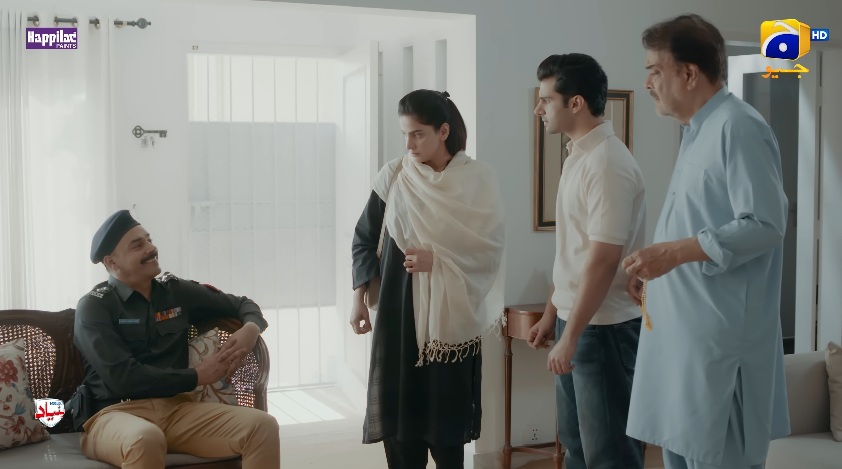
Gohar Rasheed, Saba Qamar, Ahmed Randhawa and Shahnawaz Zaidi in Case No.9
One of the most exciting elements of the drama is the return of Aamina Sheikh to television. As Beenish Ali, the prosecutor who takes Sehar’s case, Sheikh brings intellectual weight and moral clarity to the proceedings. In interviews she has spoken about how the role is meant to educate audiences on how rape cases unfold within Pakistan’s legal framework, and that intent comes through on screen. Sheikh’s ability to embody both empathy and authority makes her presence a vital counterbalance to the forces trying to silence Sehar. Her comeback is not only a delight for fans who missed her nuanced performances but also a reminder of how much Pakistani drama has been lacking without her.
The supporting cast further strengthens the narrative. Junaid Khan, Naveen Waqar, Gohar Rasheed, Hina Khawaja Bayat, Ali Rehman Khan, Noor ul Hassan, and others each inhabit their roles with conviction. Together they paint a landscape of family members, colleagues, and legal practitioners whose reactions to the case expose the many shades of complicity and courage within society. None of the characters feel like filler. Each one adds a layer to the web that surrounds Sehar, whether as allies, skeptics, or silent observers.
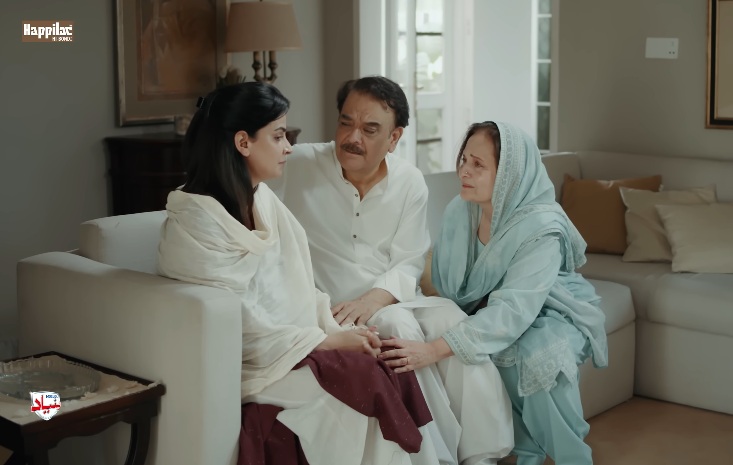
Saba Qamar, Shahnawaz Zaidi and Hina Khawaja Bayat
Direction is crucial for a story of this nature, and Syed Wajahat Hussain deserves credit for handling it with both restraint and cinematic flair. Hussain has been on television for years, gradually building a body of work that reflects his growth as a storyteller. With Case No. 9, he seems to have reached a new level. The visual grammar of the show is sharper, the pacing more deliberate, and the courtroom sequences are staged with an intensity that avoids sensationalism while keeping the audience riveted. Hussain’s hand is evident in the careful blocking of scenes, the use of silence as effectively as dialogue, and the way the camera lingers on characters’ faces to capture their internal conflicts. This is television that looks and feels different, which is precisely what Geo Entertainment needed at this moment.
Production also deserves a mention. Abdullah Kadwani and Asad Qureshi of 7th Sky Entertainment have delivered a serial that is polished without being glossy. The sets are realistic, the wardrobe restrained, and the overall picture quality superior to much of what passes for primetime drama. The attention to detail is evident in the way court documents, police stations, and even household spaces are designed. These small touches enhance believability, making it easier for audiences to immerse themselves in the world of the story. In a drama where credibility is everything, production design becomes more than background. It is part of the storytelling itself.

Faysal Quraishi and Gohar Rasheed
What makes Case No. 9 compelling is not only its subject matter but also its willingness to confront audiences with uncomfortable questions. How does a society treat its survivors? What does it mean to challenge a man of privilege? How does the law serve justice when evidence is pitted against influence? These questions are not asked in abstract but played out through characters we can recognize. That resonance is why the drama has gripped audiences from the start. The hope now is that it maintains its momentum without falling into the traps of melodrama or didactic preaching.
As the first four episodes indicate, the series is still setting the stage for the courtroom battles to come. The emotional intensity of the opening, the performances of its leads, and the assured direction all suggest that this could become one of the most significant dramas of the year. It is not flawless. Some viewers may find moments that verge on sensational, and others may question whether the justice system will be represented in its entirety. But the ambition is undeniable, and the effort to balance entertainment with education is worthy of praise.

Junaid Khan and Navin Waqar
In conclusion, Case No. 9 is a drama that attempts more than just storytelling. It strives to confront a reality many would prefer to avoid. By bringing together Saba Qamar’s fearless performance, Faysal Quraishi’s unsettling portrayal, Aamina Sheikh’s powerful comeback, and Syed Wajahat Hussain’s evolving directorial vision, the drama delivers a viewing experience that is both gripping and thought provoking. Geo Entertainment and 7th Sky Entertainment have invested in a project that sets a new bar for what socially conscious television can look like. If the first four episodes are any indication, Case No. 9 is poised not just to attract ratings but to leave an impact on how we see survivors, perpetrators, and the long road to justice.
You may also like: