Written by: Kinza Asif
Posted on: November 28, 2025 |  | 中文
| 中文
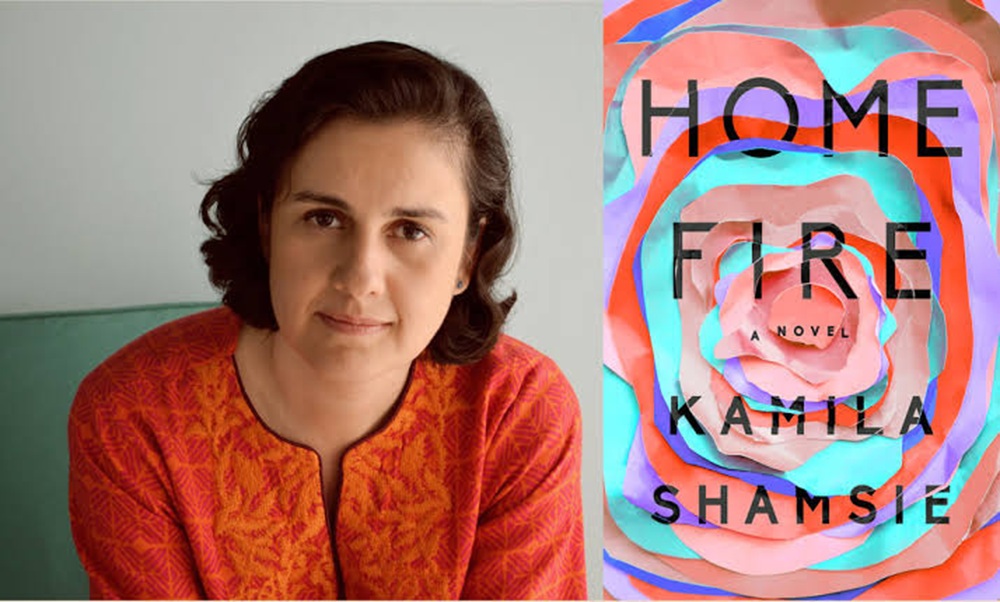
Kamila Shamsie and the book
In Home Fire, Kamila Shamsie constructs a contemporary tragedy grounded in politics, family and affection. Rooted in the timeless tragedy of Antigone, Kamila Shamsie’s Home Fire imagines the ancient conflict between state law and familial loyalty in modern context. The outcome is a haunting narrative that remains in your thoughts long after the last page, an account that is both personal and vast, subdued and intense, remote yet familiar.
At its essence, Home Fire explores the tension between opposing realms: family and government, belief and belonging, obligation and longing. These themes may not be entirely new, but what distinguishes Shamsie’s novel is the seamless way she weaves them into everyday existence, illustrating how political choices affect the personal lives of those who are simply seeking acceptance.

Kamila Shamsie
The story begins with Isma, a young woman in London, traveling to the U.S. after years of dedication, having cared for her younger siblings following the passing of their mother and grandmother.
Her younger sister Aneeka, passionate and highly emotional, contrasts with her in every aspect. Where Isma complies, Aneeka opposes. While Isma seeks to safeguard the family reputation, Aneeka boldly embraces love without restraint. Her beloved is Eamonn, the child of Karamat Lone, a British Muslim politician who has forged his career by condemning extremism, even if it requires distancing himself from his own community.
Eamonn’s character is particularly interesting. He is one of the five protagonists of novel. He is someone caught in the middle, pulled between his father’s expectations and the truth unfolding before him. His journey from privilege to vulnerability is gradual and painful, handled with a subtlety that reflects Shamsie’s deep understanding of how power and guilt interact.
But the novel’s real storm brews around Parvaiz, the twin brother of Aneeka, who becomes entangled in the dangerous web of radicalization. His transformation is not presented as a caricature, nor is it sensationalized. Shamsie takes the time to humanize him, to show the loneliness, confusion, and manipulation that lead him to join ISIS. The decision is tragic not just because of where it takes him, but because of how easily it could have been prevented had society offered him belonging instead of suspicion.
One of the novel’s strengths is its structure. Shamsie tells the story from five different point of views. This allows the reader to feel the complexity of the narrative without becoming overwhelmed. It also mirrors how real-life events are never experienced in isolation but through relationships, through emotion, through perspective.
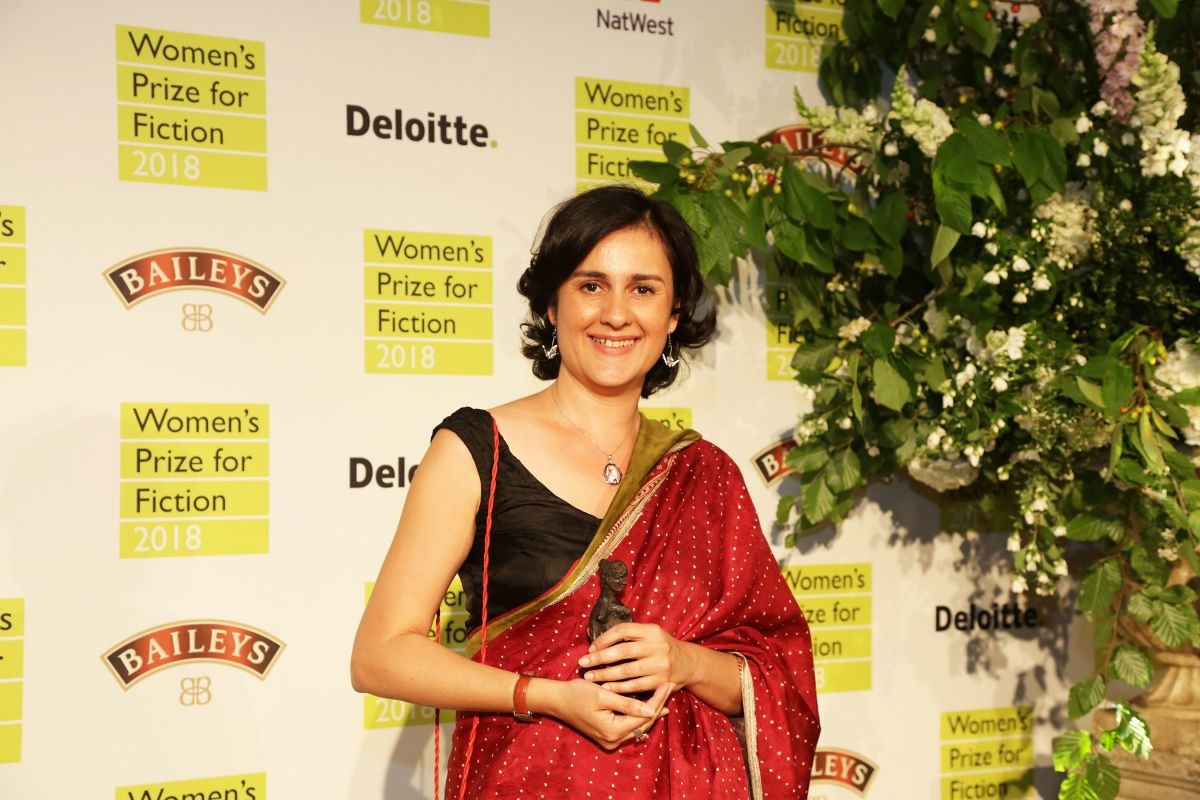
The author at an event in 2018
Language-wise, Shamsie’s prose is elegant without being showy. She writes with precision, choosing her words with care, letting silence and subtext speak where needed. There are moments of quiet poetry in the middle of chaos, and that balance between restraint and intensity gives the novel its emotional power.
What’s also commendable is how Home Fire refuses to offer easy answers. It does not fall into the trap of defining good or evil in black and white. Karamat Lone, for example, is a man of contradictions. He genuinely wants integration but sacrifices empathy in the name of assimilation. His choices may make him a villain in his son's eyes, but Shamsie doesn't strip him of humanity. He believes he is doing what’s best for his country, even if the cost is his own family.
Similarly, Aneeka’s love for her brother isn't framed as noble or naive. It’s raw, almost desperate, and entirely believable. Her determination to bring his body home after his death is where the Antigone parallel becomes explicit, but even without that literary backdrop, her actions speak to something deeply human: the desire to mourn on your own terms.
The political commentary in Home Fire is sharp, but never preachy. The novel speaks to the condition of being Muslim in the post-9/11 West, of being scrutinized and mistrusted, of having to prove loyalty at every step. But more than that, it is about the cost of belonging, and the sacrifices people make—willingly or not—in order to be accepted.
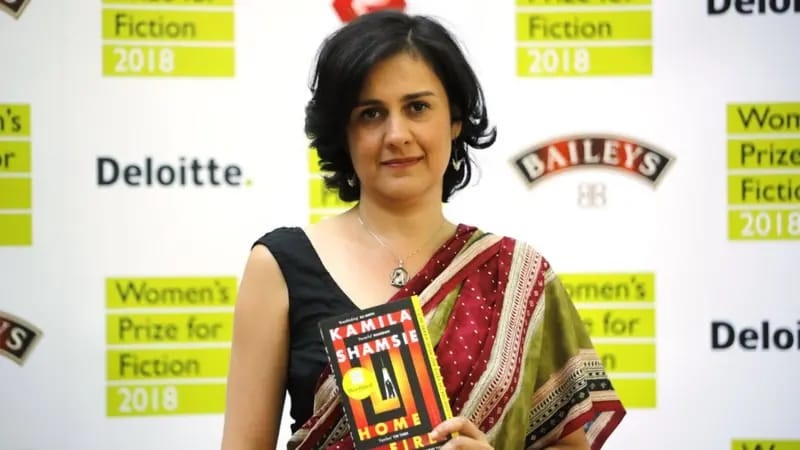
Kamila Shamsie has won the 2018 Women's Prize for Fiction for her novel Home Fire.
By the time the novel reaches its shocking climax, Shamsie has built a narrative that feels both inevitable and devastating. The ending is abrupt, explosive, and almost cinematic. Some readers might feel it comes too suddenly, but others will see it as a deliberate choice, a mirror to how life, especially in politically charged realities, often ends not with slow fadeouts but with instant, irreversible outcomes. Beyond its plot, Home Fire succeeds because it doesn't just tell a story. It makes you feel its weight. It reminds readers that behind every headline is a family, behind every political debate is a young man or woman trying to make sense of who they are.
The novel resonates even more because it doesn’t take place in a vacuum. In the age of increasing polarization, of borders tightening and rhetoric hardening, “Home Fire” asks what it means to be loyal, and whether loyalty is even possible when you're asked to split yourself into pieces to survive.
For readers unfamiliar with Kamila Shamsie’s work, Home Fire is a powerful introduction. For those who have followed her career from Burnt “Shadows” to “A God in Every Stone” it’s a brilliant continuation of her commitment to telling stories that matter, stories that unsettle, that challenge, that humanize.
Ultimately, Home Fire is a tragedy, but not just in the literary sense. It is a tragedy because it reflects a world where love is not always enough, where family cannot always protect, and where justice does not always prevail. But it is also a novel of resistance, quiet, fierce and unforgettable.
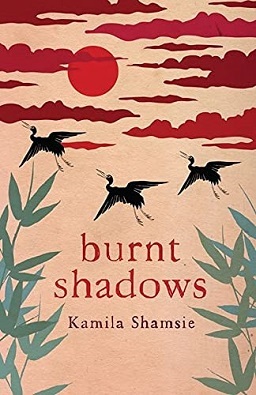
Burnt Shadows by Kamila Shamsie
In a time when fiction is more necessary than ever, Kamila Shamsie reminds us why stories matter—not just to entertain or distract, but to reflect, to question, and, perhaps to heal.
You may also like: