Written by: Saman Khalid
Posted on: August 27, 2026 |  | 中文
| 中文

A Representation of Body Dysmorphia
If protruding shoulder blades, sickly limbs, and ribs visible enough to tally paint a frightening picture in your head, count yourself fortunate. You are among the few sane individuals with a healthy perception of health and beauty. Unfortunately, the same cannot be said for the landscape we happen to be witnessing currently. Following the sharp rejection of the deadly 2000s heroin-chic trend, many of us naively believed that we had moved past toxic beauty standards once and for all. However, the 2026 ecosystem of social media, showbiz, and modern medical interventions proves that such hopes are sorely misguided.

Jenna Ortega’s Drastic Weight Loss
If you have spent any time on social media recently, chances are you have come across Ariana Grande’s concerning weight loss transformation. It initially sparked discourse when she showed up for the Wicked promotions alongside Cynthia Erivo, but the online meltdowns tripled in intensity following her recent music tour. With an impossibly gaunt face, and a skeletal frame loosely draped in nothing but skin, Grande’s emaciated appearance set off alarm bells across her fandom and beyond. This deeply unsettling situation is not just a one-off to be blamed on one celebrity’s personal issues; it is, in fact, the harbinger of a much larger crisis in the making. Jenna Ortega, Lily Collins, Alexa Demie, Michelle Yeoh and Demi Moore are just some of the other stars that have exhibited drastic weight loss over a short span.
With more and more instances stacking up, it isn’t hard to surmise that Hollywood is on the precipice of a new fashion era; the ultra-skinny aesthetic we presumed to have left behind in the early 2000s. If so, many celebrities are deliberately catering to a specific look, it most certainly points to the need to satisfy shifting Hollywood standards. After all, this is exactly how beauty trends are born: a host of celebrities adopt a certain look, the fashion industry catches up, social media amplifies it and soon enough, the entire dynamic transforms. It would be willfully ignorant to pretend that the 2000s “Kate Moss Body” is not making a comeback in the big 2026.
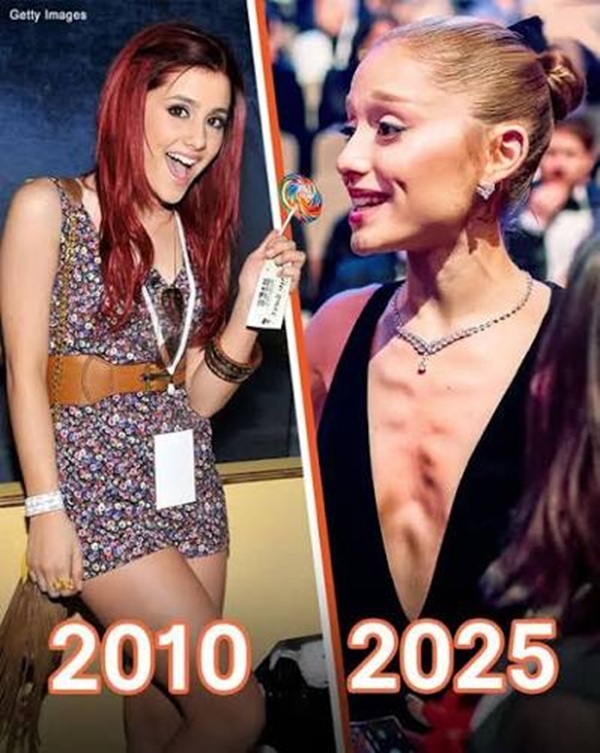
Ariana Grande Before and After
5 am Pilates classes, aesthetic workouts and clean eating sound pretty innocuous on paper. However, this brand of health promotion is marked by a dark underbelly that becomes obvious on closer inspection. While it has metastasized across every social media platform to some extent, #Skinnytok seems to be the clear trailblazer, boasting millions of followers and ultra-fast accessibility. Posing as a community meant for people looking to shed a few pounds, #Skinnytok is actually a hub of videos blatantly glorifying eating disorders and toxic diet culture.

Liv Schmidt; Founder of the #skinisociety
These creators take great pride in flaunting their less than 1200 cals/day diet, non-existent appetite, impossibly tiny waists and ridiculously stringent ”skinny rules”. While TikTok banned search results for “SkinnyTok” in 2025 owing to the same concerns, the preposterous community is still alive and well. Liv Schmidt seems to have become a household name in this space. It wouldn’t be an exaggeration to call her the foulest personification of this trend’s worst aspects. From advice on how to stay full on a forkful of pasta while on vacation, to the promise of fellow women cheering you on as you leave a few bites of your meal untouched, her personal platform called “theskinnisociety” offers the whole package. Needless to say, such content aims to place a woman’s entire sense of self-esteem on the ability to stay as thin as possible, regardless of its catastrophic impact on her mental and physical health.

Ozempic, Bane or blessing
What happens when Hollywood’s obsession with thinness meets a drug that magically delivers rapid weight loss? What sounded like a remote fantasy a decade ago is now widely accessible to the rich as “Ozempic”. Ozempic was initially approved for type 2 diabetics, but its weight loss benefits soon turned it into the drug of choice for getting rid of body fat. When used appropriately by those who actually need it, it can be a genuinely life-altering medication. The problem, however, arises when there are no enforceable regulations governing its usage. The rampant shrinkage of celebrity bodies clearly indicates that Ozempic is practically a cosmetic intervention; one that anyone with the right resources can exploit. To make matters worse, social media influencers are purposely discreet about their Ozempic use, while proudly parading their sweeping weight loss results. This disingenuous dynamic creates unfair expectations and unfounded insecurities among vulnerable women.

Kate Moss; the 2000s Ideal
Those who don’t learn from history are destined to repeat it. The 2000s left massive destruction in its wake - eating disorders, body dysmorphia and an entire generation of women riddled with self-consciousness. Unless we wake up and face the music, the day we witness it all over again isn’t far. Online scrutiny demands that we refrain from commenting on people’s bodies; and while that is a good rule of thumb under normal circumstances, it doesn’t hold up in the face of the horrors awaiting us. Staying silent and pretending that nothing untoward is happening would be akin to accepting that frail is the new chic. If we are to break this toxic cycle, we must come to the personal and collective realization that true health lies not in a number on the scale, but in the freedom to exist in your own body unapologetically
You may also like: