Written by: Azfar Khan
Posted on: October 14, 2026 | 
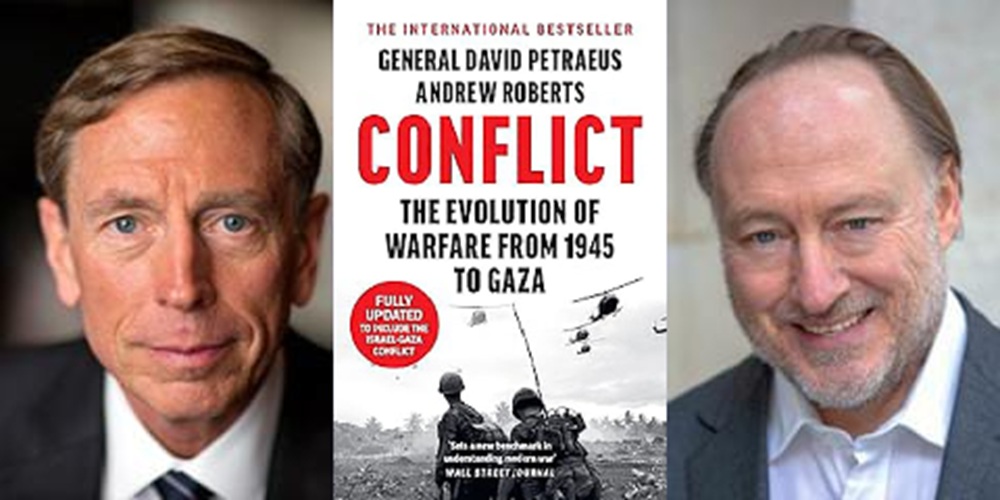
The Book Conflict: The Evolution of Warfare from 1945 to Gaza and the Authors David Petraeus and Andrew Roberts
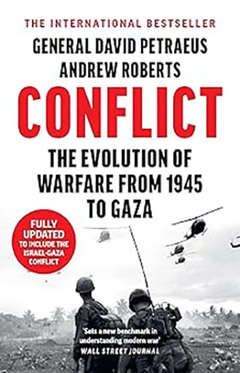
War has always played a significant role in world history. Although wars have devastated human societies, they have also contributed to the development of human civilization. This may sound paradoxical, but wars have often acted as catalysts for innovation. Throughout history, many technological and strategic developments have emerged from warfare and subsequently benefited civilian society. In this context, Conflict: The Evolution of Warfare from 1945 to Gaza is a very intriguing read for readers interested in the history of warfare. The book explores how the nature of warfare has changed since 1945, how military strategies have evolved, and how technological developments have transformed the way wars are fought. The book is written by David Petraeus, a former senior American military commander who played a significant role in the Iraq War and the wider War on Terror, and Andrew Roberts, a renowned historian and biographer of Napoleon.
To understand the changing nature of warfare, we must first understand why wars occur. Carl von Clausewitz and Henry Kissinger offer important perspectives on the relationship between conflict and the distribution of power. Clausewitz famously described war as the continuation of politics by other means, highlighting the close relationship between military force and political objectives. Henry Kissinger emphasized the importance of the balance of power in international relations.
Consider two competing powers. If one becomes significantly stronger than the other, it may attempt to dominate or eliminate its rival as a strategic threat. The weaker power, in response, may strengthen its military capabilities or seek alliances to restore the balance. When this equilibrium is disturbed, competition and insecurity can intensify, increasing the possibility of war. Although an imbalance of power does not automatically lead to conflict, the struggle to establish or restore a favourable balance has been an important feature of international politics. This perspective provides a starting point for understanding how warfare has evolved since 1945.
After the Second World War, warfare gradually moved beyond traditional conventional confrontations towards increasingly technological and indirect forms of conflict. In earlier periods, countries often fought one another directly through their armed forces. After 1945, however, a different pattern became increasingly prominent: proxy warfare. In proxy warfare, rival states support other actors to pursue their strategic objectives without necessarily engaging in direct military confrontation. The India-Pakistan rivalry provides an example of this broader pattern of indirect confrontation. Both countries have repeatedly accused each other of supporting militant groups and facilitating cross-border violence, while Kashmir has remained a major focus of their rivalry. The Vietnam War provides another important example of the changing nature of warfare. Vietnamese communist forces employed guerrilla tactics alongside conventional military operations, keeping American forces engaged in a prolonged and costly conflict.
Guerrilla warfare is particularly challenging for conventional armies because fighters can operate among the civilian population, exploit local knowledge, and avoid confrontations in which a technologically superior opponent might have an advantage. Distinguishing combatants from civilians can become extremely difficult. Despite its overwhelming military resources, the United States suffered enormous human, financial, and political costs during the Vietnam War. The conflict demonstrated that superior firepower does not necessarily guarantee victory. The ability to adapt military strategy to local conditions, sustain a prolonged struggle, and achieve political objectives can be just as important as conventional military superiority.
One of the most significant transformations in modern warfare is the growing importance of drones and unmanned systems. According to the broader argument presented in the book, contemporary Warfare and military competition are increasingly shifting from traditional tank-based warfare towards drone warfare. The battlefield is becoming more technologically advanced, and aerial systems are playing an increasingly important role.
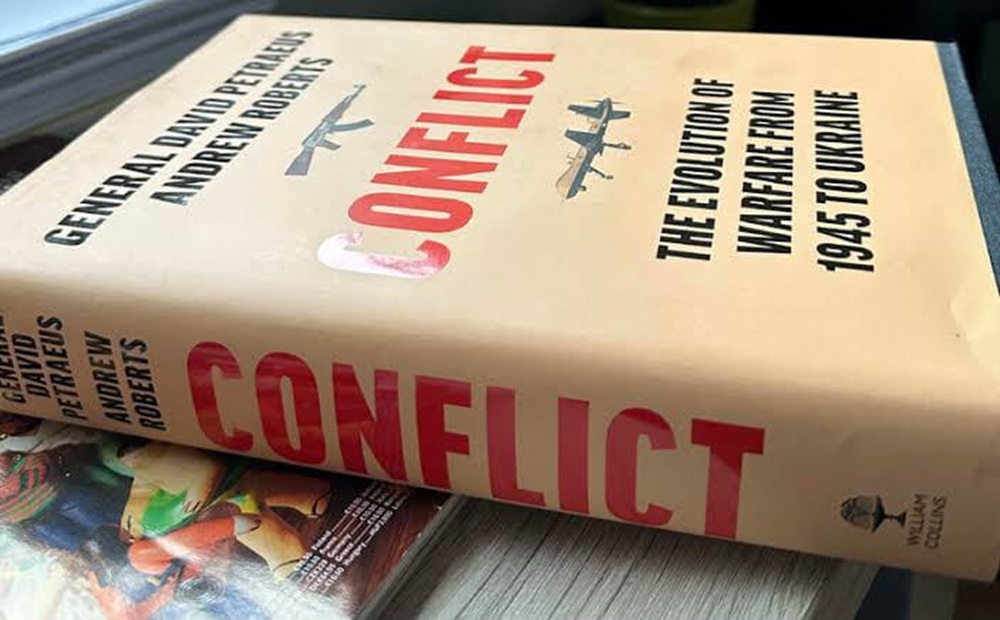
Earlier Edition of the Book Published in October 2023
The Russia–Ukraine war illustrates this transformation. Ukraine has made extensive use of drones for surveillance, reconnaissance, target identification, and direct attacks. Its investment in domestic drone production has also expanded its capacity to employ relatively inexpensive unmanned systems. This technological adaptation has helped Ukraine resist a much larger Russian military. Russia possesses considerable conventional military strength and manpower, while Ukraine has increasingly relied on innovation and the effective use of drones to challenge Russian forces. However, modern warfare is not exclusively fought through drones. Tanks, artillery, infantry, missiles, and other conventional capabilities remain important. The key development is that drones have become an integral part of contemporary military strategy.
A similar principle can be observed in the confrontation involving Iran, the United States, and Israel. Iran has employed drones and missiles to conduct retaliatory strikes and impose costs on more technologically advanced adversaries. One of the major advantages of drone warfare is its potential cost asymmetry. Relatively inexpensive drones can force an opponent to use costly air-defence systems or expend substantial resources to intercept them. In this way, a state with fewer resources may still create significant military and economic pressure on a stronger adversary. The broader lesson is that military power increasingly depends not only on manpower and conventional weapons but also on technological innovation, cost-effectiveness, and the ability to adapt to new forms of warfare. The Battle of Plassey in 1757 illustrates how military outcomes can be influenced by technological capabilities, political circumstances, and strategic decisions. The forces of the British East India Company, led by Robert Clive, defeated the army of Siraj ud-Daulah, the Nawab of Bengal. Although the Nawab possessed a considerably larger army, political intrigue, defections, and the failure of important sections of his forces to fight effectively played a crucial role in the British victory. The battle demonstrates that numerical superiority alone does not guarantee military success. Leadership, political alliances, military organisation, and strategic circumstances can prove equally decisive.
The Second World War provides another example of technological innovation transforming warfare. Germany’s early military victories were partly associated with the coordination of air power, armoured formations, and ground forces. The Luftwaffe, Germany’s air force, played an important role in supporting military operations. The effective integration of aircraft with ground forces helped Germany achieve rapid advances during the early stages of the war. These historical examples demonstrate that warfare has repeatedly encouraged technological development. From gunpowder artillery to military aviation and modern drones, the competition to defeat an adversary has pushed states to develop new weapons and refine their military strategies. Nevertheless, technological superiority is not the sole determinant of victory. Leadership, logistics, political circumstances, and strategic judgement remain essential. The evolution of warfare raises an important question about the future of human civilization: what happens when machines increasingly begin fighting other machines?
Modern technological developments are moving military competition towards a future in which artificial intelligence, autonomous systems, and robotic weapons may play an increasingly important role. This development also creates serious concerns. Machines operate according to programming, algorithms, and assigned objectives. They do not possess human emotions, compassion, or moral judgement in the same way that human beings do. If autonomous weapons are allowed to make increasingly independent decisions about life and death, the consequences could be dangerous.
Who will determine whether a target should be attacked? Who will be responsible if an autonomous weapon mistakenly kills civilians? What happens if automated systems begin responding to one another at speeds that leave human operators unable to intervene effectively? These questions demonstrate the potential risks of increasingly automated warfare. If machines begin fighting one another across multiple theatres of conflict, it may become increasingly difficult for human beings to control escalation or prevent unintended consequences. The concern is that military systems could make decisions faster than political and military leaders can assess their implications. The future of warfare therefore presents a serious challenge. Technological innovation may make military operations faster and more precise, but it also raises questions about human control, responsibility, and the ethical limits of warfare.
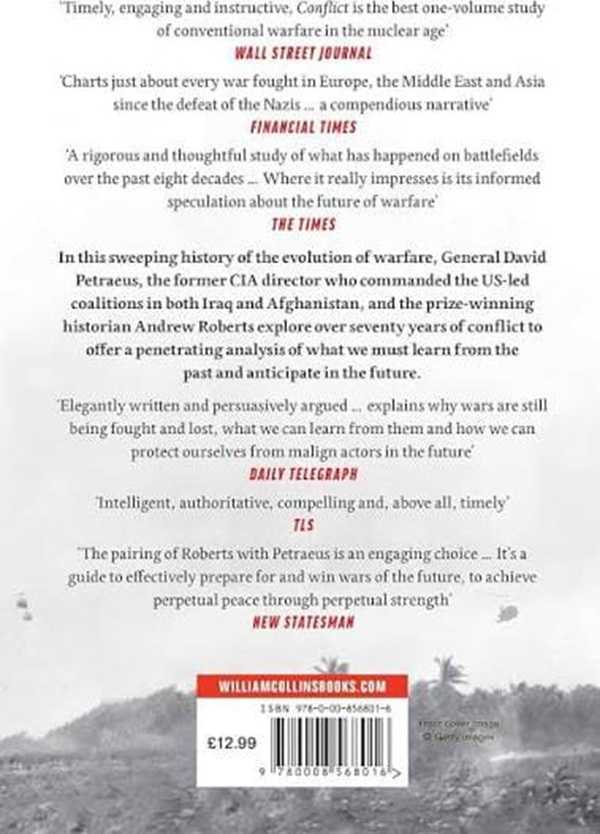
Back Cover of Conflict: The Evolution of Warfare from 1945 to Gaza
Conflict: The Evolution of Warfare from 1945 to Gaza provides an opportunity to examine how warfare has evolved and how technological innovation has influenced military strategy throughout history. From the balance of power and proxy warfare to guerrilla tactics, drones, and artificial intelligence, the nature of conflict has continued to change. Historical examples such as the Battle of Plassey, Babur’s victory at Panipat, and Germany’s use of air power during the Second World War demonstrate how technological capabilities and strategic adaptation can influence military outcomes. The Russia–Ukraine war and the use of drones in contemporary conflicts further illustrate that modern warfare is increasingly shaped by innovation and the effective employment of relatively inexpensive technologies.
Wars have undoubtedly caused immense suffering and destruction, but they have also accelerated technological and industrial development. The challenge for humanity is to understand this relationship without overlooking the devastating human consequences of armed conflict. As warfare increasingly incorporates artificial intelligence, drones, and autonomous weapons, the central question is whether humanity will remain capable of controlling the technologies it creates. The future of warfare may be defined by machines, algorithms, and autonomous systems, but humans must remain responsible for preventing catastrophe.
You may also like: