Written by: Rana Kanwal
Posted on: October 02, 2026 | 
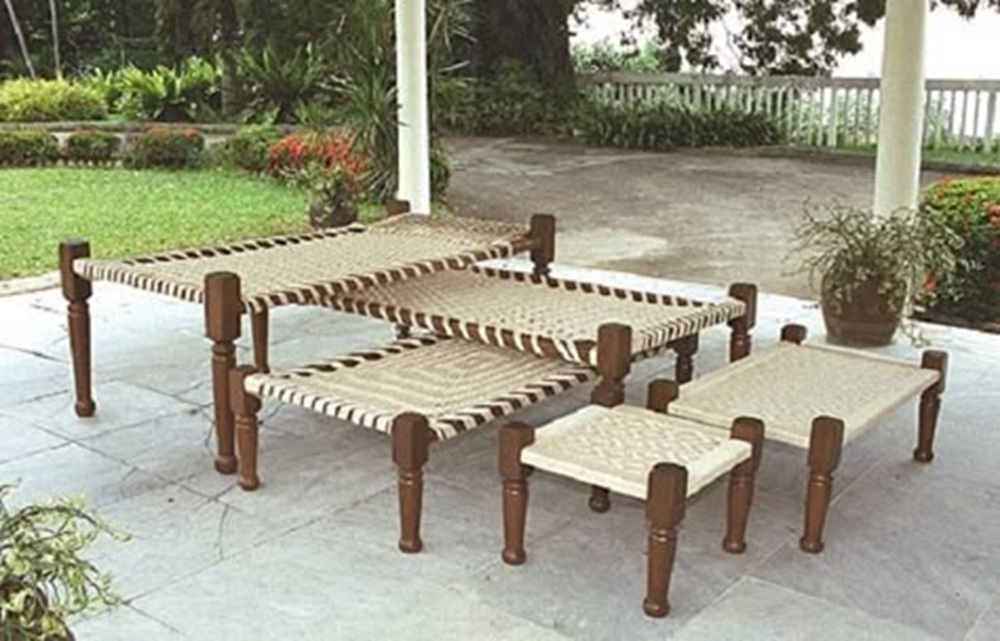
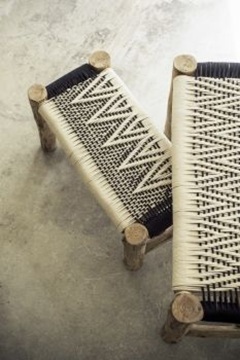
Set of homemade charpais.
There are some things in a Pakistani home that are more than just objects. They quietly become part of our memories. A wooden trunk may remind us of our grandmother, an old radio may bring back childhood afternoons, and a traditional charpai can take us straight to a courtyard filled with family conversations, summer evenings, and the smell of freshly brewed tea.
For generations, the charpai has been a familiar part of life across Pakistan. It has served as a bed, a place to rest, a seat for guests, and a gathering space for families and neighbours. Simple in design but rich in cultural meaning, the charpai represents a way of life that valued comfort, community, craftsmanship, and hospitality.
The word charpai is commonly understood as coming from the words char, meaning four, and pai, referring to legs or feet. Traditionally, a charpai consists of a simple wooden frame supported by four legs, with a woven surface stretched across it.
Its open woven design makes it particularly suitable for Pakistan’s warm climate. Unlike heavy furniture, a charpai allows air to circulate beneath and around the person resting on it. On hot summer days, sitting or sleeping on a charpai in an open courtyard could be surprisingly comfortable.
Its simplicity is perhaps its greatest strength. It does not require complicated machinery or expensive materials. Yet creating a strong and comfortable charpai requires skill, patience, and an understanding of how wood and rope work together.

charpai in mode time
Traditional charpais were generally made from wooden frames and natural rope or woven material. The frame had to be strong enough to support weight, while the weaving had to be tight and even enough to provide comfort.
The weaving itself was a craft passed down through generations. Experienced artisans could create different patterns and colours while maintaining the tension needed to keep the surface firm. What may look like a simple piece of furniture from a distance is actually the result of careful handwork.
In many communities, charpai-making was not simply a way of producing household furniture. It was part of a broader tradition of practical craftsmanship, where useful everyday objects were made to last.
The charpai was never limited to sleeping.
In villages and traditional homes, it could become almost anything a family needed. Someone might sit on it while drinking tea, an elder might rest there in the afternoon, children might gather around it to listen to stories, and guests could be offered a place to sit.
During summer evenings, several charpais might be placed outside in a courtyard or under a tree. Family members and neighbours would sit together, talk about their day, share news, and enjoy the cooler air.
In this way, the charpai became part of social life. It created a natural space where people could slow down and spend time together.

Traditional Charpai
Hospitality has always held an important place in Pakistani culture, and the charpai often played a quiet role in it.
A visitor arriving at a village home could be invited to sit on a charpai while tea was prepared. Food might be served nearby, and conversations could continue for hours. There was no need for formal dining rooms or elaborate furniture. A simple charpai could provide a comfortable place for people to sit, eat, talk, and connect.
This is one reason the charpai feels so closely connected with memories of home. It was not merely something people owned; it was something they used while sharing their lives with others.
The traditional charpai is particularly associated with rural Pakistan, where courtyards and open spaces allowed it to be used throughout the day.
Farmers could rest on one after returning from work. Older family members might spend their afternoons sitting outside. Children could turn them into temporary play areas, while women and men could use outdoor spaces for everyday conversations and household activities.
The charpai also appeared at social gatherings, family events, and weddings. Its presence reflected a lifestyle in which outdoor spaces were an extension of the home.
Pakistan has changed considerably over the decades, and the charpai has changed with it.
As more people moved to cities and homes became smaller, traditional courtyards became less common. Apartments, air conditioning, modern beds, sofas, and other furniture gradually replaced many of the everyday uses of the charpai.
Yet the charpai never completely disappeared.
Today, modern versions can be found in homes, gardens, farmhouses, restaurants, cafés, and hotels. Some have colourful woven patterns, while others combine traditional rope work with modern wooden or metal frames.
Instead of being seen only as rural furniture, the charpai is increasingly appreciated as a piece of traditional Pakistani design.

wooden charpai
For many Pakistanis, the charpai carries a personal memory.
It may be the place where a grandparent rested after lunch, where cousins sat together during family visits, or where someone spent a summer night under the open sky.
These memories give the charpai an emotional value that cannot be measured by its price or design. It reminds us of a slower time when families spent more time outdoors and conversations did not always compete with television screens, phones, or social media.
Perhaps that is why an old charpai can feel surprisingly familiar, even to someone who has not used one for years.
The charpai may belong to an older tradition, but it does not necessarily belong only to the past.
Its simple design makes it adaptable to modern lifestyles. A carefully crafted charpai can work as an outdoor daybed, a garden seat, a traditional-style sofa, or a decorative piece in a contemporary home.
Restaurants, cafés, farmhouses, and hotels can also use charpais to create spaces inspired by Pakistani heritage. With thoughtful design, traditional craftsmanship can coexist with modern comfort.

Traditional Charpais -Craft, Family, and Home
More importantly, preserving the charpai means preserving the skills behind it. When traditional crafts disappear, we lose not only objects but also the knowledge, techniques, and stories connected to them.
The traditional charpai may be made from wood and rope, but its real story is about people.
It has witnessed family conversations, welcomed guests, provided rest after long days, and carried countless childhood memories. It represents the practical creativity of traditional craftsmen and the warmth of a culture where hospitality often began with a simple invitation to sit down.
As Pakistani homes and lifestyles continue to evolve, the charpai may no longer have the same everyday role it once did. But it remains a meaningful symbol of our cultural heritage.
Perhaps that is the beauty of the charpai: it was never just a bed or a piece of furniture. It was a place to sit, talk, rest, remember, and simply be together.
You may also like: