Written by: Maysam Khan
Posted on: November 12, 2026 | 
The mountains of Gilgit-Baltistan have never been as isolated as their geography might suggest. For centuries, caravans of traders, pilgrims and travellers crossed its formidable mountain passes, connecting the markets of China and Central Asia with the Indian subcontinent. Along these routes, silk and spices travelled alongside religions, languages, artistic traditions and ideas, making the region an important crossroads of the ancient Silk Road.
The Silk Road played a significant role in shaping the history, politics, culture, religions, and languages of Gilgit-Baltistan. Because of its geographical position between South Asia, Central Asia, China, and Tibet, Gilgit-Baltistan became a meeting point for outside powers and cultures. The route carried armies and diplomats into its valleys, introduced Buddhism, Buddhist art, and later Islam, mixed languages from three language families, and brought tolls, porterage, and markets into mountain economies. Understanding the Silk Road is therefore essential to understanding GB's politics, culture, religion, language and livelihood.
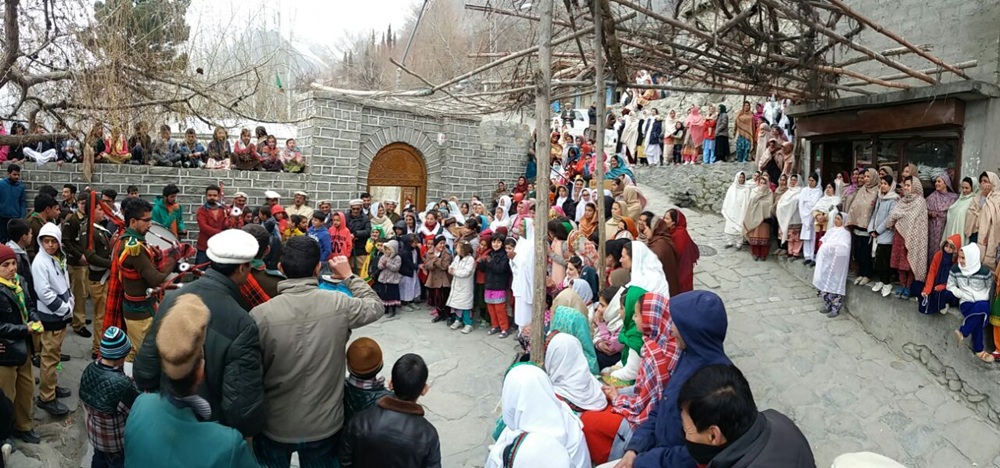
The enduring popularity of polo and Nauroz in Gilgit-Baltistan offers a glimpse into how deeply the cultural traditions of the ancient Silk Road remain woven into the region's social fabric. Passed down through generations, these traditions connect local communities to a wider cultural world stretching across Central Asia and Persia, where both polo and the spring festival of Nauroz have long held significance. Every spring, as communities gather to celebrate Nauroz, and every summer, as crowds assemble around polo grounds, the region renews a cultural connection that transcends modern borders. Though the caravans have disappeared and the old trade routes have given way to highways, the cultural exchanges they once carried continue to live on in the everyday traditions of Gilgit-Baltistan.
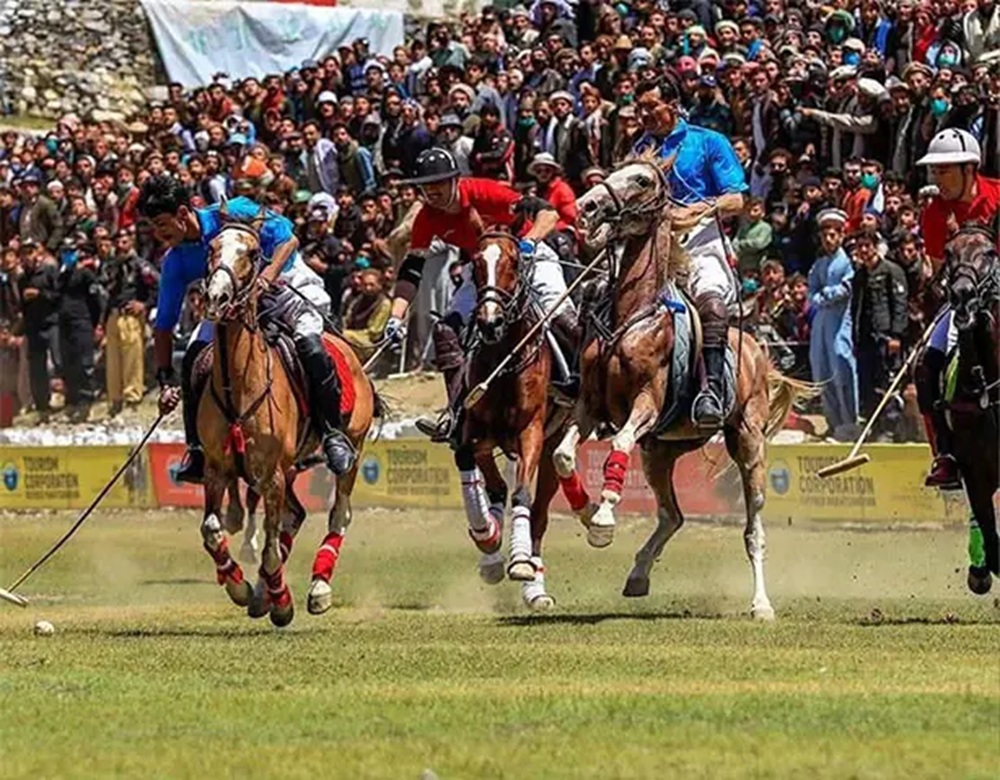
Gilgit-Baltistan Traditional Polo
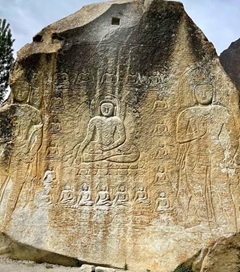
Every Silk Route caravan left something behind. Traders and travellers from China, Sogdiana, Persia, Tibet and India brought clothing, food, music, crafts and artistic styles that gradually blended into local life. The rocks of Gilgit-Baltistan can be read like an ancient visitors' register. Merchants, diplomats, pilgrims and travellers left their names and messages behind, creating an extraordinary record of human mobility. Thousands of rock carvings and inscriptions found along the Indus near Chilas, Thalpan and Shatial, as well as at the Hunza-Haldeikish site, depict Buddhist stupas and animals, alongside inscriptions in Kharosthi, Brahmi, Sogdian, Chinese and Tibetan scripts. The rock-cut Buddhas at Kargah near Gilgit and Manthal near Skardu reflect Gandharan and Tibetan artistic influences. Local artists adapted these styles to their own surroundings and traditions, giving them a distinctive regional character.
Since the time of the Silk Road, Gilgit-Baltistan's position at the crossroads of several major geographical regions has made it important to neighbouring powers and, at times, a centre of conflict between competing interests. Between the third and tenth centuries CE, the region experienced the influence of the Kushan, Chinese, Tibetan and Kashmiri powers. Local rulers, particularly the Palola or Patola Shahi dynasty of Gilgit, maintained connections with powerful neighbouring states. A Chinese inscription discovered at Haldeikish in Hunza, along the historic Silk Road, now traversed by the Karakoram Highway (KKH), between Ganish village and Attabad Lake, records the journey of an envoy associated with the Wei dynasty (386–535 CE), demonstrating the diplomatic connections between distant territories. During the seventh and eighth centuries, Chinese, Tibetan, and Kashmiri interests competed for influence in the Gilgit-Baltistan region.
This strategic significance did not diminish with the decline of the ancient Silk Road. During the nineteenth century, Gilgit-Baltistan became an important theatre of the Great Game, as the British and Russian empires competed for influence in Central Asia and sought to secure their respective frontiers. Its proximity to Chinese Turkestan and its network of mountain passes made the region particularly important to British imperial calculations. More than a century later, CPEC and China's expanding economic and strategic presence have once again placed Gilgit-Baltistan at the centre of wider geopolitical calculations. The nature of these rivalries has changed, as have the actors involved, but the underlying contest over connectivity, trade routes and strategic access bears a resemblance to the geopolitical competition of the Silk Road era.
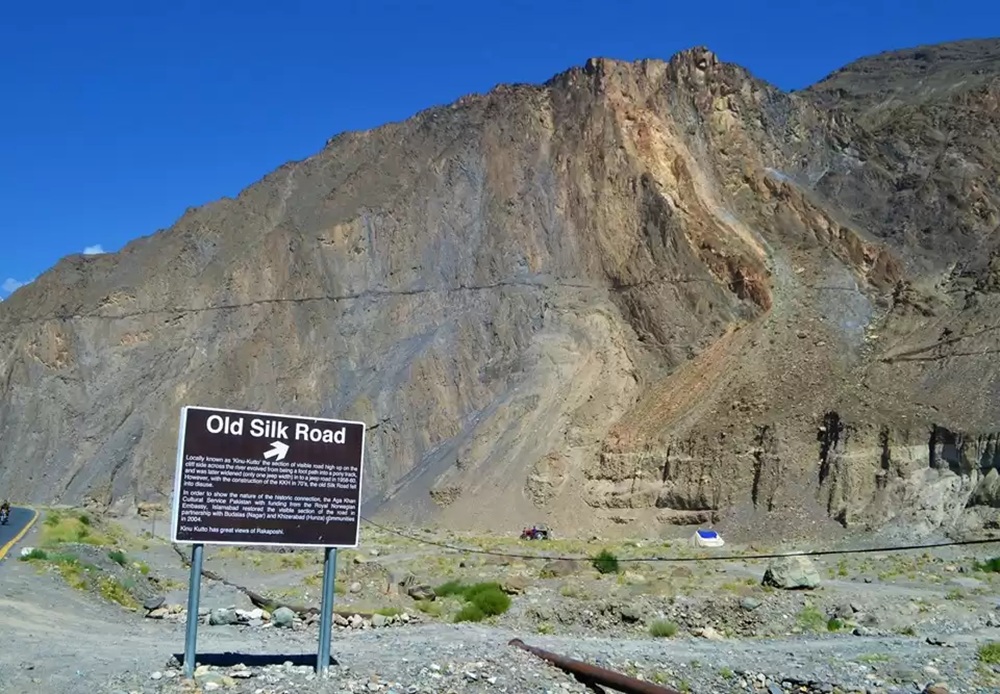
Section of the Old Silk Road I Gilgit-Baltistan
Gilgit-Baltistan is one of the most linguistically diverse regions in the world, and the history of the Silk Road helps explain this diversity. Its rugged, mountainous terrain kept communities relatively isolated from one another, while the trade routes brought travellers, traders, and settlers from different directions, creating opportunities for linguistic and cultural exchange.
Shina, the main language of Gilgit and Diamer, belongs to the Dardic branch of Indo-Aryan and developed through centuries of contact with neighbouring linguistic and cultural communities. Khowar, spoken in Ghizer and Chitral, is also a Dardic language with considerable Persian influence. Balti, spoken in Baltistan, belongs to the Tibetic branch of the Sino-Tibetan language family and reflects centuries of Tibetan cultural and political influence. Wakhi, spoken in Gojal, is an Eastern Iranian language brought by communities with historical connections to the Wakhan Corridor, itself part of the wider network of Central Asian trade routes. Burushaski, spoken in Hunza, Nagar and Yasin, is a language isolate with no established linguistic relatives. It has, however, absorbed numerous loanwords through contact with neighbouring languages. The linguistic landscape of Gilgit-Baltistan is, in many ways, a living record of its history as a crossroads of civilisations.
Before the arrival of Buddhism, communities in Gilgit-Baltistan followed indigenous belief systems centred on shamanism, animism and the reverence of mountains, spirits, fairies, fire and sacred places. In Baltistan, these traditions also included elements of the Tibetan Bön religion. Buddhism reached the region through the wider networks connecting Kashmir, northern India and Central Asia, possibly as early as the third century BCE, and gained prominence during the Kushan period, particularly under Kanishka. Monks, merchants and travellers carried the faith along the Silk Road, while local patrons supported monasteries and stupas that also served as places of shelter for travelling caravans. Gilgit became an important centre of Buddhist learning and manuscript production. Rather than replacing older beliefs entirely, Buddhism gradually blended with local traditions, many elements of which survived in popular customs and rituals. From around the eighth century, and more significantly between the fourteenth and seventeenth centuries, Islam spread through trade, migration and the work of Sufi and other religious preachers.
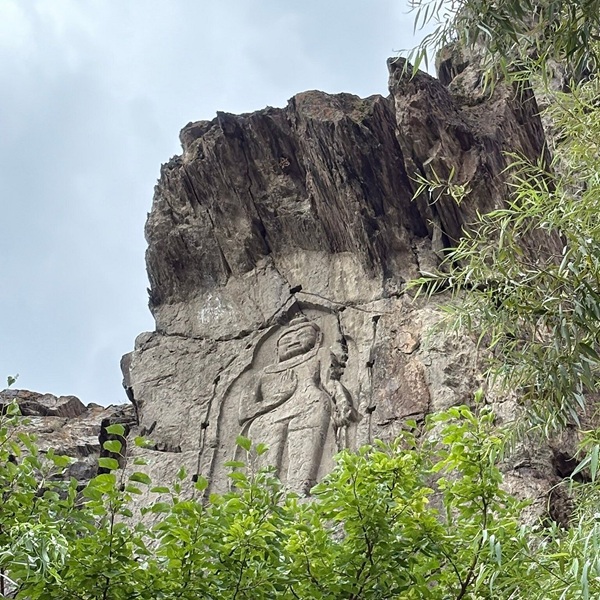
Kargah Buddha
In ancient times, the economy of what is now Gilgit-Baltistan was shaped by a combination of subsistence agriculture, pastoralism, and trade. Although the rugged terrain and harsh climate limited cultivation in many areas, communities in the valleys grew crops, raised livestock, and supplemented their livelihoods by serving the caravans that crossed the region. They provided porters, pack animals, guides, food, and fodder at resting points along the routes. Local rulers and chiefs could levy duties or demand tribute from passing merchants, sometimes offering protection in return.
The region was not simply a corridor for goods but also a participant in wider commercial networks. Caravans carried silk, textiles, tea, jade and other luxury goods between the Tarim Basin, Central Asia and the Indian subcontinent. Local products included woollen cloth, nuts, kernels, dried apricots and other fruits, clarified butter, livestock and small quantities of gold dust washed from riverbeds. Hunza, in particular, maintained links with trading centres in Badakhshan, Kashgar, Yarkand and Khotan, although it was not a major entrepôt controlling the principal trade routes. These exchanges brought the region into contact with distant markets and cultures. The Buddhist stupas, monasteries and extensive rock carvings found along the ancient routes bear witness to this movement of people, ideas and religious traditions.
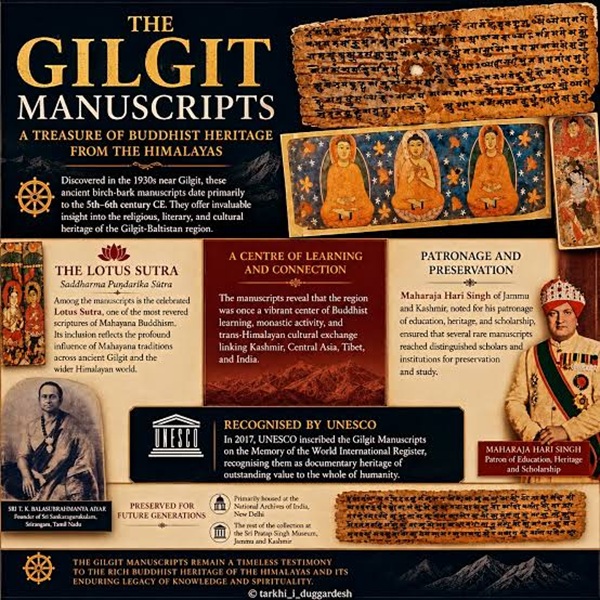
The Gilgit Manuscript
The Silk Road made Gilgit-Baltistan far more than a remote mountain land. It carried armies and ambassadors that shaped its politics, artists and pilgrims that enriched its culture, merchants and monks who brought new faiths, and travellers whose languages still echo in its valleys. It also gave its people a lasting role in regional trade. The rock carvings of Chilas, the Buddhas of Kargah and Manthal, and the busy Khunjerab road today all tell one story: GB has always been a crossroads. Remembering that heritage matters, because it explains the region’s remarkable diversity and points to its future as a bridge between South and Central Asia.
You may also like: