Written by: Muhammad Humair
Posted on: November 03, 2026 | 
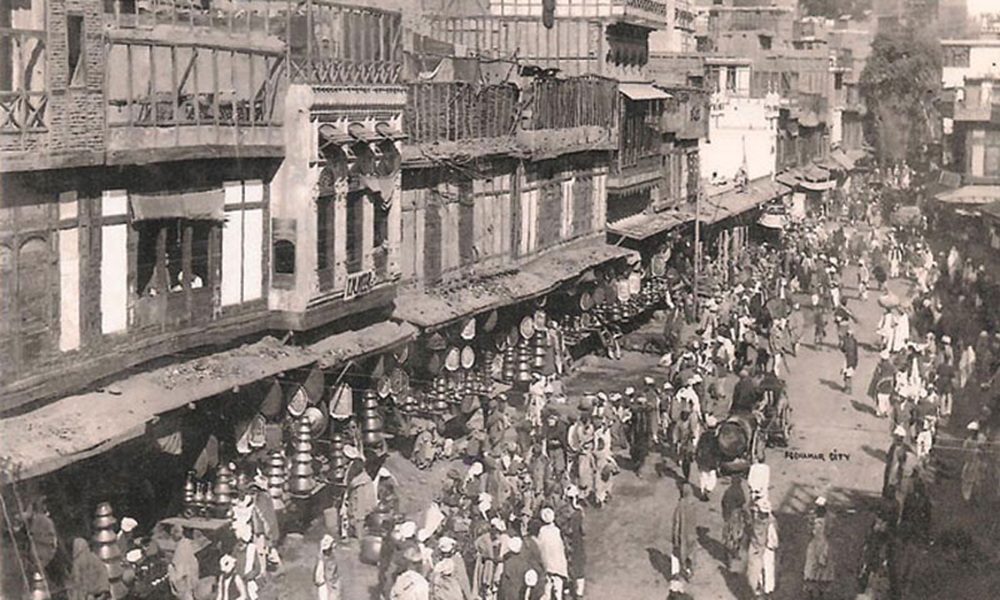
Old Qissa Khuwani Bazaar, Peshawar
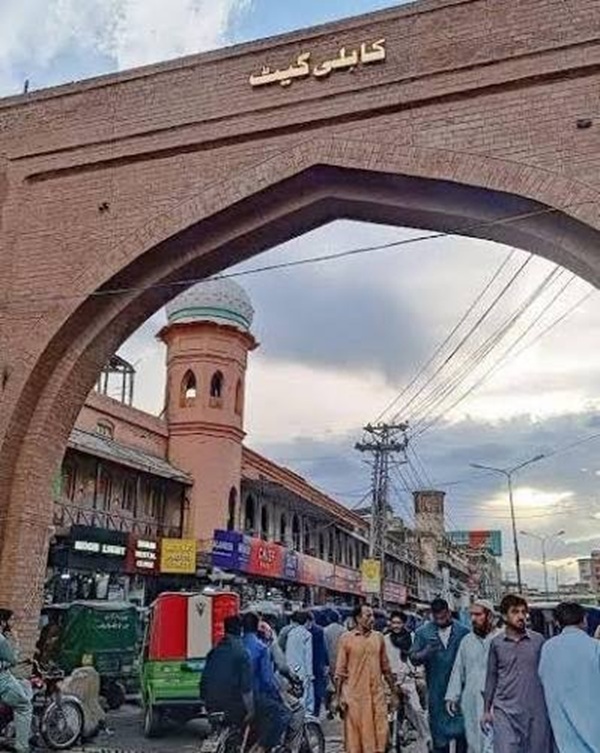
Enter Peshawar’s old city through Kabuli Gate, and you meet the smell before you see anything: cardamom, charcoal smoke, hot oil, and somewhere underneath, the sharp tang of metal being worked. Markets here were never simply places to shop. Every lane belonged to a trade, every trade to a handful of families, and most of those families can tell you how many generations have sat on the same plank behind the same counter. Lately, that line of generations is getting thinner.
Qissa Khwani Bazaar at dusk, when the lanes of the old city fill with chatter.
Qissa Khwani, the Storytellers' Bazaar, is the one everybody has heard of. Caravans coming down from Kabul and Central Asia would rest in Peshawar for the night, and the tea houses around this street were filled with tired traders, green tea and talk. Narrators performed tales of war, romance and faraway roads for a few coins. Radio, and later television, moved the entertainment indoors, and the storytellers gradually stopped turning up. The tea, at least, survived. A few old qehwa khanas still pour it from brass samovars, with faded photographs on the walls and the same low benches where customers sit shoulder to shoulder.
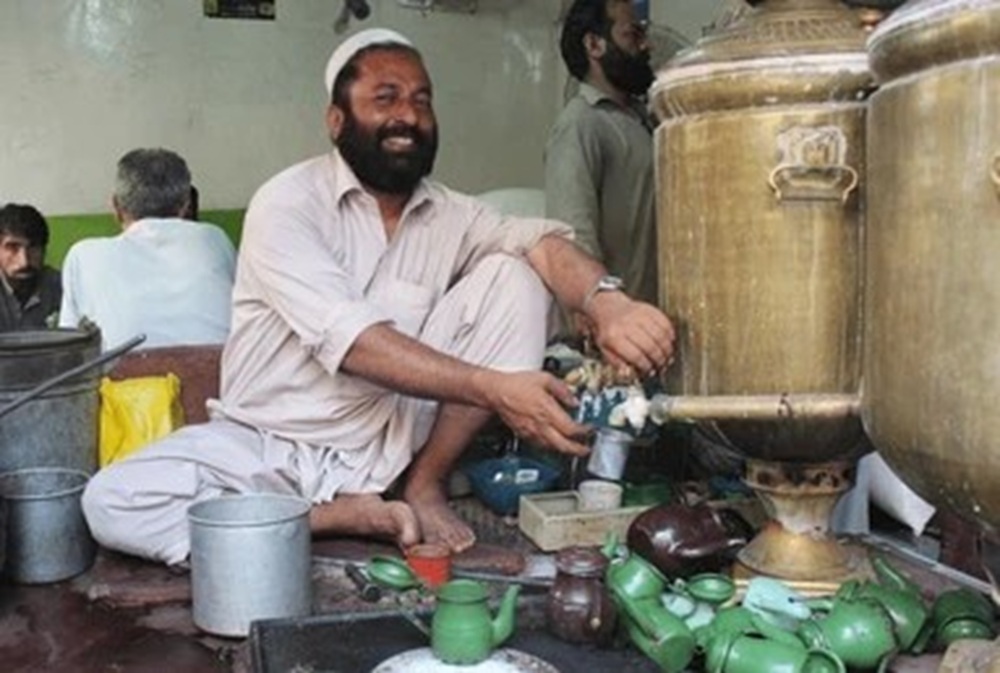
Green tea from a brass samovar is the one Qissa Khwani tradition that has outlasted the storytellers.p>
The street carries heavier memories too. In April 1930, British troops opened fire on a crowd of unarmed protesters here, and nearly four hundred people are generally reported to have been killed. A memorial in the street keeps that day from being forgotten, even as the shops around it change hands.
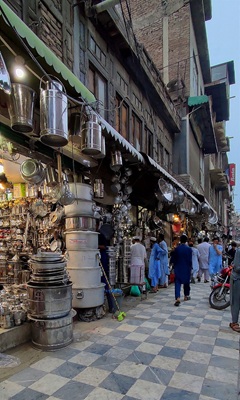
Walk on towards Chowk Yadgar, and you reach Misgaran, the coppersmiths' bazaar. It used to be loud in a way nobody needed to be told about: rows of men beating out pots, trays and cooking vessels by hand. Today the hammering is much quieter. Cheap steel, aluminium and factory-made cookware have taken over most kitchens, and young men from craftsmen's families increasingly prefer a mobile-shop counter to a lifetime of beaten copper. Those who still work the metal talk about it with a tired kind of pride.
A memorial in the bazaar recalls the events of April 1930.
Dabgari Bazaar tells a similar story from a different angle. Shopkeepers there still sell hand-turned wooden spoons, rolling pins, and kitchen tools, but older residents remember the place for its sound. Rabab music drifted down the lanes, and singers performed in the open until the early hours while crowds gathered for the poetry. That kind of night is hard to picture in the city today.
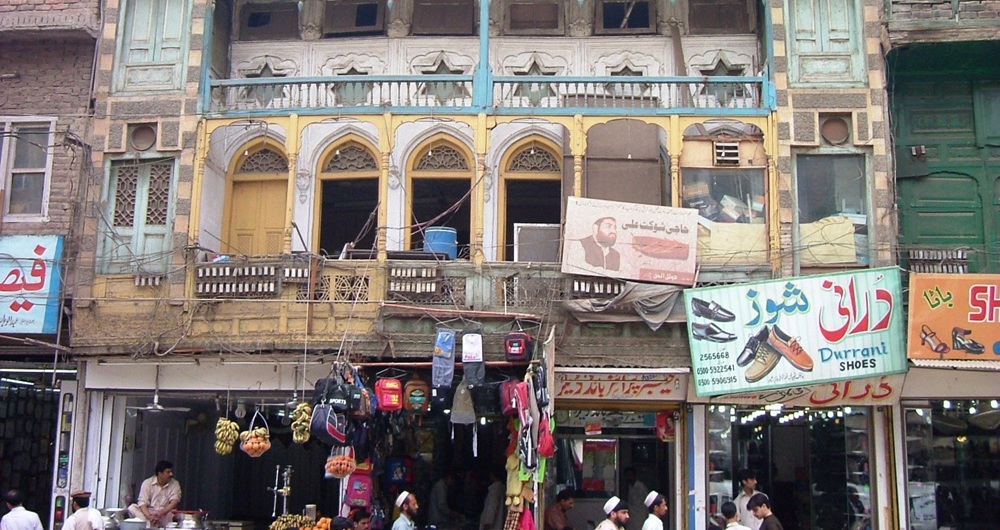
Nearby stand the Sethi houses, built by one of Peshawar's oldest merchant families, who traded in silk, cloth, indigo and tea. Their carved wooden balconies and painted ceilings are some of the best evidence of how rich the old trade routes once made this city. Many buildings like them are crying out for repair, and some have already given way to concrete.
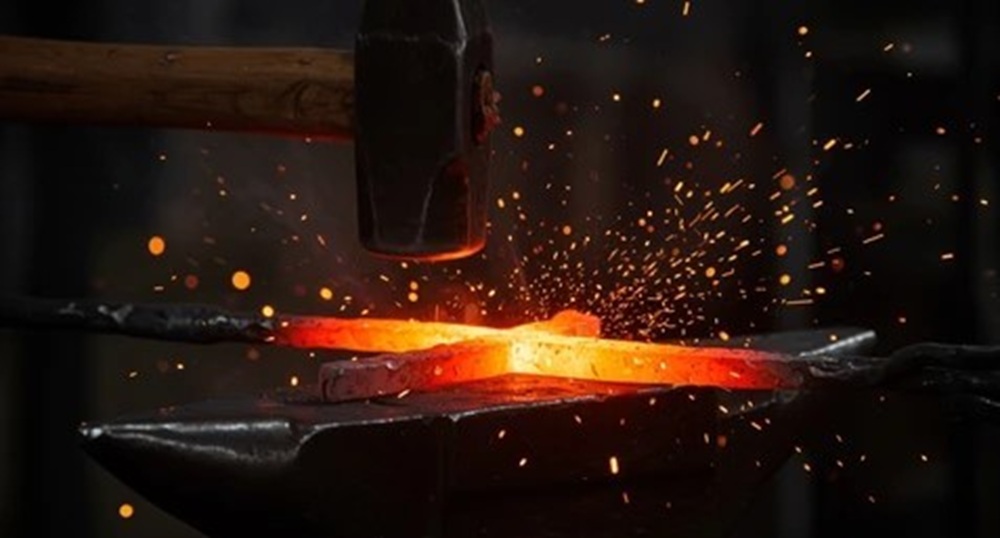
A coppersmith at work in Misgaran Bazaar, one of the few who still shape each pot by hand.
Other markets have faded for more recent reasons. In Chitrali Bazaar, artisans still stitch woollen waistcoats and caps, but they say customers, especially Afghan buyers, have dwindled. In Saddar, a 2017 report described a single Afghan family that once ran ten antique shops and was down to one.
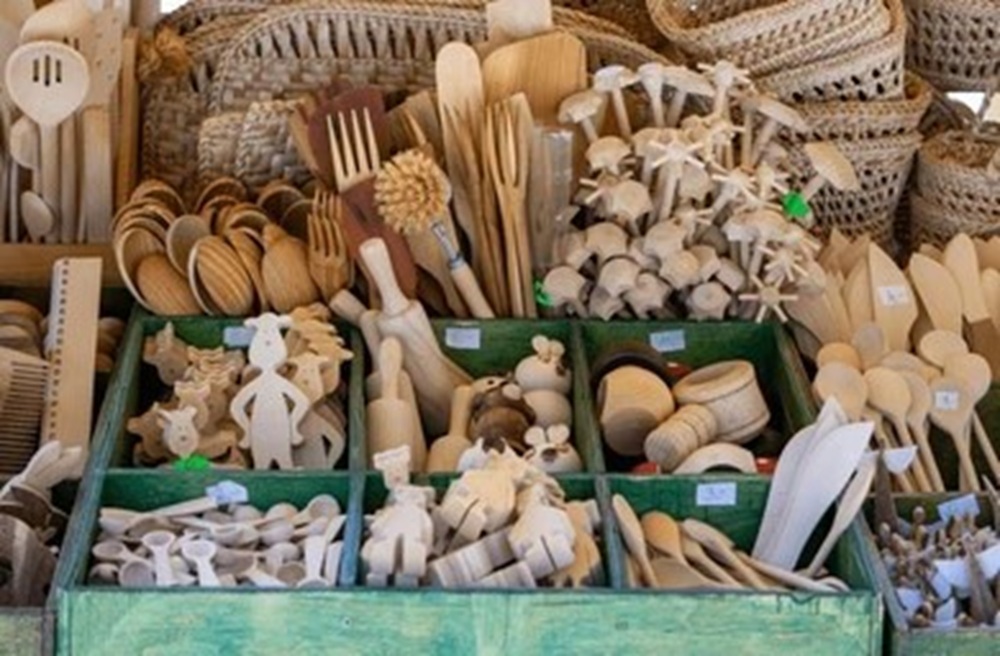
Wooden kitchenware in Dabgari Bazaar, a trade that has held on while the music has gone quiet.
There is no single villain. The Soviet invasion of Afghanistan in 1979 sent huge numbers of refugees into Peshawar and put local business under strain. Later, bomb attacks hit Qissa Khwani again and again, and customers stayed away. New plazas and wholesale markets on the edge of the city pulled trade out of the narrow lanes, where deliveries are a headache, and parking is impossible. And for many families, the plain truth is that the children want something different, so when the elder retires, the shop shuts.
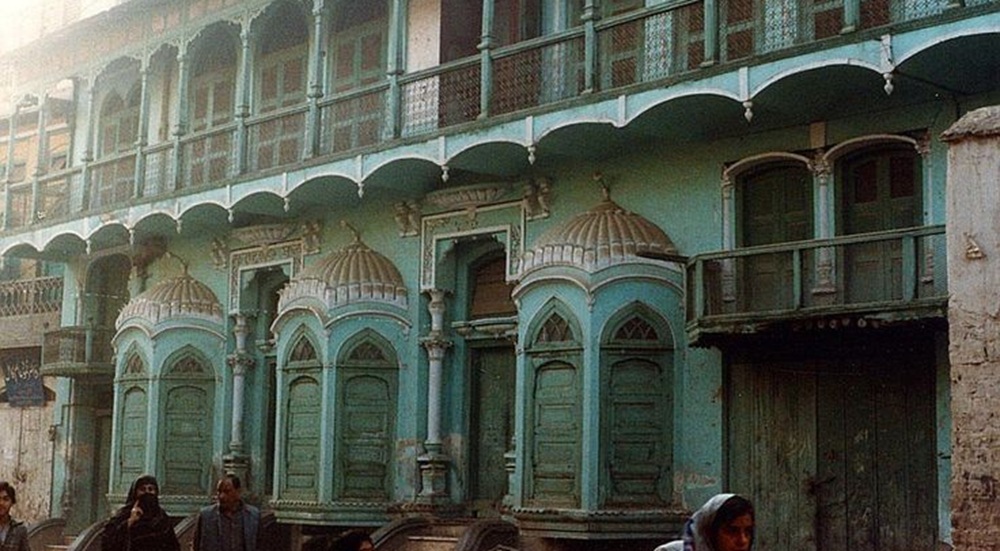
Carved balconies of the Sethi houses hint at the wealth the old trade routes once brought to Peshawar.
Something less measurable has gone as well. A bazaar like this ran on trust and habit: the grocer who kept a tab for decades, the tailor who knew your father's measurements, the neighbour who minded your stall while you prayed. A glossy plaza with fixed prices and a security guard does a different job. It sells things efficiently, but it doesn't hold a neighbourhood together in quite the same way.
It would be easy to write all of this as a funeral notice, but that wouldn't be quite fair. The jewellers of Namak Mandi still cut and set stones much as their predecessors did for centuries. The qehwa houses still fill up in the evenings. A few young Peshawaris have started photographing, sketching and walking the old city in a way their parents never bothered to.
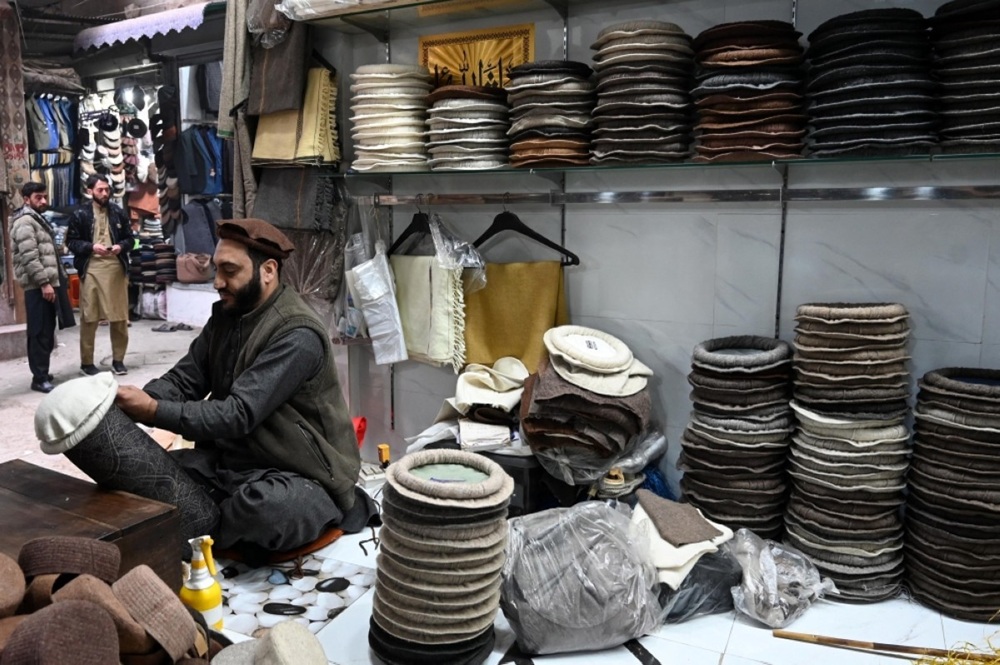
woollen caps and waistcoats in Chitrali Bazaar, where makers say customers are fewer every year.
If you plan a visit, go in the morning, wear comfortable shoes, and take your time. Buy a wooden spoon, order tea, and ask the person behind the counter how long their family has been there. The answer is worth more than the purchase, and in a few years there may be nobody left to give it.
You may also like: