Written by: Mubashir Hassan
Posted on: November 04, 2026 | 
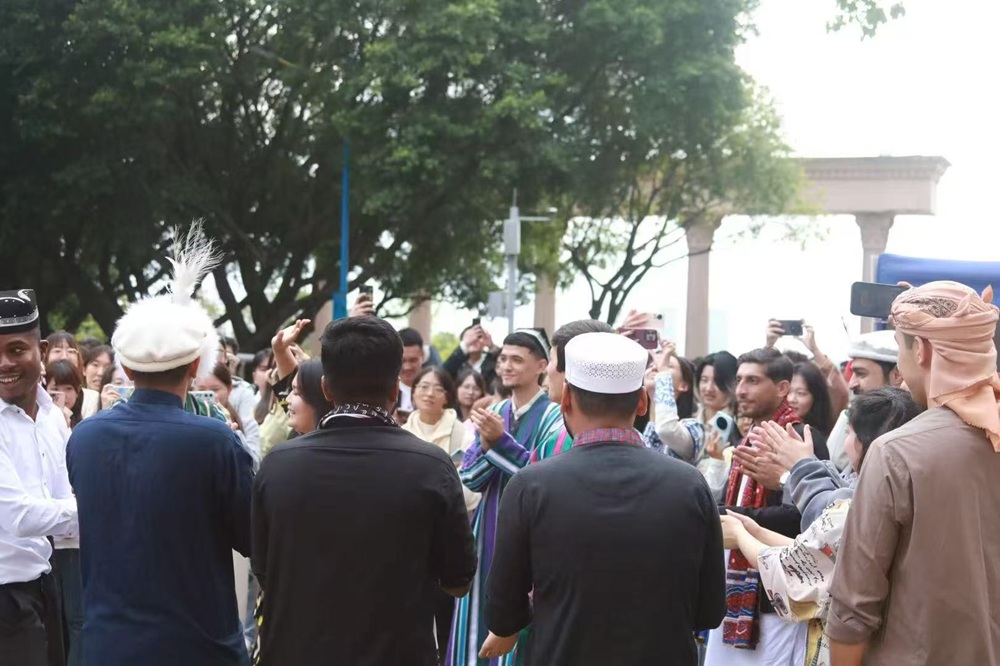
Pakistani Students Showing their Culture in a Chinese University
I remember the moment when I first arrived at Chongqing Jiangbei International Airport on a cold September morning, holding a bag of homemade Pakistani garam masala in my hand, with an unease settled deep within me. This is the story of thousands of Pakistani students who travel to China each year on scholarships, prepared for academic challenges.
What the students rarely anticipate is the moment they stand in a university cafeteria, surrounded by unfamiliar odours, unable to read a single character on the menu, wondering whether they have made a mistake. For every student, that moment marks the beginning of a transformation.
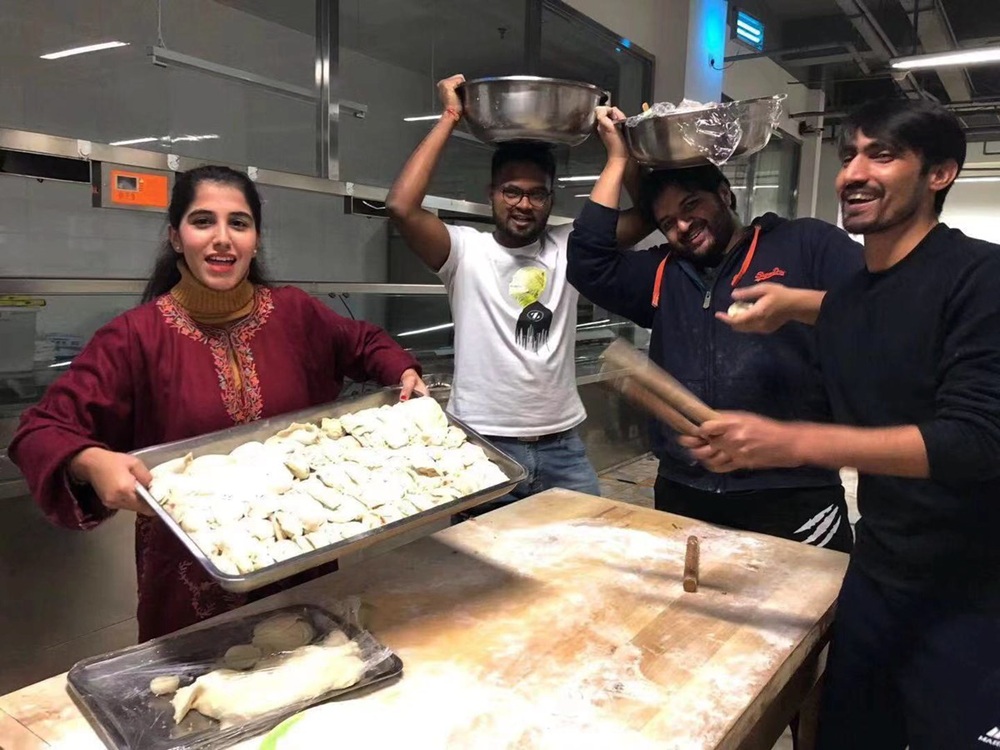
A Pakistani student in China making Dumplings, with international friends
Food is the first language of belonging. For Pakistani students in China, it becomes both a source of homesickness and a pathway to connection. The initial weeks are challenging, as they feel nostalgic for the comforting taste of biryani, the familiarity of roti and the shared meals with family. The alien Chinese cuisine, with its emphasis on textures and flavours, seems overwhelming.
Yet, this doesn’t last long, and adaptation arrives quietly. It comes in a few weeks with the discovery of Halal restaurants near their campuses. They begin cooking in dormitory kitchens, sharing Daal and Chicken Karahi with curious Chinese roommates who, in turn, teach them the art of using chopsticks, folding dumplings, and cooking noodles. In sum, food becomes their first step of adaptation. What begins as a barrier turns into a bridge. The Pakistani students, along with their Chinese fellows, learn that chai and green tea can coexist and that a shared meal can dissolve the most stubborn language barrier.
For many, the tonal complexity of the Mandarin language feels very difficult to learn at first. The embarrassment of mispronouncing a word and accidentally saying something absurd is a universal experience. During the first days, when translation apps fail and gestures prove inadequate, it is quite interesting as well as frustrating. Yet, when a student orders food at a restaurant without pointing for the first time, the feeling is unmatched for him. It works as one of the most vital motivations to adapt. When the first conversation with a Chinese fellow extends beyond basic greetings, and the first joke is understood, the students’ confidence and deepening connections with the people of China are worth seeing.
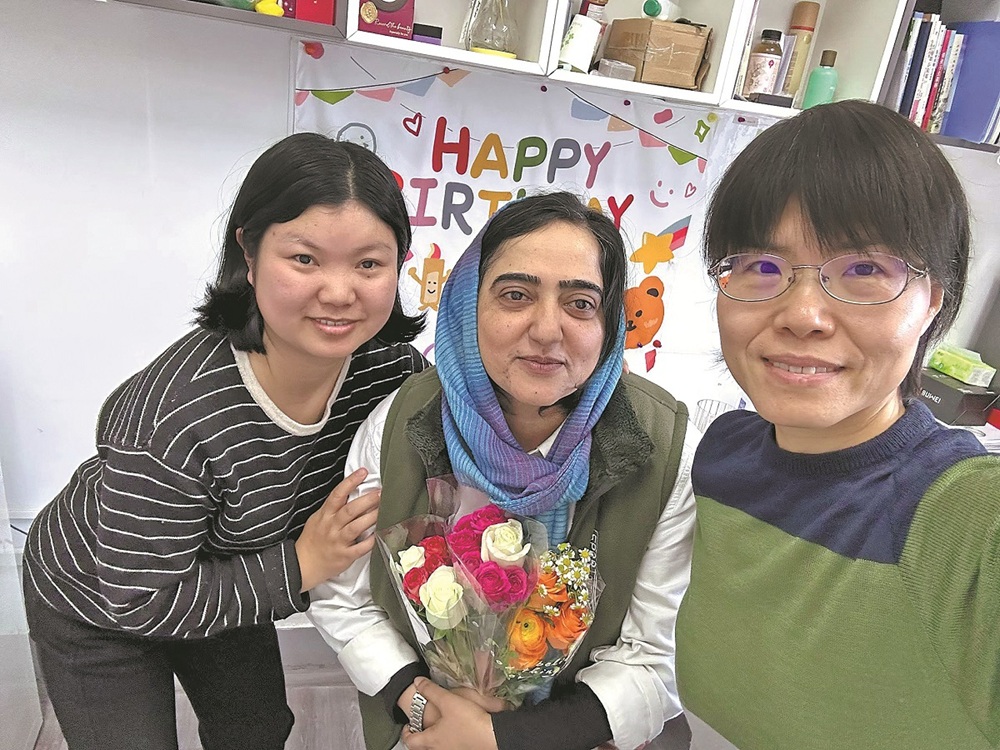
A pakistani student with her chinese classmates.
Besides, language becomes a bridge not only to Chinese society but also to a new understanding of Pakistan. Students find themselves explaining their own culture with greater clarity, becoming accidental ambassadors who articulate what it means to be Pakistani to an audience that often got secondhand information about their homeland.
Digital life is divided into two worlds for Pakistani students in China. WeChat is the infrastructure of daily life. It’s how they pay for their food, get taxis, contact their professors, and deal with university administration. It is not an option; rather, it is a matter of survival. The app turns into a virtual passport that provides access to the rhythms of present-day China. At the same time, social media platforms like Instagram, Facebook, and YouTube are used by them for different purposes. On these platforms, they perform their new lives for an audience back home. For their family, friends, and social circle in Pakistan, they become storytellers through carefully chosen posts like a snapshot of the Great Wall, a video of a bustling night market, a selfie with Chinese friends.
WeChat, the most famous social media platform in China.
This duality is not just virtual; it's real. These students live in two worlds at once. They translate not only words but entire cultural frameworks. They build bridges in real time, with one post and one message at a time.
Perhaps one of the most profound and interesting transformations for these students is the emergence of what is generally referred to as "third culture" identity. They are no longer simply Pakistani, yet they are not fully Chinese. Culturally, they live in a no-man's-land, seeing both the cultures with a clarity that neither insiders nor outsiders can achieve. This mixed identity can be confusing. But this in-betweenness is also a gift. It fosters empathy, adaptability, and a capacity to find common ground across divides. For the students, identity is no longer a fixed point but a living and evolving story.
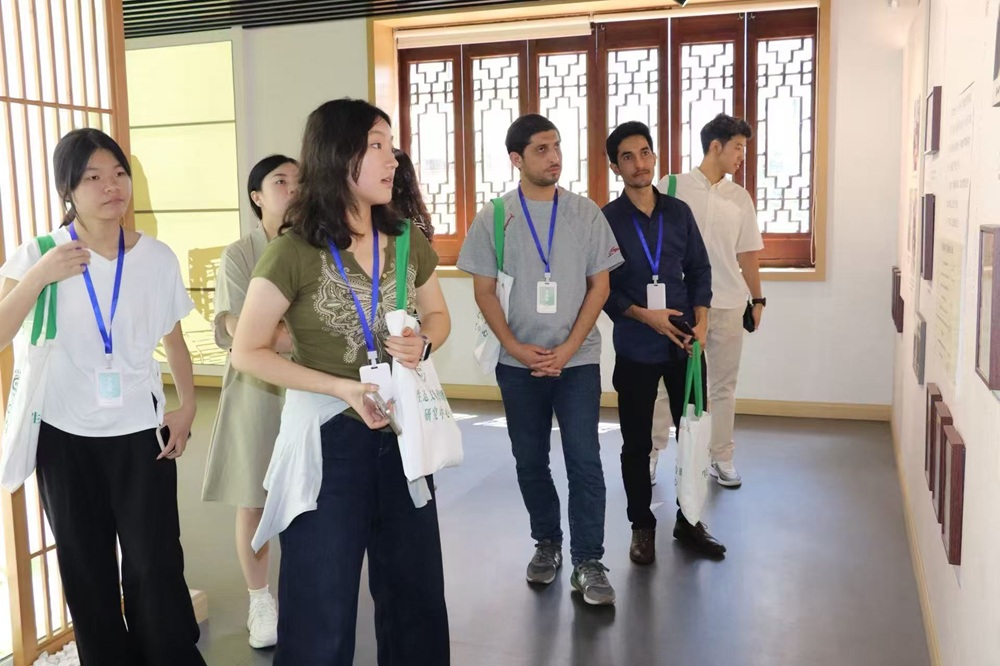
Pakistani students with their Chinese classmates exploring Chinese culture in a museum.
Besides the personal and cultural experience of the students in China, the value of a Chinese education extends far beyond the classroom. They possess a rare combination of skills, with degrees from top-ranked universities, cutting-edge research skills, language proficiency, cross-cultural competence, and an insider's understanding of the world's second-largest economy. With the bilateral cooperation between China and Pakistan reshaping the regional landscape, these graduates are uniquely positioned to become professionals who will navigate the complex relationship between the two nations.
You may also like: