Written by: Prof. Dr. Mamoona Khan
Posted on: October 29, 2026 | 
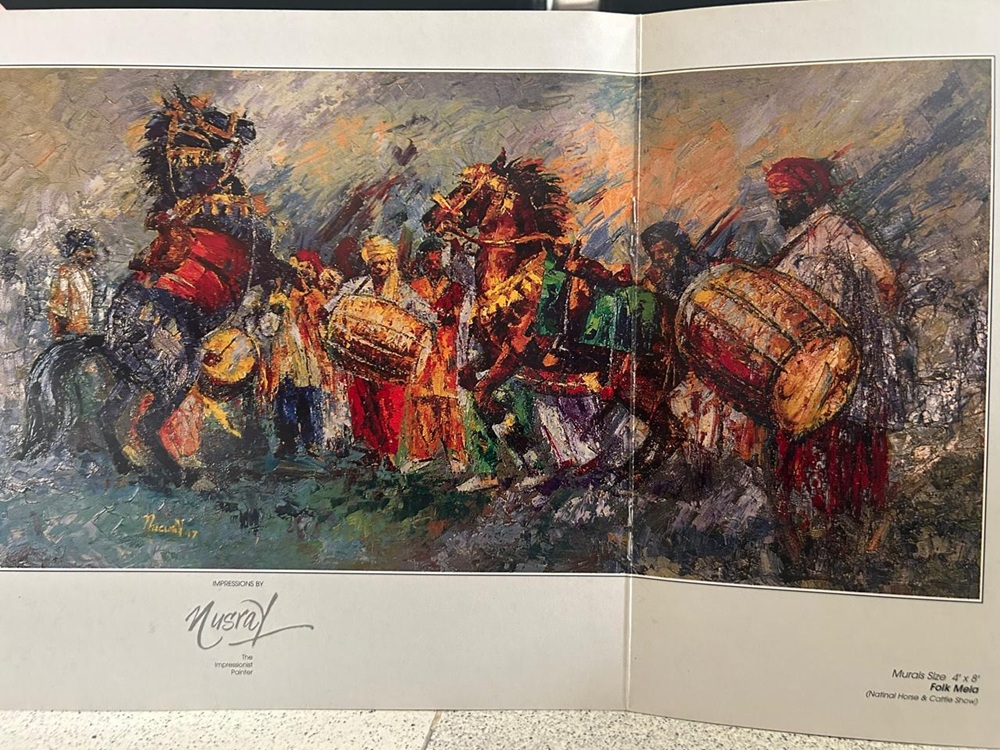
Horse and Cattle Show, Lahore
Pakistan National Art Gallery, Islamabad, is resonating with the works of the eminent senior Pakistani artist Nusrat Ji, who has been contributing substantially to the creative field for more than four decades. Over twenty-five solo shows are to her credit in Pakistan and abroad, exhibiting in the UK, Canada, USA, UAE, Bahrain and beyond, including art galleries in the various provinces of Pakistan. This exhibition, titled “What Remains to be Seen”, began on the 13th of October, is unique in that it uses modern technology, boosting the emotive power of her expression, making conspicuous the aspects that are meant to stand out, seizing the observers as belonging to it.
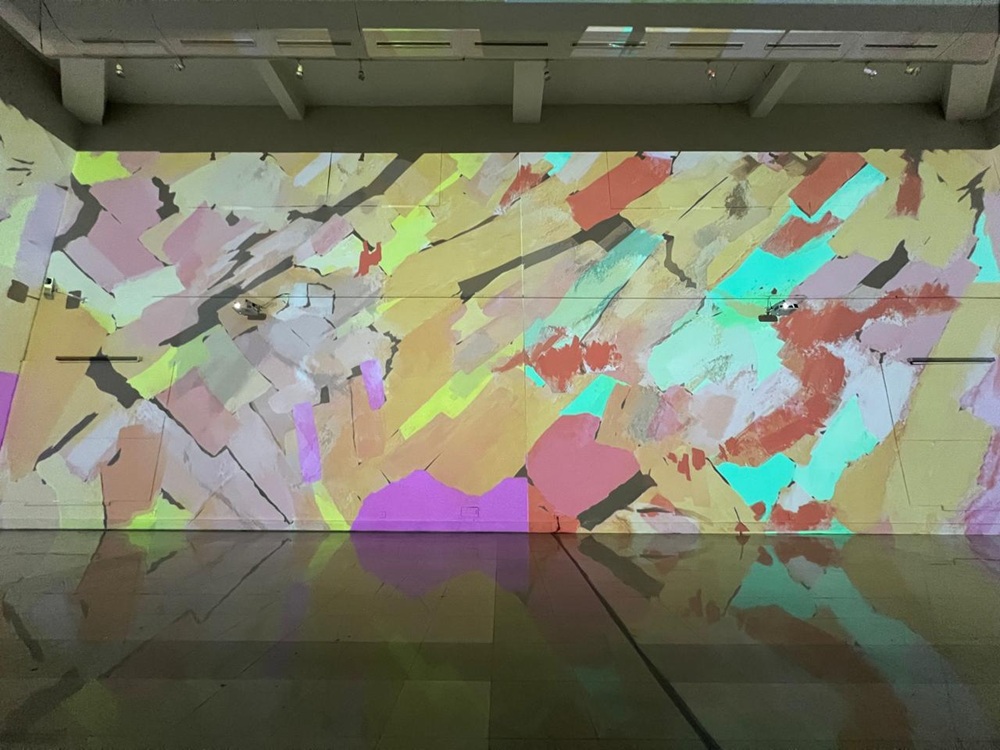
Blue Horse (Immersive Formation)
Immersive technology or immersive experience are the commonly used terms in the post-modern times, but its practical usage in the gallery space of PNCA, Islamabad is novel of its kind, dared to be used by a maverick only, and Nusrat Ji has the audacious soul, always ready to experiment, learn and explore for the novel, because deftness of draughtsmanship is her basic strength. Additionally, with the forceful quick strokes, she captures not the static dead world but the bustling spirited environs, where vibrant sounds are audible too, creating an immersive experience even without the use of technology, and now making it more gripping with the auxiliary help of technical gadgets.
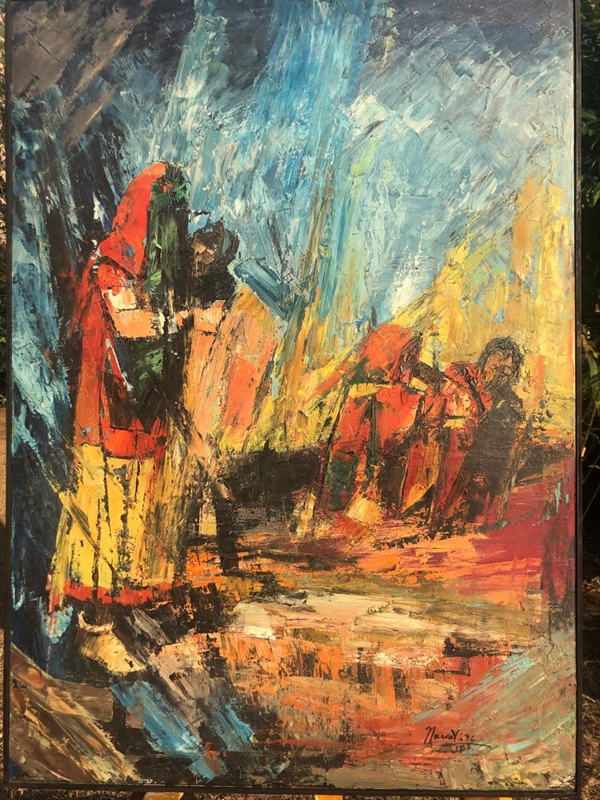
Weary Travelers
The huge four walls of the gallery-1at PNCA are pulsating with the moving mural length enlarged images of her paintings, a spectacular combination of art, science and technology. It makes discernible the step-by-step execution of her paintings: starting with a muted, neutral canvas, then floating strokes and textures roaming around the vast space of the walls of Gallery-1, gradually, line drawing of a galloping horse or a human figure with all the nuances of perfect draughtsmanship appears. While an observer is engrossed in the automatic formations, the horse/figure gets a coloured three-dimensional structure with its surroundings and other mates converting it into the complete composition of the painting that gets closer and closer to the spectators, who seem to have immersed into the huge soft images of the painted space which starts moving back, as it reversely did before. In the zooming in and zooming out of the wall-sized images of paintings, the audience loses their own identity, feeling psychological transmutation.
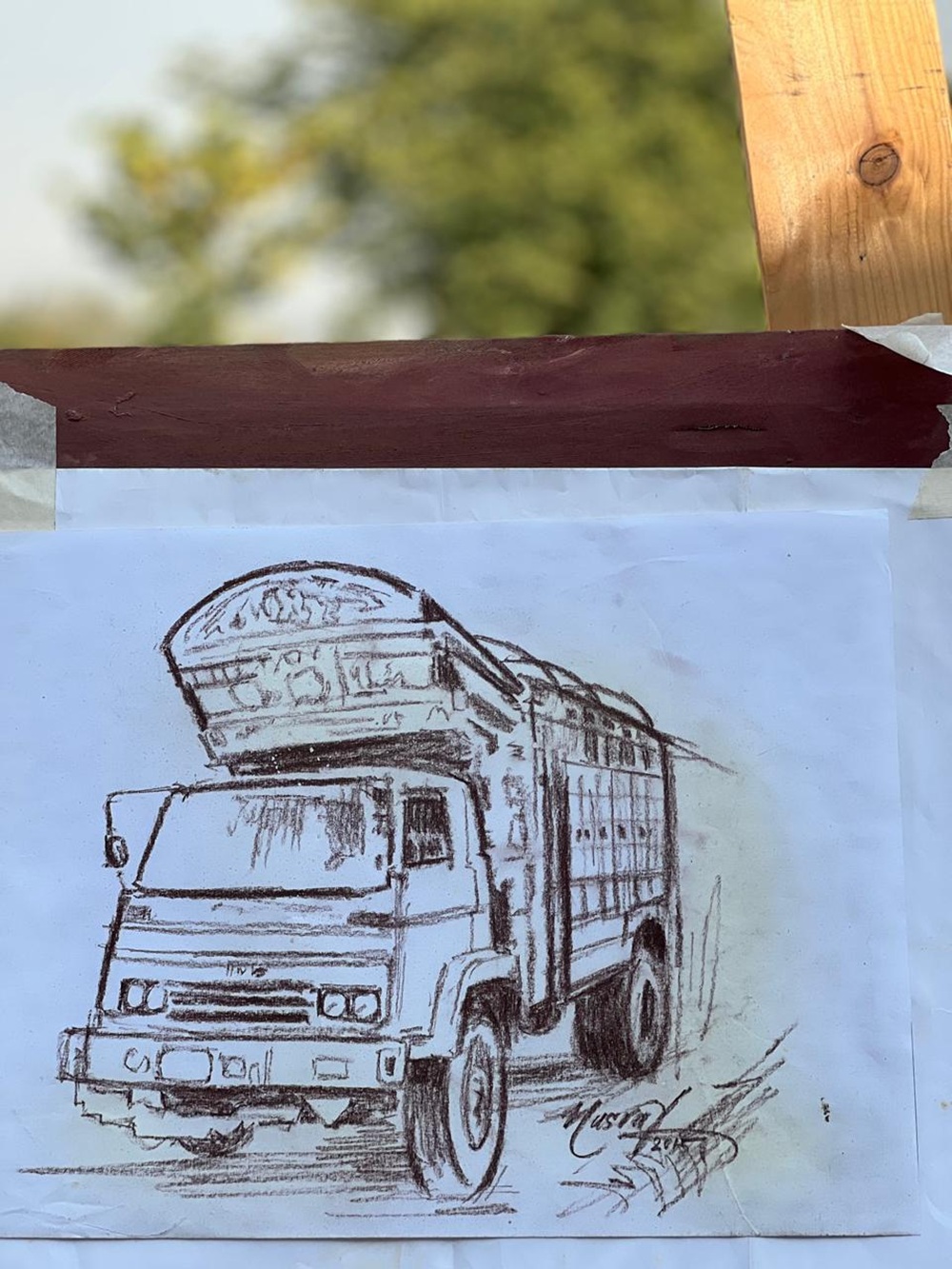
Truck (Transport)
It uncovers not only the artist’s style of work using bold, quick strokes, thick impasto that captures motion with ease, and dexterity of draughtsmanship, but also reveals her aura while visiting the attractive cultural spaces of Pakistan, sources of inspiration for her artwork. Every step of her work, which is difficult to see once the artwork is complete, is dismembered mutely, enlarged, and step by step joined together to formulate the complete images of her paintings. The sound of soft instrumental music adds to the dreamy transformations, which constantly keep on moving and changing on the four walls around the audience, creating an ecstatic otherworldliness.
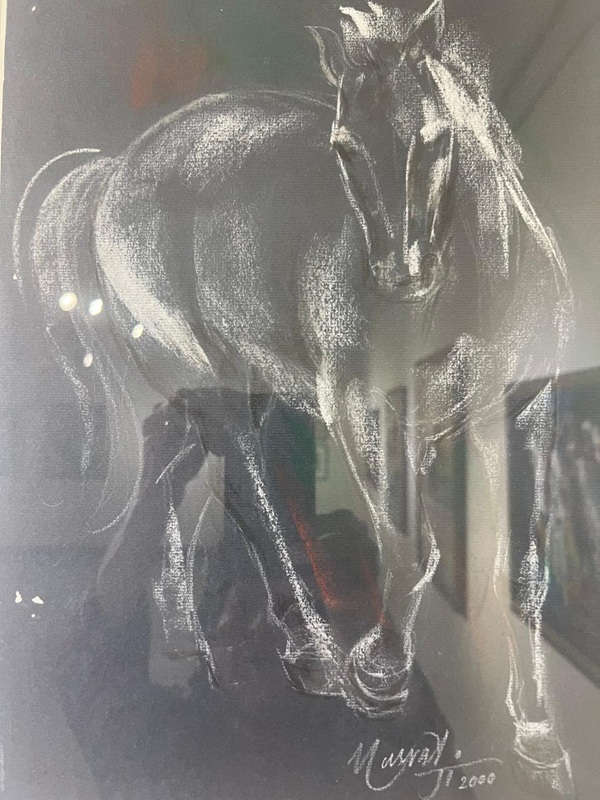
A Study. Charcoal Pencil
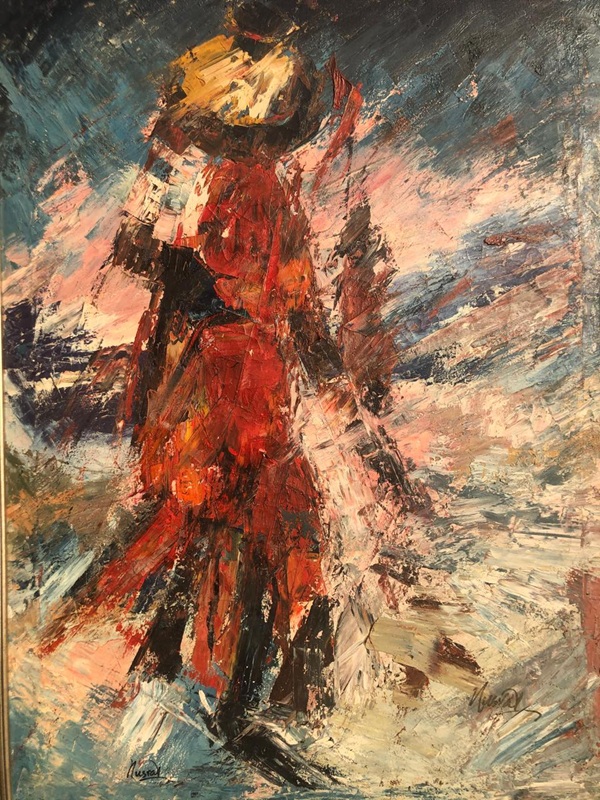
Gallery 2 of the PNCA, on the other hand, displays exuberant original paintings of Nusrat Ji; a few are augmented with preliminary sketches too. These are a witness to her keen observation, spontaneity of swift strokes, peculiar line of undulating thickness that stresses dramatic value, rich colours with thick strokes of the palette knife, reflecting her inner energy. More powerful are her drawings that bespeak the strength of draughtsmanship essentially required for a true artist, which unfortunately is lacking in modern times. Talking about the working condition of her artistic path, it is found out that she frequently visits the places of her interest, converts her inspirations into quick sketches, refines them and then creates a painting out of it. Sketches to be worked out used to be many, and the final production is one.
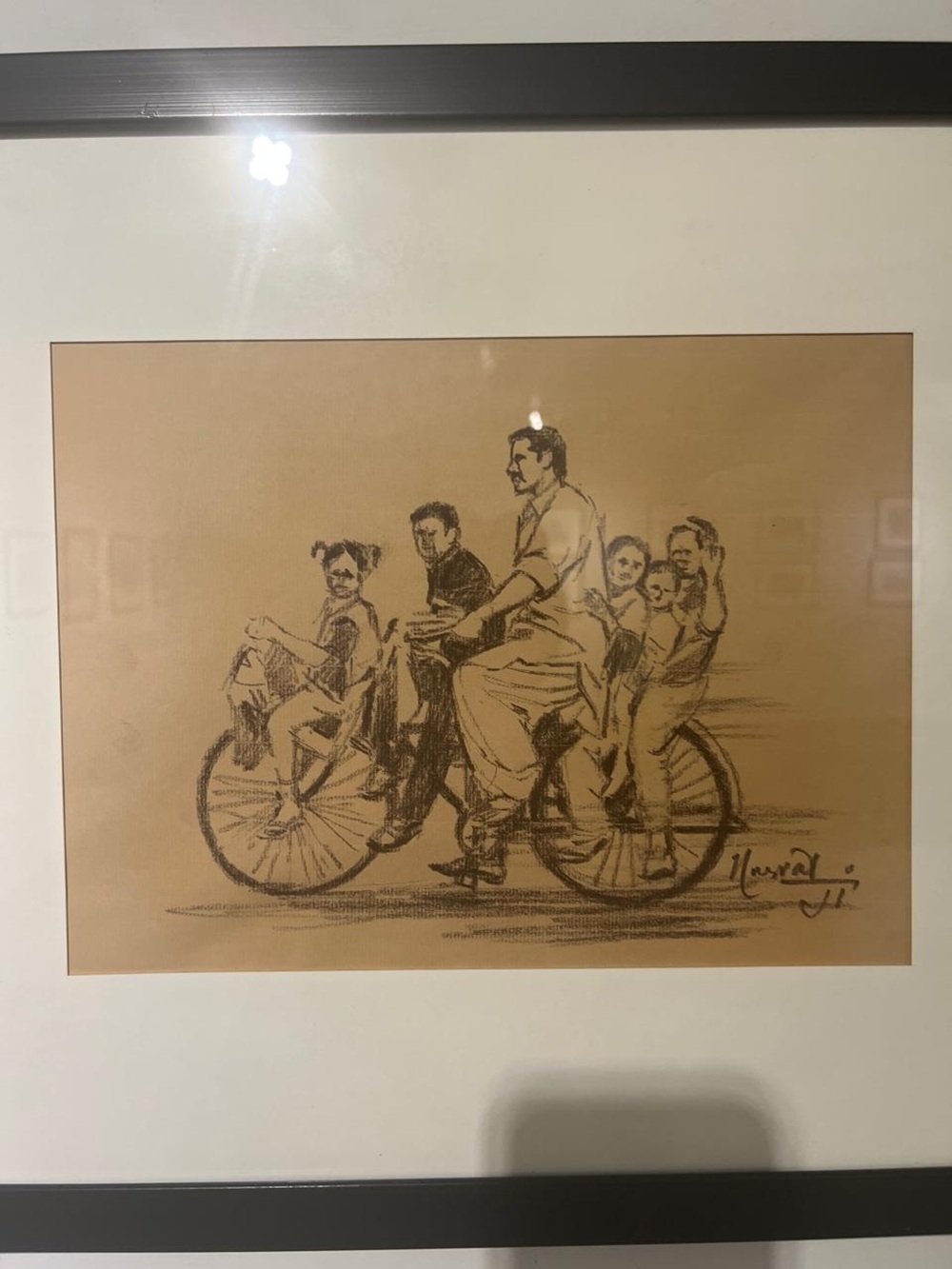
Khandan
Nusrat Ji has produced series of the subjects of her choice, like the series on the women of Thar or the many series on frantically dashing horses. She is not objective in her representations, portraying one or the other woman; rather, her works represent the entire community of the Thar women, represented featurelessly, retaining no individual identity, generalised representations while stressing the beauty of their traditional costumes and ornamentation. She wants to point out their contribution while remaining in oblivion. Throughout their lives, they remain engaged in hard toil, fetching water from miles and miles, rearing children, tending animals, doing embroidery without individual acclaim. She has portrayed not those women but their neglect and repudiation, about which they themselves are not aware. Her interest in horses is again not to capture their beautiful arched necks, protruding eyes, mane, or their pronounced ponies, but the energy that they release while sprinting at top speed. Her approach is simplified without going into extra details; rather, essential particulars are sifted out to bring the intangible into tactile forms, like the energy of forceful motion or societal issues. Her observation and manual dexterity to capture momentary and quickly changing poses need to be appreciated.
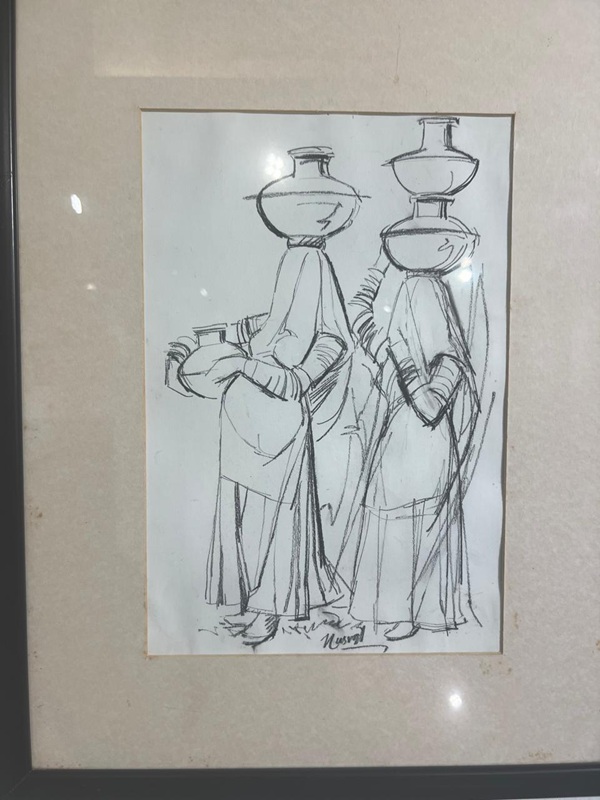
In Search of Water
The exhibition is actually an anthology of devotion added with novelty; the former is to be viewed in Gallery-2, while her craving for innovation is accomplished through the auxiliary technical assistance, displayed in Gallery-1. It made visible six dimensions of the painted world, not restricted to the three dimensions only, exploring many facets of the inner journey of the artist. Modern art is actually a reaction against the brutal use of modern technology, but here technology is unfolding Nusrat Ji’s path of creativity: from inspiration to preliminary sketching, bringing her creations into being, and then converting them into an immersive experience by uniting the viewer as part of the entire game.
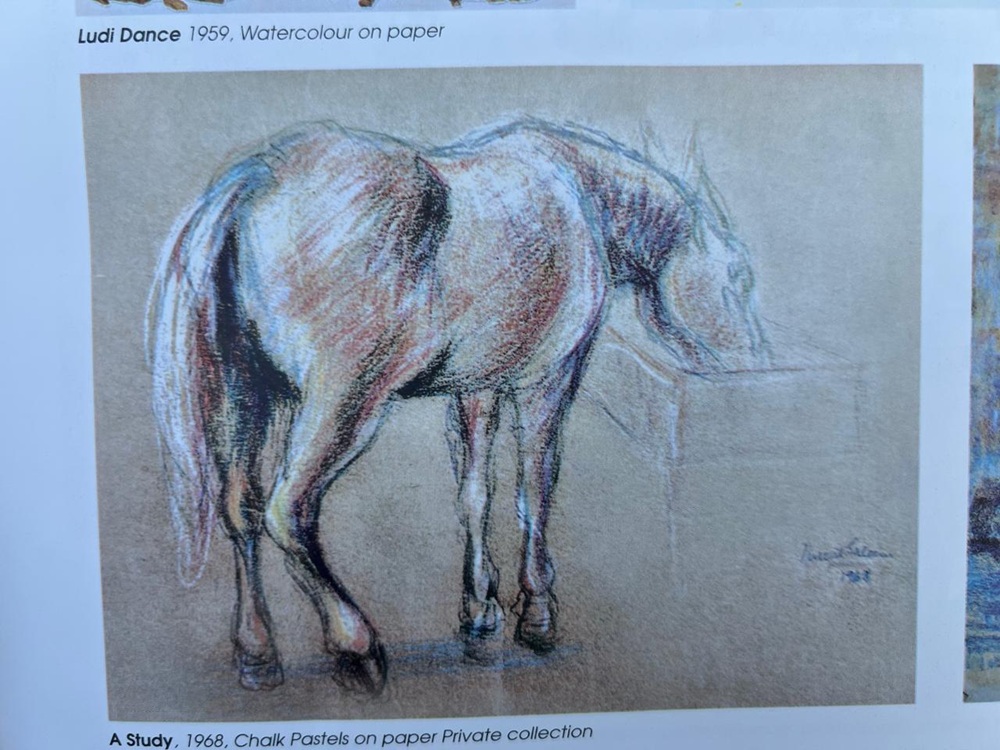
A Study 1969
It reminds me of the famous saying of Henry Matisse about modern art, as he says, “it is tightrope walking, first learn to walk on the ground.” Tightrope walking is the task of acrobats; it cannot be done by those who cannot walk steadily on plain ground. Nusrat Ji seems to be a follower of Matisse’s dogma. In contemporary postmodern times, many shortcuts have emerged in the quest to attain something novel, but there are a few who, by comprehending the strength of tradition, aspire to the novel. Nusrat Ji, while firmly standing on the ground cherished by Matisse, introduces the new in the novel. The exhibition continued until October 27.
You may also like: