Written by: Khadija Khan
Posted on: October 19, 2026 | 
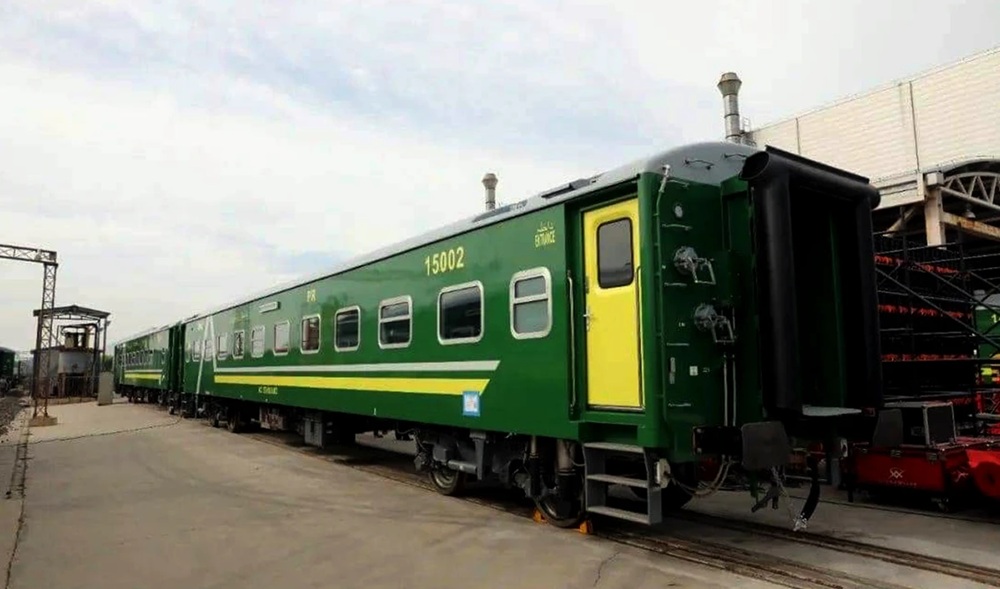
Pakistan Railways
Ask almost anyone in Pakistan about their first train journey and a story usually follows. A window seat, a tin of biscuits, a relative who somehow knew the guard. In China, the memory may be of instant noodles on a long overnight ride home for the new year. Railways leave memories long before they leave timetables. Yet behind those memories sits a quieter fact. In both countries, whole towns exist because a station was placed in one particular spot.
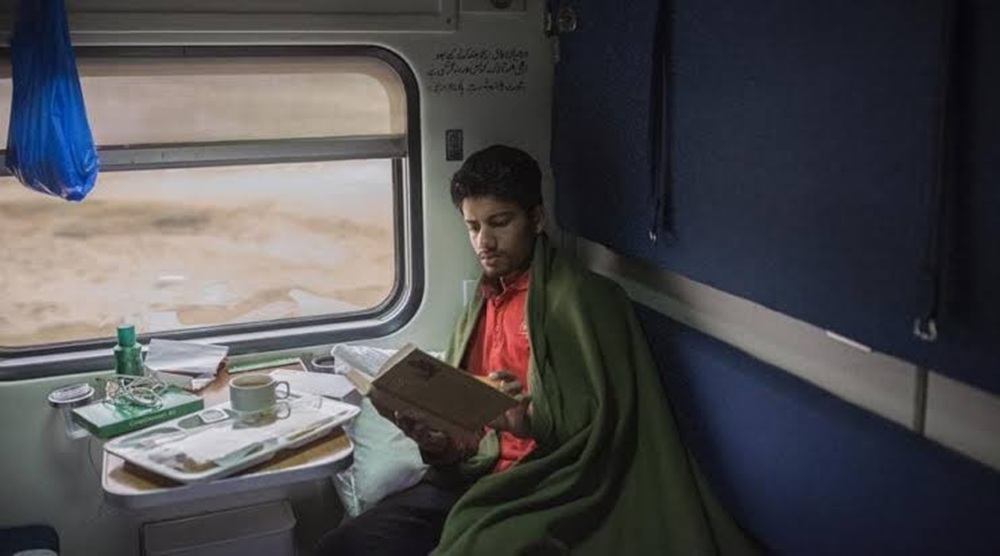
Every railway journey starts with a window seat and a story
Shijiazhuang in northern China is a clear example. A little over a century ago it was a modest market town. In 1905 the railway between Beijing and Hankou reached it, and in 1907 a second line opened toward Taiyuan in Shanxi, which made the town a junction. Farmers began growing crops for sale, grain traders moved in, and by 1935 it had overtaken the older city of Zhengding as the economic centre of its region. The population figures show the scale of the change. About 120,000 people lived there in 1947. By 1980 the number had passed one million, and by the end of 2017 it stood at more than 4.5 million. Few cities have grown so fast, and this one did so largely because the tracks met there.
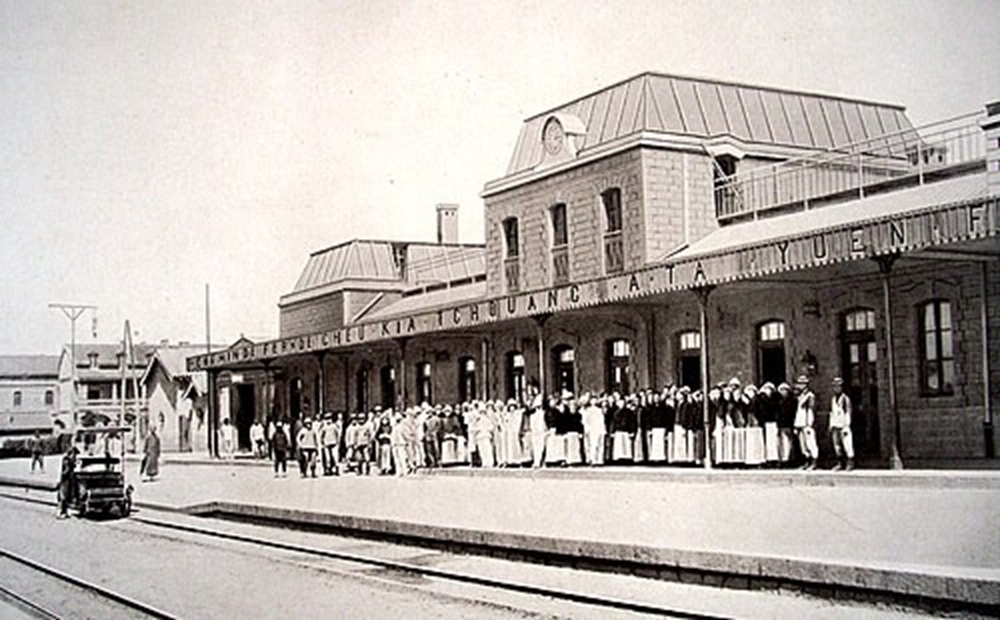
Shijiazhuang grew from a small market town into a major city after the railways arrived
The story has not ended, only changed shape. Shijiazhuang opened a new main station in December 2012, built to serve both ordinary and high-speed trains. Across China today, a large station works less like a place to catch a train and more like the front door of a city. Before the Spring Festival, the squares outside fill with people carrying bags, bedding, and gifts for home, and for a few days the station becomes one of the busiest and most emotional places in town.
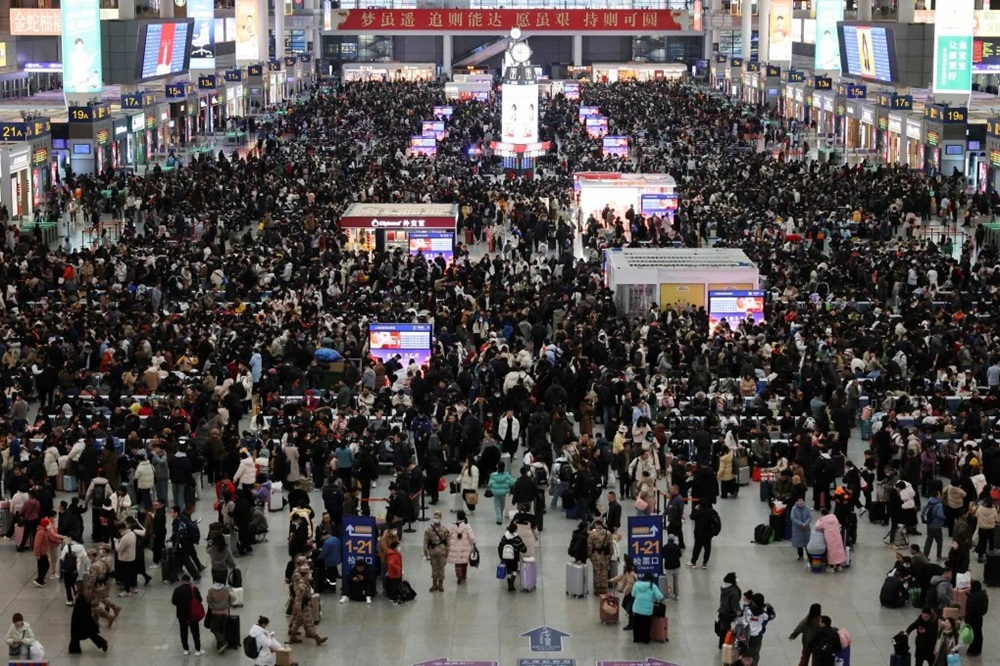
In China, a big station is now the front door of the city
Pakistan tells its own version through buildings. Lahore Railway Station was built between 1859 and 1860, only a couple of years after the uprising of 1857, and that moment can still be read in its heavy walls and towers. The station was meant to look elegant, yet also to serve as a fortress if trouble returned. A railway station designed to double as a castle shows how nervous its builders were, and how closely the railway and the state were tied together in those years.
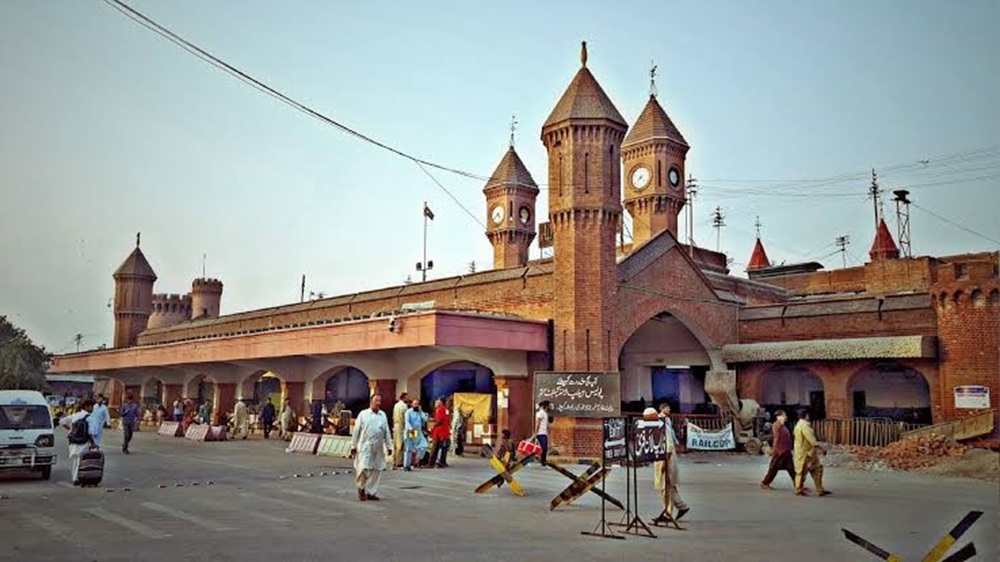
Lahore Railway Station, built between 1859 and 1860, was designed to look graceful and to work as a fortress
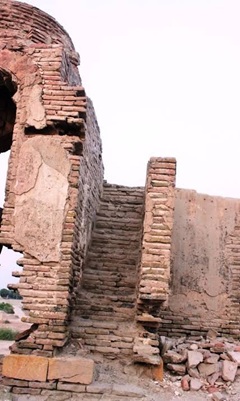
Rohri Junction in Sindh shows a gentler side of railway life. It is where the main line from Karachi to Peshawar meets the line toward Chaman. Trains stop for a while, passengers stretch their legs, and vendors call out along four busy platforms, while a workshop nearby keeps engines and carriages running. Junctions like this gather small worlds around them, made of tea sellers, porters, mechanics and travellers who meet for ten minutes and never see each other again. Then there is the line that climbs into the Khyber Pass. Work began in 1905, stopped for years, and started again in 1920. The first stretch to Landi Kotal opened in 1925 and needed 34 tunnels and 92 bridges and culverts to cross those rough mountains. It was built because Britain feared a Russian push toward India. Today the trains are gone. Regular service to Landi Kotal ended in 1982, and heavy monsoon rains in 2008 washed away major sections of track. It is a railway built with enormous ambition and then left behind, which is exactly why it is so hard to forget.
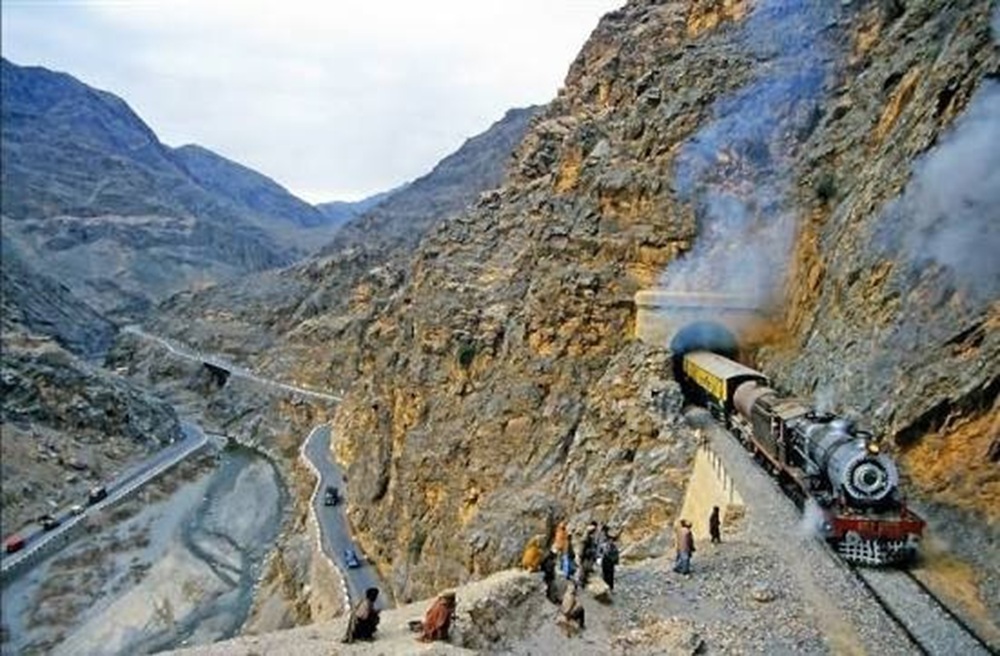
The Khyber Pass line needed dozens of tunnels and bridges, and now sits silent
No railway story in Pakistan is complete without 1947. When the country was born, the North Western Railway was divided, with about 3,133 kilometres of track going to India and about 8,124 kilometres to Pakistan. Stations became places of fear and farewell. Lahore was among those where terrible violence took place as trains carried migrants in both directions. Many families still remember a platform as the spot where one life ended, and another began. That is part of why old stations feel heavier than other buildings. They hold what people carried and what they had to leave behind.
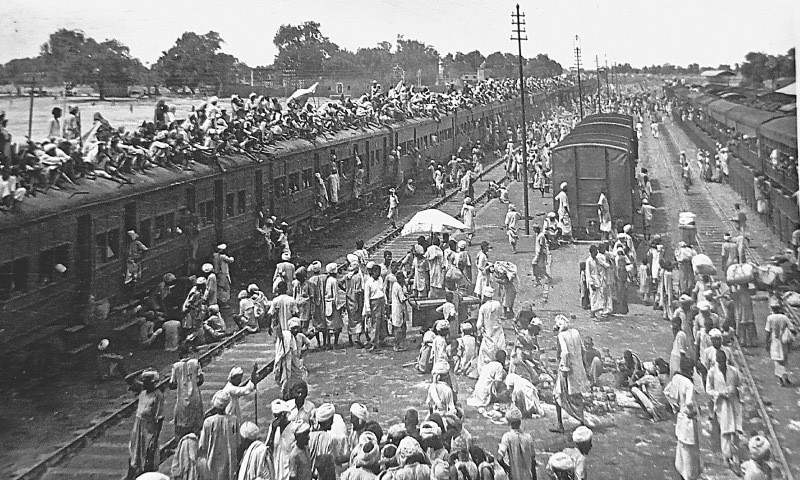
In 1947, railway platforms became places of farewell and uncertain arrival
Yet stations were never only sad places. Anyone who has waited on a Pakistani platform knows the rhythm of it: porters moving through the crowd, tea poured into small cups, an announcement nobody quite catches, then the sudden rush when the train finally appears. Stations are where students leave for university, where soldiers come home, where relatives wait with food wrapped in cloth. In small towns, the evening train can still decide when the shops close and the streets go quiet.
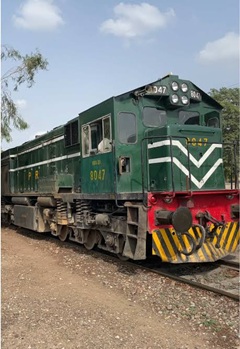
Today the two countries are linked by rails in a new way. The Karachi to Peshawar main line, known as ML 1, has long been part of upgrade plans under the China Pakistan Economic Corridor, and Pakistan Railways has bought passenger coaches from China. Whether every plan arrives on time is another question, but the lesson from both sides is the same. A station is never just a building. It decides where a town grows, what it looks like, who arrives and who leaves. Seen this way, even a quiet platform deserves a second look, because around many of them a whole town was built.
You may also like: