Written by: Mubashir Hassan
Posted on: October 05, 2026 | 
Mountains are not merely scenery; they shape cultures, living standards, and the daily lives of those who live within them. The spectacular municipality of Chongqing in southwestern China and the high-altitude territory of Gilgit-Baltistan in northern Pakistan are living proof of the fact that geography writes culture. Though these two regions are separated by thousands of kilometers and differ in cultural norms, language, and religious beliefs, both are defined by dramatic mountainous terrain. For travellers who dream in peaks and valleys, these two mountainous regions stand out as exceptional destinations at opposite ends of the Asian continent. This piece will uncover the shared characteristics and unique qualities of these two remarkable regions.
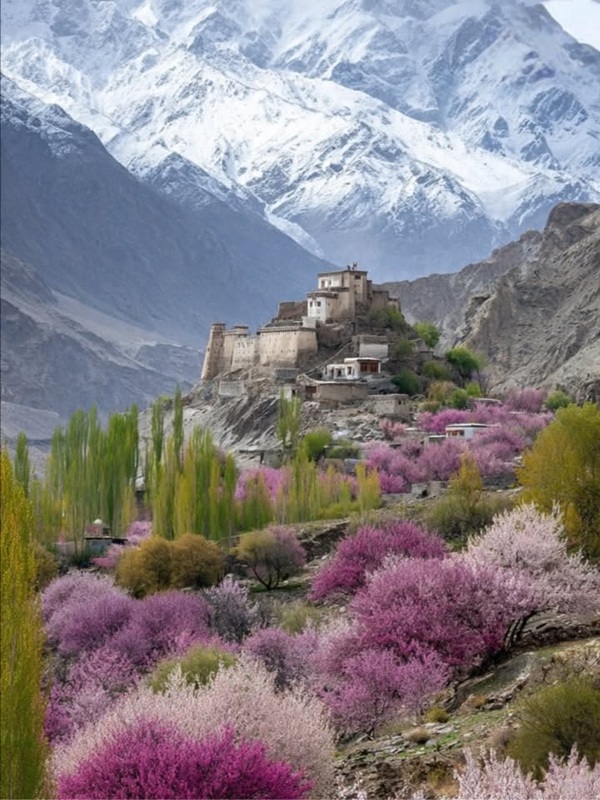
A scenic view of Baltit Fort Hunza
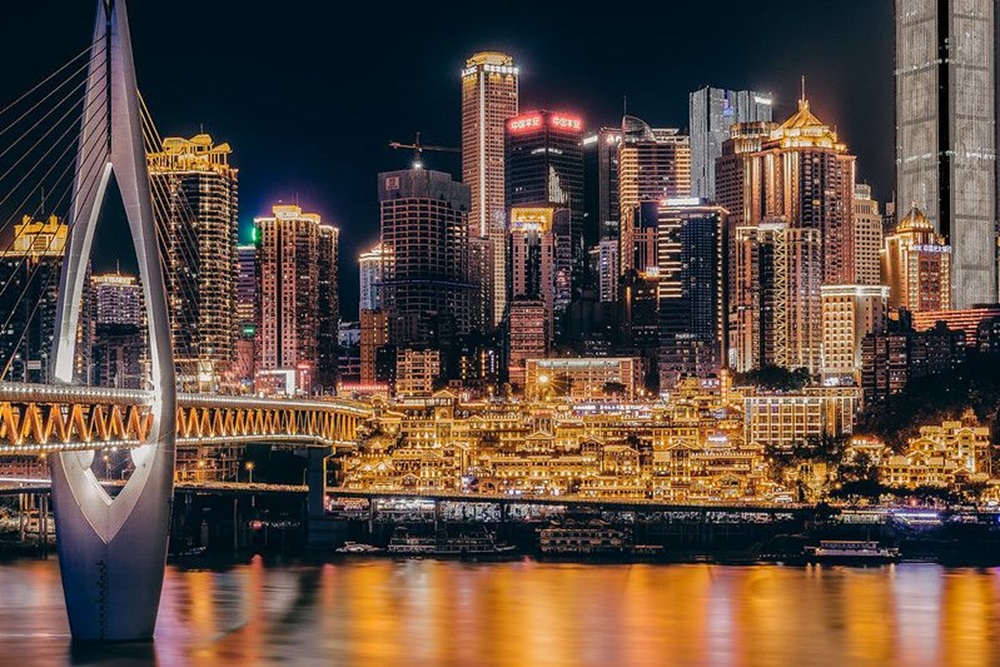
The foremost similarity between Chongqing and Gilgit-Baltistan lies in the fact that both are known for their mountains, rivers, and lakes. Chongqing is also referred to as the 8-D city of China due to its geographically vertical landscape. Situated at the transitional zone between the Qinghai-Tibet Plateau and the middle Yangtze plain, it is a populous place where low-altitude mountains and rivers are woven together to create a landscape unlike any other. For instance, the long-praised Yangtze River carves through the Wushan Mountains, forming the legendary Three Gorges. Similarly, the Daba Mountains rise to the north, and the Dalou range stretches southward. It looks as though the terrain is a patchwork of parallel ridges, deep valleys, and widespread lush greenery. Its vertical landscape clings to steep slopes at the confluence of the Yangtze and Jialing Rivers. This creates an unmatched vertical urban landscape.
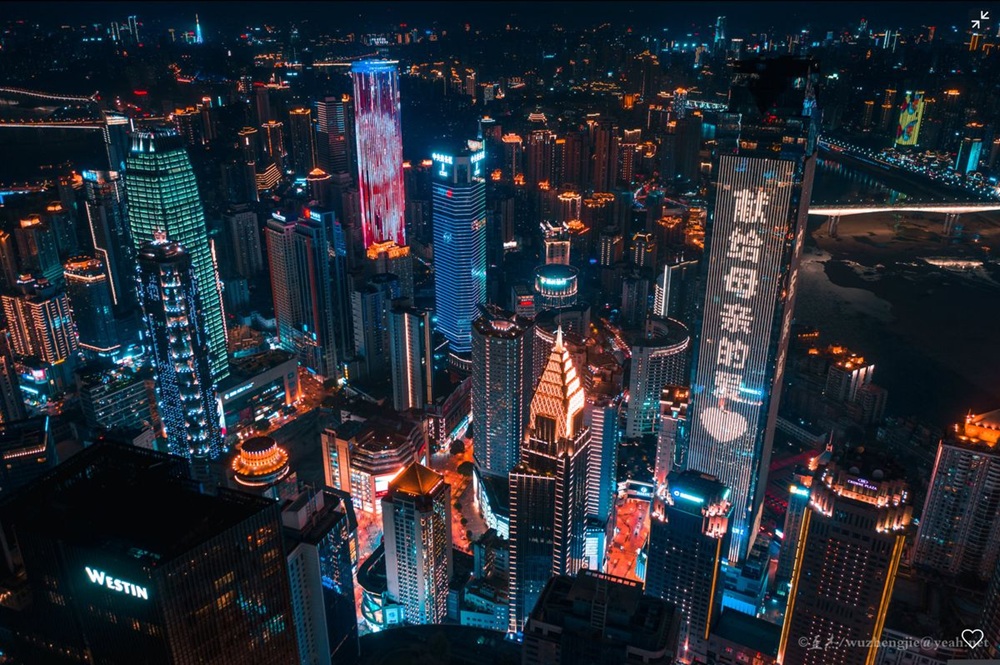
Night View of the City center
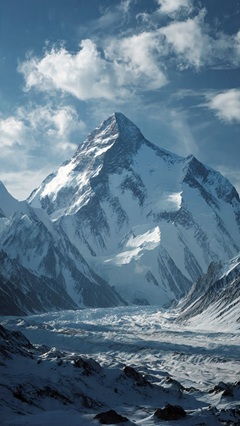
In contrast to Chongqing’s low-altitude mountains, Gilgit-Baltistan defines itself by altitude records. Gilgit-Baltistan's high-altitude mountains are home to the world's most important glaciers after the poles. Its territory is sparsely populated, with high mountains, covering over 72,000 square kilometers in the northern part of Pakistan, bordering China and India. It is embraced by three of the world’s greatest mountain ranges: the Karakoram, the Western Himalayas, and the Hindukush. Here, one can find K2, the world’s second-highest peak at 8,611 meters, along with glaciers like the Baltoro Glacier, which stretches 62 kilometers. The region’s rivers and gigantic glaciers cover 66% of the landscape. While Chongqing’s mountains are low-altitude and sculpted by water, Gilgit-Baltistan’s peaks are raw, ice-carved titans that pierce the sky.
A surprising commonality between the two regions can be found in their shared linguistic heritage within the Tibeto-Burman language family. The Tujia minority group of Qianjiang District in Chongqing and the Baltis of Gilgit-Baltistan offer a fascinating linguistic resemblance. The Tujia community is one of the 55 officially recognized ethnic minority groups in China that live in the Qianjiang District. Qianjiang’s population of roughly 487,000 is predominantly Tujia, and the Tujia language belongs to the Tibeto-Burman branch of the Sino-Tibetan family. In Gilgit-Baltistan, the Balti people speak the Balti language, a Tibetic language within the Tibeto-Burman family that retains a close phonetic relationship to the Tibetan script and is spoken by more than 3 lakh people in the Baltistan division. Both groups thus share ancient Tibeto-Burman roots. However, the Tujia language is referred to as highly endangered and is struggling for survival, while the Balti language is still the mother tongue of hundreds of thousands of people.
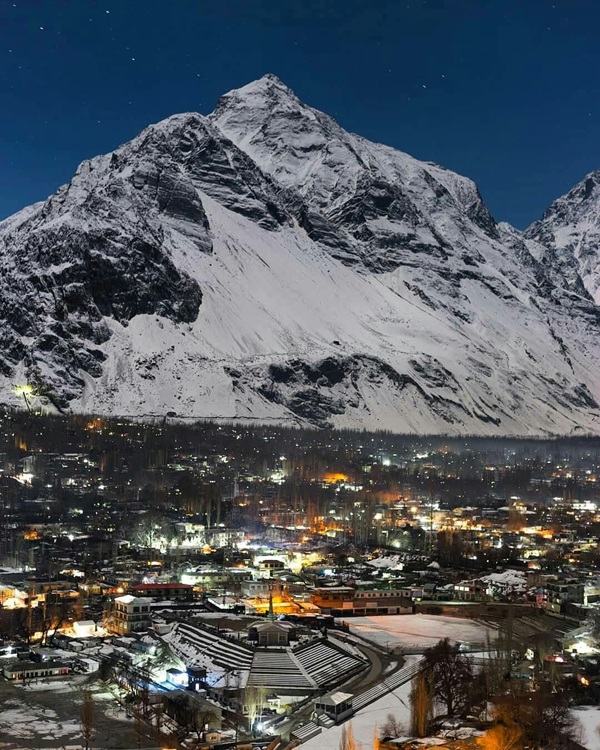
Skardu City during winters
Besides their natural landscape, the two regions starkly contrast in their infrastructure and urban development. Chongqing has successfully transformed its dramatic mountainous terrain into an advanced modern tourism industry. The city’s 8D urban features, through which the streets, cliffs, and caves have been restructured vertically, have made it a social media sensation globally. Foreign visitors often flock to the UNESCO World Heritage sites like the Dazu Rock Carvings, where digital technology brings ancient cliff sculptures to modern audiences. It offers night tours along the rivers and intangible cultural heritage workshops. Furthermore, in Chongqing, amid its natural serenity, one can easily fall in love with the cultural cuisine, like the famous Chongqing Hotpot on a cliffside, and watch the sun set behind skyscrapers nestled among mountains.
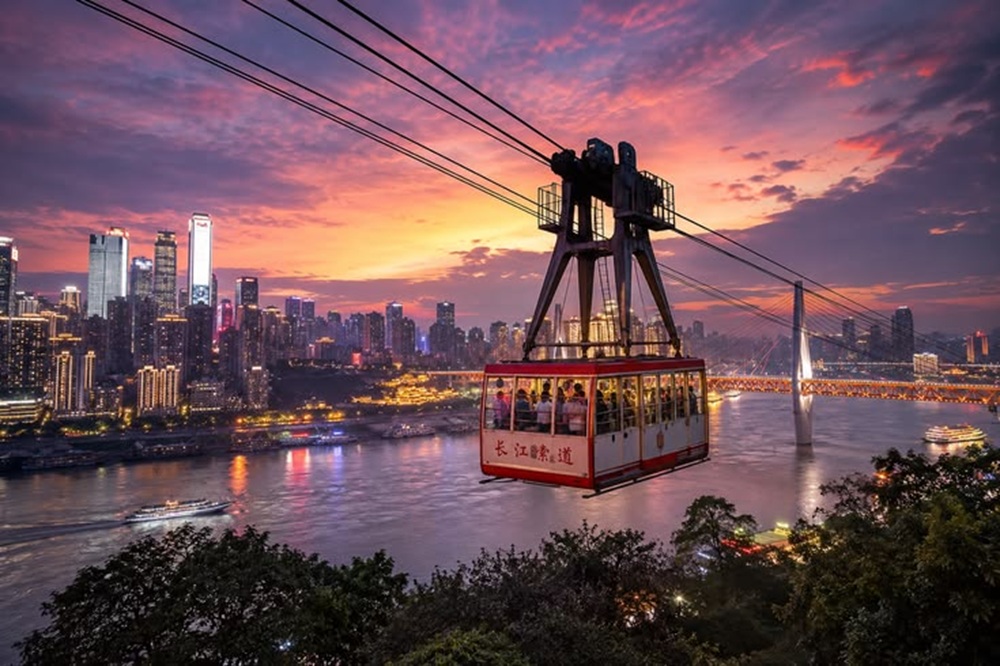
Yangtze River passing from Chongqing
In comparison to Chongqing’s highly developed infrastructure, Gilgit-Baltistan offers a simpler and more expeditionary form of tourism. The Hunza Valley, with its fairy-tale forts of Baltit and Altit and the surreal blue of Attabad Lake, attracts culture enthusiasts. Similarly, Skardu city serves as the gateway to K2 and the otherworldly Katpana and Sarfaranga Cold Deserts, while Deosai National Park offers an unmatched combination of extreme altitude and summer wildflower meadows. The Karakoram Highway, one of the world’s highest roads, winds through the region, connecting Pakistan to China through the Khunjerab Pass. In conclusion, Tourism here is about immersion in raw nature, with hospitality that locals proudly describe as unmatched. Yet, there is still an advancement gap. With the right investment in transport and tourism services, like Chongqing, Gilgit-Baltistan can also convert its scenic landscape into an advanced tourism hub.
You may also like: