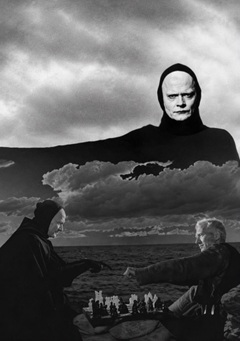
Written by: Fiza Husnain
Posted on: November 13, 2026 | 
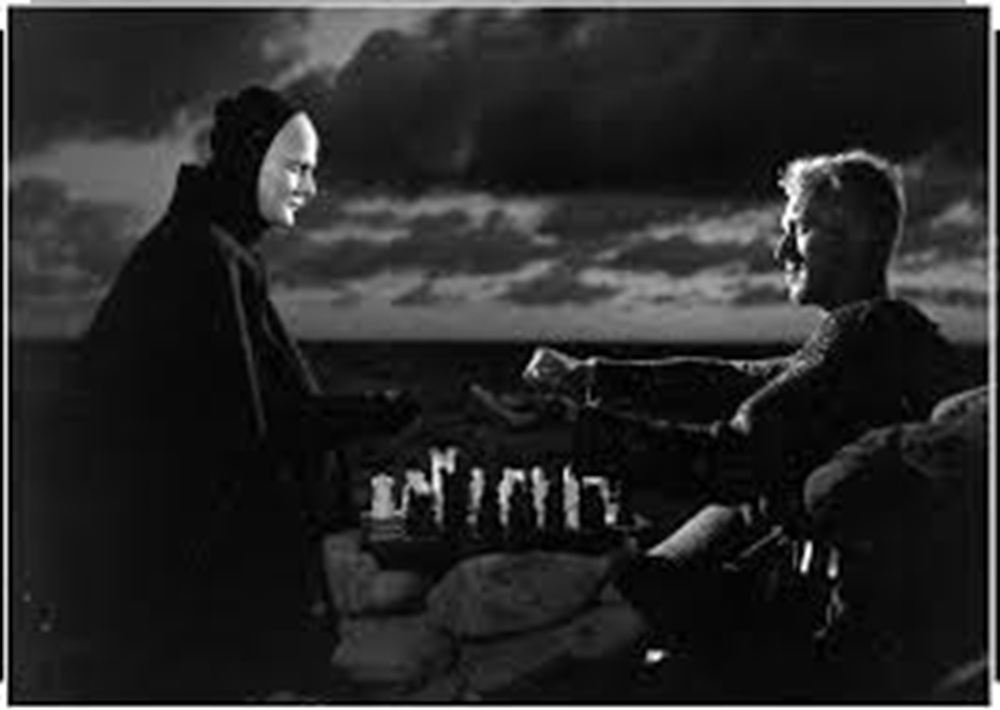
Checkmate with no answers. A knight plays chess with Death, and Death keeps his secrets.
Ingmar Bergman's cinema is often described as a long argument with God, yet its most striking moments remain wordless. Usually, silence is treated as absence: God does not answer, and people cannot reach one another in any way. That reading is somewhat true but, in this case, incomplete. Between The Seventh Seal (1957) and Persona (1966), Bergman's silence changes in meaning, shape, and form. In The Seventh Seal, silence is metaphysical, a question addressed to God himself. In the second film, it is ontological and aesthetic, a question about language, selfhood, and the cinematic image. In the backdrop of the shifting currents of postwar European cinema, this shift shows silence to be a historical form of thought rather than a fixed motif.
Bergman is known to draw on several traditions. From Swedish silent cinema of Victor Sjöström to Mauritz Stiller, which taught him that the human face could carry meaning without speech. His Lutheran upbringing, as the son of a pastor, gave him a vocabulary of sin, grace, and divine hiddenness. Half the inspiration can be traced back to his household, and the other half has its roots in the politics he lived around; postwar anxiety, sharpened by the nuclear threat, made that vocabulary urgent.
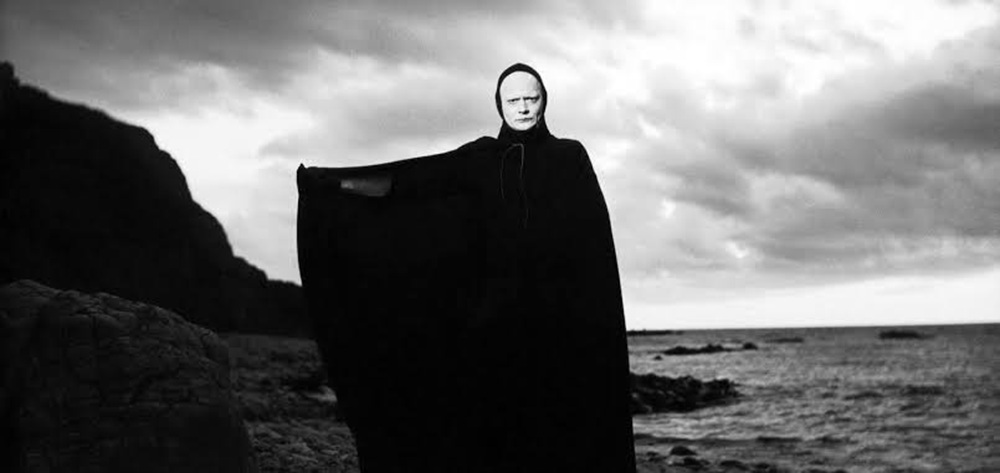
Smoke, stillness, and a stare that says more than any speech
When it comes to looking at the metaphysical aspect of silence, two philosophical echoes matter. Kierkegaard's deus absconditus, the hidden God, a God who withholds himself from human demand and their pleas, shapes the seventh seal. Secondly, Pascal's confession that "the eternal silence of these infinite spaces frightens me" captures the very mood of the films. Both treat silence as the condition of faith rather than its refutation. Thus, silence becomes an extension for understanding faith.
If you try to understand silence in The Seventh Seal, on the surface it would feel like the divine absence. The film's central scene is a confession. The Knight, Antonius Block, tells a hooded figure (which is the personification of death) that he wants not belief but knowledge: "I want God to put out His hand." and the God he addresses never replies. Bergman makes the silence audible, and the Knight's demand for proof meets only emptiness.
The chess match between the knight and death figure extends this. Death speaks, but never reveals anything beyond the rules of the game. The conversation between them produces no insight, and the Knight's answers with sardonic materialism. Then there is a mute girl, on cross, being punished for something that is not given in the context of the film; if anything, her presence complicates the pattern. She is rarely given dialogue, yet she accompanies the group with quiet steadiness. Her silence looks like deprivation but is actually endurance, a faith that does not need confirmation. The film does not answer its question, though it dignifies the asking, in a register close to Camus's absurd: the human demand for meaning meeting a world that offers none.
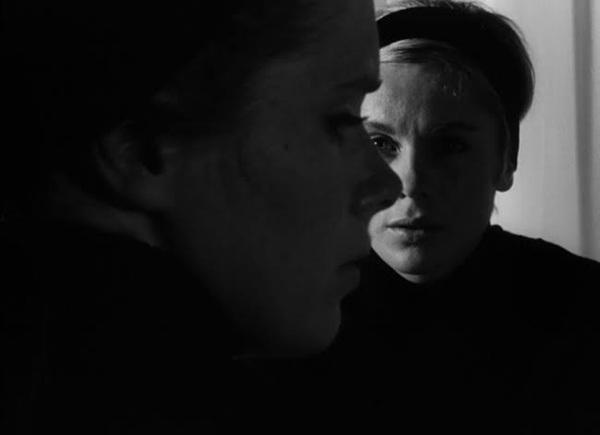
One woman talks, the other watches. In Persona*, listening is a form of power
Persona, on the other hand, is a film that relocates silence from heaven to the human subject. The lead actress Elisabet Vogler stops speaking in the middle of a performance of Electra. There is no physical cause, so her muteness reads as refusal to speak. The nurse Alma, assigned to her care, fills the quiet with talk, confessing an affair and an abortion. Her talk becomes annoying even for the viewer of the film. Speech becomes a form of exposure, and the listener's silence becomes a form of power.
As the film proceeds, the boundary between the women erodes until their faces literally merge in a single frame. Considered one of the best shots in cinema history, it inspired many other directors to use that framing. Where language gives out, identity seems to follow; the failure of language becomes a revelation of identity. This recalls Wittgenstein's remark that "whereof one cannot speak, thereof one must be silent," though Bergman dramatizes the point rather than stating it. It also reminds one of Heidegger's notions of Schweigen, silence as a mode of authentic expression, because there is no authenticity left in dialogue. Elisabeth's muteness communicates this precisely because it refuses ordinary discourse.
Crucially, silence also extends to the medium, thus elevating itself from just becoming silence. The film opens on carbon arcs, leader strips, and a projector, then appears to burn in the gate midway through. Cinema, the art of showing, admits, in a subtle way that it may be unable to say. Susan Sontag's essay "The Aesthetics of Silence," published in 1967, argued that modern artists increasingly used silence to challenge the claims of their own medium. Persona is an absolute example.
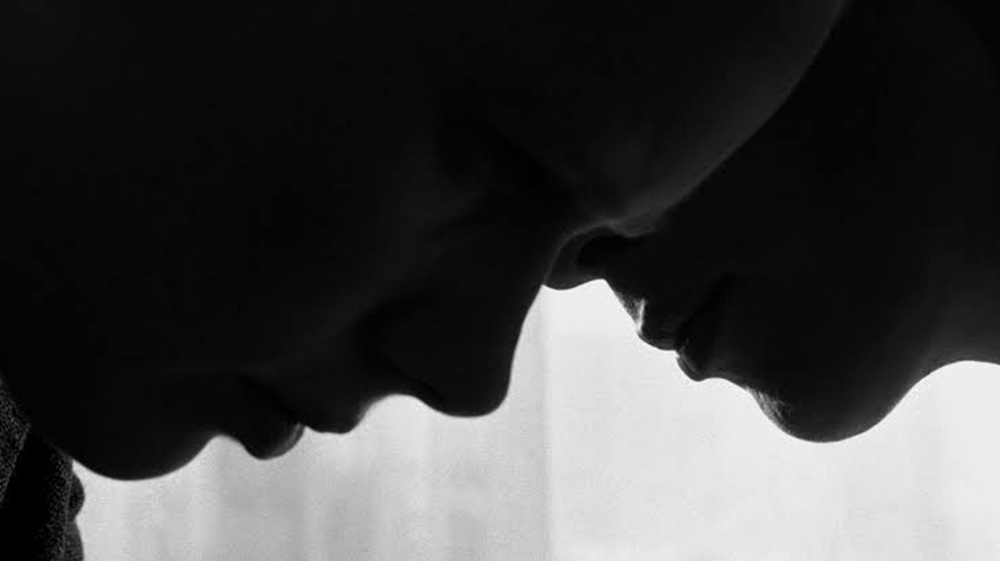
Two profiles, one breath apart. Where identity begins to blur
The question arises: Why does silence deepen this way in nine years? Between the two films, Bergman made the "silence of God" trilogy (Through a Glass Darkly, Winter Light, The Silence, 1961–63), in which religious questions gradually give way to failures of human communication. Persona completes that movement with its ontological aspect.
The wider cinematic landscape moved similarly. In 1957, European art cinema still favoured allegory and moral drama. By 1966, the French New Wave had made self-reflexivity a norm, Resnais had turned memory into form, and Antonioni had made emptiness a subject. Meanwhile, "death of God" theology was entering public debate, and television was transforming the image into a daily witness of war. Persona's brief footage of a Buddhist monk's self-immolation in Vietnam asks whether images can bear moral weight, or whether we have learned to look without feeling. The shift, then, is from theological to epistemological doubt. The earlier film asks whether anyone is listening; the later asks whether anything we say or see can be trusted. Even so, continuity remains: in both films, silence is a form of address, a withholding that makes demands on the audience.
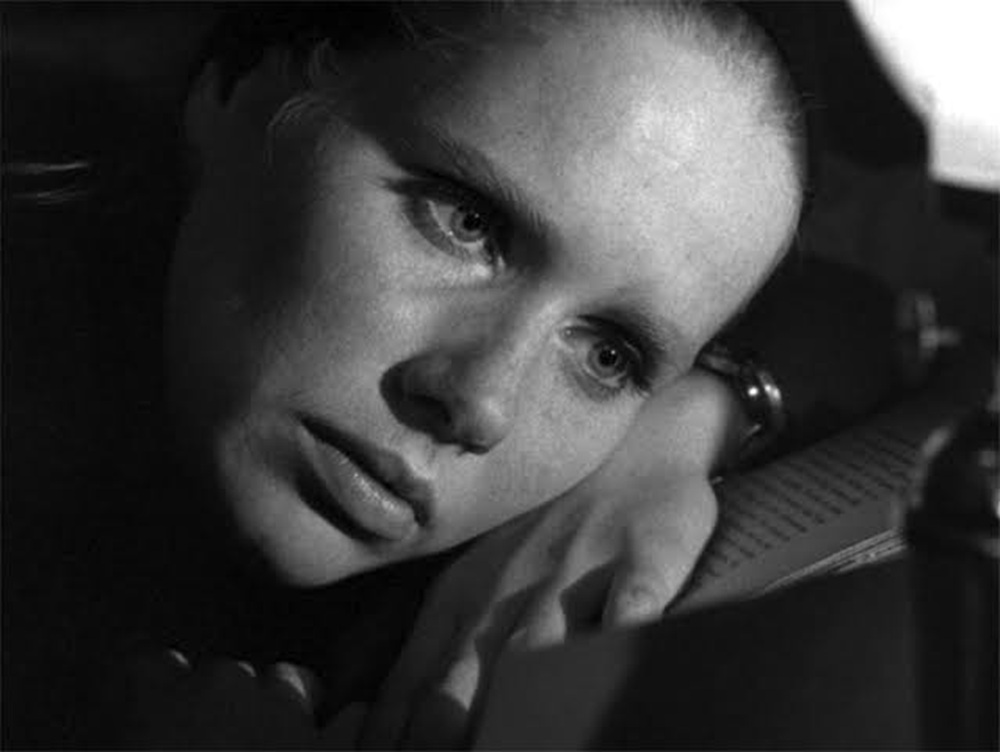
A face that refuses to speak, and says everything anyway. Silence as defiance in Persona
Bergman's silences are never merely empty; they are loaded. In The Seventh Seal, silence is where faith and doubt meet; in Persona, it is where language fails, and the self dissolves. Read alongside the changing history of cinema, they show an artist adapting his central question to what his era could no longer easily say. The viewer is left with an invitation rather than a conclusion: to stay with the quiet, and to ask what it is asking of us.
You may also like: