Written by: Rana Kanwal
Posted on: November 06, 2026 | 
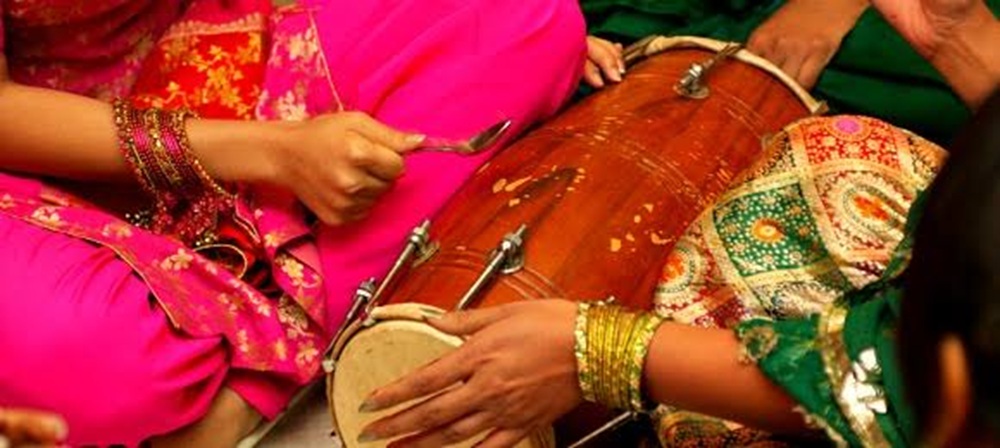
Traditional Pakistani Wedding with Dhoal
Imagine a Pakistani wedding gathering from a few decades ago. Women sit together in a courtyard, a dholki rests in someone's lap, and a familiar tune brings everyone into the conversation. One woman begins a song, another joins in, and soon the room fills with laughter, clapping, and playful verses about the bride, the groom, and their families. No one needs a microphone, a playlist, or a rehearsed performance. The songs live in people's memories.
Now picture a modern mehndi, with a DJ, colourful lights, choreographed dances, and popular songs playing through loudspeakers. Both scenes belong to Pakistani wedding culture, yet the contrast raises an important question: as wedding celebrations evolve, are we losing touch with the songs that once connected generations?
In many Pakistani households, wedding celebrations began well before the main event. Dholki evenings brought relatives and neighbours together in courtyards, living rooms, and verandas. Women sang traditional wedding songs while others clapped along, danced, or joined the chorus whenever they recognised a familiar tune.
These gatherings were rarely formal. Someone might forget a line; another person would supply it, and an ordinary evening could turn into hours of singing. Younger girls learned by listening to their mothers, grandmothers, aunts, and older cousins. Nobody needed to organise a lesson in folk music; the songs were learned naturally through participation.
The lyrics also expressed emotions that were not always easy to put into everyday words. Some songs celebrated the bride's happiness, while others reflected the sadness of leaving her parental home. Humour, affection, teasing, and nostalgia all found a place in these musical traditions.
Punjabi wedding culture is particularly rich in tappay, boliyan, and suhag. These traditional forms of singing have distinctive styles and purposes, but all offer glimpses into family life, relationships, and local culture.
Tappay and boliyan often feature playful exchanges about the bride, groom, in-laws, and relatives. A clever verse can provoke laughter, while a quick response from another singer keeps the gathering lively. This friendly teasing is part of what makes traditional wedding singing so distinctive: the lyrics are not simply performed for an audience; they bring the people present into the celebration.
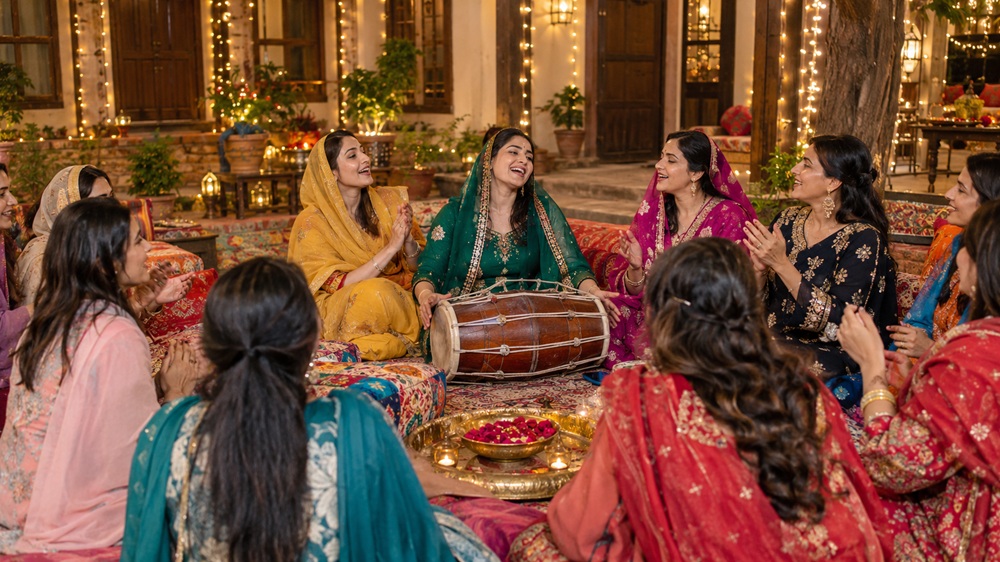
Joyful Mehndi Drum Circle
Suhag songs, meanwhile, often focus on the bride and the emotions surrounding marriage and leaving home. Their verses reflect the affection between parents and daughters, the uncertainty of a new beginning, and the feelings associated with moving into another household.
The words and tunes may vary between families and regions. Some songs have been remembered for generations, while others acquire new verses over time. This flexibility is part of their charm. Traditional wedding singing has never been entirely frozen in the past; it has always been shaped by the people who sing it.
Wedding songs were closely connected to other folk traditions. In Punjabi communities, the sound of the dhol often brought people together for giddha and bhangra. Women performed giddha with expressive movements and boliyan, while men joined bhangra to energetic dhol rhythms.
In some Punjabi communities, khwaja sira performers also visited weddings to offer blessings through songs and dance. Customs differed across regions and families, but these practices formed part of the wider cultural landscape surrounding marriage celebrations.
The atmosphere was participatory rather than carefully staged. People sang, danced, laughed, and responded to one another in the moment. The celebration belonged to the gathering itself, not just to the people performing at the front.
Today, many weddings feature professional sound systems, DJs, recorded music, and choreographed performances. Bollywood tracks, Punjabi pop, and viral social media hits often dominate mehndi playlists. Couples and their friends spend time preparing dance routines, and wedding entertainment is increasingly planned around photography and video recordings.
There is nothing inherently wrong with these changes. Contemporary music gives couples new ways to celebrate, and a well-rehearsed performance can be a joyful part of a wedding. The concern is that, in some households, traditional singing has become less common as recorded music takes centre stage.
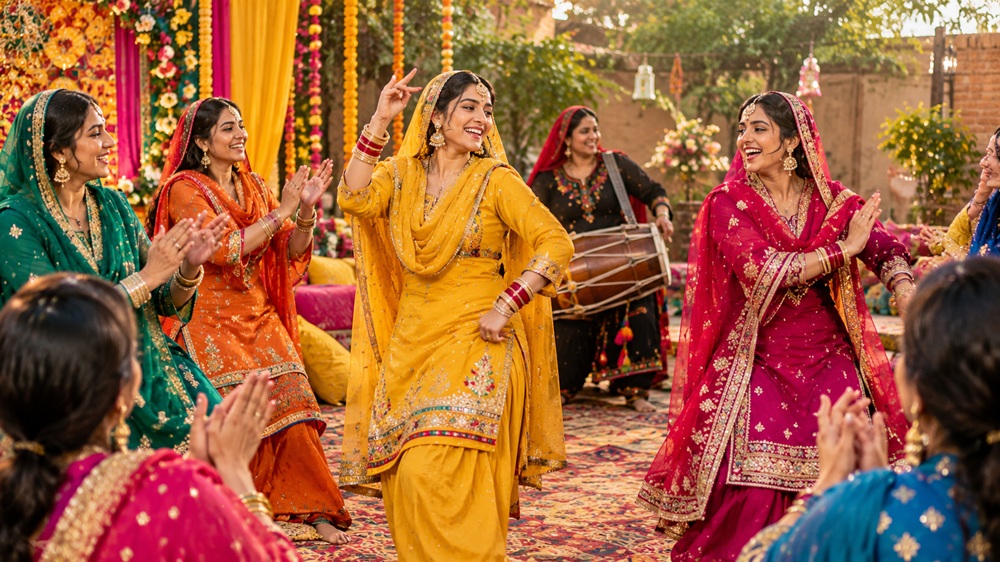
Joyful Punjabi Wedding Dance
A DJ can play a popular wedding track, but the experience differs from a gathering where relatives sing together. A dholki evening develops spontaneously: someone starts a familiar boli, another adds a verse, and the rhythm changes with the energy of the room. When that space disappears, traditional songs can lose their place in everyday family celebrations.
Perhaps the most significant change is not simply in the music people prefer, but in how much each generation knows about the traditions behind it.
Grandparents may remember weddings where traditional songs were an ordinary part of family life. Many millennials grew up during a transition, experiencing dholki evenings alongside television music, cassettes, CDs, and eventually digital playlists. For some members of Generation Z, wedding entertainment is more closely associated with popular tracks, social media trends, and choreographed dances.
Now, as Generation Alpha grows up and Generation Beta begins to emerge, this cultural gap may become more noticeable. These generational labels do not describe every young person's interests, but they reflect a world in which digital entertainment is readily available from childhood. A child can learn a viral dance online in minutes yet grow up without hearing the traditional boli that a grandmother once sang at every wedding.
The issue is not necessarily that younger people reject their heritage. Often, they simply have fewer opportunities to encounter it. Traditional songs were once learned by sitting beside elders, listening to familiar verses, and gradually joining in. When family gatherings change, this informal way of passing on cultural knowledge can weaken.
A young person might know the lyrics of several popular Punjabi hits but struggle to recognise a traditional suhag or take part in an exchange of boliyan. This does not make one generation better than another. It shows how easily cultural knowledge can fade when the spaces in which it was shared become less common.
Traditional wedding songs have not disappeared from Pakistan. Many families continue to organise dholki evenings, sing Punjabi boliyan, and include folk music alongside contemporary favourites. In some homes, old and new traditions coexist comfortably.
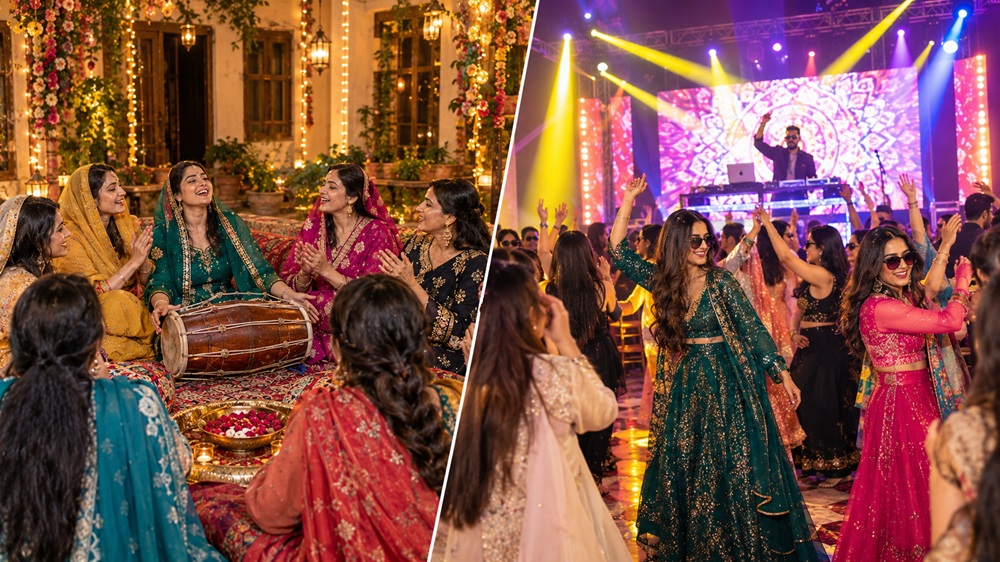
Tradition Meets Neon Celebration
Keeping these songs alive does not require rejecting modern weddings or returning to the past. Families can create space for both. A mehndi could begin with a short dholki session before the DJ takes over. Grandmothers and aunts could teach younger relatives a few favourite verses, explaining their meanings and the occasions on which they were traditionally sung.
Recording elders singing these songs can also preserve their voices, styles, and family variations for future generations. Schools, cultural groups, and digital creators can help introduce folk traditions to younger audiences in engaging ways. Most importantly, young people should be invited to participate rather than made to feel that tradition is an obligation.
Pakistani wedding songs are more than background music. They preserve regional languages, family humour, shared memories, and emotions associated with one of life's most significant occasions. Their value lies not only in the lyrics but also in the relationships and experiences through which they are passed on.
Weddings will continue to change, and new music will always find its place. But traditional songs deserve a place too, not merely as nostalgic reminders of the past, but as living expressions of the culture families carry forward.
You may also like: