Written by: Haroon Sohaib
Posted on: November 18, 2026 | 
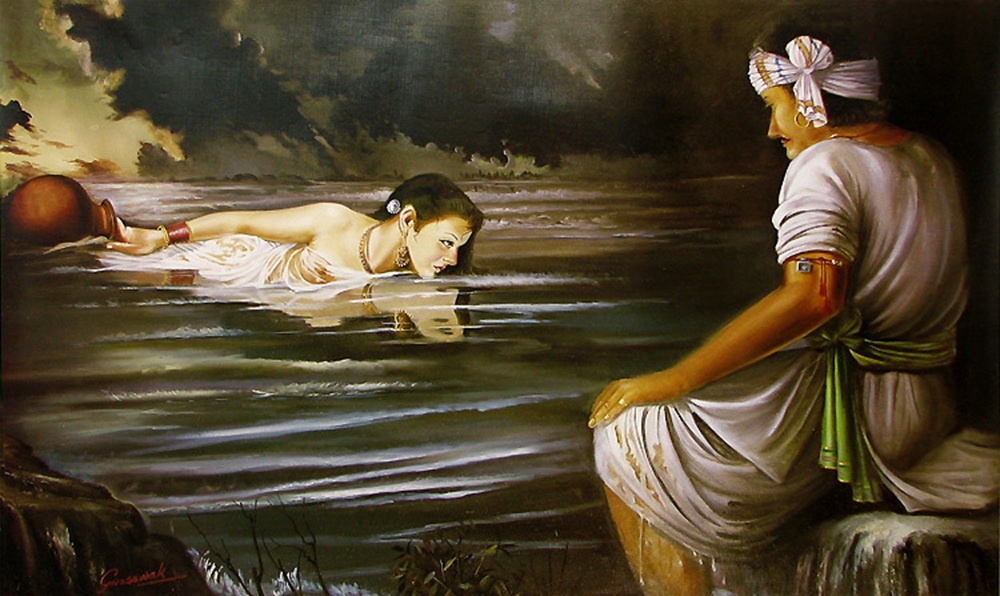
Sohni Mahiwal: A vibrant canvas capturing Sohni staying afloat with her pitcher as Mahiwal waits patiently along the bank
With the haunting, soulful refrains of "Paar Channa De" echoing from Green Entertainment’s stellar production Mitti De Baway, starring Mahira Khan and Wahaj Ali, the timeless folklore of Sohni and Mahiwal has found a striking modern resonance. Featuring powerhouse vocals by folk legend Arif Lohar and Saleema Khawaja, and composed by Sahir Ali Bagga, the serial's soundtrack breathes vivid emotional depth into a narrative set against the rustic and culturally rich backdrop of rural Punjab. While "Paar Channa De" is an ancient folk ballad rooted in the tragic romance of the Chenab River, it first reached contemporary audiences in 2016, when Noori (Ali Hamza and Ali Noor) reimagined it for Coke Studio Season 9 alongside Shilpa Rao. Coke Studio's rendition transformed the traditional lament into a soaring, rock-infused masterpiece, with Shilpa Rao voicing Sohni's tragic determination while Ali Hamza and Ali Noor delivered the solemn warnings of the pot and the climax. "Paar Channa De" was also sung earlier by Arif Lohar and Saleema Jawwad for the 2013 movie Zinda Bhaag, but in Mitti De Baway, the song returns as an emotional bridge to contemporary television storytelling.
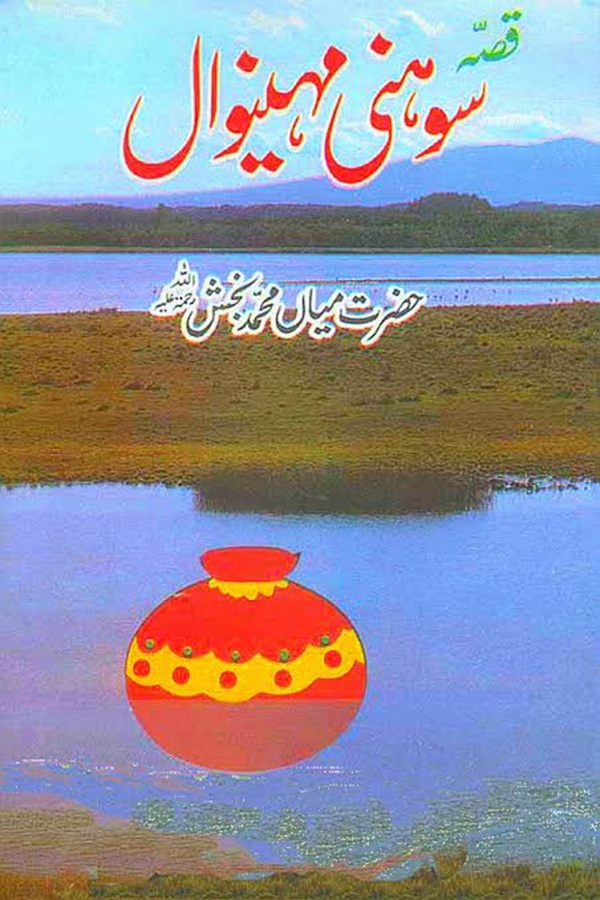
Qissa Sohni Mahiwal (Hazrat Mian Muhammad Bakhsh): The classic book cover featuring the iconic unbaked clay pitcher over the river, immortalizing the spiritual Punjabi verses composed by Hazrat Mian Muhammad Bakhsh
The timeless tragedy of Sohni and Mahiwal is a tale of two star-crossed lovers caught in a web of class, pride, and societal decree. The legend is set in the town of Gujrat, where a young woman named Sohni was born into a traditional Kumhar (potter) clan, responsible for decorating the pottery of her father, whose name is recorded as Tulla. As fate would have it, Sohni crosses paths with Izzat Baig, a wealthy merchant from Bukhara, Uzbekistan. Smitten beyond reason, Izzat abandons his wealth, status, and caravans, transforming himself into a humble buffalo herder and earning the name Mahiwal just to remain close to her. When societal backlash forces Sohni into a marriage she never consented to, Mahiwal retreats to a small hut across the roaring river, sparking a clandestine ritual where Sohni defies the midnight currents, using a hard-baked earthen pitcher as a float to swim across and meet her beloved. The romance ultimately meets a devastating end when Sohni's jealous family members replace her sturdy, fired clay vessel with an unbaked pitcher.

Paar Chanaa De (Coke Studio Season 9): Noori and Shilpa Rao's iconic 2016 musical rendition, reimagining the ancient folk dialogue between Sohni and her unbaked clay pitcher into a rock-infused masterpiece
On an unusually stormy night, as Sohni plunges into the dark, churning depths, the vessel dissolves mid-stream, causing her to drown. Witnessing her final moments from the opposite bank, Mahiwal immediately leaps into the relentless waters, sealing their eternal union in death.
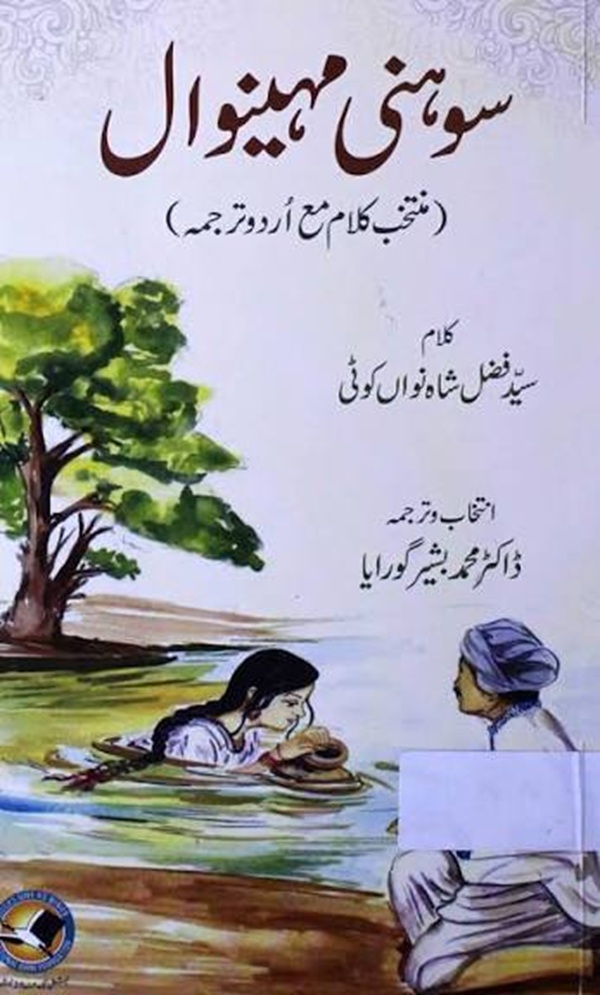
Sohni Mahiwal (Syed Fazal Shah Nawan Koti): Book cover featuring selected Punjabi verses and Urdu translation of Fazal Shah of Lahore's celebrated account of the tragic lovers
To this day, "Paar Channa De" (Across the Chenab) stands as one of the most poignant folk ballads in Punjabi literary, musical, and art traditions. The story of Sohni and Mahiwal shares universal appeal with the ancient Greek myth of Hero and Leander, although the genders are reversed. Hero was a priestess who dwelt in a tower in Sestos on the European side of the Hellespont, and Leander was a young man from Abydos who lived on the opposite side of the strait. Leander fell in love with Hero and swam every night across the Hellespont to meet her. Their secret love affair lasts through a warm summer, but when winter and its rougher weather loom, they agree to part for the season and resume in the spring. One stormy winter night, however, Leander sees the torch at the top of Hero's tower. He attempts to go to her, but halfway through his swim, a strong winter wind blows out Hero's light, and Leander loses his way and drowns. When Hero sees his dead body, she throws herself off the tower to join him in death.
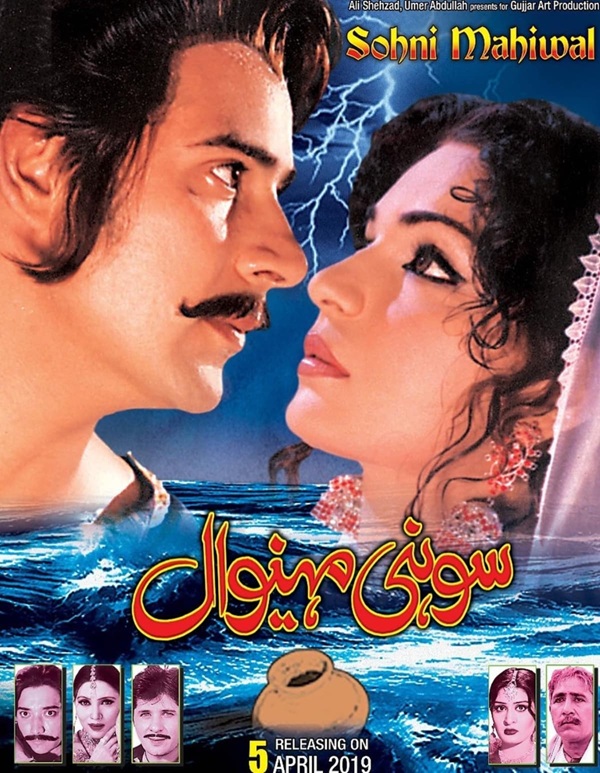
Sohni Mahiwal (Pakistani Cinema Adaptation): Movie poster featuring Moammar Rana as Mahiwal and Meera as Sohni, continuing a rich cinematic tradition of adapting the folklore for the big screen.
Interestingly, a different version of the same story is central to Sindh’s folk traditions. While the origins of the Punjabi tale can be traced back to the Mughal era, the Sindhi tradition traces its roots to the Soomra dynasty period of the 10th century. Suhni belonged to the Samtia clan and was the daughter of Jarkat Samtio, while Mehar, a herder, belonged to the Nagamro clan. Initial accounts of this Sindhi version can be found in the texts of Shah Abdul Karim Bulri and Shah Jo Risalo as part of the seven popular tragic romances commonly known as The Seven Queens of Sindh by Shah Abdul Latif Bhittai. The most popular Punjabi rendition was documented from oral accounts by Fazal Shah of Lahore.
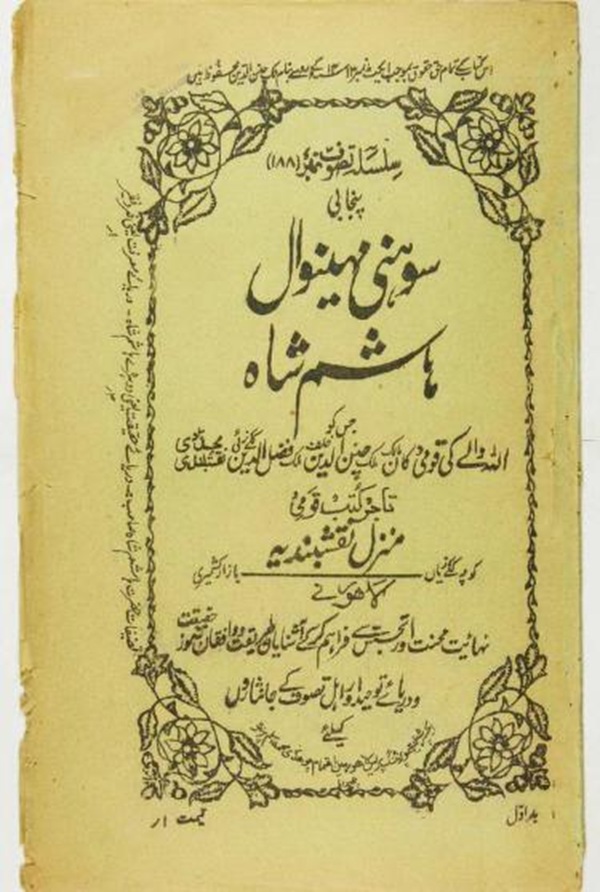
Sohni Mahiwal by Syed Hashim Shah Tharpalvi (1930): A historic 1930 publication cover of the tragic legend, immortalizing Syed Hashim Shah's classical Punjabi poetic rendition
What makes "Paar Channa De" unique in Punjabi folk heritage—which boasts many similar tales ingrained in popular culture such as Heer Ranjha, Mirza Sahiban, and Sassi Punnu—is its dramatic, dialogue-driven structure. The song is framed as a conversation between Sohni and the unbaked pitcher. The pot warns her of the dark night, treacherous waves, and its own fragile nature that will inevitably melt in the water. Sohni acknowledges the danger but insists on pressing forward even if it costs her life. The unbaked pot continues to serve as a metaphor for the worldly body and human limitations, while the turbulent river represents the vast ocean of existence that can only be crossed through absolute spiritual devotion. Beyond a simple tale of tragic romance, it stands as an enduring anthem of courage, commitment, and the eternal search for love. Legend has it that the bodies of Sohni and Mahiwal were recovered from the Indus River near Shahdadpur, and one can find a tomb attributed to Sohni located along Shahpur Chakar Road in Shahdadpur.
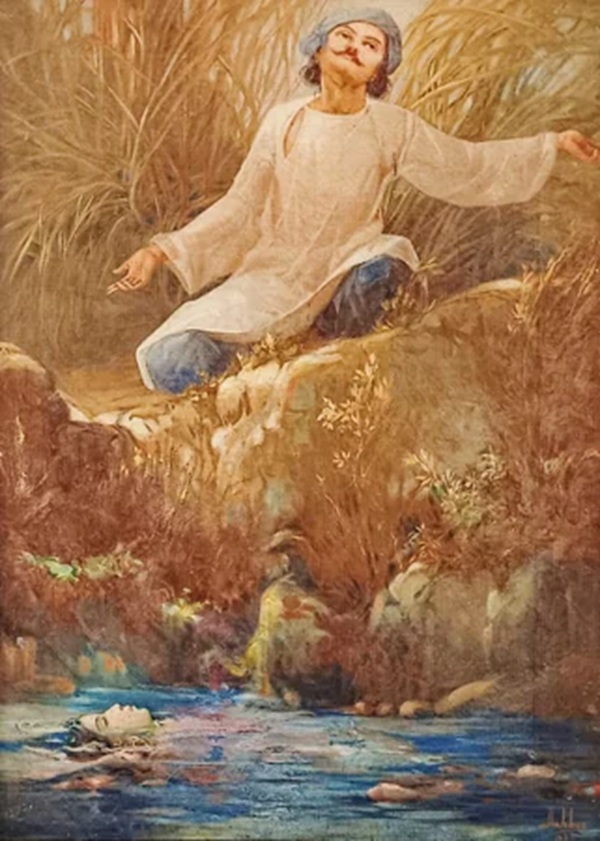
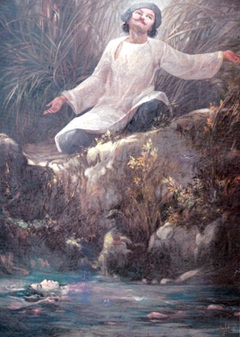
Sohni Mahiwal (Ustad Allah Bakhsh Masterpiece): Ustad Allah Bakhsh’s original 1923 painting depicting Mahiwal perched in anguish above the river as Sohni drowns, restored in 2016 by the Danish Centre of Culture and Development
The recent inclusion of "Paar Channa De" in Mitti De Baway and its immense popularity are a testament to how this story has inspired generations of writers, artists, and filmmakers across regions. The Sohni and Mahiwal love story inspired numerous modern songs, including Pathanay Khan's famous track Sohni Gharay nu akhadi aj mainu yaar milaa ghadeya (Sohni asks the pot: please carry me to my lover). Earlier, Alam Lohar, father of Arif Lohar, created many renditions of this ballad and was among the first singers to present the story in a song format. O disdi kulli sohne yaar di (I can see the hut of my lover), originally composed by Ustad Fateh Ali Khan and Ustad Mubarak Ali Khan and later performed by Ustad Nusrat Fateh Ali Khan, is also inspired by the same story and written as a conversation between Sohni and the unbaked clay pot.
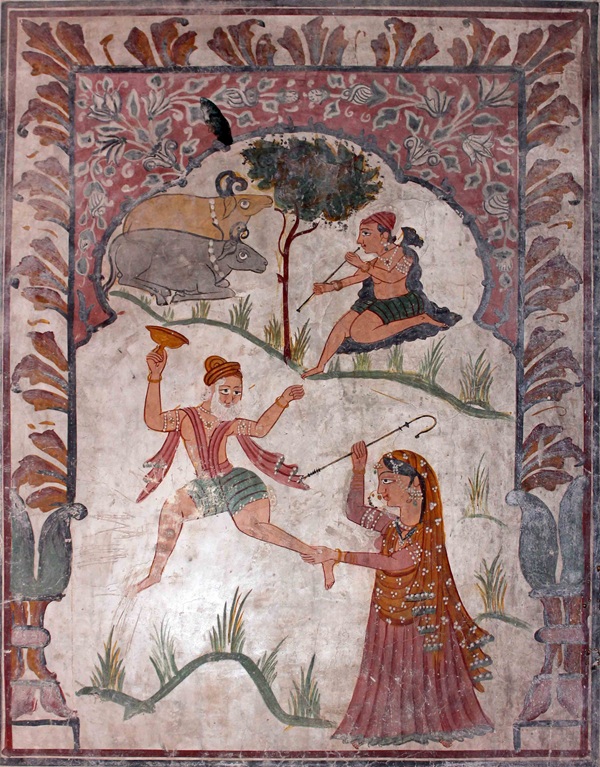
Heer Ranjha Mural (Sui Simbli Temple, Jammu): A historic mural from the Sui Simbli temple in Jammu depicting scenes from the tragic legend of Heer Ranjha-another cornerstone of Punjabi folk heritage alongside Sohni Mahiwal
World-renowned artist Ustad Allah Bakhsh, born around 1895 in Wazirabad, Punjab, depicted the beloved folktale in a mesmerizing painting in 1923, which was later restored in 2016 by the Danish Center of Culture and Development (CKU). A prime example of indigenous subject matter rendered in the 20th-century European painterly tradition, his composition depicts a distraught Mahiwal dramatically perched at the edge of the river in a typical Allah Bakhsh characterization of theatrical posture, poised hands, and soft demeanor. The charming details of the surrounding atmosphere are influenced by British landscape painting, and the portrayal of the drowning Sohni is reminiscent of Ophelia, the masterwork by British artist Sir John Everett Millais. Sobha Singh, one of the most prominent 20th-century modern artists from Punjab—who lived in Lahore until 1949 before migrating to India—painted around five versions of this story, with the first created in 1947.
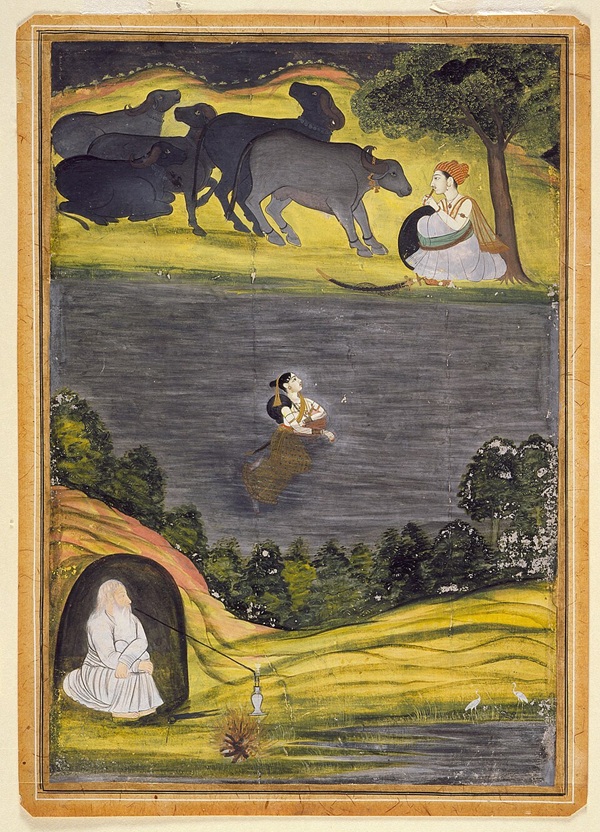
Sohni Swims to Meet Her Lover Mahinwal (LACMA): An 18th-century LACMA miniature depicting Sohni crossing the dark river with her clay pitcher toward Mahinwal
The first film ever made on the folktale of Sohni Mahiwal dates back to 1928. Produced by K.P. Bhave, it starred Gauhar Karnataki and Jamshedji. Afterward, in India alone, more than half a dozen films were made based on this tragic love story, with the last one produced in 1984 starring Sunny Deol and Poonam Dhillon. In Pakistan, the first film based on the folklore was produced in 1976. Directed by Raza Mir—father of Asif Raza Mir and grandfather of prominent television star Ahad Raza Mir—the film featured Yousaf Khan and Mumtaz playing the title roles. In 2022, another Sohni Mahiwal film was produced in Pakistan, starring Moammar Rana as Mahiwal and Meera as Sohni.
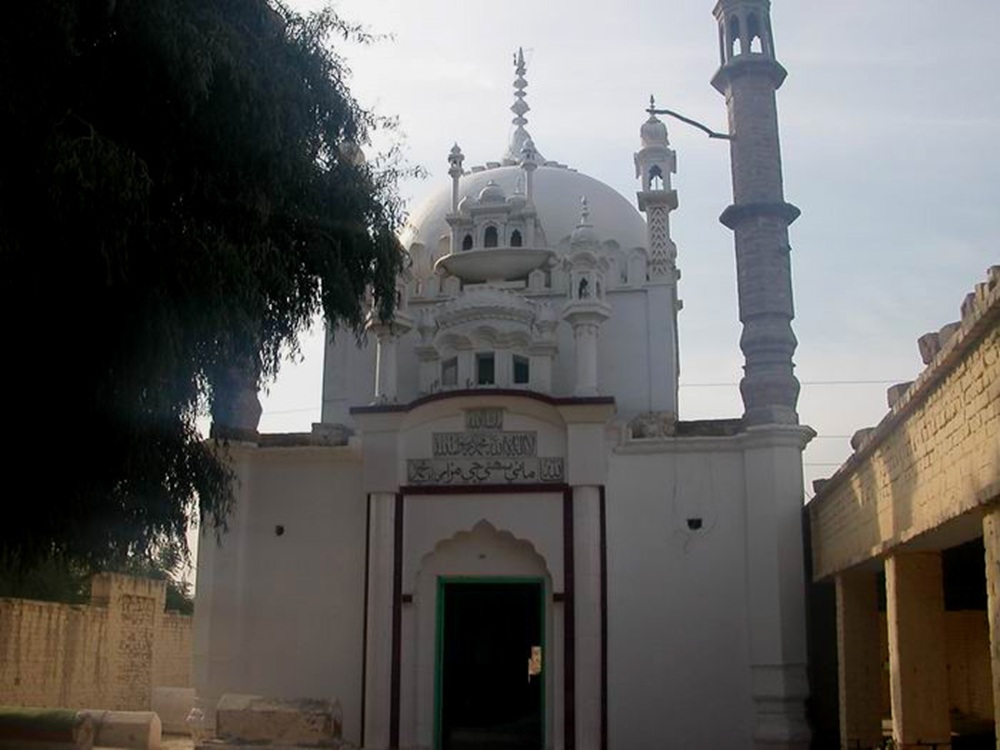
Tomb of Sohni in Shahdadpur, Sindh: The tomb shrine located along Shahpur Chakar Road in Shahdadpur, where local legend holds that Sohni and Mahiwal were laid to rest after being recovered from the river
As the final notes of "Paar Channa De" blare across the airwaves, the enduring legacy of Sohni and Mahiwal proves that true art does not merely recount history; it reinvents it for every new generation. From the oral traditions whispered along the banks of the Chenab and the timeless verses immortalized in Shah Jo Risalo, to Ustad Allah Bakhsh’s sweeping canvas and the modern cinematic and television interpretations, this tragic romance remains etched deep into the cultural subconscious of South Asia. Through contemporary masterworks like Mitti De Baway, the raw yearning of the unbaked clay pot and the dark, swirling currents of the river continue to speak to us across centuries.
You may also like: