Written by: Hurmat Majid
Posted on: October 13, 2026 | 
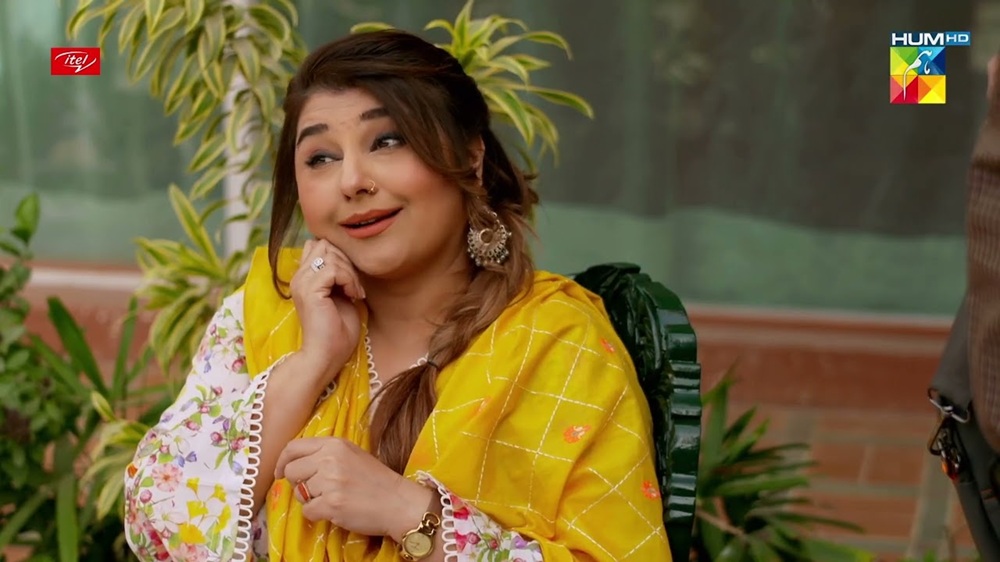
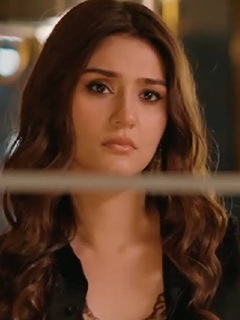
Javeria Saud in Paristan 2
Something about the current debate over actors and their English feels slightly strange.
Every time an actor playing an affluent, educated character speaks English with the wrong grammar, an incongruous vocabulary, or a manner of speaking that does not quite belong to the character, the internet has a field day. The latest example is Durefishan Saleem in Dar-e-Nijaat, where her character Zaryab is presented as the daughter of a well-to-do family, educated in elite schools and considering going to the US for further education. Viewers picked apart her English, arguing that her accent and delivery did not fit the character. The criticism became intense enough for Sanam Saeed to call the online bashing “very lame” and “downright mean”. Others argued that the issue was not mocking an accent but whether the actor's delivery made sense for the character.
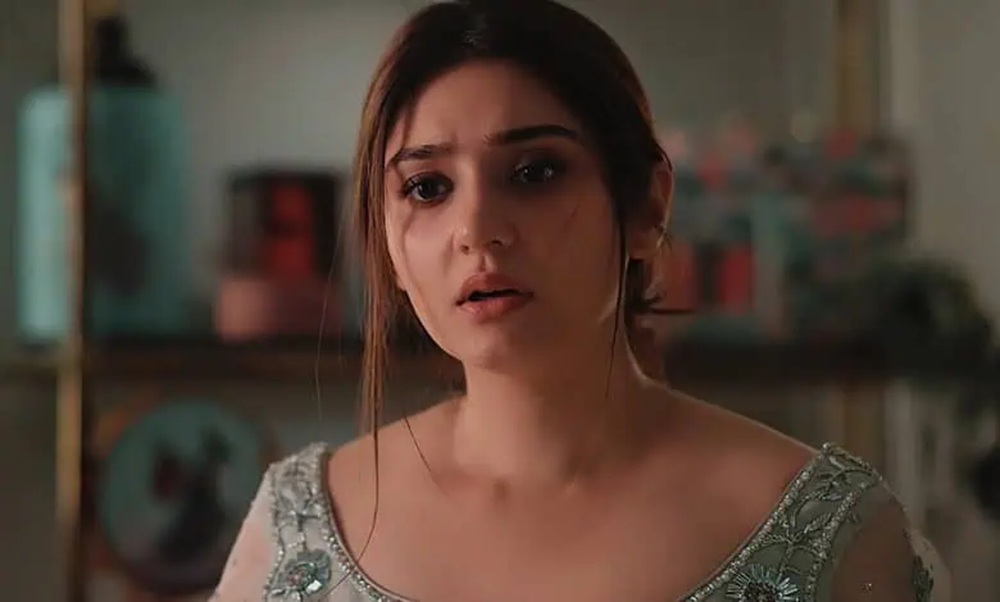
Durefishan in Dar e Nijaat
I think the second argument deserves more attention.
Not because actors should be mocked for bad English. They shouldn't. But because this is not really about whether someone's English is good or bad. It is about whether a character sounds like the person the script tells us they are. We take this distinction seriously when it comes to almost everything else.
If an actor is playing an upper-class woman, we notice if her clothes don't look expensive enough. We notice her jewellery, her makeup, her hair, the car she drives and the house she lives in. Actors talk about observing people, picking up mannerisms, changing their posture, learning how someone walks, eats or carries themselves.
But when it comes to the actual talking, we often seem willing to say: close enough. Why?
Language, accent and tonality are part of characterisation. They tell us where someone grew up, what kind of school they attended, what language was spoken at home, what social circles they inhabit, and sometimes what class they belong to.
A character can walk into a room wearing the most convincing clothes in the world and still feel wrong if they open their mouth and sound like somebody else.
Pakistani television has given us plenty of examples of this - in English, Urdu, and regional languages.
Take Meray Humnasheen. Hiba Bukhari played a traditional Pashtun girl, but viewers objected to the way her Urdu was performed with an exaggerated Pashtun inflection. The accent was described as fake and overdone, with some viewers arguing that the drama was presenting an inaccurate version of Pashtun culture.
The criticism was not that Hiba could not speak Urdu. It was that the way she was performing Pashtun speech did not sound authentic to people who knew it.
Then there was Javeria Saud in Paristan. Her character spoke Punjabi, and the criticism was even more direct. Lubna Faryad described her Punjabi as “not Punjabi or not even Urdu” and argued that a Punjabi-speaking character should be given to someone who could actually speak the language. The criticism specifically questioned the industry's tendency to give such roles to actors from Karachi who did not speak Punjabi fluently.
Again, this had nothing to do with English. It was about a character's language being treated as an acting detail that could be approximated.
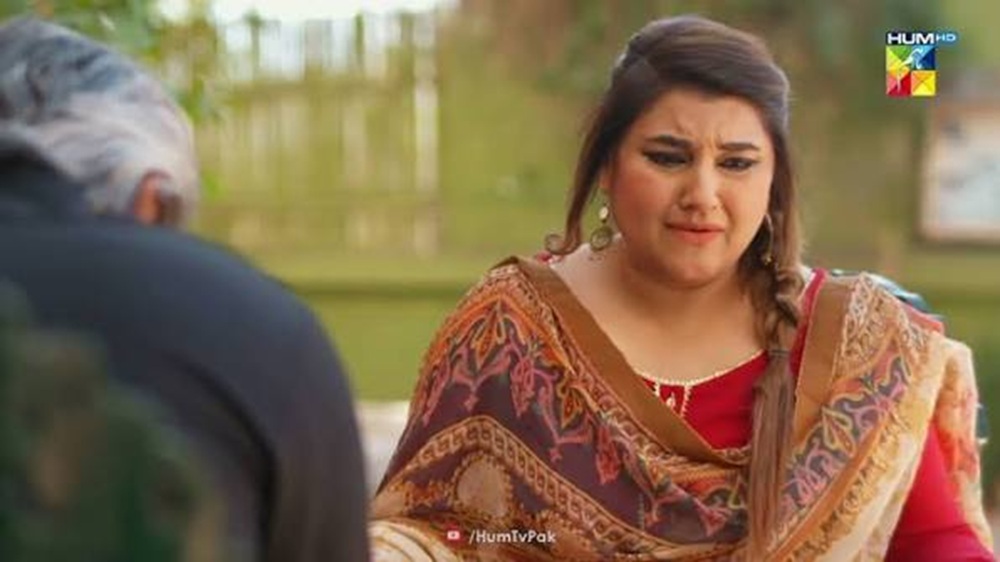
Javeria Saud in Paristan
Then there is Talha Chahour in Jama Taqseem, a particularly useful example because the criticism was not simply that he had a Punjabi accent.
Chahour plays Qais, a young man from a family the drama establishes as Urdu-speaking and living in Karachi. Marina Khan pointed out on Kya Drama Hai that Chahour's Punjabi inflection became noticeable at emotional moments. She specifically referred to his delivery of “Leyla Leyla” and argued that he needed to be careful about slipping into a Punjabi style of speaking when the character was supposed to speak Urdu.
That is a legitimate acting note. Talha Chahour being Punjabi is not the problem. His Punjabi accent is not the problem. The problem is that the actor's own regional speech pattern was occasionally becoming audible in a character who, according to the world the drama had established, did not speak that way.
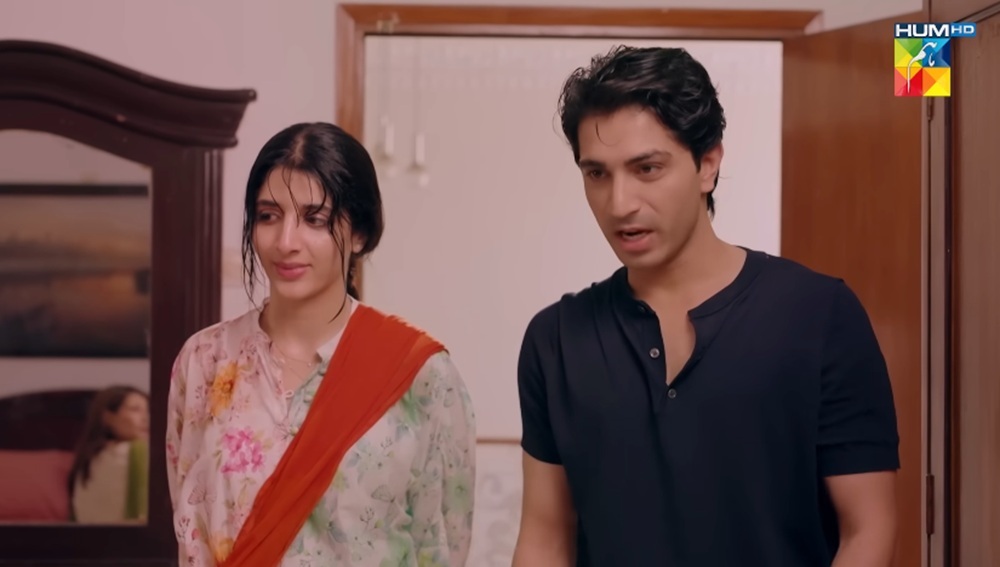
Talha Chahour as Qais in Jama Taqseem
That is exactly the standard we should apply across the board. If an actor playing an affluent character is criticised because their English does not convincingly belong to the world the character inhabits, that is about characterisation.
If an actor playing a Pashtun character is criticised because their supposed Pashtun accent sounds artificial, that is about characterisation.
If an actor playing a Punjabi character is given an exaggerated Punjabi accent, that is about characterisation. And if a Punjabi actor playing an Urdu-speaking character allows his own Punjabi inflection to creep into the performance, that is also about characterisation.
The language changes. The principle doesn't. The backlash that followed the Jama Taqseem criticism is a separate conversation. Viewers objected to the way the criticism was being framed, particularly when Punjabi speech appeared to be associated with being “paindu” or undesirable. That objection is fair. No regional language or accent should be treated as inherently inferior.
But it does not erase the original acting question: does the actor's speech belong to the character? And audiences clearly do care about this.
Consider Shazeal Shoukat. In 2023, after an appearance on Momin Saqib's Had Kar Di, a clip of the actress struggling with Urdu went viral. She was subsequently trolled online, with some users calling her “bunkabab” and others criticising her Urdu fluency and English accent.
Whatever one thinks of the way she was mocked, the reaction demonstrates that audiences notice language. They notice Urdu. They notice English. They notice regional accents.
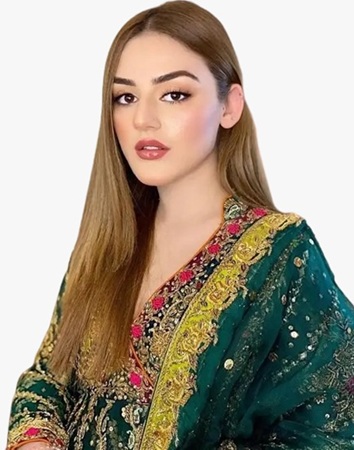
Shahzeal Shouqat
So why should English be the only language around which we have a serious conversation about character authenticity?
If a wealthy, privately educated character is supposed to have grown up speaking English, then grammar, vocabulary, pronunciation, code-switching, and delivery matter. If a working-class character has supposedly grown up in a particular linguistic environment, their Urdu matters too.
If a character is Pashtun, their accent matters. If a character is Punjabi, their Punjabi matters. If a character is Sindhi, Balochi, or Saraiki, their language and the way they speak Urdu should matter.
The same standard has to work in every direction. There is another problem: regional language and regional accent are not the same thing as rurality.
A Punjabi-speaking character does not have to be a villager. A Sindhi-speaking character does not have to be a feudal landlord. A Pashto-speaking character does not have to be a tribal elder. A Balochi-speaking character does not have to live in some remote landscape.
These languages are spoken in cities, universities, hospitals, offices, homes, and boardrooms. Yet mainstream television still frequently uses language as shorthand for geography and class.
That is how a regional accent becomes a costume. A Pashtun character does not become more Pashtun because the actor adds an exaggerated intonation. A Punjabi character does not become more authentic because every sentence is delivered loudly. A Sindhi character does not become more Sindhi because the actor drops a few words of Sindhi into the dialogue.
The problem is not that regional accents are being used. It is that they are too often being performed rather than inhabited. Some actors clearly understand the difference.
Ramsha Khan has spoken about preparing for her Balochi character in Sinf-e-Aahan. Because her character was city-educated, she did not need to speak “hardcore Balochi”; she needed a subtler Balochi undertone. She learned from her co-stars from Quetta, spending time with them between scenes to get the accent right.
Namra Shahid took a similar approach for Aik Aur Pakeezah. An Urdu-speaking Karachi actress, she was required to perform entirely in Saraiki. She spent roughly a month receiving voice notes from actor Saqib Sumeer, who corrected her pronunciation, accent, and delivery. One audition scene reportedly took three days to get right.
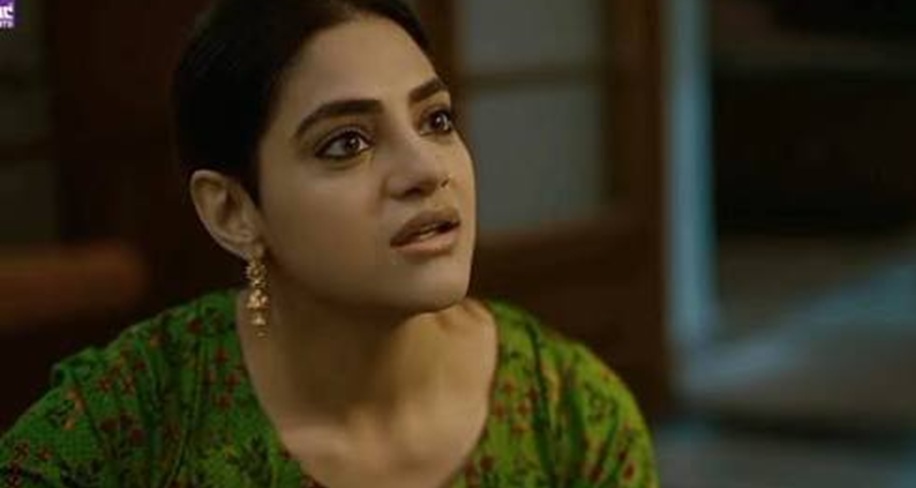
Namrah Shahid from Aik Aur Pakeezah
Humayun Saeed has also described preparing for his Seraiki-speaking character in Punjab Nahi Jaungi, with writer Khalil-ur-Rehman Qamar reading his lines in the required accent and correcting his pronunciation and emphasis.
This is acting preparation. And it is no different in principle from an actor learning how to walk like a soldier, carry themselves like someone from another class, or adopt the mannerisms of another person.
Language requires preparation too. Which is why I don't think the entire responsibility can be put on actors.
The director has to listen. The writer has to listen. The production has to have somebody who knows.
If a character's costume is wrong, someone on set notices. If the makeup is wrong, someone notices. If a historical prop is wrong, somebody will point it out.
So, who is listening when the accent is wrong? Who is checking whether an actor is actually speaking Punjabi or simply doing a “Punjabi accent”? Who is checking whether a Pashto accent is authentic or a caricature? Who is deciding what a working-class character's Urdu should sound like? Who is checking whether the English written for an elite character actually sounds like the English that character would speak? And who is telling the actor when they have got it wrong?
It isn't an unreasonable demand. There are speakers of these languages and dialects who can coach actors. Productions already understand the need for experts when it comes to costumes, choreography, fight sequences, and historical detail. Language deserves the same attention.
We have become very sophisticated about visual authenticity. Perhaps it is time we became equally attentive to aural authenticity.
This doesn't mean every actor needs to become a linguist. It doesn't mean everyone has to speak “perfect” Urdu. It certainly doesn't mean actors should be mocked for their accents. It means something much simpler:
The character should sound like the character.
And that does not necessarily mean speaking in a “correct” or standard accent. Sometimes the most authentic thing a character can have is a regional accent. Sometimes it is polished Urdu. Sometimes it is imperfect English. Sometimes it is a mixture of Urdu and English. Sometimes it is a regional language spoken in an urban register.
The point is not to impose one standard of speech. The point is to make the speech consistent with the person we have been asked to believe in. This is why I don't think the current debate should be reduced to “kisi ki angrezi ka mazaq nahi urhana chahiye” versus “kya ab log dramay ke chakkar mein apni Urdu kharab kar lein?”
There is a much more interesting question underneath it: Does this person sound like the person the script says they are?
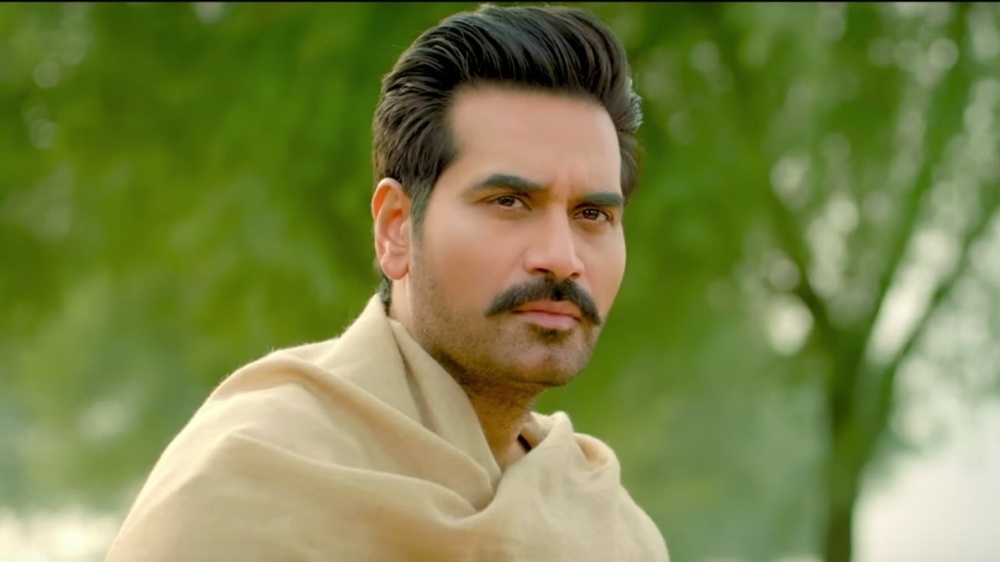
Humayun Saeed in Punjab Nahi Jaungi
If we are willing to spend hours making sure that a character has the right clothes, the right hair, the right house, the right car, the right mannerisms and the right body language, why should the moment they open their mouth be where our attention to detail stops?
We don't ask actors to merely look like their characters. We ask them to become them. And becoming someone includes learning how that person speaks. Because language is not what comes out after the acting is finished.
Language is part of the acting.
You may also like: