Written by: Muhammad Suhayb
Posted on: September 29, 2026 | 
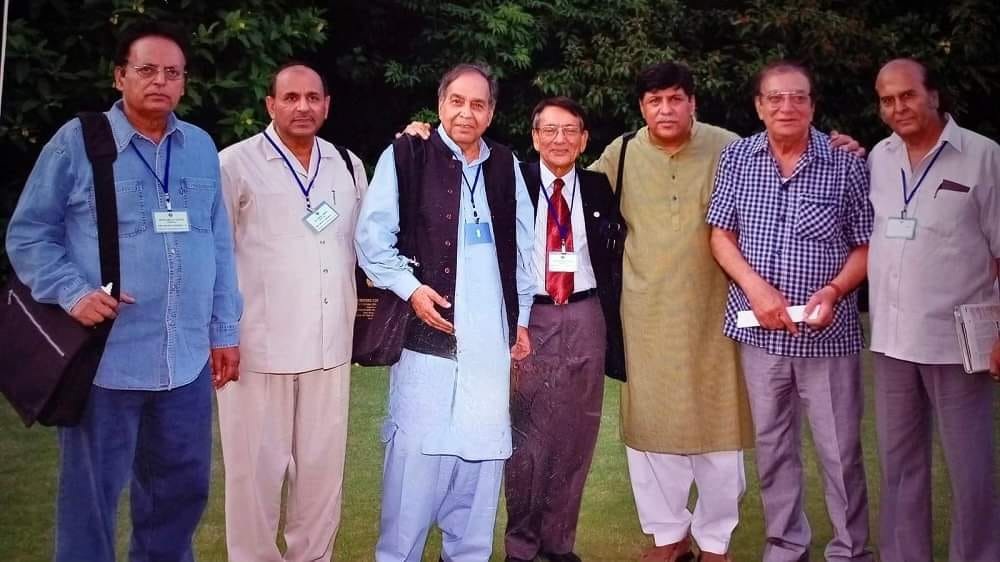
Faraz, Tarrar, Asghar, Anwar Sajjad, Dr.Anwaar Ahmed,Javed Shaheen,Zubair Rizvi
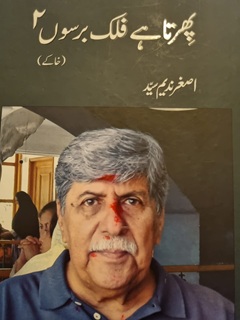
It is often believed that the sequel to a successful book rarely matches the charm or quality of its predecessor, ending up as little more than a pale imitation. That may hold for writers whose careers are built on just a handful of memorable columns, plays, or films. However, such a notion does not apply to Asghar Nadeem Syed. One of Pakistan's finest dramatists, his writing has consistently evolved and matured over the decades, making the idea that a sequel must disappoint difficult to accept in his case.
Phirta hai Falak Barson 1 came out in 2023, while the second part, also published by Sang-e-Meel, came out in 2025. Asghar Nadeem Syed's latest work is much more than a follow-up to an earlier success. At different moments, it reads like a history lesson, a nostalgic journey through old Lahore, and a collection of intimate literary portraits. The book contains fifteen personal sketches of some of the most celebrated figures in Pakistan's literary, theatrical, and cultural landscape, all based on the author's own encounters and friendships with them.
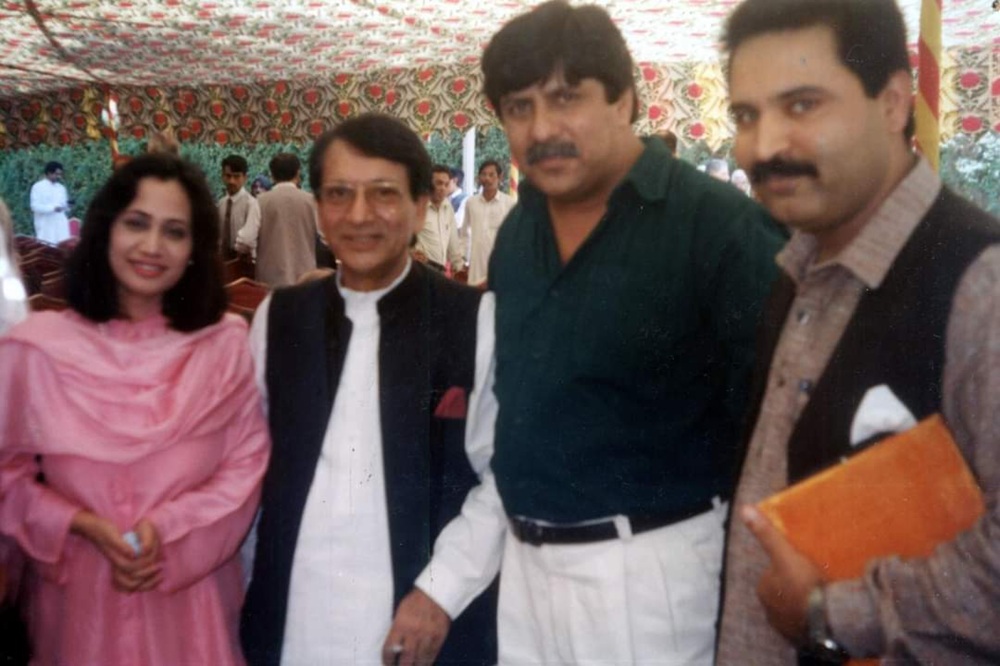
Anwar Sajjad, Perveen Shakir
Whether writing about columnist-turned-drama writer Munoo Bhai and his remarkable career, the brilliant Dr. Anwar Sajjad, Faiz Ahmed Faiz and his complex relationship with Ahmed Nadeem Qasmi, legendary actor Zia Mohyeddin, storyteller Ashfaq Ahmed, or poets of the stature of Ahmed Rahi and Amjad Islam Amjad, Asghar brings every personality vividly to life. Far more than conventional biographies, they are deeply personal portraits that recreate not only the individuals but also the social, cultural, and literary atmosphere in which they lived. Together, they paint a rich picture of Punjab and its intellectual traditions, making readers feel as though they are walking through that world themselves.
Having spent over four decades in literature and television, and after writing some of Pakistan's most memorable television dramas, Asghar is uniquely placed to narrate these stories. He neither idealizes his friends nor settles old scores. Instead, he presents what might be called "the good, the bad and the ugly" of the people he knew best. Their strengths, weaknesses, achievements, disappointments, humour, and contradictions all find space in these pages. At the same time, Asghar subtly intertwines their stories with his own, transforming each sketch into a shared journey rather than a detached biography.
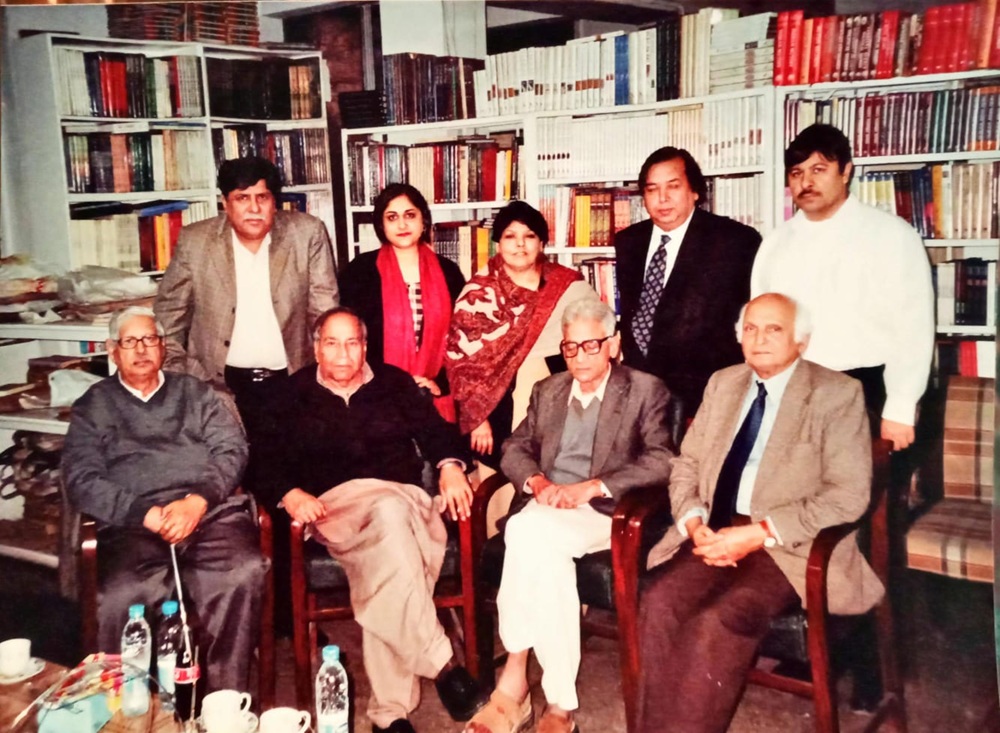
Fellow poets, writers: Intezar Hussain, Kishwar Naheed
Each chapter carries its own emotional tone. The portraits of Faiz Ahmed Faiz and Ahmed Nadeem Qasmi radiate the warmth of mentors and guiding lights whose influence shaped generations of writers. The sketches of Munoo Bhai and Dr. Anwar Sajjad present them as witty, free-spirited companions whose presence could brighten any gathering. Yet Asghar also records the more difficult years that followed, when both men struggled with personal challenges and witnessed a decline in their professional lives. Likewise, the portrait of Amjad Islam Amjad carries an undercurrent of professional rivalry. Ironically, Amjad's departure from Pakistan Television created the opportunity for Asghar to establish himself there. Remembered as a playwright before becoming widely recognised as a poet, Amjad is portrayed with admiration but also refreshing honesty. Asghar is equally candid about his occasional disagreements with Munoo Bhai, whose outspoken nature often led to memorable clashes.
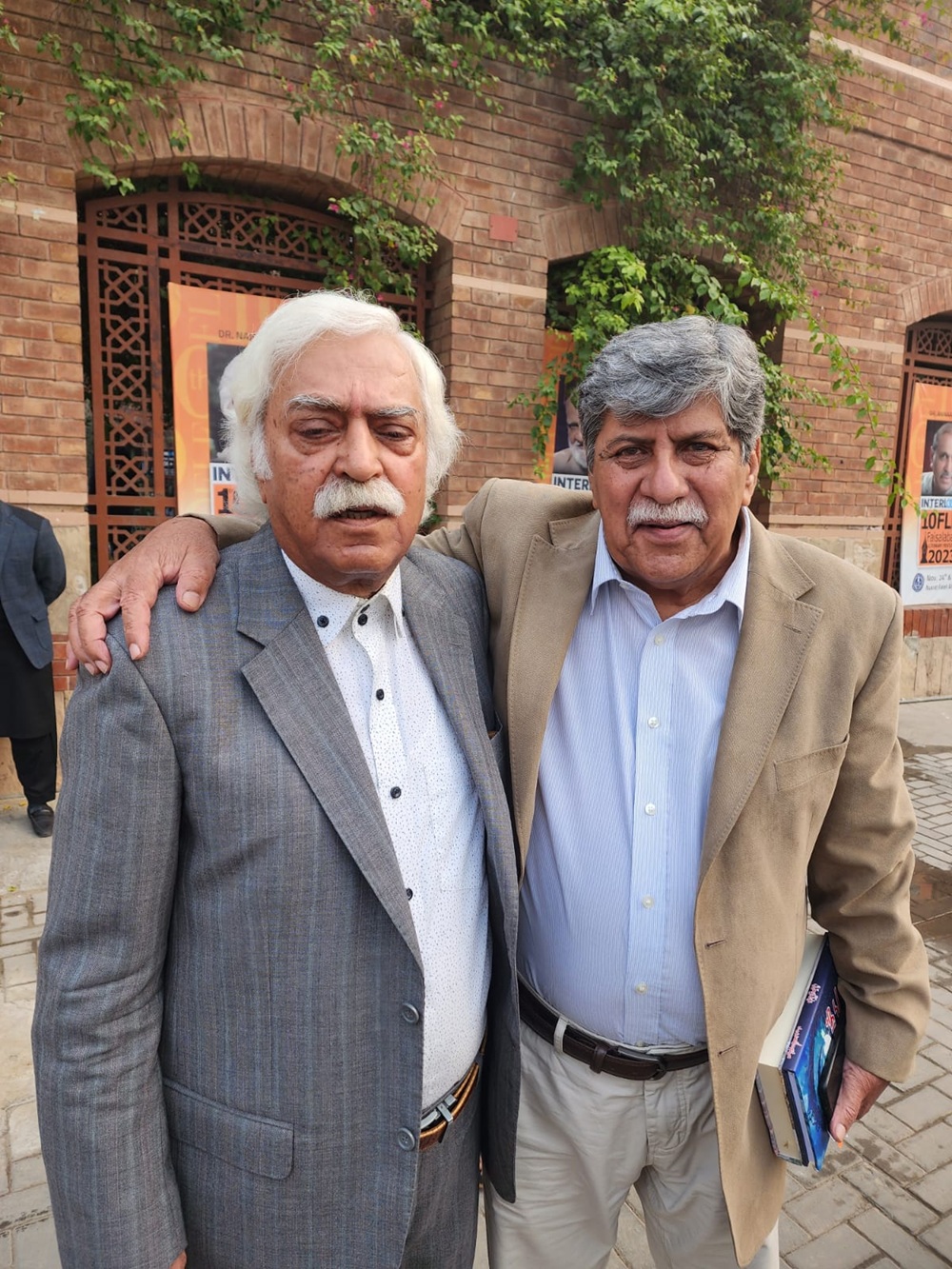
Mazharul Islam
The decision to devote elaborate chapters to Faiz Ahmed Faiz and Ahmed Nadeem Qasmi appears deliberate. Asghar presents them as two towering figures whose personalities, though equally influential, represented contrasting temperaments. Faiz, the internationally acclaimed poet and leading voice of the Progressive Writers' Movement, embodied grace, humility, and quiet resilience. His poetry embraced revolution, love, exile, and hope, while his personal conduct reflected remarkable dignity and composure.
Ahmed Nadeem Qasmi, though also associated with progressive thought, represented a different literary tradition. Deeply rooted in the culture of Punjab and the lives of ordinary people, he was not merely a distinguished writer but also a mentor who nurtured countless young authors. Although literary circles often highlighted the rivalry between Faiz and Qasmi, Asghar wisely refuses to define either man through that conflict. Instead, he celebrates both as indispensable architects of modern Urdu literature, each contributing in his own unique way.
Among the book's most enjoyable chapters is the one devoted to Zia Mohyeddin. Asghar transports readers back to 1973, when The Zia Mohyeddin Show was being recorded in Lahore's Lawrence Gardens, and he had the rare opportunity to witness the production firsthand. From there, he retraces Zia Mohyeddin's extraordinary journey through English theatre and international cinema with remarkable precision. The narrative is so vivid that it often feels as though Zia himself is recounting those memories.
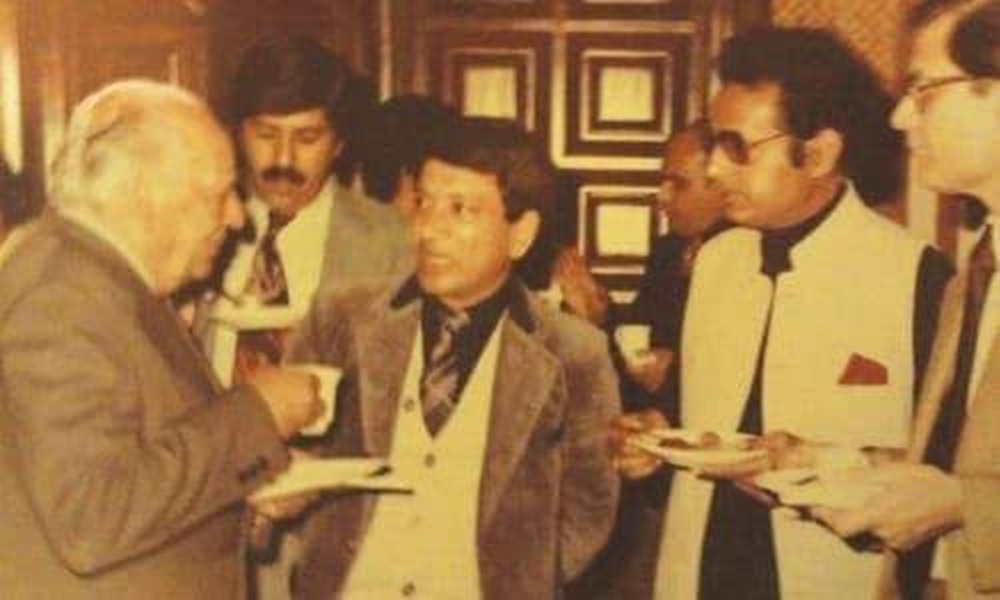
with Faiz, Anwar Sajjad and Tarrar
Whether writing about senior literary figures such as Ashfaq Ahmed or veteran journalist Ahmed Bashir - the father of actor and writer Bushra Ansari - Asghar Nadeem Syed leaves no stone unturned in introducing readers to the people behind the public personas. His sketch of Ashfaq Ahmed recalls the creative genius who gave Pakistan the unforgettable character of Talqeen Shah, while Ahmed Bashir emerges as someone who, like his daughters, has tried his hand at everything, from journalism to filmmaking.
Asghar's own milestones also find a place within this larger narrative. Buying his first Suzuki in 1983, driving literary giants across the city, his marriage, and his gradual emergence as a recognised dramatist are woven naturally into the stories. Perhaps the book's greatest emotional strength lies in its treatment of grief. The death of his first wife quietly runs through many of the sketches like an invisible thread.
His uncontrollable tears upon meeting Ahmed Nadeem Qasmi afterwards, Bano Qudsia's haunting premonition of death, and his attempts to console his teenage son are among the book's most moving passages. These moments of vulnerability elevate the work beyond literary criticism or memoir, reminding readers that behind celebrated writers and artists are ordinary human beings who experience love, loss, and resilience.
With Ifti Arif and wife
Ultimately, this is not merely a book about famous people. It is a book about friendship, memory, literature, and the city that shaped an entire generation of intellectuals. Through honesty, warmth, and an extraordinary eye for detail, Asghar Nadeem Syed succeeds in preserving a disappearing cultural landscape while paying tribute to the people who defined it.
You may also like: