Written by: Muhammad Hamza
Posted on: October 22, 2026 | 
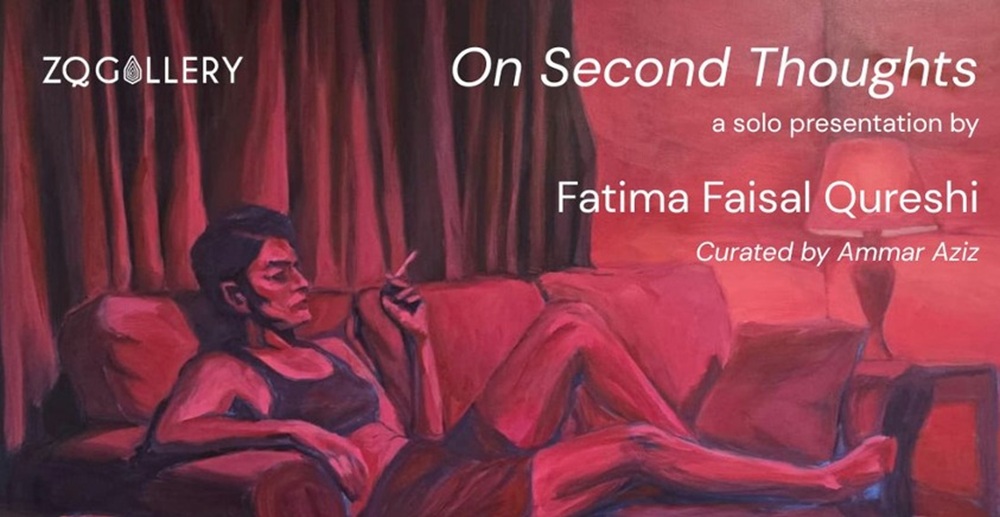
On Second Thought by Fatima Faisal Qureshi
Fatima Faisal Qureshi’s solo exhibition On Second Thoughts at ZQ Gallery brings together a group of paintings that feel quiet at first glance yet carry a steady emotional weight. The works show people in rooms and open spaces, often alone or sharing the same frame while remaining apart in feeling. Curator Ammar Aziz describes these scenes as ordinary on the surface, yet filled with a private sadness and a careful study of how closeness and distance can exist at the same time. The paintings do not shout. They linger.
Qureshi works with the body as a place of both recognition and estrangement. Her figures appear in states of rest or mild activity, yet something remains unresolved in their expressions and postures. The color choices play a strong role in setting the mood. Many of the larger works bathe the scenes in deep reds and pinks that feel warm and closed in, like late-night light filtering through curtains. Other pieces shift into cooler greens and blues that suggest quieter hours after midnight or the strange calm of early morning. These shifts in palette help the viewer move between different emotional temperatures without needing any explanation outside the image itself.
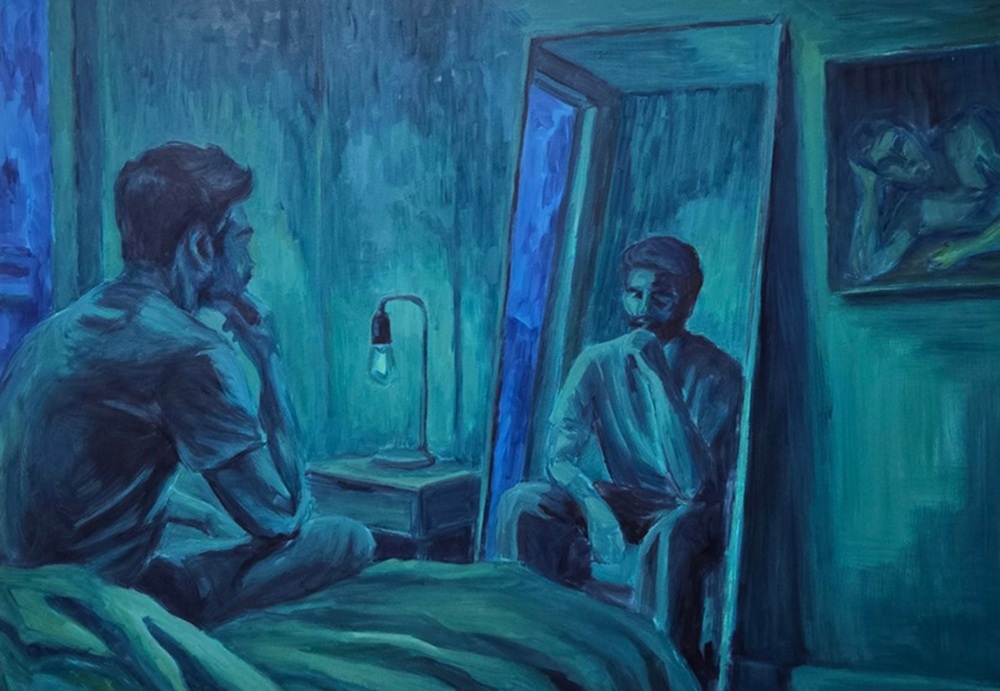
A Little After Midnight, 2026
One of the most striking works is Nothing to Wear Tomorrow. A figure reclines on a sofa in a room washed entirely in red. One hand holds a cigarette. The body sinks into the cushions while the face turns slightly away, as if listening to something only it can hear. The curtains and the lamp create a soft enclosure. Nothing dramatic happens, yet the painting holds the sense of a long pause. It is the kind of moment that arrives after the day has already ended and the mind begins to wander through small worries and half-formed thoughts. The title adds a gentle humor that never undercuts the stillness.
Nearby, I Can Make Dinner Tonight shows two figures sharing a sofa. One rests against the other. Their bodies lean into the shared space, yet each face seems occupied with its own quiet. The red light again fills the room, making the scene feel both intimate and slightly heavy. The painting does not explain the relationship. It simply presents the physical fact of two people occupying the same furniture while remaining separate in their inner worlds. This balance between nearness and solitude appears again and again across the exhibition.
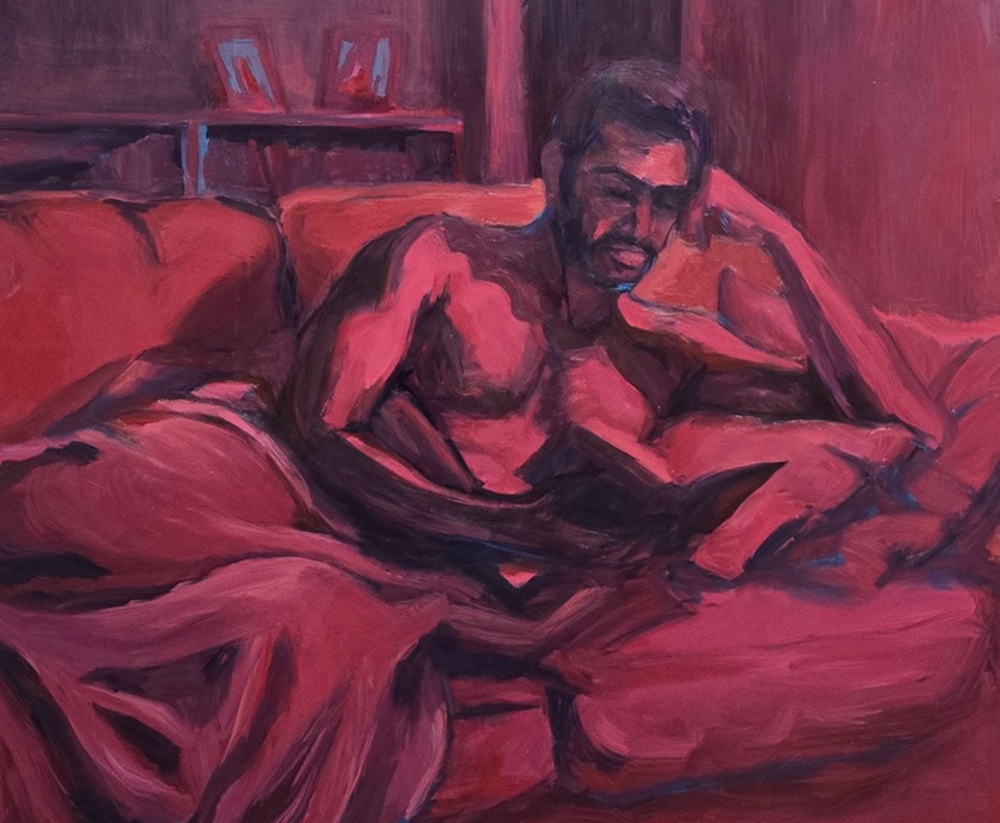
Five More Minutes
Five More Minutes continues the theme of delayed departure. A figure sits on a sofa with a book or papers resting against the body. The head is lowered. The room is dim and red. The posture suggests someone who has already decided to stay a little longer even though the time for leaving has arrived. The painting captures that familiar human hesitation without needing any narrative detail. The soft handling of the paint keeps the image gentle rather than dramatic.
A different kind of distance appears in The Sea Between Us. Two figures sit on wet sand facing each other under a sky of deep red and pink. Water stretches between them. One reaches forward while the other waits. The cool blue of the sea contrasts with the warm sky, creating a visual tension that matches the emotional one. The painting feels open and large after the closed rooms of the other works. It suggests a conversation that has not yet found its words, or a meeting that carries both hope and caution. The figures remain connected by the composition even while the space between them stays clear.
I Won’t Have To Miss You Much Longer returns to an interior. A figure reclines on a sofa beneath a painting that hangs on the wall. The room is again saturated with red. The painted figure on the wall seems to echo or answer the living one below. The work plays with the idea of presence and absence in a quiet way. Looking and being looked at become part of the same soft exchange. The painting does not resolve the feeling of missing someone. It simply holds the possibility that the missing might soon ease.
Farewell, My Lovers
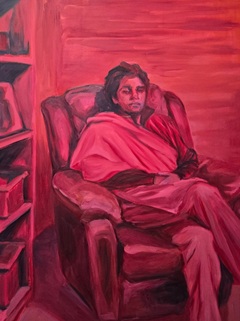
Faisal, domesticated offers a quieter, more settled presence. A figure sits in an armchair wrapped in a shawl or cloth, looking outward with a calm but slightly distant expression. The red of the room softens the edges of the form. The title suggests a kind of acceptance or settling into ordinary life, yet the face keeps a private reserve. It is one of the more contemplative works in the show, less charged than the sofa scenes yet equally careful in its observation of inwardness.
A sight for sore eyes shifts the setting to a studio. A figure sits in a chair while a large painting of a reclining form appears behind on an easel. The red light continues, but the space feels more open and functional. Tools and furniture surround the sitter. The relationship between the living figure and the painted one creates a quiet dialogue about looking, making, and being seen. The work feels personal without becoming autobiographical in any obvious way.
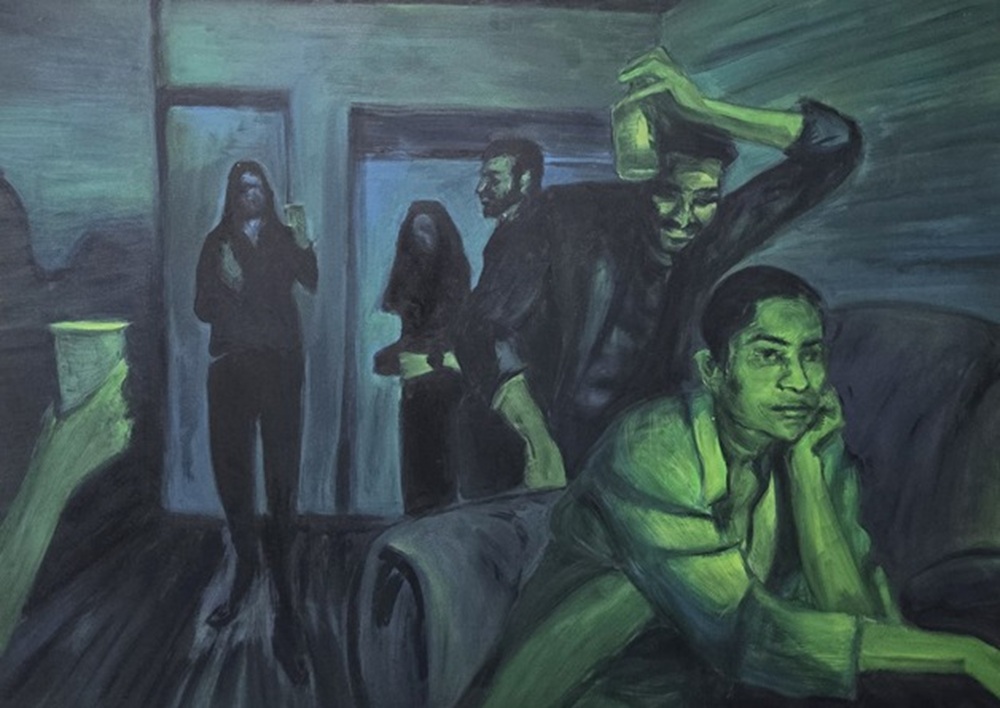
Later works move into cooler tones. Roll Me A Joint, Roll Me A Reason places two figures in a darker room with green and blue light. One sits low while the other reclines with legs raised. A framed face appears on the wall between them. The cooler palette changes the emotional register. The earlier warmth gives way to something more reflective and slightly melancholy. Farewell, my lovers continues in green, showing a group of figures in a room with mirrors or doorways that multiply the sense of presence and departure. A Little After Midnight returns to blue. A figure sits on a bed facing a mirror that reflects the same pose. A single lamp lights the scene. The doubling of the self through the mirror becomes a quiet study of self-regard and solitude.
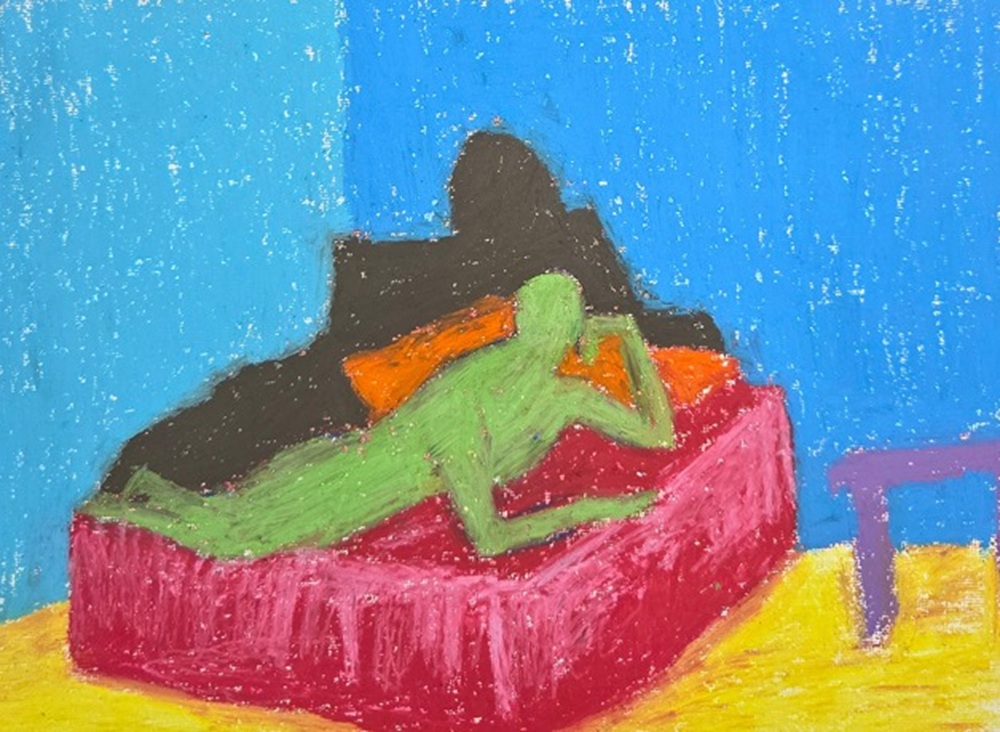
Smaller works such as First Time In Islamabad and The Only Haram Thing About You Is Me keep the same attention to mood and posture. The green figure resting against pillows and the close portrait of a face looking upward both feel private and unguarded. The later acrylic works on paper introduce brighter colors and looser marks, yet they still carry the same interest in the body as a site of feeling rather than display.
How Do I Look Today?
Across the exhibition, Qureshi returns again and again to rooms where little appears to happen. The drama lives in the small distances between people, in the way a body settles into furniture, in the way light can make a space feel both protective and isolating. The paintings do not explain the lives of the figures. They simply present the atmosphere of private time, the moments when the self feels slightly separate from its own body or from the people nearby. This quality of attentive quiet makes the work linger after the viewer leaves the gallery.
The exhibition succeeds because it trusts the viewer to notice what is not said. The figures remain absorbed in their own thoughts. The rooms remain ordinary. Yet something tender and unresolved moves through every canvas. Qureshi’s paintings invite a slow looking that matches the pace of the scenes themselves. In a time when much art seeks immediate impact, these works offer the rarer gift of sustained attention. They remind us that the most familiar spaces can hold the deepest questions about belonging, distance, and the quiet possibility of feeling connected again.
You may also like: