Written by: Tehzeeb Hussain Bercha
Posted on: December 09, 2025 |  | 中文
| 中文
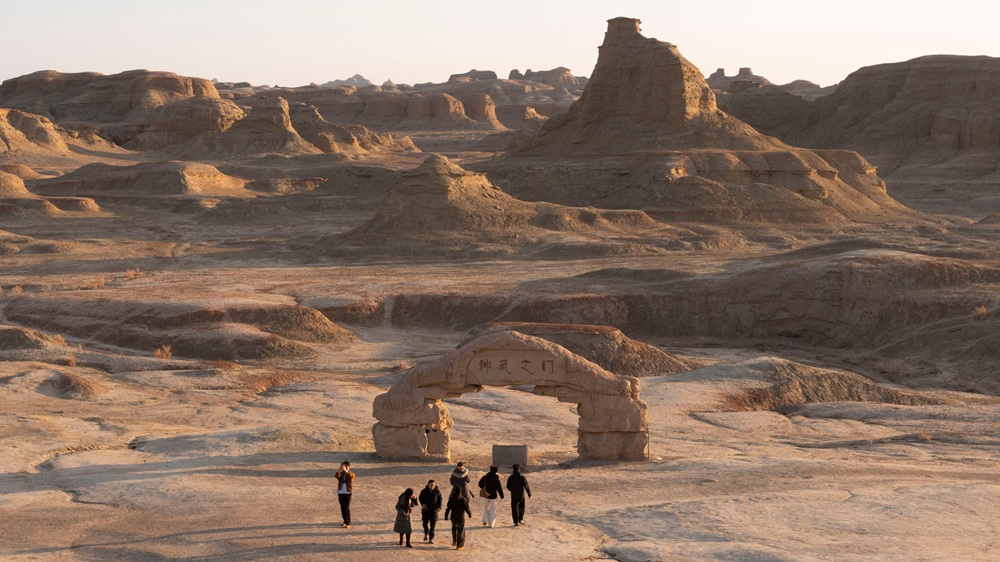
Open since 2002, World Devil City is now a key stop on Xinjiang’s northern tourist route. (Photo by Nhân Dân)
It was a blissful afternoon on November 11th, 2025, when I landed at Urumqi Tianshan International Airport after a 2 hour and 30-minute journey from Islamabad. When our plane entered Xinjiang’s airspace, I excitedly looked out of the window. The majestic Tianshan and other mountain ranges were covered with a white blanket of snow. As we approached Urumqi, I slipped into a wave of nostalgia. Growing up in the northern Pakistani city of Gilgit, which has trade ties with Xinjiang, I first became familiar with the words “Urumqi” and “Kashgar” in early childhood and often heard stories about Xinjiang from my father, who was a businessman engaged in Pak-China trade. Urumqi Airport offered a beautiful view, and upon my arrival, Mr. Chang (my guide) warmly welcomed me as we headed outside.
It had probably snowed a day or two earlier, and some areas of Urumqi were still covered with snow. The snow glistened in the sunlight, and the weather was cold but delightful. We travelled along a road lined with markets, skyscrapers and residential areas. On both sides, numerous large buildings reflected a unique architectural style and a preference for similar colors and designs. After a half-hour drive, we reached Urumqi Railway Station. Mr. Chang said we would depart for Karamay at 5:20 p.m. We moved to the waiting area, which was full of people. I observed that the people of Xinjiang seemed healthy and prosperous, with smiling faces and parents playing with their children.
I traveled to Xinjiang on the invitation of the Karamay Foreign Office to speak at the Karamay International Cultural Communication Event, the city’s first international cultural exchange gathering, held from November 11-14, 2025. During this visit, I explored Karamay’s urban image and learned about the stories of Xinjiang. The city’s name, meaning “black oil” in Uyghur, reflects its petroleum roots. Established on May 29, 1958, Karamay lies on the northwestern edge of the Junggar Basin and comprises four districts: Karamay, Dushanzi, Baijiantan and Urho. Covering 7,333.58 square kilometers, it is home to 46 ethnic groups, including Han, Uyghur and Kazakh, with a population of about 492,900.
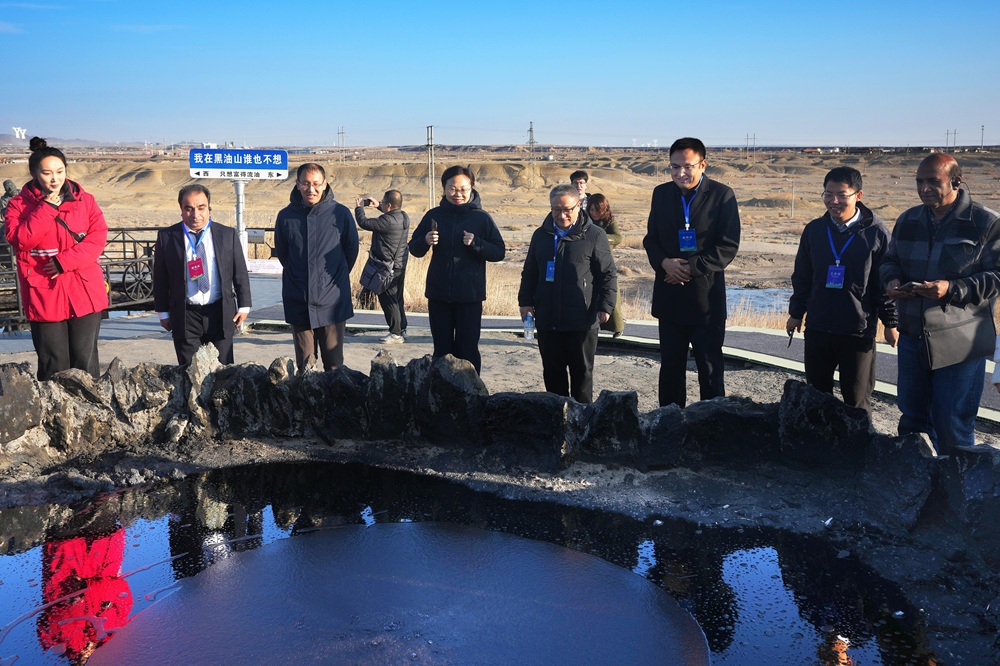
Foreign guests view the geological wonders of Black Oil Mountain. (Photo by Cui Wenjuan, Karamay Media Reporter)
When the time came to leave for Karamay, Mr. Chang and I went to the railway platform just as the train arrived. On the way, the train passed through Shihezi, a major Bingtuan city known for agriculture and industry, and then Kuitun, an important railway junction connecting routes toward Karamay, Baku and the Alashankou border crossing into Kazakhstan. On the seats to my left and right were an elderly Chinese woman and a young man; the woman warmly asked where I was from, and when I replied “Pakistan,” her smile reflected the strong Pakistan-China friendship. Throughout my four-day stay in Xinjiang, many people greeted me kindly and expressed their affection for Pakistan. After a 2 hour and 50-minute journey, we arrived at Karamay Railway Station.
Upon arriving at the station, a Chinese woman greeted me with a warm handshake and began a friendly conversation. My host, Ms. Wang Haifei from the Karamay Foreign Office, welcomed me warmly and extended her best wishes for my trip. We then reached the Saussurea Hotel, where my schedule, badge, and other materials had already been prepared. Ms. Wang guided me to my room and explained the next day’s program, including the city tour, the opening session, and the evening event where I would deliver my speech. After a short rest, I went for dinner and enjoyed Chinese dishes such as cumin lamb, cumin beef, numbing-spicy chicken, and Suoman gush siz. During dinner, I met fellow Pakistani delegates, including Mian Abrar, Resident Editor of Pakistan Today, and Muhammad Asghar, the Beijing correspondent of the Associated Press of Pakistan, along with several other participants. I also met Mr. Zhou Xinyong, Deputy Director of the Foreign Affairs Office of the Karamay Municipal People’s Government. Our discussion centered on potential avenues of cooperation between Pakistan and the Xinjiang government, with particular emphasis on youth-focused initiatives.
The first day in Karamay began with a pale, crisp Xinjiang morning, setting the tone for a journey from the legacy of oil pioneers to the haunting landscapes of the World Devil City. My first stop was the Karamay City Museum, where a 534-meter exhibit path showcased the city’s transformation from a barren Gobi settlement into a major oil capital. At Heiyou Mountain, the birthplace of the Karamay Oilfield, I saw crude oil seeping naturally from beneath the 13-meter hill, preserving the memory of the 1955 “black gold” discovery.
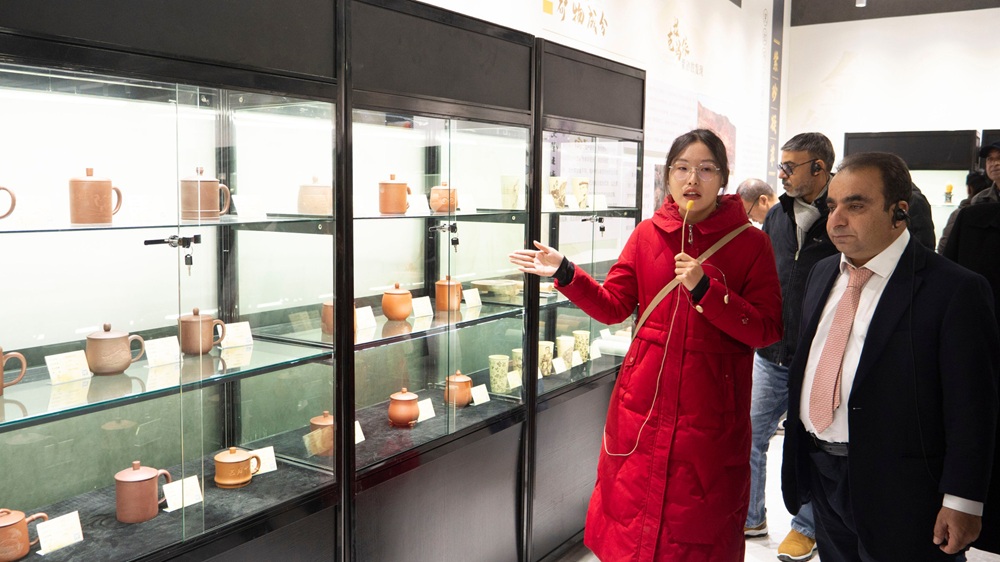
Karamay Jin Siyu Zisha Museum, Xinjiang’s only modern multifunctional museum dedicated to Zisha culture. (Photo Nhân Dân)
After lunch, I visited the Karamay Jade Jinsi Zisha-ware Museum, viewing over 300 pieces of Xinjiang’s Zisha ceramics. The afternoon continued at the Nanyuan Nanquan Community Neighborhood Sharing Center, where I observed genuine multiethnic unity through shared services and community programs.
A stop at the Karamay Hospital (Central Hospital) of the Xinjiang Uygur Autonomous Region highlighted the city’s medical progress, with a top-tier institution that emerged alongside the oilfield and now serves millions through advanced care and international cooperation.
Near evening, I explored the World Devil City, its wind-carved Yardang formations glowing under night lights in an otherworldly landscape. My final visit was to the China University of Petroleum (Beijing) Karamay Campus, an academic hub shaping talent for Xinjiang’s future. Returning to my hotel, I felt that Karamay is far more than an oil city, it is a place where history, community, innovation and landscape exist in striking harmony.
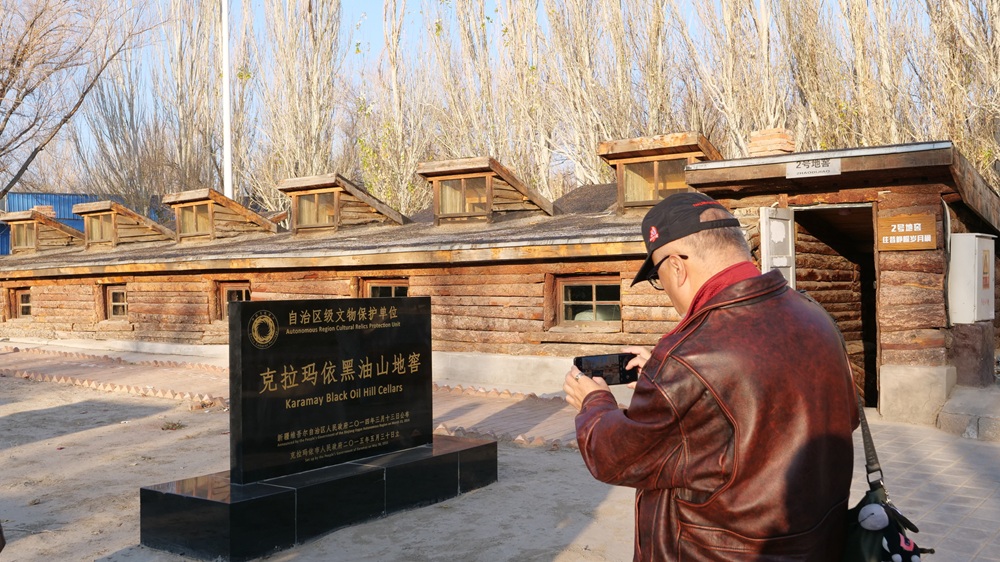
Karamay City Museum, a national 3A-level scenic spot and a key center for revolutionary heritage and spiritual education. (Photo Nhân Dân)
On my second morning in Xinjiang, Karamay felt energized with an international atmosphere as I arrived at the opening ceremony. The hall was filled with leaders from Karamay City and delegates from Russia, Pakistan, Vietnam, Algeria, Tunisia, South Korea, Egypt, Saudi Arabia, Kyrgyzstan and several other countries, an impressive gathering in China’s oil city.
The day continued with three themed salons: one on ESG and green energy, another on the role of culture, sports and tourism in shaping a city’s future, and a third on truth in journalism in the age of AI. I delivered my remarks in the final salon, stressing the need to protect truth as AI becomes capable of fabricating visuals and narratives. Drawing on experiences from Russia and China, especially Xinjiang, I encouraged Global South journalists to use AI-based verification tools, strengthen cross-border cooperation, and prioritize real human voices in their stories.
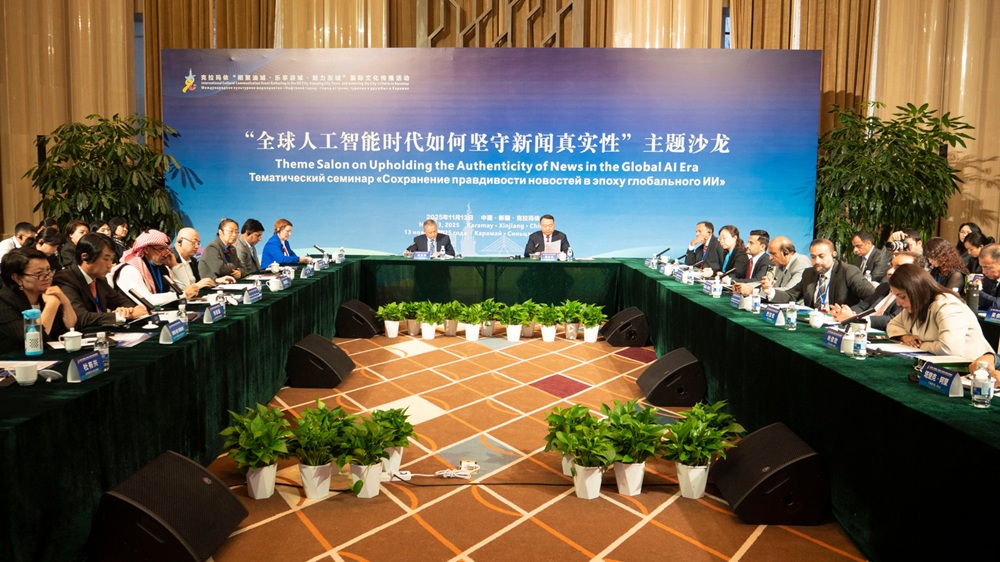
A dialogue on News Authenticity in the Global Age of Artificial Intelligence. (photo by Fildes Reshati)
As I stepped into the hotel lobby, I noticed our interpreter, Sara, standing near the entrance, deeply absorbed in a video call. When she finished, she told me she had been speaking with her nine-year-old daughter back in Urumqi. Her husband, she explained, had traveled thousands of kilometers to visit his parents in another city, while she was stationed with us on duty in Karamay. For the past three days, her little daughter had been living alone: managing her meals, getting ready for school, and attending classes all by herself. I gently asked whether she had requested neighbors to look after the child. Sara smiled and replied that everyone is busy with their own lives, and hardly anyone interferes in another’s. “We prepare our children for independence from an early age,” she said. “By the time they grow up, they are ready to face life on their own.”
After returning to my hotel with the day’s warm memories, I packed my luggage for an early departure, as the organizers had instructed me to be ready by 5:30 a.m. for the train to Urumqi. At dawn, our group assembled: two officials from Balochistan, Mr. Balach from the Information Department of the Balochistan Government and Tariq Ali from the Gwadar Port Authority, along with Mr. Zhou Xinyong from the Foreign Office of the Karamay Government. Together, we traveled from Karamay to Urumqi. As the train moved through the vast Xinjiang landscape, the hopeful faces of the young Chinese passengers reminded me of Napoleon’s words: “China is a sleeping giant. When it wakes up, it will shake the world.” Watching them, I felt as though I was witnessing that awakening in real time.
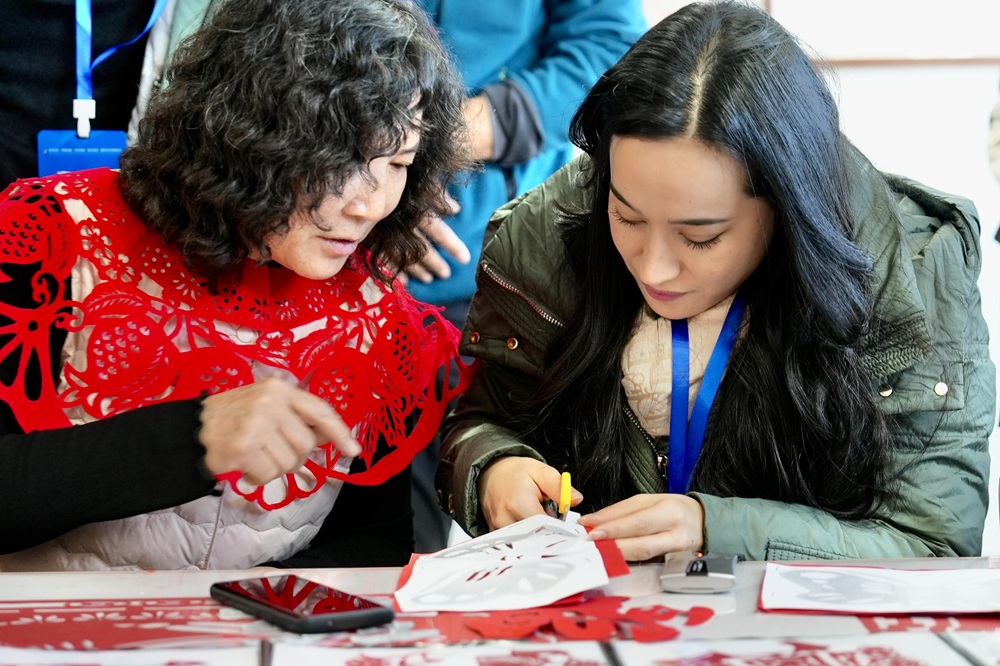
A foreign guest learns paper cutting at the Nanyuan-Nanquan Community Neighborhood Sharing Center. (Photo by Cui Wenjuan, Karamay Media Reporter)
After arriving in Urumqi, we checked into our Karamay Hotel situated on Hetian 1st Street for a short rest before heading to the Xinjiang Meteorological Centre for a scheduled meeting. Later, we spent the afternoon exploring the city’s shopping malls, moving from one bright, bustling space to another until our bags were full and we were tired. Back at the hotel, I felt like going out again, so I walked through the cool evening streets. I bought dry fruits from a street vendor and entered a small shop to buy diaries as gifts. The salesgirl spoke only Chinese and couldn’t understand me. Just then, a ten-year-old boy walked in; when I asked if he spoke English, he shyly said, “Little, little,” and then asked, “Do you speak Urdu?” He explained in Urdu that his father was from Peshawar and his mother Chinese, and that he had spent some time in Pakistan. The brief exchange felt like an unexpected bridge between two homes.
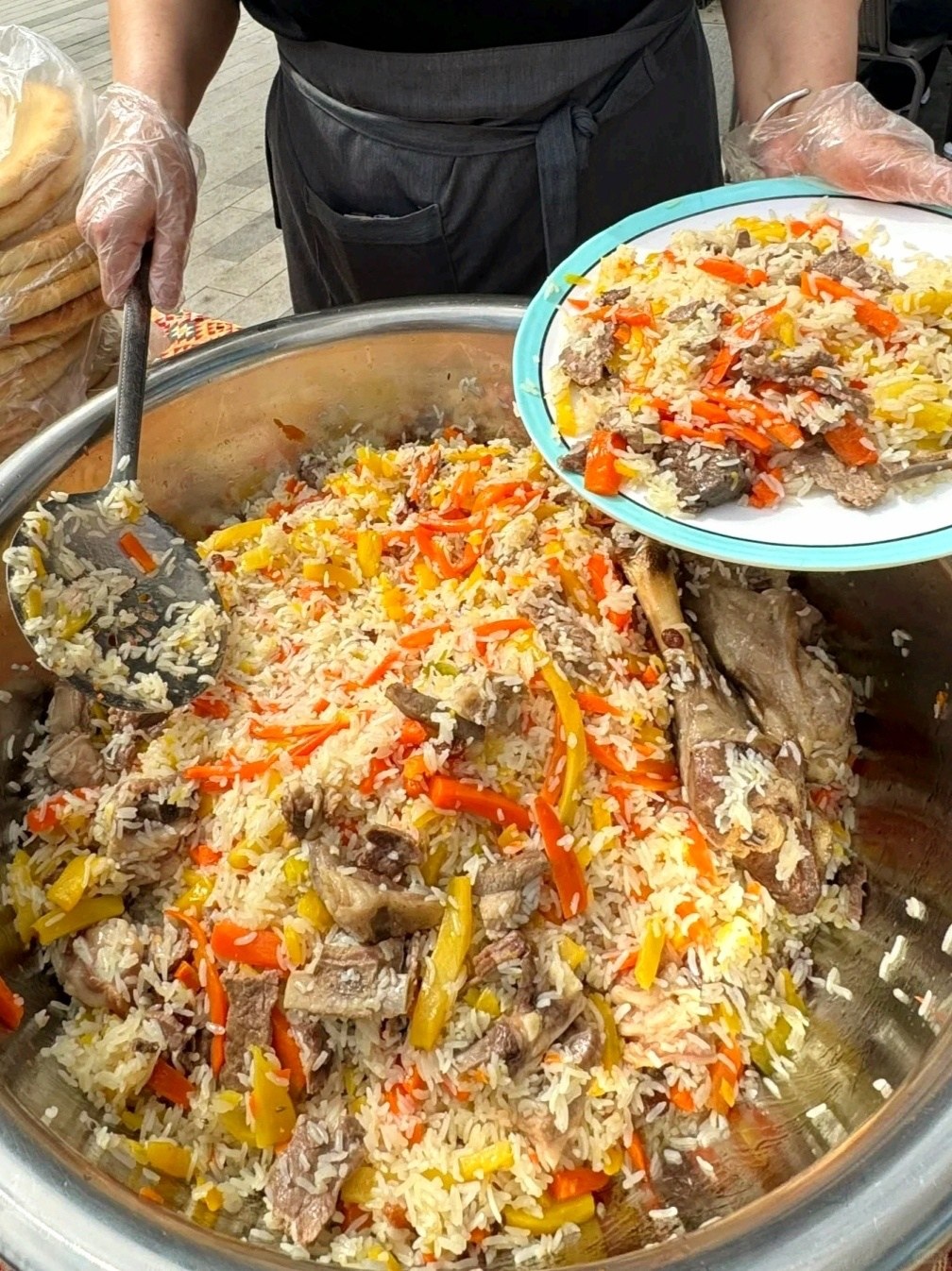
Uyghur Lamb Pilaf (Photo Aliya Fatir)
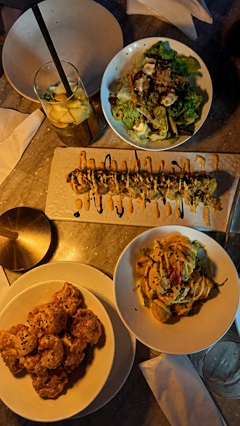
After walking through more markets, I reached Hotan Second Street and entered a lively Uyghur restaurant, greeting the room with “Assalamualaikum.” An elderly woman welcomed me warmly. Although I had already eaten dinner, I couldn’t miss the chance to taste the Uyghur dishes I had loved since childhood, flavors also familiar in my hometown of Gilgit-Baltistan. I ordered lamb kebabs, laghman and dumplings, sitting at a small table on the street as Persian music played loudly outside. Two waitresses checked on me, ensuring I was comfortable, and the food was rich, warm and familiar.
With beautiful memories in my heart, I returned to the hotel and packed my luggage for the next leg of the journey, from Urumqi to Kashgar, and then home to Islamabad. The next day, after a two-hour wait at Kashgar Airport, we boarded China Southern flight CZ6033 to Islamabad. Reflecting on the trip, I felt a profound sense of warmth and affection. Though the journey lasted only four days, the memories seemed to stretch across years. The hospitality, sincerity and kindness of the people of Xinjiang were beyond words, leaving me with countless unforgettable moments that I will cherish forever.
You may also like:
From the Horn of Africa to Bahria Town: Habesha Café Brings Centuries of Coffee Culture to Rawalpindi
(October 15, 2026)