Written by: Hurmat Majid
Posted on: November 26, 2025 |  | 中文
| 中文
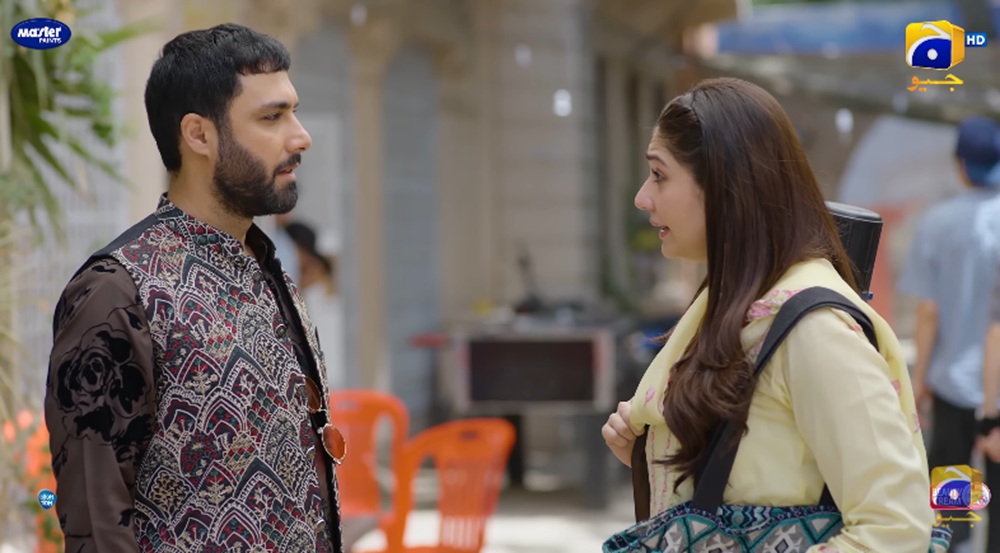
Ahmed Ali But and Durefishan Saleem
There comes a point in every television season when a drama appears that feels less like a creative endeavor and more like a contractual obligation to keep the wheels of melodrama turning. Sanwal Yaar Piya, Geo Entertainment’s much-hyped 2025 serial, arrives with all the polish and fanfare expected from a 7th Sky production, yet underneath the glossy veneer lies a narrative so familiar it practically sleepwalks across the screen. Viewers entering with hopes for innovation or emotional nuance quickly discover that the only real suspense is how many tropes can be stacked before the entire structure collapses under its own predictability.
Produced by Abdullah Kadwani and Asad Qureshi under the 7th Sky banner, written by celebrated novelist and screenwriter Hashim Nadeem, and directed—per the broadcaster’s official credits—by Danish Nawaz, the drama has every ingredient associated with contemporary mainstream success. The cast is undeniably star-studded: Ahmed Ali Akbar headlines as Sanwal, Feroze Khan takes on the role of the entitled and affluent Aaliyaar, and Dur-e-Fishan Saleem embodies the titular Piya, the woman at the heart of the narrative tug-of-war. Surrounding them is a seasoned supporting ensemble featuring Yasir Nawaz, Zainab Qayoom, Deepak Perwani, Erum Akhtar, and others, all more than capable performers in their own right.
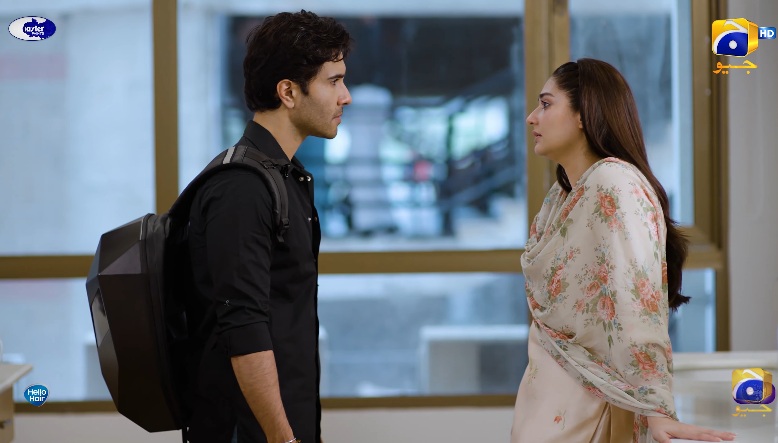
Feroze Khan and Durefishan Saleem
With names of this caliber, expectations naturally rise. Audiences familiar with Nadeem’s emotionally weighty work and Akbar’s acclaimed performances could reasonably anticipate a compelling, introspective story that interrogates social hierarchies and relationships with nuance. Instead, Sanwal Yaar Piya follows the most well-worn trajectory in Pakistani television: a love triangle anchored in class disparity, drenched in secrecy, and stretched across episodes with a predictability that borders on parody.
The setup, as laid out in the opening episodes, is straightforward to the point of déjà vu. Sanwal, modest and morally upright, develops a gentle bond with Piya. Enter Aaliyaar, wealthy, influential, and accustomed to getting what he wants. The rivalry between the two men forms the core narrative engine, while a murky secret in Piya’s family background conveniently intensifies the stakes. Early episodes introduce these dynamics with the usual dramatic flourishes—lingering gazes, emotionally charged encounters, and ominous hints about the father’s past.
By Episode 10, the drama makes its first attempt at escalation, promising a turning point through revelations and shifting loyalties. Social media chatter indeed amplified the moment, but not because it introduced anything groundbreaking. Instead, viewers reacted to heightened melodrama, power play theatrics, and emotional confrontation sequences that feel transplanted from countless earlier serials.
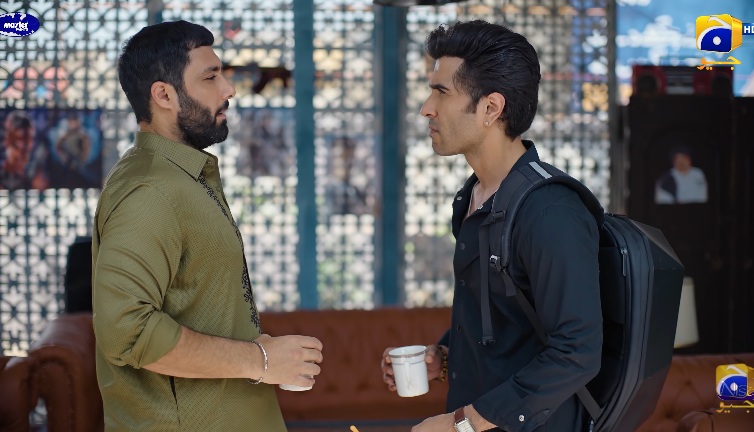
Feroze Khan and Ahmed Ali Butt
Episodes 13 through 17 delve deeper into political and familial antagonism, expanding the narrative into business rivalries and ministerial involvement. Yet these additions function more as narrative padding than true development. Characters orbit the same emotional beats: Sanwal suffers nobly, Aaliyaar schemes with increasing intensity, and Piya remains caught in a narrative stasis that robs her of agency. The supposed deepening of the plot ultimately amounts to recycled tension, recycled dialogue, and recycled outcomes.
By Episode 20, the drama enters what should be its climactic phase. Alliances shift, sacrifices loom, and thematic consequences are teased. However, the emotional payoff remains strangely hollow, primarily because the story has failed to evolve. The characters stand exactly where they began, merely more exhausted and theatrically wounded. Any tension that remains exists because the script wills it, not because the audience genuinely fears or hopes for a particular outcome.
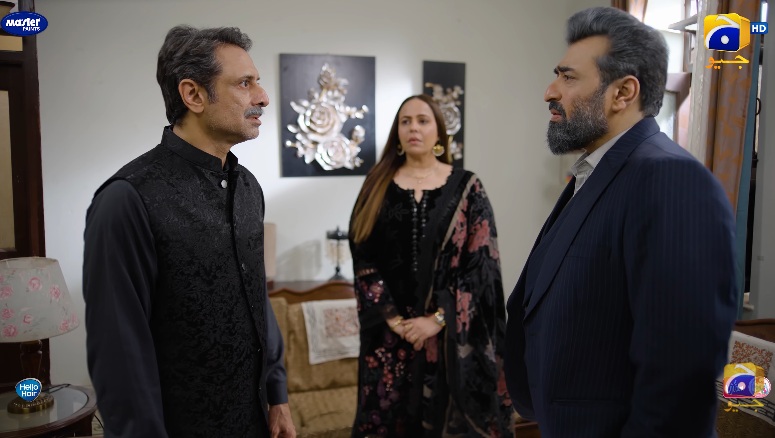
Ali Tahir, Zainab Qayyom and Yasir Nawaz
The problem is not simply predictability; predictability can still succeed when delivered with emotional authenticity and character depth. The real issue lies in Sanwal Yaar Piya’s refusal to challenge the genre’s most outdated conventions. The rich-versus-poor binary has been explored to death in Pakistani drama, frequently without subtlety, and this serial leans into it with abandon. The wealthy antagonist wielding power against a noble, struggling hero is no longer a commentary on class; it is a storytelling reflex. The love triangle, once a staple that allowed for emotional complexity, has become a narrative crutch used to justify endless episodes without meaningful progression.
Most disappointing is the way the drama reduces its central female figure to a plot object rather than a character. Piya, despite her position as the titular figure and emotional fulcrum, rarely acts. She reacts, hesitates, suffers, and is claimed, debated, and fought over by the men around her. In 2025, when audiences have repeatedly demonstrated enthusiasm for strong female leads, complex storytelling, and socially relevant narratives, this regression feels not only lazy but regressive.
This creative stagnation becomes especially glaring when juxtaposed with the evolution of Pakistani viewership in recent years. Audiences have embraced nuanced, genre-bending dramas, character-driven narratives, and bold thematic exploration. Viewership patterns show an appetite for stories that challenge societal norms rather than reinforce them. Yet Sanwal Yaar Piya serves as a reminder that large-scale productions still often cling to formulas that have long since exhausted their emotional resonance.
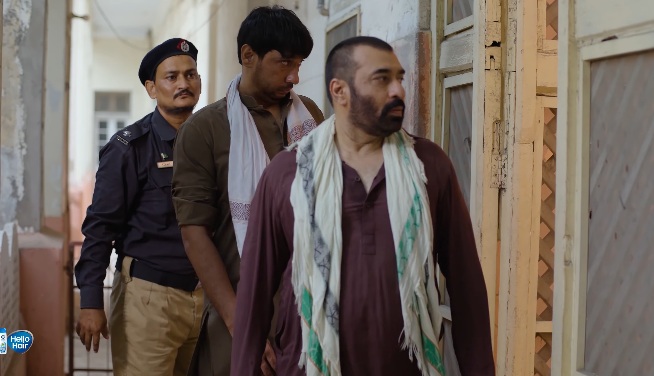
Saqib Sameer and Yasir Nawaz
Loopholes in the storytelling only exacerbate matters. Key secrets are introduced with dramatic weight but revealed haphazardly. Character motivations shift without adequate buildup. Supporting characters appear and vanish based on plot convenience rather than narrative logic. Emotional turning points are underdeveloped or rushed, leaving viewers questioning whether the writers trust the audience’s ability to follow complex emotional arcs.
There is an irony in watching an industry capable of producing thoughtful, layered storytelling choosing instead to replicate the safest and most commercially predictable structure. The sadness lies not only in the existence of such dramas but in their continued popularity. The fact that a production with substantial resources and a talented cast, defaults to such conventional storytelling suggests a creative environment where risk is discouraged and familiar formulas remain the safest investment.
To its credit, the drama boasts strong production values. The cinematography is polished, and the OST, sung with gravitas by Javed Bashir—lends emotional weight that the script often lacks. Sets, costume design, and visual framing reflect a commitment to aesthetic quality. Performances, particularly from Ahmed Ali Akbar, occasionally elevate scenes beyond their written limitations. His nuanced portrayal hints at what the drama could have been had the writing offered deeper characterization.
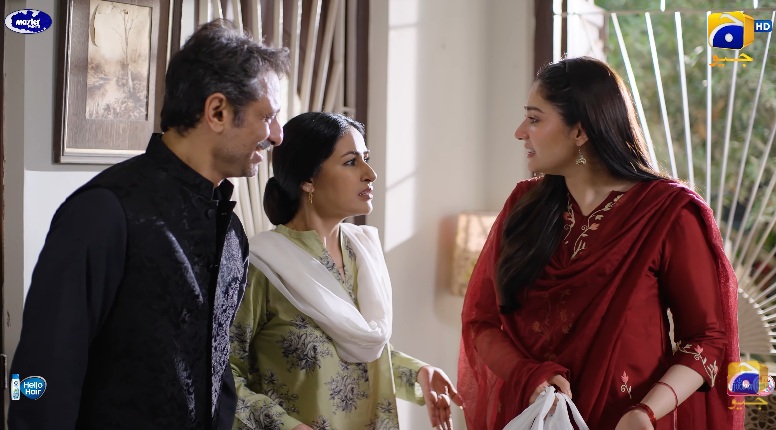
Ali Tahir, Erum Akhtar and Durefishan Saleem
However, strong visuals and compelling music cannot compensate for narrative stagnation. High production quality only highlights the disparity between technical execution and creative ambition. When a drama looks expensive but feels intellectually and emotionally dated, the disconnect becomes impossible to ignore.
In the end, Sanwal Yaar Piya represents a troubling tendency within mainstream Pakistani television: the prioritization of formula over innovation. Viewers have proven time and again that they are willing, eager, even to engage with challenging, contemporary storytelling. Continuing to provide them with reheated plots and superficial conflicts underestimates that maturity.
The verdict is straightforward: the audience deserves better. Better writing, better narrative risks, better character complexity. Pakistani drama is capable of so much more than love triangles and class binaries, and it is time for major productions to reflect that potential. Until then, Sanwal Yaar Piya will stand as yet another beautifully packaged reminder of wasted opportunity.
You may also like: