Written by: Muhammad Hamza
Posted on: June 18, 2026 | 

Always Bluer Somewhere Else by Fatimah Mirza
The exhibition “Of Places and Passing Time” at Gallery Zaal Contemporary brings together seven artists who explore how places hold memories and how time moves through the spaces we know.
Domestic rooms, outdoor gatherings, hands at work, and inner thoughts all appear. Together the paintings show that places are more than backgrounds. They are containers for feeling, memory, and change. The show feels like walking through different lives and seeing how time leaves gentle marks on everything.
She paints in oil and builds many layers on the canvas. These layers give her pictures a sense of depth, much like the layers of memory we carry from the places we have lived.
A woman sits at an old sewing machine. She wears glasses and works with steady hands while a child watches from behind. Soft light falls from a window and a green curtain hangs nearby. The room feels safe and full of quiet care. The old machine stands as a witness to years that have passed, yet the simple act of sewing continues without hurry. Time here is not loud. It lives in the shared space between two people and in the familiar object that has seen many seasons.

SINGER by Ayesha Tanveer
Two men sit on the ground outside and share food from simple containers. The title hints at stories from harder days. Still, the painting feels warm and connected. The outdoor place becomes a spot where people meet, talk, and find comfort together. Tanveer shows that passing time is felt most clearly in these small, repeated acts of care and in the places where they happen.
An elderly man sits in a patch of sunlight against a plain wall. He rests or reads with a relaxed body. Long shadows stretch across the ground and the light feels gentle and slow. The whole scene suggests a lifetime of experience held in one peaceful morning. The place is simple yet it carries the weight of many days lived. Time moves softly here, and the man seems at ease with it.

Winter Morning by Dura e Shawar
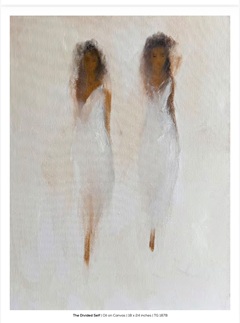
A woman appears in a dreamy space where small fish swim through the air around her. The image captures those in-between moments when thoughts drift, and the world feels soft and open. Nothing dramatic happens, yet the painting holds a deep stillness. Shawar helps viewers notice the beauty in quiet pauses and the way certain places can hold emotions that words cannot easily express.
She works with images of hands and gestures. She is interested in rhythm, memory, and the small movements that carry meaning across time.
A pair of hands holds a piece of fruit with care while a cat looks on from the background. The simple action feels full of presence. It reminds us how ordinary moments of holding or offering can mark the passing of a day. The hands become the center of the story, showing connection to the world through touch.
Hands play a traditional asian musical instrument called a tabla, which comes in a pair. Even though the painting is still, it suggests sound and movement. The front and back views add a sense of rhythm and flow. Through these works, Raazia shows that our bodies remember places and cultural patterns long after we leave them. Her focus on hands turns everyday gestures into quiet records of time and belonging.

Dharkan by Eisha Tur Raazia
He creates paintings that explore personal identity and inner feelings. He often uses color and close up views to ask gentle questions about loneliness, memory, and where we feel at home.

Does it still feel lonely by Faseeh Bin Amir
She paints domestic spaces filled with atmosphere and soft light. She turns ordinary rooms into places where memory and feeling linger.
A person lies on a bed at night and looks out a window. Blue tones fill the scene and create a mood of quiet longing. The body stays in one room while the mind seems to travel elsewhere. The painting captures that restless feeling many people know when time and memory pull us toward other places.
A dark interior shows a plant, stairs, and dim light. The space feels mysterious and half forgotten and as if it were being seen through a glass window.
Shadows hide as much as they reveal. Mirza shows how rooms can keep secrets and how light itself can suggest things we no longer clearly remember. Her paintings make viewers pause and notice the emotional weight that ordinary spaces can carry.
Gently looks over at the quiet rooms and the traces people leave behind. One work from the series shows green light filtering through curtains into a space. The play of light and shadow makes the room feel alive with memories of those who may have passed through it. Time here feels slow and thoughtful.

The Silence of Spaces, Series by Hina Malik
Trained in miniature painting but now works in ways that explore inner life and change. His figures often appear in private moments that feel both personal and universal.
A figure turns toward their own thoughts. The painting creates a private world on the canvas and invites the viewer to step inside that quiet space over a floor cushion. In the contrasting artwork, ‘Conversation With I,’ a person lies on a bed while the shadow of another person falls on the wall nearby. The image holds both nearness and distance. It suggests the complex talks we have with ourselves and with others in the rooms where we feel most ourselves. Time seems to pause in these moments of reflection. Khalid’s work shows that the most important places we carry are often inside us, no matter where we physically stand.

Inward by Usman Khalid
The whole show presents solitude, language, or the traces left in empty rooms. All of them treat time as something we can feel in objects, light, gestures, and shadows.
They show that art can make the passing of time visible without drama. A sewing machine, a patch of winter light, hands holding fruit, or a shadow on a wall can each become a doorway into deeper feeling.
There’s a politeness and genuine journey in each artwork, evolving through every visual. It leaves the viewer with a quiet sense that our everyday places matter more than we sometimes notice, and that there is more nostalgia in normalcy than in anything else.
You may also like: