Written by: Muhammad Suhayb
Posted on: June 05, 2026 | 
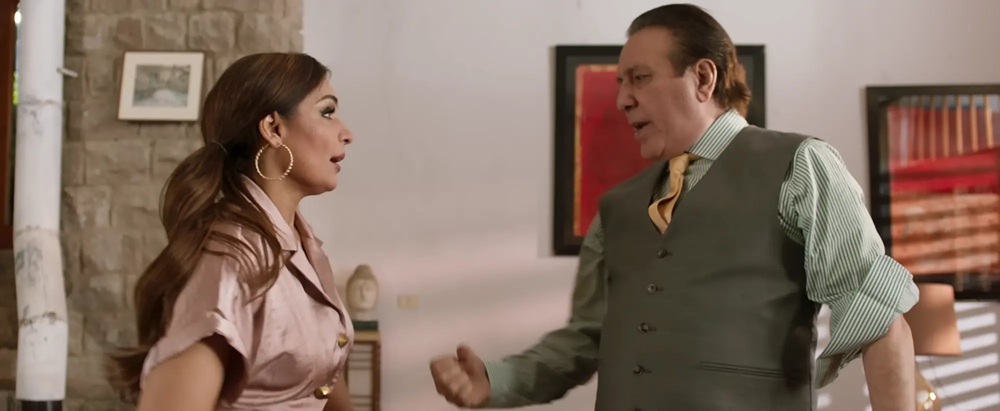
Javed Sheikh and Meera in Psycho
Psycho, another ambitious Pakistani film released on Eid, was originally positioned as an epic collaboration between two of Lollywood’s most recognizable stars, Meera and Shaan Shahid. Marketed as a psychological thriller promising darker, more unsettling territory, the film ultimately plays it surprisingly straight, falling short of its intended impact and, in the process, leaving many viewers feeling just like its title Suggests: “psycho.”
Written and directed by Shaan, the film attempts to examine the thin line between sanity and madness, weaving together suspense, mystery, and emotional turmoil to create an atmosphere of intrigue and tension. Had Shaan been solely at the helm as producer, things might have taken a different shape; however, Meera was the one calling out the shots here. However, it was Meera who was calling the shots. For someone who does not have a decent, to show it to the world, type film to her credit in even 30 years, Psycho was doomed from the beginning.
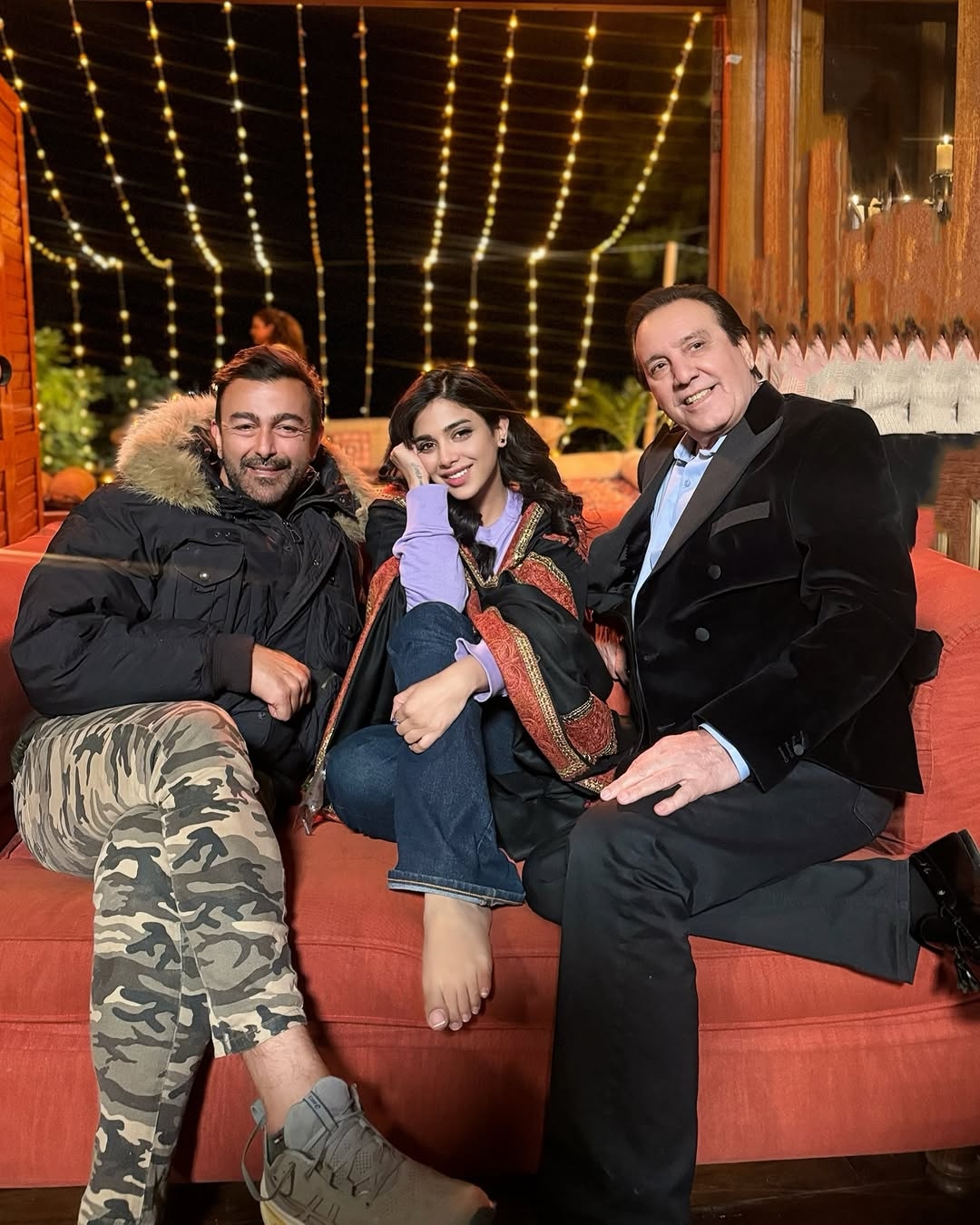
Shaan Shahid, Sonya Hussyn and Javed Sheikh
It tells the story of a woman who marries a retired barrister for financial security. Barrister Raza Ahsan, portrayed by Javed Sheikh, is a youthful, spirited man at heart who Serving as guardian to two young lawyers, Salman and Sarah. However, complications arise when Salman, who usually prioritizes money over truth, experiences a change of heart and finds himself pursued by Sher Khan Afridi (Shabbir Jan) over the death of his Brother.
Things might have worked better had the film stayed focused on this central thread. Instead, Meera’s ambitions—ranging from a swimsuit pool sequence to a dance number featuring lines reminiscent of a Nazia Hassan song, along with a revenge arc echoing films like Taking Lives (2004)—drain the narrative of cohesion and impact.

Meera in Psycho
Shaan and Sonya Hussyn work well as a romantic pair, and their live-in relationship is handled with noticeable craft and technical polish. In contrast, the pairing of Javed Sheikh and Meera create more confusion than clarity. If Meera’s character Zara is introduced as someone brought into the story during a fundraising trip for an NGO (or “ANN-JEE-OH,” as pronounced in the film), it becomes difficult to reconcile this with later explanations suggesting her repeated absences from home are tied to obtaining a professional license.
The Nayyar Ejaz arc as Inspector Jamshed, pronounced “SPECTRE”, also feels stretched and uneven. Nayyar Ejaz is a seasoned performer who has done comedy in his earlier career, but here his character is framed as a stock antagonist, and the attempt to give him a stylized, almost Columbo-like presence does not quite land. Similarly, Meera’s encounter with Adnan Butt is of no use, and could have been tackled well, had grey cells been used.
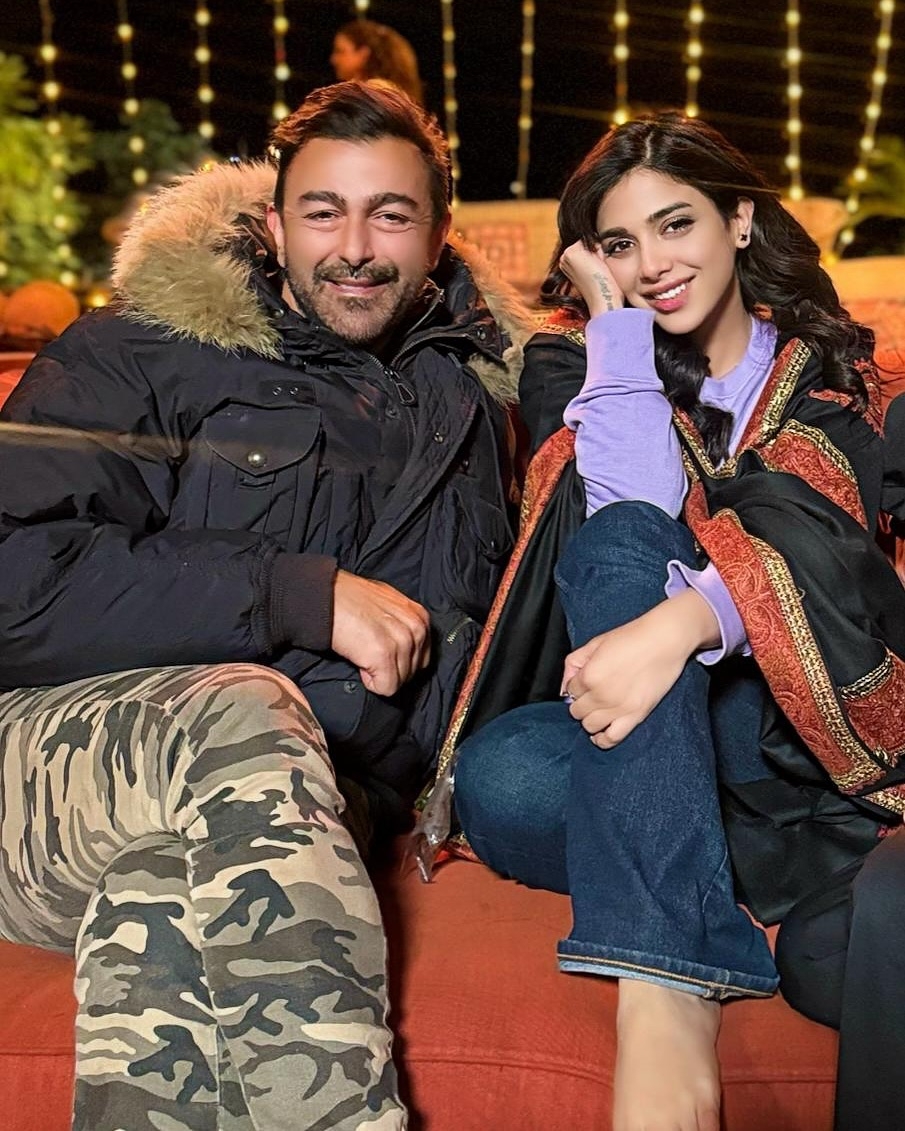
Shaan Shahid and Sonya Hussyn
The music and camera work receive more favorable attention. Veteran singer Ameer Ali’s “Aashq Tu Ready Hai” stands out as a refreshing addition to the usual wedding playlist, and one can easily imagine it becoming a staple at upcoming shaadis, with uncles taking over the dance floor. Similarly, hearing voices like Saira Naseem, Humera Channa, from the 90s and Rahat Fateh Ali Khan in “Tu Ban Gaya Hai Mera Naseeb” brings a soothing, nostalgic quality that briefly elevates the film.
There is still a lingering question about why English dialogues continue to be used so frequently in our films. The old habit of the “elite” sprinkling words like “sweetheart” and “darling” already feels dated, yet it persists in different forms. In Meera’s case, English often feels like her Achilles’ heel; in moments that demand seriousness, her delivery slips into unintended awkwardness, occasionally drawing laughter instead of gravity. Javed Sheikh and Shaan handle the language comfortably, and it shows on screen, but Meera’s delivery often breaks the emotional tone of key scenes.
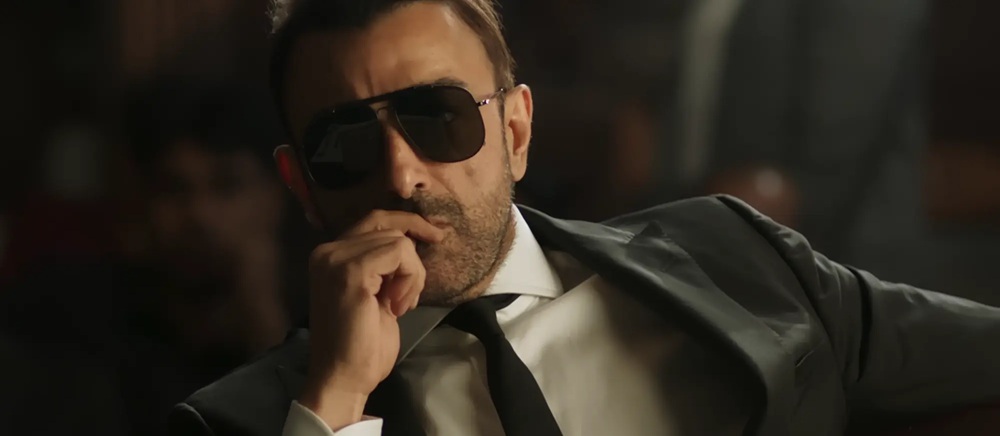
Shaan
Meera has lived through many phases during Psycho. Over time, she has remained in the news more for public appearances and controversies than for her on-screen performances. Had this been the 1990s, the film might have done better; however, in the era of social media scrutiny and instant audience feedback, it struggles to sustain attention the way earlier cinematic releases once could.
Legendary actors approaching the twilight of their careers often create films that reflect on their legacy. Raj Kapoor and Waheed Murad, for instance, were associated with such late-career projects like Mera Naam Joker (1970) and Hero (released posthumously in 1985). While these films were initially misunderstood, they later gained cult recognition within cinematic history.

Behind the Scenes
In a similar context, Meera’s attempt to center herself in a film like Psycho can be seen as part of that tradition of a career-reflective or image-redefining effort. Unfortunately, the final result feels far less cohesive or purposeful. It almost gives the impression that Meera, whose career tends to resurface intermittently within Lollywood’s shifting landscape—may have drawn loosely from films like Misery, Basic Instinct, and Joker, and then shaped a narrative through an interpretation that was never fully translated on screen.
You may also like:

From the Horn of Africa to Bahria Town: Habesha Café Brings Centuries of Coffee Culture to Rawalpindi
(October 15, 2026)