Written by: Ayesha Majeed
Posted on: August 07, 2026 | 
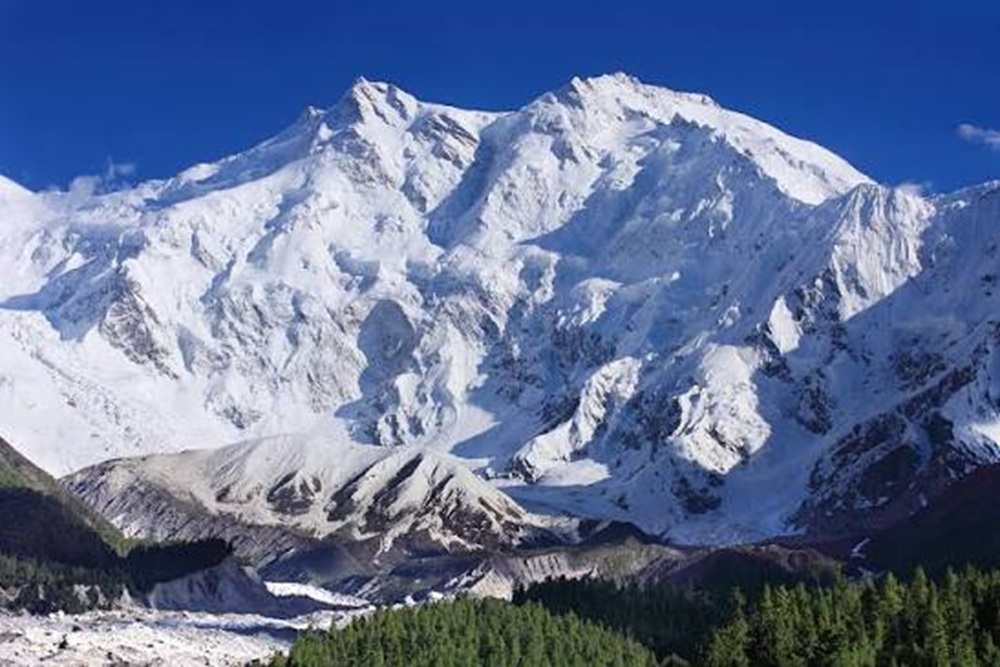
Nanga Parbat
Pakistan is a land of remarkable geographical diversity. Along its southern coastline, the vast Arabian Sea washes the shores of Sindh and Balochistan, while the golden dunes of the Thar and Kharan deserts stretch across the eastern and western landscapes. Moving inland, the fertile plains of Sindh and Punjab form the agricultural heartland, their lush fields nourished by the Indus River. And up north, the Potohar Plateau finally merges with the towering Himalayas.
The snow-white Himalayan mountains, shrouded in clouds, have one particular peak that rises above the mist: the Nanga Parbat. At 8126 meters, Nanga Parbat stands as the ninth-highest mountain in the world. It is located in the Gilgit-Baltistan region in the western Himalayas. Due to the sheer impossibility associated with climbing this mountain, it has been nicknamed the “Killer Mountain”, perhaps also because of its southern wall known as the “Rupal Face”, which is a staggering 4600 meters, making it the highest mountain wall on Earth. Many mountaineers have tried to summit it, historically dating back to the 1930s when German teams first tried to lead expeditions but failed. The first successful summit took place in 1953, before which this deadly mountain had claimed the lives of thirty mountaineers.
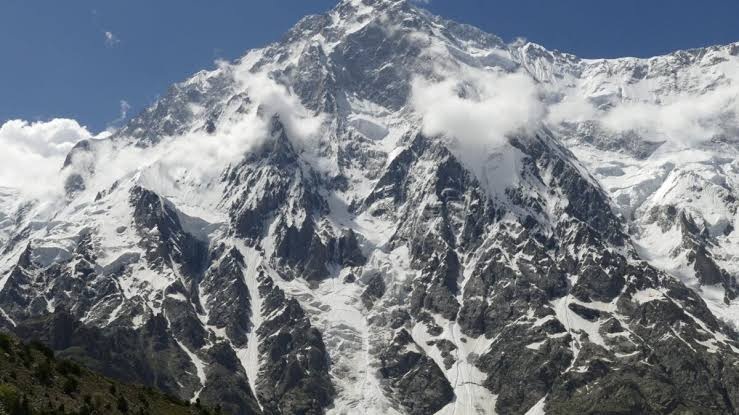
The Rupal Face
The origins of Nanga Parbat’s name, however, stand in stark contrast to its ominous nickname. Derived from Sanskrit, nanga means “naked,” while parvata means “mountain.” Together, the name translates to “Naked Mountain,” a reference to its immense rock faces, particularly the Rupal Face, which often appears bare of snow and vegetation.
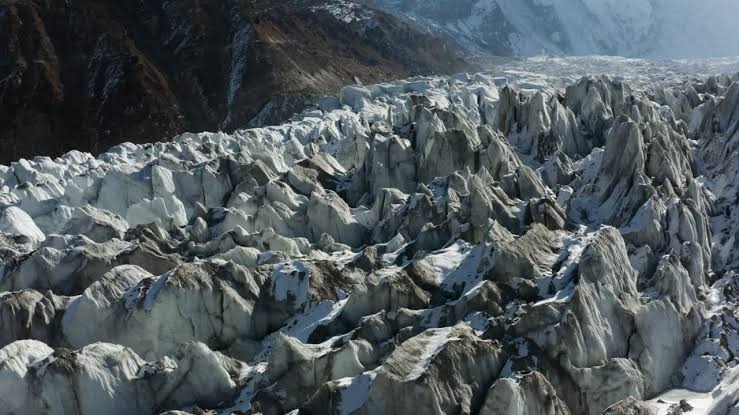
Raikot Glaciar
As formidable as the mountain may be, for most visitors, Nanga Parbat serves as a breathtaking backdrop rather than a climbing adventure. Thousands travel each year to Fairy Meadows and the Astore Valley to admire its towering summit from afar. Fairy Meadows, a lush alpine grassland nestled among the Himalayan conifer forests, offers an adventure in its own right. Reaching it involves a 15-kilometre jeep ride from Raikot Bridge on the Karakoram Highway to the village of Tattu, followed by a scenic hike. The jeep track leading towards Fairy Meadows has often been described as one of the world’s most dangerous roads, adding an element of thrill to the journey. Once there, visitors are welcomed by rustic wooden cabins and campsites overlooking one of the most spectacular mountain panoramas in Pakistan.
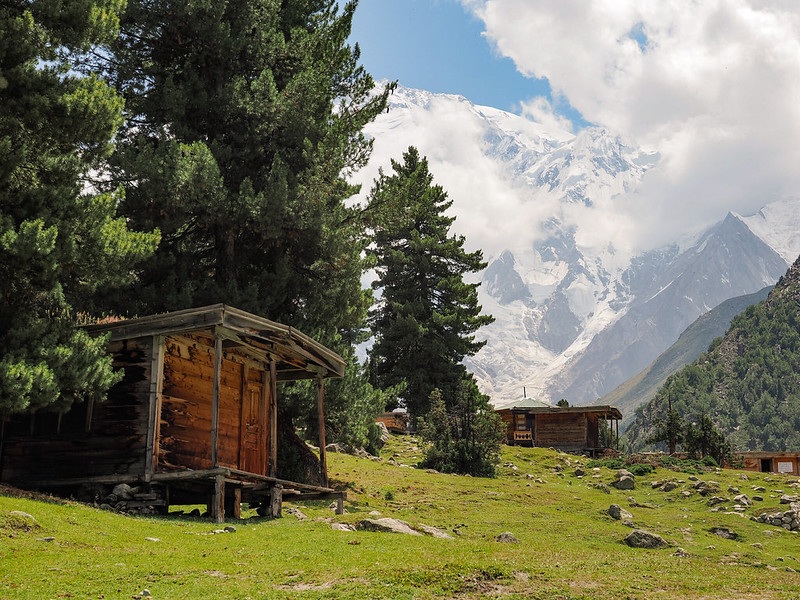
Traditional wooden lodgings for tourists
While Nanga Parbat has attracted much international attention, drawing mountaineers, trekkers, photographers, and researchers from around the world, it continues to remain an imperative part of the local communities’ culture and traditions. For the people of Gilgit-Baltistan, Nanga Parbat is a landmark around which their culture and traditions are anchored. The region’s renowned hospitality has long been central to the visitor experience. In many ways, tourism in the area thrives because of the local communities, who have transformed their homes and villages into welcoming gateways to the otherwise uninviting mountain. The locals, in response to growing tourism, have done their best to build tourist-friendly infrastructure, which includes family-run wooden cabins, and home-cooked regional cuisine. Many have gone out of their way to serve as guides and porters, sharing generations of knowledge about the mountain’s trails, wildlife, and folklore with those who seek to know more.
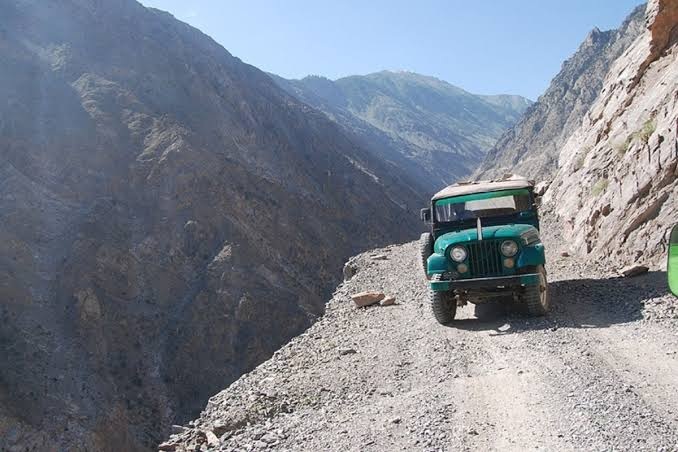
Fairy Meadows trek
Despite its imposing beauty, like many mountain regions across the globe, Nanga Parbat faces growing environmental challenges. The ecosystem of the region relies on a delicate balance of people and nature. Ever since tourism became mainstream, this balance has been disturbed. For many visitors, the journey to the mountain begins in a four-wheel-drive jeep, contributing to air pollution. To accommodate the growing influx of tourists, more commercial hotels have been built by deforesting the alpines, often without adequate regulatory oversight of their environmental impact. Overgrazing has also become a growing concern as increasing visitor numbers place greater pressure on alpine pastures. And on a larger climatic scale, global warming is causing accelerated glacial melting in the region. This has destabilized the surrounding slopes, exposing more bare, unpredictable rock and altering the vital human-water system that locals and alpine flora depend on. These changes are stripping the Fairy Meadows bare of their name, with climatic realities seeping into the land’s otherwise fantastical qualities.
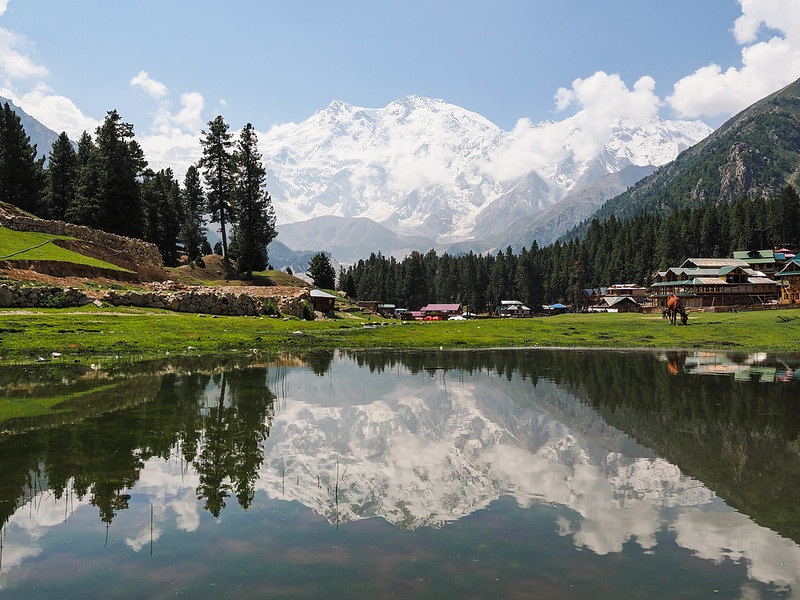
Fairy Meadows and the Altor Lake
The Nanga Parbat has provided an almost enigmatic experience for recreational tourists, academic researchers, and thrill-seeking mountaineers. It has an endearing beauty that has often led to it being compared to the Swiss Alps, while simultaneously earning the moniker of the Killer Mountain. However, whatever the experience might hold, it is agreed by all that the Nanga Parbat continues to inspire awe in all who encounter it. Today, it stands as a symbol of Pakistan’s natural grandeur, resilience, and enduring appeal as one of the world’s most extraordinary destinations.
You may also like: