Written by: Asfa Asad
Posted on: July 02, 2026 |  | 中文
| 中文
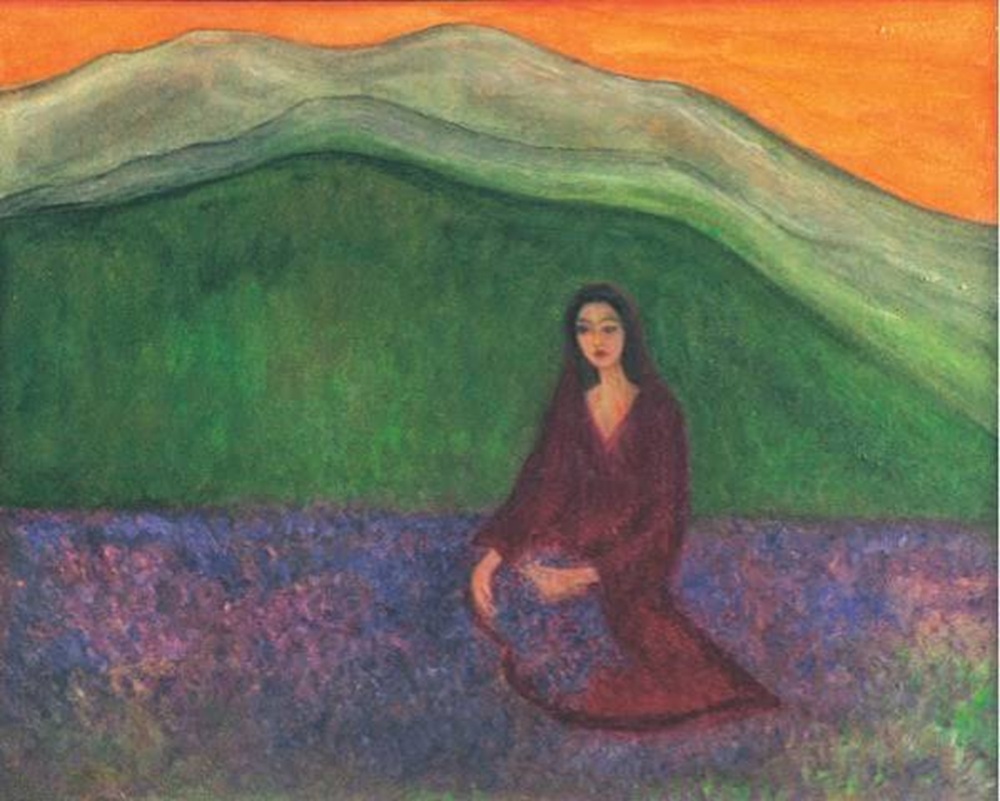
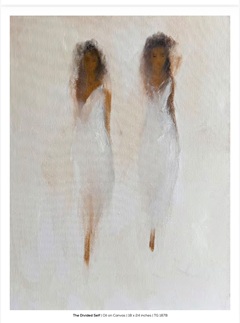
Image from the book
Whenever someone mentions fairy tales, some rendition of a Brothers Grimm story comes to most people's mind, usually the Disney version with its happily-ever-after ending and, occasionally, the darker, more morbid original. However, no matter the version, there is a question that remains unanswered: is there space in our imagination for stories from our own part of the world?
For every part of Pakistan, whether it is the lush green plains of Punjab or the Indus regions of Sindh, there is a folktale. Today, these stories are often mentioned in passing, frequently reduced to idioms. A Heer Ranjha romance. A Sohni Mahiwal tragedy. However, the stories that have transcended time by becoming an intrinsic part of our cultural identity seem to be losing their grip on the public imagination.
It is in this context that Huma Agha Abbas and Taiba Abbas' book The Night In Her Hair becomes particularly significant. The Night In Her Hair is a collection of nine folk tales from across Pakistan, including famous and beloved ones such as Heer Ranjha, Sohni Mahiwal, Mirza Sahiban, Sassi Punhun, Habba Khatoon, and Umar Marvi, as well as lesser-known ones such as Kash Kash Jinn, Himal Nagrai, and Adam Khan Dur Khanai. The back of my copy describes the book as "a fictional retelling of legends and folk tales," which is quite an accurate description for two reasons. Firstly, in the word-of-mouth tradition through which these stories are passed on, certain elements are often lost in narration and the story becomes diluted, losing much of the depth that exists between its beginning and end. Secondly, like the oral tradition itself, which often bends the story to the narrator, this book, while preserving the authenticity of the original tales, also makes room for certain creative liberties in order to make them accessible to a contemporary audience.
The prose of the book deserves acclaim. Oftentimes, in translations or retellings of stories that are central to a region's culture, the figurative meaning or the "essence" tends to get lost in translation. Huma and Taiba, however, largely avoid this pitfall. The book is a mixture of poetic lyricism and prose, which gives the reader a sense of what the stories might have felt like in their native languages. This technique may undermine plot delivery for some readers, but considering the cultural context, it is an appreciable effort on the authors' behalf.
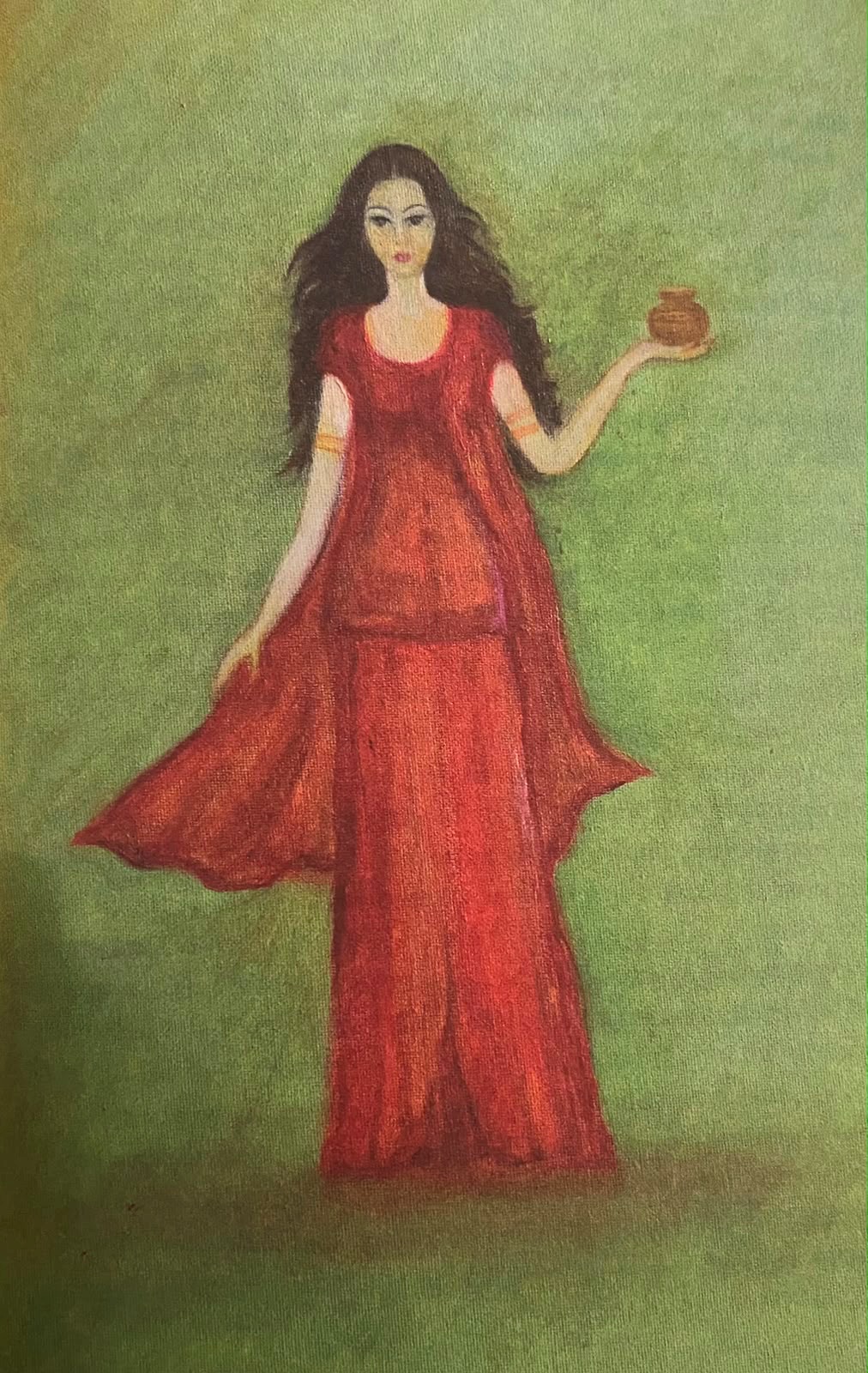
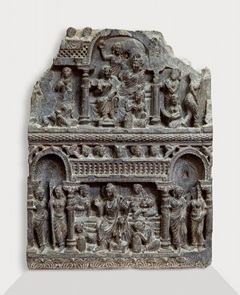
Image from the book
As previously mentioned, many of these folktales have begun to shrink in our collective imagination into little more than a beginning and an end. This retelling fills precisely those gaps, fleshing out the abstract into concrete stories. For now, and for as long as there are few other initiatives preserving these folktales for a contemporary audience, The Night In Her Hair remains an important bridge of understanding. In order to preserve these tales, we must first address the disconnect between the modern Pakistani reader and their native languages and oral storytelling traditions.
Love, sacrifice, and fate are recurring themes throughout the collection; however, their delivery in each story is unique. In Sohni Mahiwal, for instance, love is rebellion. In a culture that is particularly constrictive towards women, Sohni endeavours to cross the Chenab River every single night to meet her lover, Mahiwal. In the process, she defies the very socio-cultural norms that constrain her. On the other hand, in Sassi Punhun, love is endurance. When Punhun is taken into the desert by his ill-intentioned brothers, Sassi travels miles through the scorching heat alone in a devoted effort to find her beloved, ultimately perishing in the attempt. This demonstrates how recurring themes in these stories are shaped by and reflective of each region's unique values, cultures, and traditions.
Perhaps what is most compelling about this collection is the inclusion of lesser-known stories such as Kash Kash Jinn and Himal Nagrai. In popular understandings of Pakistani folklore, elements of fantasy and the supernatural are often less prominent. The inclusion of these stories therefore broadens the reader's understanding of the scope of Pakistani folktales and is particularly important for the preservation of narratives that do not typically find a place in mainstream oral traditions.
The Night In Her Hair is both a beautiful and pragmatic work of literature and art. It is an attempt to revive the stories that have shaped our imaginations for generations. More importantly, it brings us back to our roots and reminds us to make space for more than just imported and inherited fiction in our collective imagination.
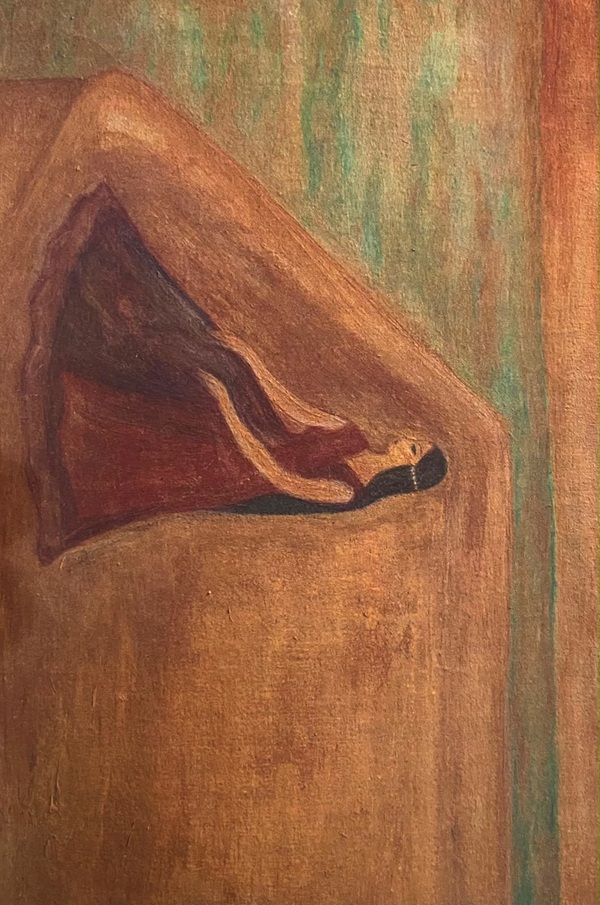
Image from the book
You may also like: