Written by: Hurmat Majid
Posted on: August 10, 2026 |  | 中文
| 中文
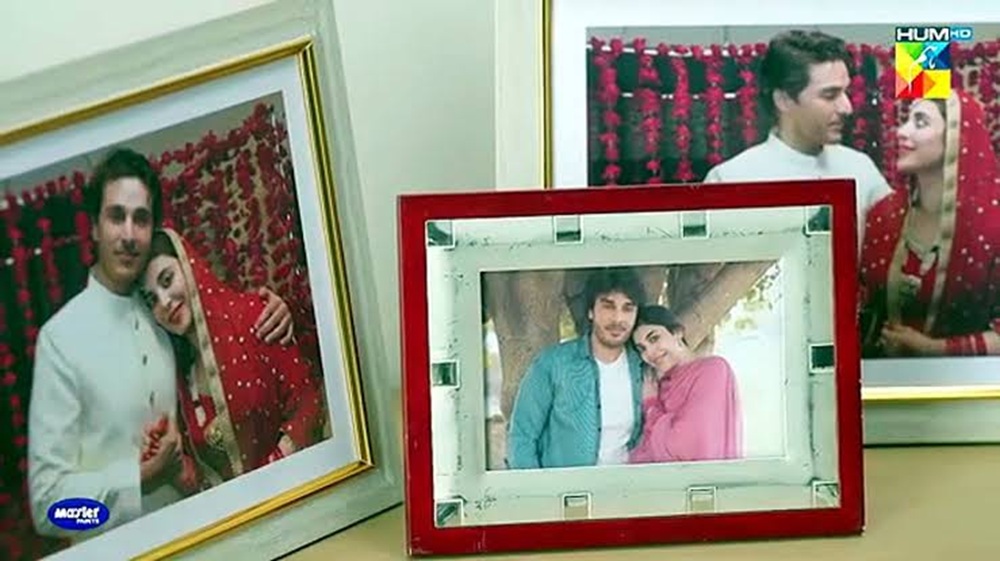
Ahsan and Urwa and Tabish and Beena
There are dramas that rely on twists, villains and sensational confrontations to keep audiences invested. Then there are dramas like Aap Ki Izzat, which understand that the most devastating tragedies are often the quietest ones. Six episodes in, Umera Ahmed's latest offering, directed by Saife Hassan, has established itself as one of the strongest Pakistani dramas currently on television—not because of what has happened, but because of what is about to happen.
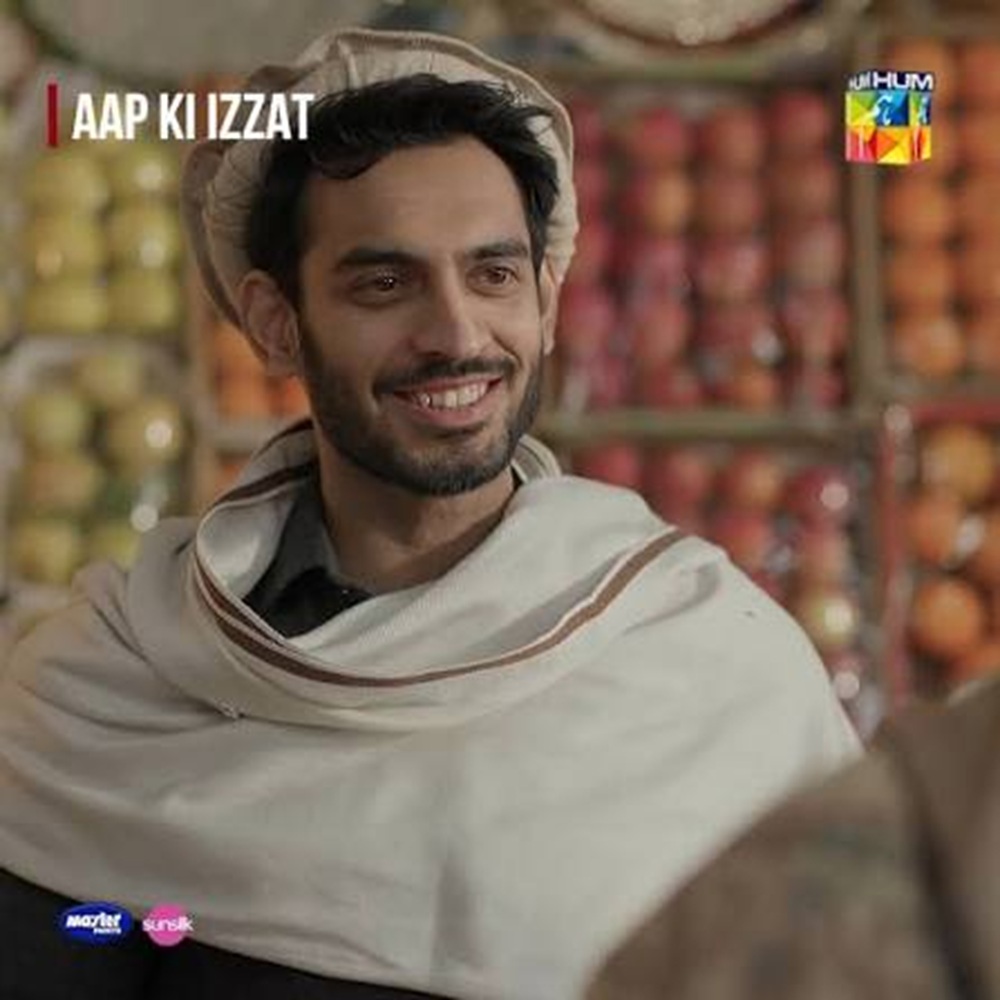
Saif Ali Khan as the Fruit Vendor that Adores Beena
At its core, Aap Ki Izzat is not really a story about polygamy. It is a story about dignity, emotional neglect and the slow death of a marriage. It asks a difficult question: what happens when love disappears long before a relationship officially ends?
From the opening episode, Umera Ahmed resists the temptation to paint Tabish as an outright monster. Instead, he is introduced as a successful man who once loved his wife deeply. Years earlier, he wanted no one but Beena, and their marriage was built on genuine affection. That history matters because it makes the present infinitely more painful. The audience is not watching an abusive husband from the beginning; they are watching someone who gradually convinces himself that the woman who stood beside him while he built his life is no longer good enough for the world he now inhabits.
By the sixth episode, it has become abundantly clear that Tabish intends to marry Naz, a woman he sees as more polished, more educated and better suited to the influential political and social circles he now moves in. His justification is revealing. It is not that Beena has failed him as a wife or mother. She has done everything society expects of her. Instead, Tabish believes he has outgrown her. His ambitions have changed, and in his mind, his wife must evolve into an accessory that complements his success. That is where Aap Ki Izzat becomes far more than another drama about a second marriage.
Rather than presenting betrayal as a single catastrophic event, Umera Ahmed carefully demonstrates how emotional abuse rarely arrives all at once. It manifests in small, almost forgettable moments that accumulate over years until they fundamentally alter a person's sense of self.
One particularly heartbreaking scene encapsulates this perfectly. Beena dresses up and asks Tabish how she looks. She is not seeking fashion advice; she is asking for reassurance from the man whose opinion matters most to her. Tabish knowingly responds that she looks fat. The cruelty lies not in the word itself, but in the intention behind it. He understands exactly what she needs in that moment and deliberately withholds it. It is a brief exchange, yet it reveals years of psychological erosion more effectively than any loud argument ever could.
These understated, yet pervasive interactions clarify the psychological landscape Beena occupies when she finally confronts the reality of Tabish’s impending second marriage. As she examines the ruins of their shared history, she begins to recognize a pattern of quiet erosion; while Tabish avoided overt cruelty or physical violence, he was a master of the slow, methodical dismantling of her self-worth. By the time he concludes she is an inadequate companion for his new life, his victory is already half-won because she has been conditioned to agree. This domestic hierarchy even poisons the next generation, as the children adopt their father’s condescension, treating Beena as if she is intellectually beneath them simply because they have mirrored the behavior of the parent they perceive as the ultimate authority.
The narrative also introduces a compelling undercurrent through the character of the fruit vendor, portrayed with a quiet dignity by Saif Ali Khan. His subtle reverence for Beena does not escape notice, and Beena, in turn, seems to reciprocate this warmth in fleeting, understated exchanges. These lingering dialogues and her habit of overpaying him hint at a burgeoning comfort that has long since vanished from her own household. While the series has only gestured toward this connection thus far, the promotional glimpses suggest he is destined to become a central figure in her journey. His inclusion poses a fascinating thematic query: as Beena potentially moves toward a life beyond her marriage, will Aap Ki Izzat attempt the far more complex feat of recalibrating our perspective on Tabish? At this stage, he remains a figure of near-universal resentment, yet Umera Ahmed is a writer who thrives in the grey areas of human morality rather than the black-and-white of traditional tropes. Whether the script eventually demands empathy for a man drowning in the consequences of his own making remains perhaps the most ambitious narrative gamble of the season.
Urwa Hocane delivers what may well be the finest performance of her career. Beena is bruised, but never reduced to a helpless victim. There is sadness in her eyes, confusion in her silence and exhaustion in every smile she forces herself to wear, yet the writing never asks the audience to pity her. Instead, it invites them to understand her. There is an important distinction. Sympathy often infantilizes women; empathy restores their humanity.
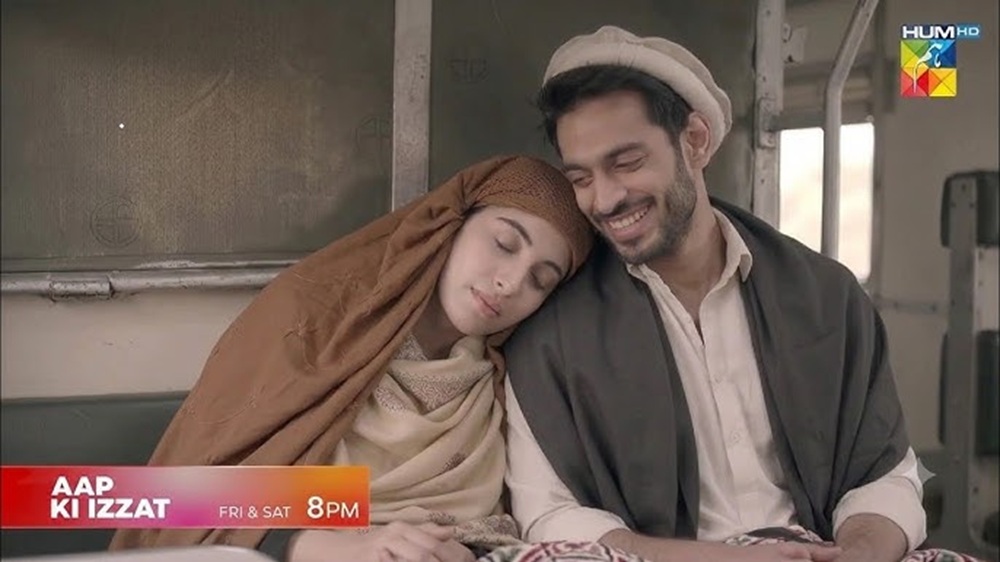
Saif Ali Khan and Urwa Hocane
Ahsan Khan deserves equal credit for resisting caricature. Tabish is infuriating, but he is recognizably real. His transformation is frightening precisely because it is believable. He does not scream, threaten or terrorize his family. Instead, he normalizes emotional neglect so completely that everyone around him begins accepting it as ordinary. By making Tabish subtle rather than overtly villainous, the drama forces viewers to confront behaviours that often go unnoticed in everyday marriages.
One of the drama's greatest strengths is its refusal to isolate Beena's suffering to her husband alone. Patriarchy in Aap Ki Izzat is shown as a collective system upheld by people who may not even realize they are participating in it.
Sania Saeed is exceptional as Tabish's mother, portraying a woman caught between conscience and unconditional maternal love. She understands that her son's decision is profoundly unfair. She initially refuses to attend his nikah to Naz, signalling her disapproval. Yet when the moment arrives, she cannot bring herself to stand against him. In perhaps the most painful irony of all, she asks Beena—the woman being replaced—to prepare her clothes and jewellery for the ceremony. It is not outright malice; it is emotional cowardice disguised as maternal duty. The character embodies a familiar contradiction in South Asian households, where mothers may recognize their sons' faults but struggle to hold them accountable.
The same societal conditioning appears elsewhere. Beena confides in her closest friend, hoping perhaps for validation or encouragement to leave. Instead, she is advised to endure the situation for the sake of her children and home. Later, when she cautiously tests the waters with her own mother by asking what would happen if she returned to her parents' house, she receives the response countless Pakistani women have heard before: her husband's home is now her real home, and leaving it should never even be considered.
None of these women intend to hurt Beena. Yet together, they reinforce the very structure that keeps her trapped. The drama wisely avoids simplistic villains because systems rarely function through villains alone; they survive through ordinary people repeating inherited beliefs.
Another standout sequence comes when Beena consults a religious scholar. She asks an apparently hypothetical question: what if someone knows they are about to commit a sin but asks for forgiveness beforehand? The scholar's answer cuts straight to the moral centre of the drama. Repentance before committing a sin, he explains, is not repentance at all. It is obstinacy—an attempt to escape accountability while knowingly doing wrong. The exchange is understated yet powerful, challenging the selective use of religion to justify unethical behaviour.
Visually, Saife Hassan's direction complements the writing beautifully. He avoids melodramatic flourishes, allowing silence, body language and lingering expressions to carry emotional weight. Domestic spaces feel increasingly suffocating without ever becoming theatrical. Conversations are given room to breathe, trusting the audience to notice what remains unsaid.
The sixth episode delivers the season's first genuine shock. On the morning of Tabish's nikah to Naz, Beena disappears. Hours pass without any trace of her. While preparations for the wedding continue, anxiety slowly replaces certainty. Then comes the devastating revelation: an unidentified woman has reportedly died after lying on railway tracks. Tabish abandons his own wedding to identify the body, and the episode ends before viewers learn whether it is Beena.
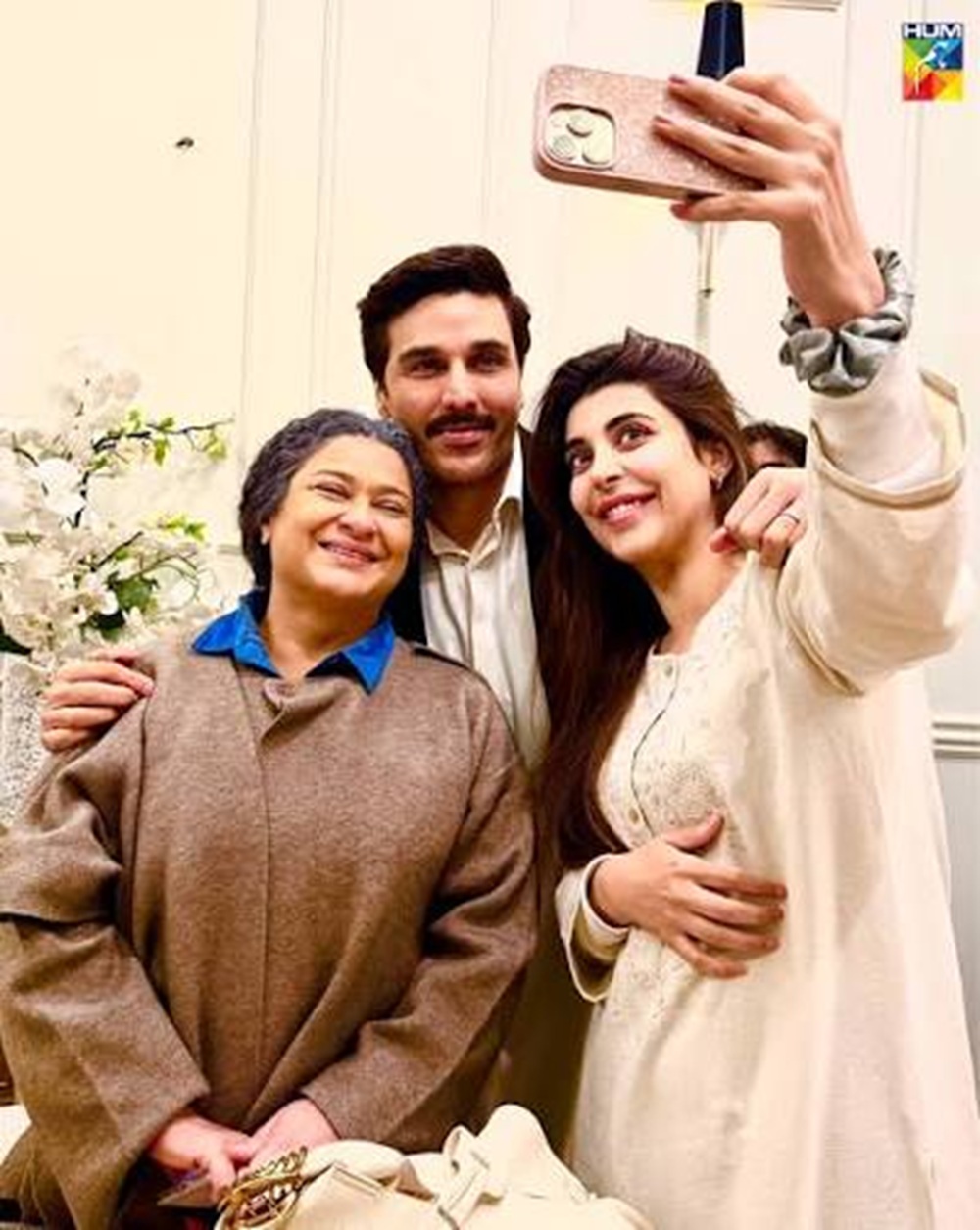
A Behind The Scenes photo of Sania Saeed, Ahsan Khan and Urwa Hocane
It is a masterclass in suspense because the cliffhanger is rooted entirely in emotional investment rather than spectacle. Whether Beena is alive or dead matters because the audience has spent six episodes understanding why she reached this breaking point.
Perhaps the drama's most compelling achievement is how it redefines the idea of izzat itself. South Asian society often burdens women with the responsibility of protecting a family's honour, expecting them to sacrifice endlessly in silence. Aap Ki Izzat quietly turns that notion upside down. It is Tabish—not Beena—who destroys his own dignity. By choosing another wife despite having a stable family and by disregarding the emotional devastation inflicted on his first wife, he becomes responsible for the questions that follow. His respect leaves him long before Beena leaves his house.
For now, Aap Ki Izzat remains one of the year's most compelling dramas. Its performances are uniformly excellent, Umera Ahmed's writing is layered and psychologically astute, and Saife Hassan's restrained direction allows every emotion to land with remarkable force. Most importantly, the drama trusts its audience enough to explore uncomfortable emotional truths instead of relying on sensational twists.
The only lingering hope is that the series maintains this standard in the episodes ahead. Pakistani dramas too often lose their narrative discipline midway through their run, stretching conflict unnecessarily or undermining carefully built character arcs. If Aap Ki Izzat avoids those familiar pitfalls and preserves the emotional honesty it has established in its opening six episodes, it has every chance of becoming one of the defining dramas of 2026.
For now, it is not simply recommended - it is essential viewing.
You may also like: