Written by: Misbah Shah
Posted on: July 29, 2026 |  | 中文
| 中文
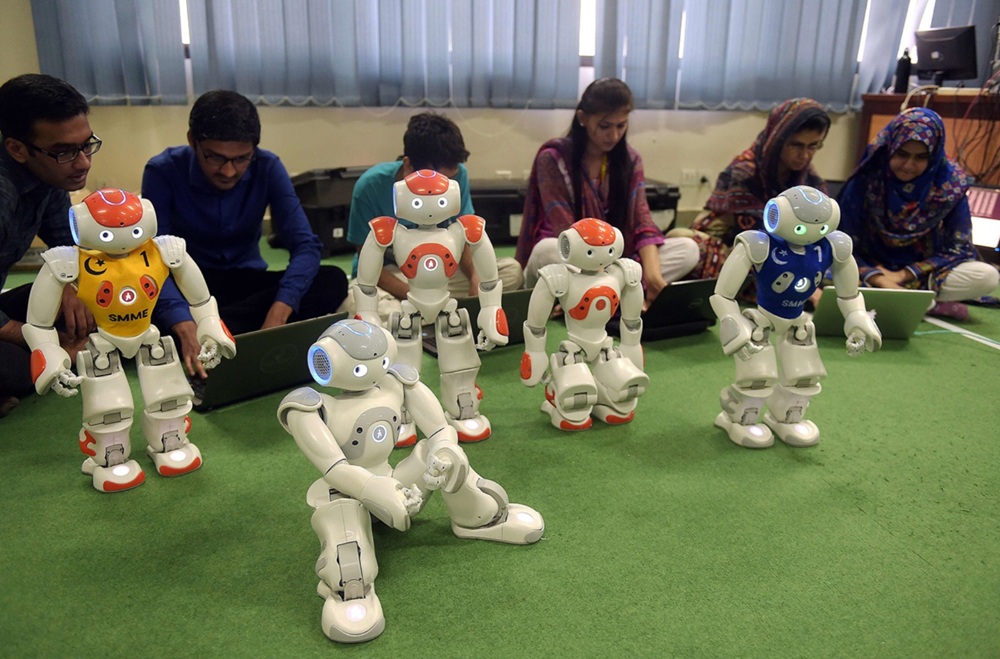
Students at National University of Science and Technology (NUST) preparing for the annual RoboCup
The second half of the twenty twenties is being defined by an AI revolution. What once was only a sci-fi fantasy has quickly been realised today. AI models have already become mainstream with business firms, academic institutes and many other sectors quickly adopting them to keep up with the rapidly changing landscape of work. Robotics is another complementary branch of AI with development underway. Statistics show that the world’s most technologically advanced countries, such as China and the US, are investing heavily in robotics with Chinese robotics-based startups raising a whopping $24.4 billion dollars.
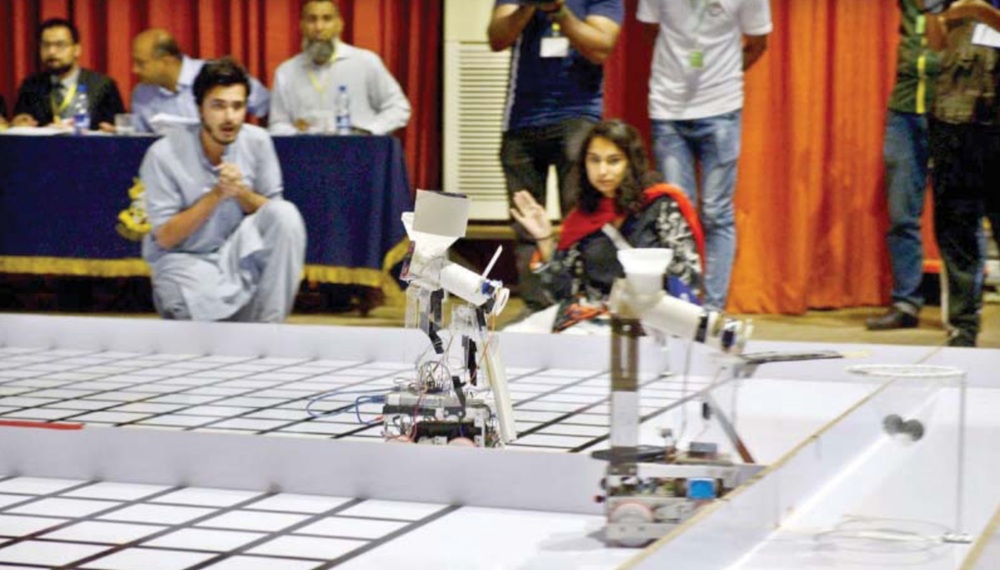
Students competing at a robotics contest held at National University of Science and Technology (NUST)
In line with this positive trend of investment in robotics, Pakistan is paving the way for robotics education in its schools, colleges and universities. As of 2026, the Federal Directorate of Education (FDE) formalised an agreement with the National University of Science and Technology (NUST) to introduce a curriculum focused on coding, robotics and artificial intelligence (AI) to primary grade students. This has mandated robotic education for K-12 in Islamabad, with AI as a non-credit topic for nursery–grade 5, a CS/AI choice in grades 6–8, and an elective in grades 9–12 with FBISE exam inclusion. While provinces are free to decide otherwise, the response has been positive. For instance, The South Punjab School education department is collaborating with UNICEF and ROBOTMEA to teach robotics in state schools from grades 6-8.
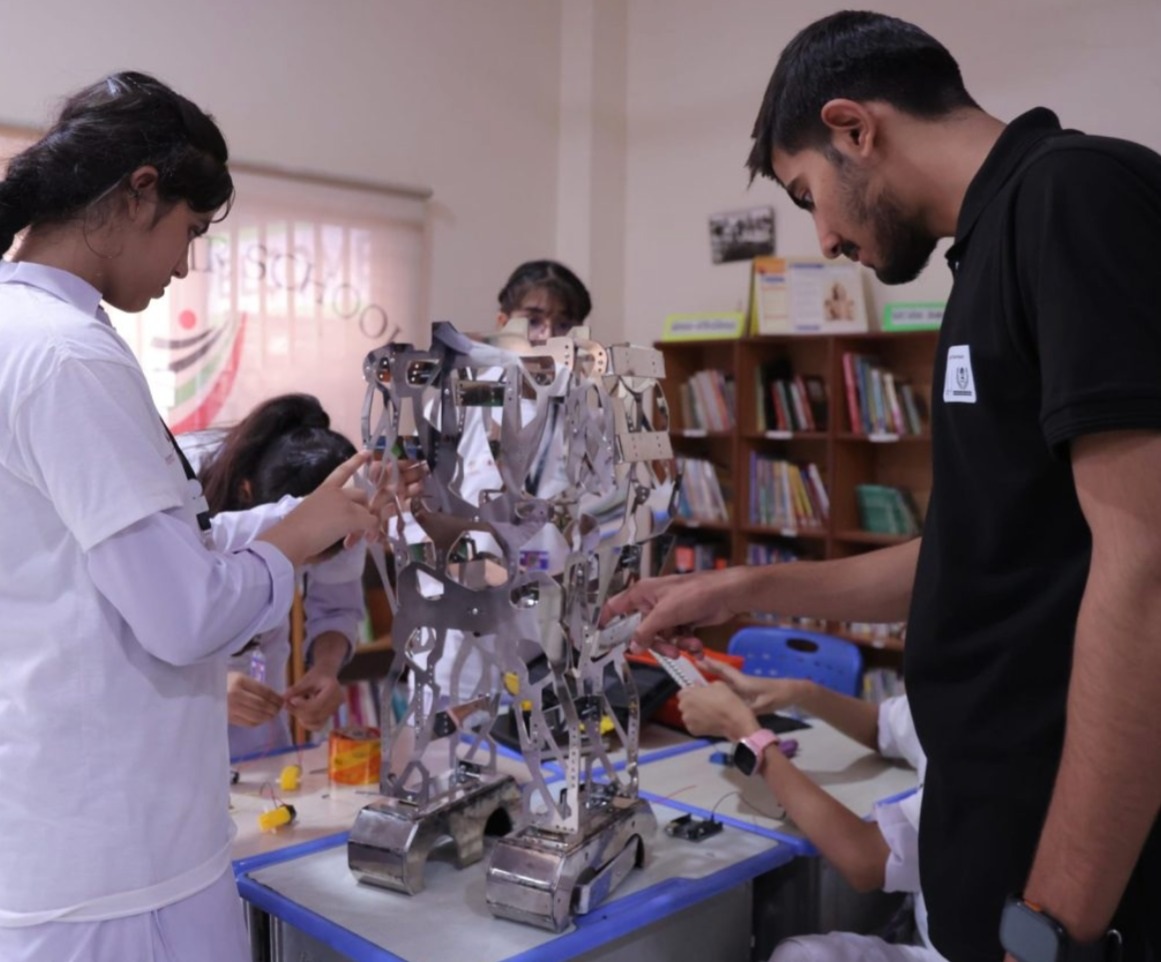
Pakistani school students working on engineering a robot
Pakistani universities are at the forefront of the robotics education movement. Institutions such as the National University of Sciences and Technology, COMSATS University Islamabad, Ghulam Ishaq Khan Institute of Engineering Sciences and Technology, and National University of Computer and Emerging Sciences have established robotics laboratories, engineering societies, and innovation centers that allow students to develop autonomous vehicles, robotic arms, drones, and intelligent systems. Annual competitions hosted by these institutions, such as Pakistan Robot Olympiad (PRO), Headstart Robotics Championship (HSRC) and ROBOCUS, have become important platforms where students showcase their technical abilities while collaborating with peers from across the country.
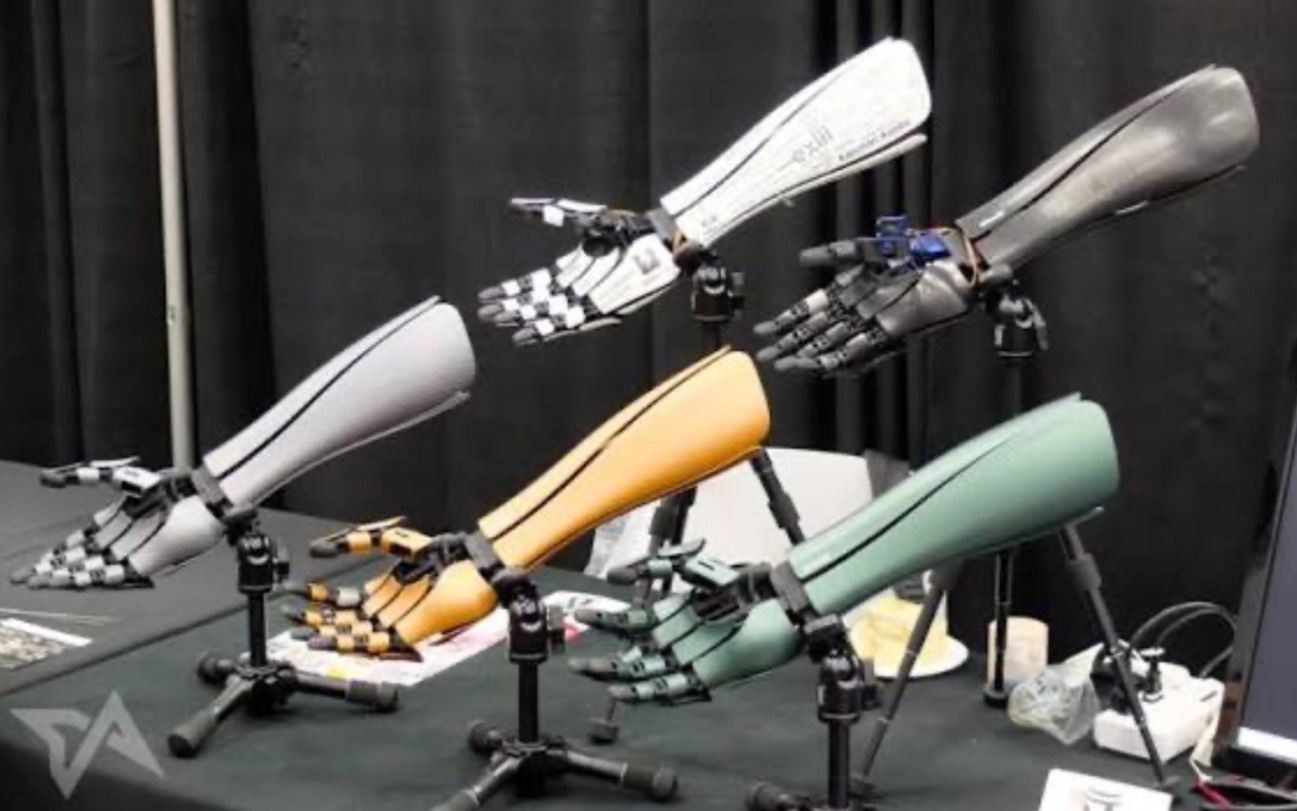
Display of robotic prosthetic arm at the Pakistan National Centre of Robotics and Automation (NCRA)
Therefore, national robotics competitions have further accelerated interest in the field. Events organized by universities, engineering societies, and technology organizations challenge participants to build autonomous robots capable of completing complex tasks such as obstacle avoidance, line following, rescue simulations, and robotic combat. Preparing for these competitions teaches valuable skills beyond engineering, including project management, teamwork, communication, and resilience.
Private organizations have also played an important role in expanding access to robotics education. Numerous STEM academies now offer weekend workshops, coding boot camps, and robotics certification programs for school students. Summer camps focusing on electronics, programming, and robot design have become increasingly popular in major cities such as Lahore, Islamabad, Karachi, and Faisalabad. These initiatives provide opportunities for students whose schools may not yet have dedicated robotics facilities.
The Pakistani industry has also provided encouragement for robotics education in schools and universities. In order to keep up with the rapidly developing manufacturing processes of the international world, Pakistani industrialists and manufacturers are also looking for innovative ways to incorporate automation to improve productivity and reduce operational costs. These trends are providing students with an incentive to pursue robotics as a field which offers relevant employment opportunities.
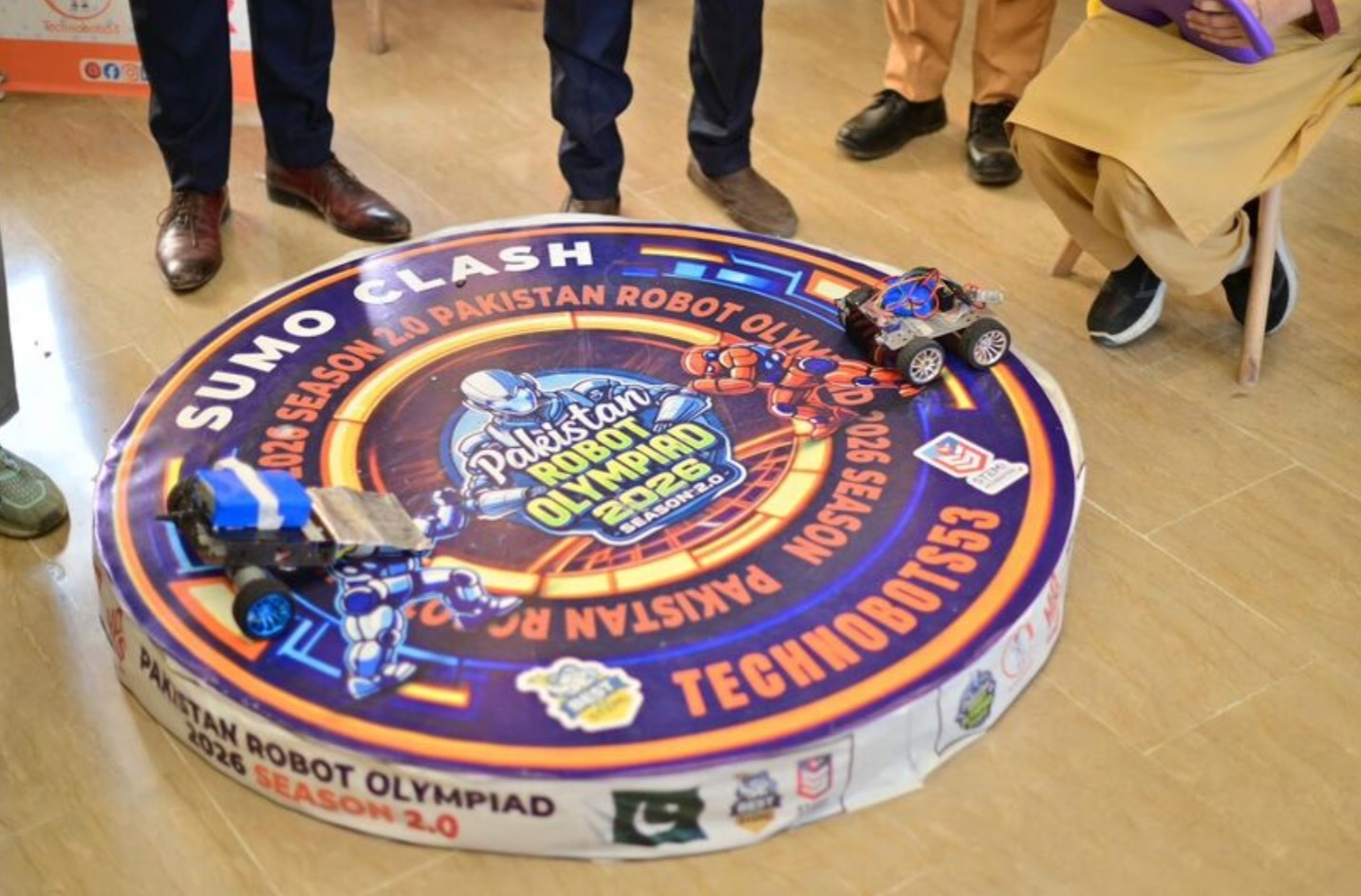
School students competing in the Pakistan Robot Olympiad
Government initiatives promoting digital transformation have also created a favorable environment for technological education, especially under the URAAN Pakistan initiative. URAAN’s 5Es framework includes E-Pakistan, which though largely is a digitalization scheme also promotes technologization. The initiative, however, is favourable for robotics education despite having a formal clause for it. Generally, policies supporting innovation, entrepreneurship, and digital skills encourage universities and educational institutions to modernize their curricula. While robotics education is still developing in Pakistan compared to many advanced economies, these positive policies are nevertheless promoting increasing collaboration between universities, industry, and technology companies, and are helping bridge the gap between the classroom and the industry.
While Pakistan is largely pushing for the incorporation of robotics education in the curricula of both schools and universities, there are certain socio-economic factors unique to the country which are holding the country back from doing so successfully. According to the World Bank, 60% of Pakistanis live in rural areas, which are severely underdeveloped. Rural schools are often underfunded due to which they lack laboratories, equipment, trained instructors, and reliable internet connectivity. Moreover, robotics kits and electronic components can also be expensive, making it difficult for many institutions to establish comprehensive programs. Therefore, robotics education is overwhelmingly concentrated in the country’s urban regions while the majority of the population remains deprived of it.
Students and staff at the prize distribution ceremony of the National Engineering Robotics Contest (NERC) hosted by the NUST College of Electrical and Mechanical Engineering
However, despite the array of challenges, Pakistan is showing resilience and is determinedly working towards modernising the education experience for its students to keep up with the international status quo of technology. And with sustained investment, inclusive educational policies, and stronger collaboration between academia and industry, robotics can become a powerful catalyst for scientific advancement, economic development, and national competitiveness in Pakistan.
You may also like: