Written by: Misbah Shah
Posted on: July 01, 2026 | 
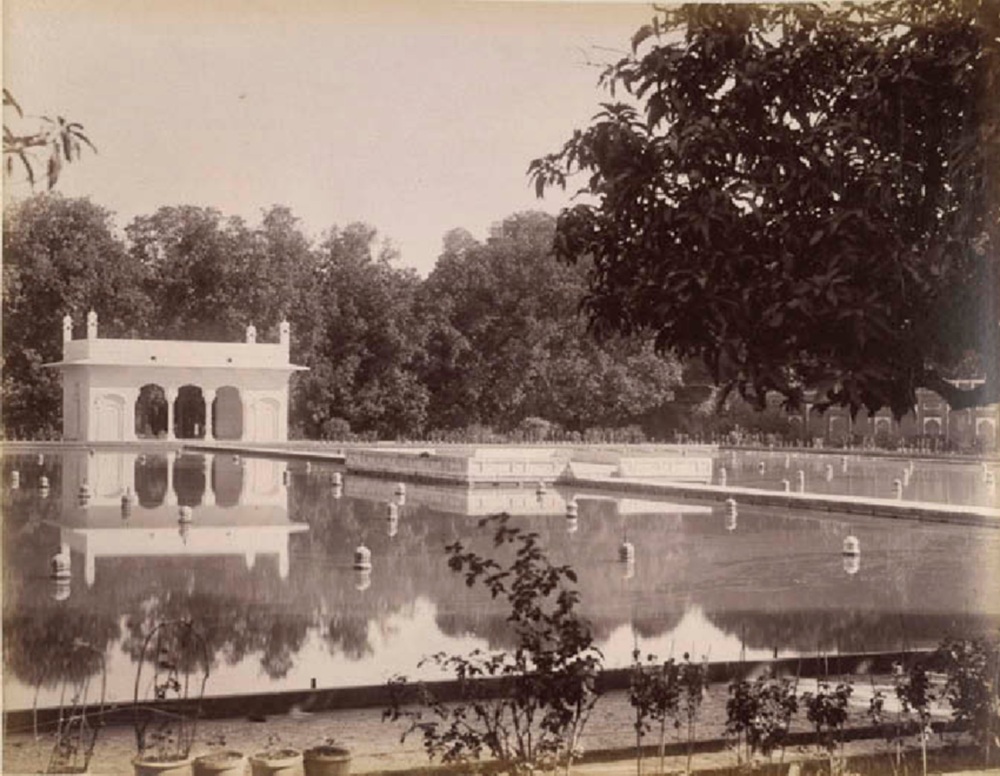
The history of gardens shows their multi-tiered role in revealing a civilization’s nature. Their aesthetic beauty is often symbolic of an empire’s culture and philosophy, along with its political stance, at times. In the realm of historical gardens, Chinese gardens and Mughal gardens stand out as remarkable examples of cultural philosophy translated into landscape design. The Mughal Empire and the Chinese Empire were quite contrasting in apparent nature, considering the two civilizations had emerged in completely different geographical and historical contexts, however beneath the aesthetics, they share certain fundamental qualities, most notably the aim of creating harmony between humans and nature.
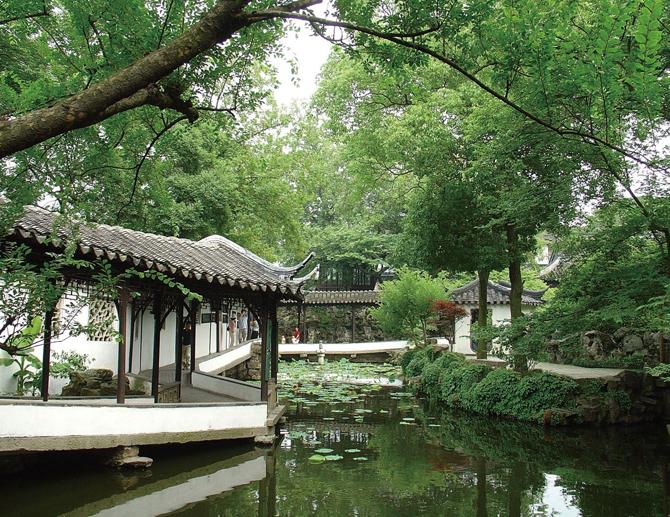
In the annals of Chinese history, the Ming and Qing dynasties saw the pinnacle of Chinese garden tradition, particularly in the city of Suzhou, whose gardens are now recognized as UNESCO World Heritage sites. China’s rich philosophical traditions, to name a few Daoist, Confucian and Buddhist, also influenced the design of these gardens. The commonality between these philosophies is the idea of recognising the need for harmony between the natural world and humans. This philosophy was translated into the architectural design of the Chinese gardens, which are asymmetrical in their layout, allow space for the incorporation of other natural elements, such as water and rocks, consist of winding paths, and have seasonal plantings. Another key characteristic of these gardens is that they are made to be small-scale recreations of Earth’s natural landscape, such as water bodies and mountains.
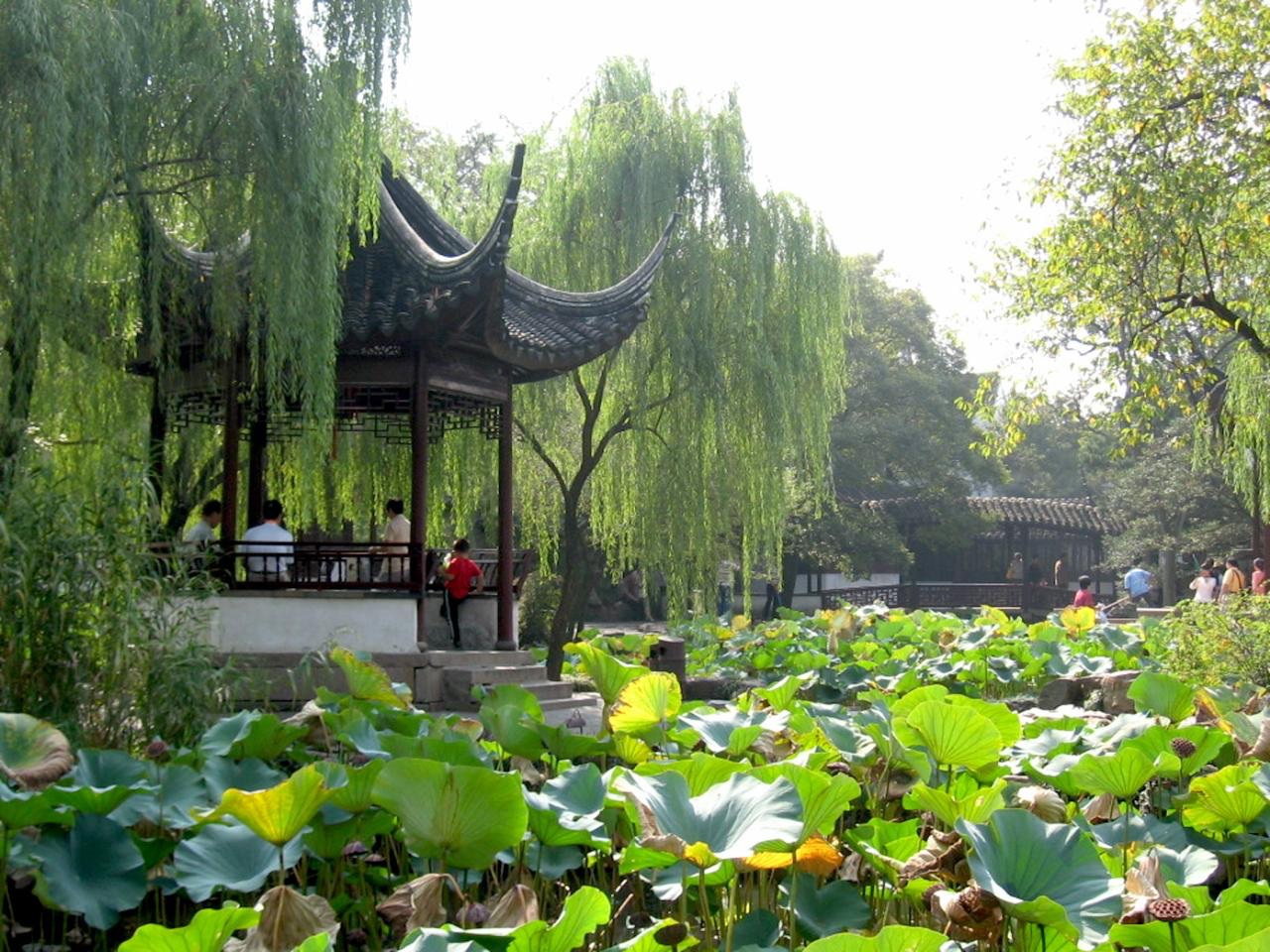
The Humble Administrator’s Garden in Suzhou exhibits the aforementioned properties. Created during the Ming Dynasty, the garden covers about 52,000 square meters. The central feature of this garden is the different ponds with irregular shorelines. The garden also has naturalistic rockeries, winding bridges, pavilions, and carefully framed views to complement the ponds. Its design embodies the Daoist philosophy of living in harmony with nature and is widely regarded as a masterpiece of classical Chinese garden architecture.
Mughal gardens, by contrast, emerged from a different cultural and historical tradition. The history of the Mughal Gardens is largely intertwined with the history of its emperors. Babur, the first Mughal emperor was a direct descendant of Timur of the Timurid Dynasty. In his memoirs, Babur repeatedly refers to the Sub-continent as “charmless and disorderly”, which he sought to beautify with “plots of garden laid out with order and symmetry.” Babur was inspired by the flourishing landscape art of the Timurid architecture, and endeavored to incorporate elements of it in the subcontinent. However, the mountainous topography of Central Asia varies from the dusty plains of the Subcontinent. As a result, the attempt to introduce the lush gardens of Central Asia into the Subcontinent produced a hybrid, or a mutation of the Indo-Islamic garden.
While the sloping gardens of Timurid could not be replicated in the Subcontinent (other than Kashmir), other elements were exportable. Perhaps the most prominent of these elements was the chaharbagh, or fourfold plot, which divided water channels and the irrigation system into a geometrical grid pattern capable of indefinite extension. Since the Mughal Empire identified itself with Islam, these gardens can also be seen as reflective of the Islamic idea of the gardens of paradise. The symbolism, however, extends beyond the Mughal religion. Most Mughal gardens featured a man-made waterbody as a significant characteristic. From the sacred status of the Ganges to Buddhist and Jain associations of purity, water symbolizes life, renewal, and cleansing; therefore, it can be reasonably deduced that the Subcontinent's idea of the spiritual significance of water had an influence.
The Mughal Gardens have also found a central place as a recurring muse in both Persian and South Asian literary traditions. One of the most influential Persian poets, Saadi Shirazi, titled his two most famous works Bustan ("The Orchard") and Gulistan ("The Rose Garden"), using the garden as a metaphor for moral wisdom and human experience. In Gulistan, he wrote:
"A flower garden that the winds of autumn cannot destroy."
Later poets such as Amir Khusrau celebrated gardens as spaces of love and aesthetic refinement, while Mughal court poetry frequently depicted blooming gardens, flowing water, and springtime (bahar) as symbols of prosperity and spiritual renewal. The popularity of literary images of rose gardens, orchards, fountains, and flowering meadows reinforced the Mughal desire to create earthly paradises such as the Shalamar Gardens, where architecture, water, poetry, and nature could come together in a single harmonious space.
Though separated by geography, history, and philosophical traditions, Chinese and Mughal gardens share a fundamental commonality: to create spaces where human beings can encounter something larger than themselves. Whether through the winding paths of a Suzhou garden or the symmetrical waterways of a Mughal charbagh, both traditions invite contemplation and serenity. Their enduring appeal lies not only in their beauty but in the philosophical and intellectual traditions they have immortalized in their design, ultimately pointing to the fact that has remained: the endeavour for harmony between humans and nature.
You may also like: